
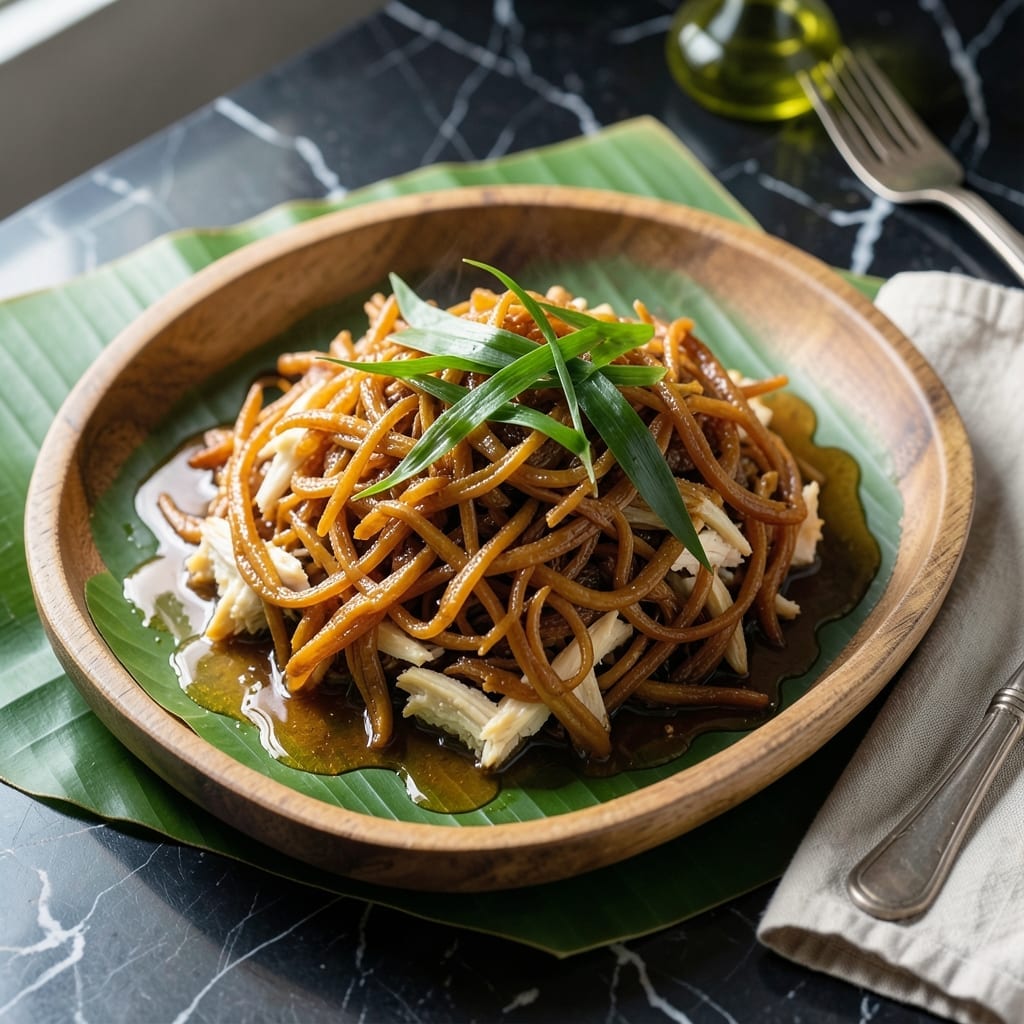
This traditional Filipino sweet treat transforms young coconut into a rich, caramelized delight that captures the essence of tropical flavors. A beloved staple in local kitchens, it showcases the natural sweetness of coconut with a simple cooking process.
The recipe relies on just two main ingredients—grated coconut and sugar—cooked together until the mixture turns golden brown. The slow cooking process develops deep, toasty flavors while maintaining the coconut’s natural texture.
What results is a chewy, sweet confection that’s both satisfying and versatile. Enjoy it as a snack, dessert, or even as a filling for pastries and cakes.
Perfect for special occasions or everyday indulgence, this recipe brings a taste of Filipino tradition to your table with minimal effort.
Ingredients for Bukayo Recipe Panlasang Pinoy
Fresh young coconut and sugar create this beloved Filipino treat with minimal effort.
| Ingredient | Amount | Notes |
|---|---|---|
| Young Coconut Meat 🥥 | 4 cups | Freshly grated from young coconut |
| Granulated Sugar 🍚 | 2 cups | White or brown sugar works |
| Coconut Water 🥥 | ½ cup | From the young coconut |
| Pandan Leaves 🌿 | 2 pieces | Optional, for aroma |
| Vanilla Extract 🌿 | 1 tsp | Pure extract preferred |
| Salt 🧂 | ¼ tsp | Balances sweetness |
| Butter 🧈 | 2 tbsp | Optional, for richness |
| Coconut Milk 🥥 | ¼ cup | For creamier texture |
| Lime Zest 🍋 | 1 tsp | Optional, for brightness |
| Cinnamon Stick 🌿 | 1 whole | Optional, for warmth |
The young coconut is everything here. Asian markets or specialty stores usually carry them whole—look for the white, jelly-like meat inside. If you can’t find fresh, frozen young coconut meat works too (just thaw and drain). The sugar caramelizes as it cooks, so don’t skimp on quality. Organic cane sugar gives the best color and flavor, but regular granulated is fine.
No young coconut? Mature coconut meat can be used, but the texture won’t be as tender. Brown sugar adds a deeper molasses note if you want to experiment. Pandan leaves (found at Filipino or Southeast Asian grocers) add traditional aroma, but vanilla extract works in a pinch. Skip the butter if you want a lighter version—it’s rich without it.
Store in an airtight container at room temperature for up to 1 week, or refrigerate for 2 weeks. The flavors deepen after a day, so it’s even better the next day. Freezing isn’t recommended—it changes the chewy texture.
Why You’ll Love This Recipe
- One Pot Wonder: I just toss the young coconut, sugar, and coconut water together, let it simmer, and pandan leaves do the rest.
- Sweet Coconut Heaven: That mix of tender coconut meat, vanilla, and pandan-infused syrup? Ridiculously good.
- Gift in a Jar: I make big batches and give them as pasalubong—everyone asks for more.
- Stays Fresh for Days: Honestly, it tastes even better after sitting in the fridge for a week.
Step-by-Step Instructions for Bukayo
Master this traditional Filipino sweet with precise timing and proper caramelization techniques.
Step 1: Combine and Simmer the Base Ingredients
In a heavy-bottomed pot, combine the 4 cups Young Coconut Meat, 2 cups Granulated Sugar, and 0.5 cup Coconut Water. The coconut water adds natural sweetness and helps create the initial syrup.
Add the 2 pieces Pandan Leaves and 1 whole Cinnamon Stick for aromatic depth. Stir gently to distribute the sugar evenly. Place the pot over medium heat and bring to a gentle simmer, watching for the sugar to begin dissolving.
Step 2: Cook Until Thickened and Translucent
Once simmering, reduce heat to medium-low and continue cooking for 20-25 minutes, stirring frequently to prevent sticking. You’ll notice the mixture becoming thicker and more translucent as the sugar caramelizes around the coconut.
Add the 2 tbsp Butter halfway through cooking—this introduces richness and helps achieve that signature glossy finish. The color should deepen to a light amber as the syrup coats each strand of coconut meat.
Step 3: Incorporate Aromatics and Finish
Stir in the 0.25 tsp Salt to balance the sweetness, followed by the 0.25 cup Coconut Milk for creamier texture. The coconut milk tempers the intensity of the caramel and binds the mixture together.
Add the 1 tsp Vanilla Extract and 1 tsp Lime Zest during the final 5 minutes of cooking. The lime zest adds a subtle brightness that cuts through the richness, while the vanilla rounds out the flavor profile.
Step 4: Test for Doneness and Cool
The bukayo is done when the syrup has reduced to a thick, sticky consistency and coats the coconut strands completely. Test by dragging a spoon through the mixture—the syrup should leave a clear path that slowly fills back in.
Remove from heat and let cool slightly in the pot. As it cools, the mixture will thicken further to a fudgy texture. Transfer to a greased dish or parchment paper to set completely at room temperature before slicing into squares.
Pro Tips For Making Bukayo Recipe Panlasang Pinoy
- Low and Slow Heat: Cook the mixture on medium-low heat to prevent burning the sugar. I learned this the hard way—high heat turns the sugar bitter before the coconut cooks through.
- Grate the Coconut: Use freshly grated young coconut meat instead of pre-packaged shreds. My grandmother swore by this, and she was right: the texture is worlds better.
- Skip the Overcrowding: Use a wide, heavy-bottomed pan to give the mixture room to evaporate evenly. Resist the urge to dump everything in at once—it’ll just steam instead of caramelize.
- Add Pandan Early: Toss the pandan leaves in with the coconut water at the start so the flavor infuses fully. Sounds weird, but it works: the aroma deepens as the syrup reduces.
Pro Cooking Tips for This Recipe
Pot Selection Matters
Use a heavy-bottomed pot like Le Creuset or enamel-coated cast iron to prevent scorching. Thin pots cause uneven caramelization, and you risk burning the mixture. I learned this the hard way with a cheap aluminum pot.
Constant Stirring
Stir every 2-3 minutes during the first 15 minutes of cooking. This prevents sugar from crystallizing at the bottom. Switch to a wooden spoon once the mixture thickens to avoid scratching your pot.
Color Monitoring
Watch for the transition from white to light amber at 18-20 minutes. The perfect bukayo has a deep golden hue—not too dark. If it turns brown too quickly, lower the heat immediately. 🌡️
Pandan Prep
Tie pandan leaves in a knot before adding to the pot for easy removal. This prevents loose leaves in your final product. If using vanilla instead, add it only in the last 5 minutes to preserve its aroma.
Cooling Technique
Spread the mixture on parchment paper while still warm, then score into squares before it fully sets. This makes cutting easier later. Let it cool completely at room temperature for 1-2 hours.
Texture Check
Test doneness by pressing a spoon into the mixture—it should hold shape but still be slightly sticky. If too runny, cook 2-3 more minutes. If too dry, stir in 1 tbsp coconut milk. 💡
Nutrition Facts
Frequently Asked Questions
Can I use mature coconut instead of young?
Yes, but the texture will be denser and less tender. Young coconut’s soft meat absorbs syrup better, creating the signature chewy consistency.
How do I know when it’s done cooking?
The mixture should reach a deep golden color and coat the coconut strands completely. Test by dragging a spoon through—it should leave a clear path that slowly fills back in.
Why did my mixture turn grainy?
This happens if sugar crystallizes. Stir frequently and use medium-low heat to prevent this. If it occurs, add 1 tbsp of water and stir until smooth.
Can bukayo be stored at room temperature?
Yes, in an airtight container it keeps for up to 1 week. For longer storage, refrigerate for up to 2 weeks. Avoid freezing as it alters the texture.

- 6 Egg Cake Recipe with Oil: Light as Air With Buttery Moisture - October 4, 2026
- 4 Bean Casserole Recipe: One-Pan Heartiness With Smoky Paprika Depth - October 4, 2026
- 3-Ingredient Keto Mug Cake Recipe: Microwave Magic in 2 Minutes - October 4, 2026