
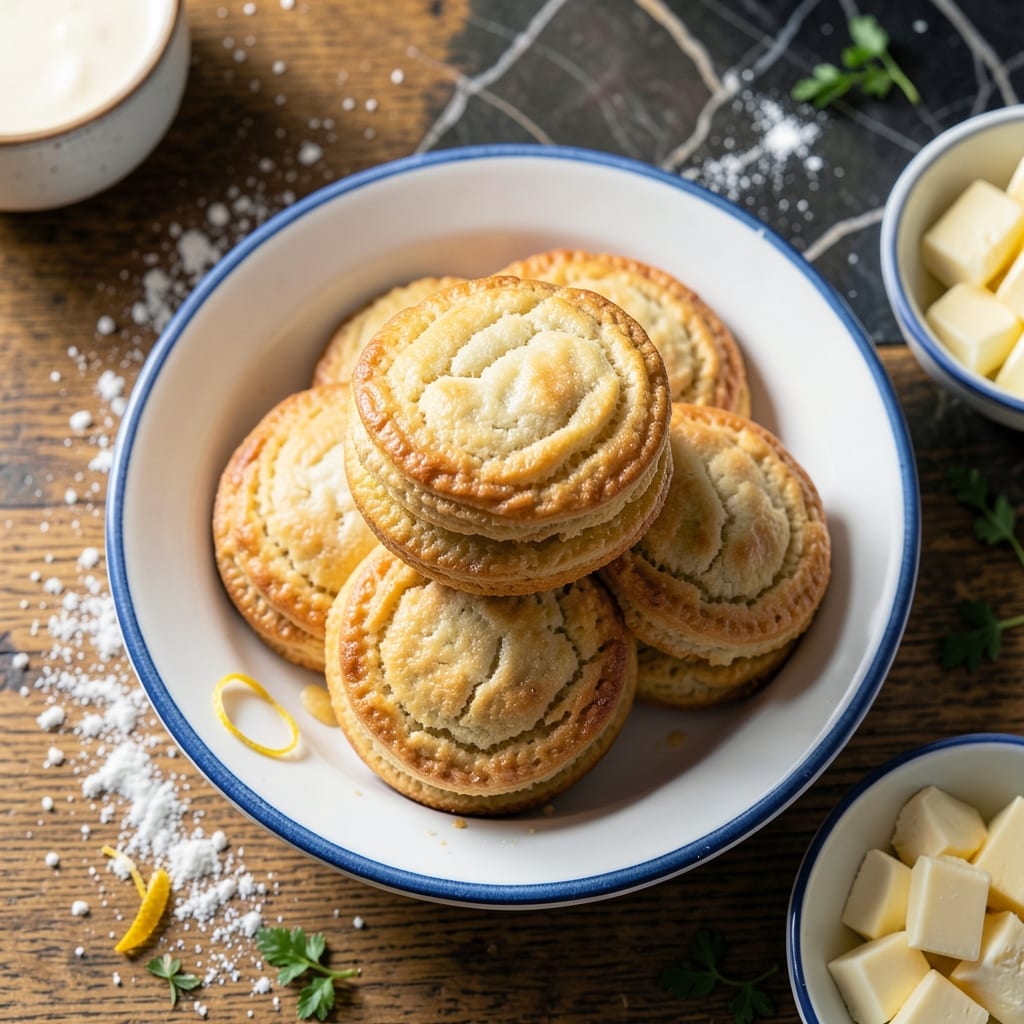
I developed this recipe to prove you can achieve fluffy, layered biscuits without dairy. The secret lies in using cold butter and a simple acid-base reaction.
This method delivers tender results every time, with no milk required. Perfect for those avoiding dairy or needing a quick breakfast solution.
Ingredients for Butter Biscuit Recipe No Milk
Cold butter and a simple acid create these dairy-free biscuits with perfect flaky layers.
| Ingredient | Amount | Notes |
|---|---|---|
| All-Purpose Flour 🌾 | 2 cups | Plus extra for dusting surface |
| Baking Powder 🧂 | 1 tbsp | Aluminum-free for best flavor |
| Granulated Sugar 🍚 | 1 tbsp | Balances the acidity |
| Salt 🧂 | 1 tsp | Fine sea salt preferred |
| Cold Unsalted Butter 🧈 | ½ cup | Cut into small cubes |
| Ice Water 💧 | ¾ cup | Plus additional as needed |
| Apple Cider Vinegar 🍎 | 1 tbsp | For the acid-base reaction |
| Baking Soda 🧂 | ½ tsp | Works with the vinegar |
The butter must stay cold—this is non-negotiable for flaky layers. European-style butter (like Plugrá) has higher fat content, but standard unsalted works fine. For the flour, King Arthur or Gold Medal are reliable choices. The vinegar might seem odd, but it reacts with the baking soda to create lift without dairy. No need for specialty stores—any grocery chain carries these staples.
Out of apple cider vinegar? White vinegar or lemon juice work identically. Need a gluten-free version? Swap the all-purpose for Cup4Cup or Bob’s Red Mill 1:1. The dough can handle a little extra water if it’s too dry—add by the tablespoon. For richer flavor, substitute 2 tbsp of water with melted coconut oil (but keep the rest cold).
Baked biscuits are best served warm but will keep at room temperature for 1 day. Store dough discs in the fridge for 24 hours or freeze for 1 month. Reheat in a 350°F oven for 5-10 minutes to revive the flakiness.
Why You’ll Love This Recipe
- One Bowl Wonder: I just dump the flour, baking powder, sugar, and salt in a bowl, cut in the cold butter, and I’m halfway to warm biscuits.
- Buttery Layers: The cold butter creates these flaky pockets that melt in your mouth—no milk needed to get that rich taste.
- Breakfast or Brunch: Honestly, these work with jam at sunrise or alongside fried chicken at noon.
- Pantry Staples: Between us, I always have these five ingredients on hand, so biscuits are never more than 20 minutes away.
Step-by-Step Instructions for Butter Biscuits
Master this technique for tender, flaky layers without traditional dairy products.
Step 1: Combine Dry Ingredients
In a large mixing bowl, whisk together the 2 cups All-Purpose Flour, 1 tbsp Baking Powder, 1 tbsp Granulated Sugar, 1 tsp Salt, and 0.5 tsp Baking Soda until thoroughly combined. I use aluminum-free baking powder for the cleanest flavor profile.
The sugar here serves a dual purpose: it balances the slight acidity from the vinegar while contributing to that coveted golden-brown crust. Ensure no lumps remain—this guarantees even distribution throughout the dough.
Step 2: Cut in Cold Butter
Add the 0.5 cup Cold Unsalted Butter (cut into small cubes) to the dry mixture. Using a pastry cutter or your fingertips, work the butter into the flour until the mixture resembles coarse crumbs with pea-sized butter pieces visible.
Keep the butter as cold as possible—this creates steam during baking that lifts the dough into flaky layers. If your kitchen is warm, briefly chill the bowl between mixing steps. The texture should be uneven, not sandy.
Step 3: Create the Liquid Mixture
In a separate small bowl, combine the 0.75 cup Ice Water and 1 tbsp Apple Cider Vinegar. The vinegar reacts with the baking soda to create additional lift, while the ice water prevents the butter from melting prematurely.
Stir just until combined—no need to dissolve the vinegar completely. This acidic liquid will also help develop the gluten just enough for structure without toughness.
Step 4: Form and Fold the Dough
Make a well in the center of the flour-butter mixture and pour in the liquid. Using a wooden spoon, stir until the dough just begins to come together. It will appear shaggy with some dry spots—that’s perfect.
Turn the dough onto a lightly floured surface dusted with All-Purpose Flour and gently pat into a 1-inch thick rectangle. Fold the dough in thirds like a letter, then rotate and repeat. This laminating process creates those desirable flaky layers. Perform this fold-rotate-fold sequence 3 times total.
Step 5: Cut and Bake to Golden Perfection
Pat the dough to ¾-inch thickness and cut into rounds using a biscuit cutter. Press straight down without twisting to ensure even rising. Place the biscuits on a parchment-lined baking sheet with edges barely touching.
Bake in a preheated 450°F oven for 12-15 minutes until the tops are golden brown and the layers have separated slightly. The vinegar’s acidity will create a subtle tang that balances the richness of the butter. Serve warm for optimal flakiness.
Pro Tips For Making Butter Biscuit Recipe No Milk
- Keep Butter Ice Cold: Grate or cube the butter straight from the fridge—I learned this the hard way after my first few batches turned out flat and dense.
- Don’t Overmix Dough: Stir just until the flour is barely incorporated; after burning three batches to crispy hockey pucks, I finally figured out overworking develops gluten.
- Use a Sharp Cutter: Press straight down with a floured biscuit cutter—no twisting—or the edges won’t rise properly, and your biscuits will look lopsided.
- Bake on Upper Rack: Position the tray on the upper third of the oven for even browning; sounds weird, but it works and guarantees golden tops without burnt bottoms.
Common Mistakes When Making Perfect Results
🔥 Overcrowding the Pan
Placing biscuits too close together on the baking sheet can cause them to merge into one giant biscuit instead of rising properly. This happens because they don’t have enough space to expand and develop those flaky layers.
Fix: Leave at least 1-2 inches between each biscuit on the pan to ensure even baking and proper rise.
🍳 Using Cold Butter
Butter that’s too cold won’t incorporate well into the dough, leading to dense, uneven biscuits. The fat needs to be slightly softened to create those coveted flaky layers.
Fix: Use butter that’s been chilled but cut into small cubes. Let it sit at room temperature for 10-15 minutes before mixing.
⏰ Overmixing the Dough
Mixing the dough too much develops the gluten, which makes biscuits tough instead of tender. A light hand ensures a flaky, melt-in-your-mouth texture.
Fix: Stir just until the ingredients come together—lumps are okay! Fold the dough gently when shaping.
🌡️ Skipping the Chill Time
Baking biscuits immediately after cutting can cause the butter to melt too quickly, leading to flat, greasy results. Chilling helps solidify the fat for better structure.
Fix: Refrigerate the shaped biscuits for 15-20 minutes before baking to ensure they hold their form and rise properly.
Nutrition Facts

- 6 Egg Cake Recipe with Oil: Light as Air With Buttery Moisture - October 4, 2026
- 4 Bean Casserole Recipe: One-Pan Heartiness With Smoky Paprika Depth - October 4, 2026
- 3-Ingredient Keto Mug Cake Recipe: Microwave Magic in 2 Minutes - October 4, 2026