
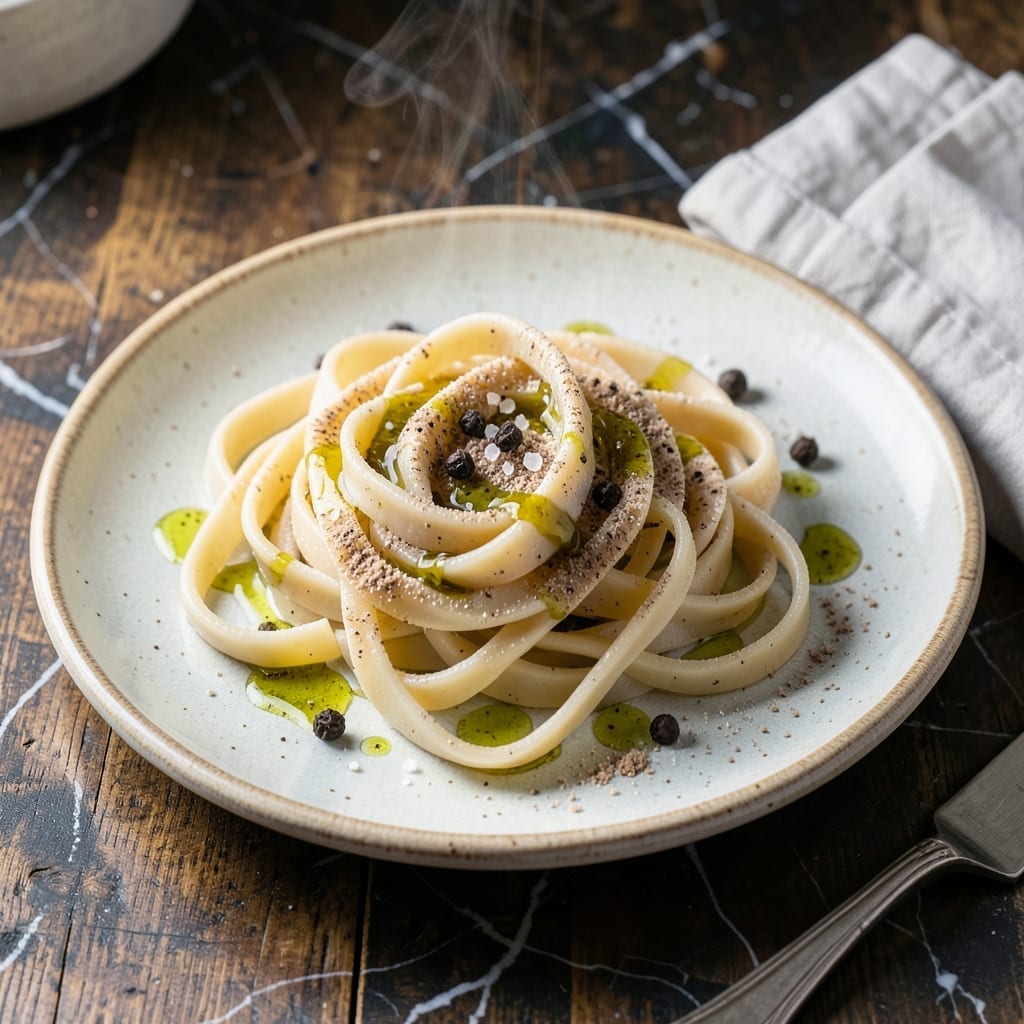
This buttermilk pasta delivers silky ribbons with a subtle tang that elevates every bite. The secret lies in the buttermilk’s acidity, which creates a tender texture and complex flavor that’s anything but ordinary.
I developed this recipe to prove that simple ingredients can produce extraordinary results. The dough comes together in minutes, requiring just flour, buttermilk, and a pinch of salt for a smooth, elastic consistency.
The finished pasta boasts a delicate yet sturdy structure that holds sauce beautifully. Its mild tang pairs perfectly with creamy or herbed sauces, making it versatile for any meal.
Whether served fresh or dried for later, this pasta promises restaurant-quality results with minimal effort. Here’s how to make it at home.
Ingredients for Buttermilk Pasta
Seven ingredients transform into silky, tangy ribbons ready for your favorite sauce.
| Ingredient | Amount | Notes |
|---|---|---|
| All-Purpose Flour 🌾 | 3 cups | Plus extra for dusting |
| Full-Fat Buttermilk 🥛 | ¾ cup | Cold, well-shaken |
| Large Eggs 🥚 | 2 whole | Room temperature preferred |
| Fine Sea Salt 🧂 | 1 tsp | Diamond Crystal preferred |
| Extra-Virgin Olive Oil 🫒 | 1 tbsp | For dough elasticity |
| Semolina Flour 🌾 | ½ cup | For dusting and texture |
| Water 💧 | 1 tbsp | As needed for consistency |
The flour quality matters—King Arthur or Bob’s Red Mill all-purpose delivers consistent results. Buttermilk must be full-fat for the right acidity and richness (low-fat versions won’t produce the same texture). For the eggs, room temperature ensures even incorporation into the dough, which is critical for that smooth, elastic consistency mentioned in the intro.
No buttermilk? Stir 1 tbsp white vinegar or lemon juice into ¾ cup whole milk and let sit 5 minutes. Semolina flour can be swapped with all-purpose in a pinch, but the pasta will lose some of its delicate bite. For a richer dough, replace the olive oil with melted unsalted butter—just ensure it’s cooled before mixing.
Fresh pasta is best used immediately, but it can be dried on a rack for up to 24 hours before cooking. Store uncooked dough wrapped tightly in plastic for 1 day in the fridge. Cooked pasta freezes well for up to 1 month—just toss with a bit of oil before freezing to prevent sticking.
Why You’ll Love This Recipe
- Minimal Effort: I just mix flour, buttermilk, eggs, and salt—no fancy tools, no resting time, and it comes together faster than boiling the water.
- Rich, Tangy Bite: The full-fat buttermilk gives this pasta a subtle zing that pairs perfectly with olive oil and a pinch of sea salt.
- Meal Prep Hero: I make a double batch on Sunday and it reheats beautifully with just a splash of water and a drizzle of olive oil.
- Pantry Friendly: Honestly, I always have these ingredients on hand, so it’s my go-to when I need a fresh, homemade meal without a grocery run.
Step-by-Step Instructions for Buttermilk Pasta
Master the technique and you’ll produce tender, elastic pasta with a subtle tang every time.
Step 1: Form the Dough Base
On a clean work surface, mound the 3 cups All-Purpose Flour and create a well in the center. Add the 0.75 cup Full-Fat Buttermilk, 2 whole Large Eggs, 1 tsp Fine Sea Salt, and 1 tbsp Extra-Virgin Olive Oil to the well.
Using a fork, gradually incorporate the flour into the wet ingredients until a shaggy dough forms. The olive oil enhances elasticity, while the buttermilk adds a subtle richness. The mixture should feel slightly sticky but manageable—this indicates proper hydration.
Step 2: Knead to Develop Gluten
Dust your hands and the work surface lightly with the 0.5 cup Semolina Flour to prevent sticking. Turn out the dough and begin kneading with the heels of your hands, pushing forward and folding back in a rhythmic motion.
Knead for 8-10 minutes until the dough becomes smooth, supple, and slightly springy to the touch. The semolina flour adds texture and prevents excessive stickiness during this process. If the dough feels too dry, add the 1 tbsp Water sparingly, a few drops at a time, until it reaches the right consistency.
Step 3: Rest the Dough for Optimal Texture
Shape the kneaded dough into a ball and wrap it tightly in plastic wrap. Let it rest at room temperature for 30-45 minutes. This resting period allows the gluten strands to relax, making the dough easier to roll out and preventing it from shrinking back during shaping.
You’ll notice the dough becomes softer and more pliable after resting. This step is non-negotiable for achieving silky, even sheets. The buttermilk’s acidity also begins to tenderize the gluten, contributing to the final pasta’s delicate bite.
Step 4: Roll and Cut the Pasta
Divide the rested dough into 4 equal portions for manageability. Working with one portion at a time (keep the rest covered), flatten it into a rough rectangle with your hands. Set your pasta machine to its widest setting and pass the dough through once.
Fold the dough in thirds like a letter, turn it 90 degrees, and repeat the rolling process. Gradually decrease the thickness setting with each pass, rolling the dough once through each level until it reaches your desired thinness—typically the second-to-last setting for ribbon pasta. Dust with semolina flour as needed to prevent sticking.
Step 5: Cook to Al Dente Perfection
Bring a large pot of generously salted water to a rolling boil. Add the fresh pasta and cook for 2-3 minutes until it floats to the surface and is al dente—tender yet with a slight resistance when bitten. Fresh pasta cooks much faster than dried, so test it early.
Drain immediately and toss with your preferred sauce. The pasta’s buttermilk base pairs exceptionally well with rich, creamy sauces or simple herb-infused olive oil. Serve without delay to enjoy its peak texture and flavor.
Pro Tips For Making Buttermilk Pasta
- Knead Just Enough: Work the dough until it’s smooth but stop before it gets tough—over-kneading makes the pasta dense, and I learned this the hard way with my first few rubbery batches.
- Use Full-Fat Buttermilk: Skip the low-fat version; the extra richness in full-fat buttermilk gives the pasta a tender, slightly tangy bite that’s worth the calories.
- Rest the Dough: After mixing, let the dough rest for at least 30 minutes under plastic wrap—this relaxes the gluten and makes rolling it out way easier.
- Dust With Flour: Keep a small bowl of extra all-purpose flour nearby when rolling and cutting; it prevents sticking without changing the flavor, unlike semolina which can add grittiness.
Regional Styles of This Recipe
Southern Comfort Style
In the American South, buttermilk is a pantry staple, and this pasta fits right in. I love serving it with a creamy pimento cheese sauce—just 1 cup shredded cheddar, ¼ cup diced pimentos, and ½ cup mayonnaise for a rich, tangy topping. 💛
Italian-Inspired Twist
For an Italian flair, swap the buttermilk for ½ cup whole milk mixed with ¼ cup plain Greek yogurt. The yogurt adds a similar tang while keeping the dough tender. Pair with a classic brown butter sage sauce for a luxurious touch.
Midwestern Farmhouse
Midwestern cooks often use buttermilk in baking, and this pasta works beautifully with hearty, comforting sauces. Try a mushroom cream sauce with 8 oz sautéed mushrooms and 1 cup heavy cream for a dish that feels like home. 🔥
California Fresh
On the West Coast, lighter sauces shine. Toss the pasta with olive oil, cherry tomatoes, and fresh basil for a bright, garden-fresh meal. The buttermilk’s tang cuts through the sweetness of the tomatoes perfectly.
New England Simplicity
New Englanders appreciate simplicity. A light lemon butter sauce—just 4 tbsp melted butter and 2 tbsp lemon juice—lets the pasta’s subtle tang take center stage. Add a sprinkle of Parmesan cheese for depth.
Texas Bold
For a Texas twist, add 1 tsp smoked paprika to the dough for a hint of heat. Serve with a spicy tomato-based sauce or a chipotle cream sauce to balance the buttermilk’s mild acidity. This version brings a little Southwestern flair to your table.
Nutrition Facts
Frequently Asked Questions
Can I use low-fat buttermilk for this pasta?
No, full-fat buttermilk is essential for the right texture and flavor. Low-fat versions lack the richness and acidity needed to tenderize the dough properly.
How do I know when the pasta is done cooking?
Fresh pasta cooks in just 2-3 minutes. It’s ready when it floats to the surface and is al dente—slightly firm when bitten. Test early to avoid overcooking.
Can I make this dough without a pasta machine?
Yes! Roll the dough by hand as thin as possible, about 1-2mm thick. It takes practice, but a rolling pin and patience will get you there.
Why does my dough feel too sticky?
Add 1-2 tbsp extra flour while kneading, but avoid overdoing it. The dough should be slightly tacky but not wet. Resting it for 30-45 minutes also helps.

- 6 Egg Cake Recipe with Oil: Light as Air With Buttery Moisture - October 4, 2026
- 4 Bean Casserole Recipe: One-Pan Heartiness With Smoky Paprika Depth - October 4, 2026
- 3-Ingredient Keto Mug Cake Recipe: Microwave Magic in 2 Minutes - October 4, 2026