
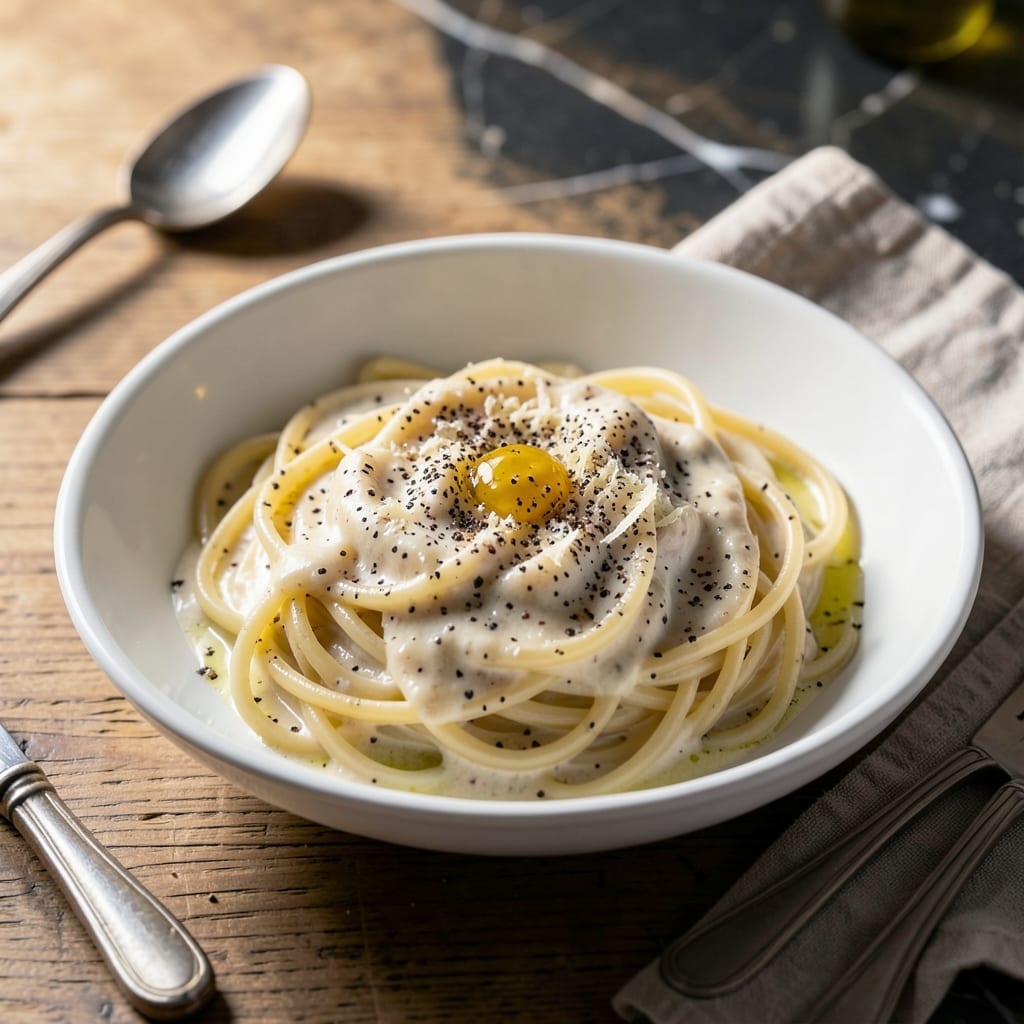
Roman pasta perfection doesn’t require heavy cream to achieve that signature creamy texture. This dish relies on a precise technique that transforms simple ingredients into something extraordinary.
The secret lies in the starchy pasta water and proper cheese melting method. I’ve tested countless variations to perfect this authentic approach that delivers a velvety sauce without any dairy shortcuts.
What emerges is a bowl of al dente pasta coated in a glossy, creamy cheese sauce that clings to every strand. The pepper adds just enough heat to balance the rich, nutty Pecorino Romano.
Master this method and you’ll have restaurant-quality results in under 30 minutes. The technique is simple but requires attention to detail for that perfect consistency.
Ingredients for Cacio E Pepe Recipe Creamy
A handful of ingredients creates this velvety Roman pasta dish without heavy cream.
| Ingredient | Amount | Notes |
|---|---|---|
| Spaghetti 🍝 | 1 lb | Dried, high-quality bronze-die |
| Pecorino Romano Cheese 🧀 | 1 ½ cups | Freshly grated, finely |
| Freshly Ground Black Pepper 🌶️ | 2 tbsp | Coarsely ground preferred |
| Reserved Pasta Water 💧 | 1 ½ cups | Starchy, from cooking pasta |
| Sea Salt 🧂 | 2 tbsp | For pasta water and seasoning |
| Unsalted Butter 🧈 | 2 tbsp | Optional for extra creaminess |
| Parmesan Cheese 🧀 | ½ cup | Freshly grated, optional complement |
The cheese is non-negotiable here. Pecorino Romano delivers that sharp, salty depth authentic to Roman cuisine. Seek out blocks from Whole Foods or Eataly—pre-grated versions contain anti-caking agents that prevent proper melting. The pasta should be bronze-die extruded (look for rough texture) for maximum sauce adhesion. De Cecco or Barilla are reliable grocery store options.
No Pecorino? Parmesan at double the amount works but lacks the peppery bite. For a milder sauce, use half Pecorino, half Parmesan. The pepper must be freshly cracked—pre-ground tastes dusty. If you’re avoiding butter entirely, a splash of the pasta water compensates. The salt in the pasta water should taste like the sea—about 2 tablespoons per pound of pasta.
Store Pecorino wrapped in parchment, then foil, for up to 3 months. Dried pasta keeps indefinitely. The sauce thickens as it cools—add a splash of hot pasta water to revive. Best consumed immediately, but leftovers reheat well with extra water for 2-3 days.
Why You’ll Love This Recipe
- I’ll be real: this tastes like something from a Roman trattoria but works just as well for a solo dinner in sweatpants.
- 20-Minute Magic: Honestly, I can go from boiling water to creamy perfection faster than it takes to decide what to watch on Netflix.
- Cheesy Heaven: The Pecorino Romano melts into the pasta water to create this ridiculously good, velvety sauce that coats every strand.
- Fancy Enough: I’ll be real: this tastes like something from a Roman trattoria but works just as well for a solo dinner in sweatpants.
Step-by-Step Instructions for Cacio E Pepe
Master the technique and create a silky, luxurious sauce without a drop of cream.
Step 1: Cook the Spaghetti in Well-Salted Water
Bring a large pot of water to a rolling boil and add 2 tbsp Sea Salt. The water should taste like the sea—this is your only chance to season the pasta itself. Add 1 lb Spaghetti and cook for 1 minute less than the package instructions for al dente.
Stir occasionally to prevent sticking. Reserve 1.5 cups Reserved Pasta Water before draining, as the starchy liquid is essential for creating the creamy emulsion. The pasta should be slightly undercooked, as it will finish in the sauce.
Step 2: Toast the Freshly Ground Black Pepper
In a large skillet, toast 2 tbsp Freshly Ground Black Pepper over medium heat for 1-2 minutes until fragrant. Be careful not to burn it—this step blooms the pepper’s aromatic oils, adding depth to the dish.
Remove the skillet from heat and let the pepper cool slightly. This prevents the pepper from becoming bitter when combined with the cheese. The aroma should be strong and inviting, signaling it’s ready for the next step.
Step 3: Create the Cheese and Pasta Water Emulsion
Off the heat, add 1.5 cups Pecorino Romano Cheese to the skillet with the toasted pepper. Gradually pour in 1 cup of the Reserved Pasta Water, whisking constantly until a smooth, creamy sauce forms. The heat from the pasta water will melt the cheese without causing it to clump.
If the mixture seems too thick, add more Reserved Pasta Water 1-2 tablespoons at a time until it reaches a velvety consistency. The goal is a sauce that coats the back of a spoon but remains fluid enough to cling to the pasta.
Step 4: Combine Pasta and Sauce for Creamy Perfection
Add the drained Spaghetti to the skillet with the cheese sauce. Toss vigorously over low heat for 1-2 minutes, adding splashes of the remaining Reserved Pasta Water as needed to help the sauce adhere to the strands.
The starch from the pasta and water will create a glossy, silky texture that defines authentic cacio e pepe. For extra richness, stir in 2 tbsp Unsalted Butter and 0.5 cup Parmesan Cheese until fully melted and incorporated.
Continue tossing until every strand is evenly coated and the sauce clings beautifully. The pasta should glisten with a creamy sheen, not look dry or clumpy.
Pro Tips For Making Cacio E Pepe Recipe Creamy
- Use starchy water: Reserve at least 1 cup of pasta water—it’s packed with starch to bind the cheese into a silky sauce. I learned this the hard way after my first few attempts turned into a clumpy mess.
- Grate cheese finely: Shred the Pecorino Romano as fine as possible so it melts smoothly into the pasta water instead of clumping. My grandmother swore by this, and she was right.
- Toss off heat: Remove the pan from heat when adding cheese to prevent it from seizing up. After burning two batches, I finally figured out the heat was the culprit.
- Toast the pepper: Lightly toast the black pepper in a dry pan for 30 seconds before adding anything else—it deepens the flavor. Sounds weird, but it works.
Storing and Reheating This cacio e pepe recipe creamy
Refrigerator Storage
Let your pasta cool for no more than 2 hours before transferring to airtight containers. I use glass containers with snap-on lids. Store at 40°F or below for up to 3 days. The sauce will thicken as it cools, which is normal. ❄️
Freezer Storage
This dish freezes well for up to 2 months without significant quality loss. I recommend flat freezer bags (quart size) because they stack efficiently and thaw faster. Leave 1 inch of headspace for expansion and squeeze out excess air to prevent freezer burn.
Stovetop Reheating
This is my preferred method because it maintains the best texture. Pour pasta into a skillet, add ¼ cup Reserved Pasta Water or water to prevent sticking, and heat over medium-low heat for 3-5 minutes. Taste and adjust seasonings. 🔥
Microwave Reheating
For quick lunches, microwave individual portions covered with a damp paper towel. Heat on 70% power for 1-2 minutes, stir, then continue in 30-second intervals until reaching 165°F. Add a splash of water if it looks dry.
Reviving the Sauce
If your sauce seems too thick after reheating, add 1-2 tbsp hot water or pasta water and toss vigorously. The starch will help recreate that signature creamy texture. I find this works better than adding more cheese, which can make the dish grainy.
Nutrition Facts
Frequently Asked Questions
Why does my sauce turn grainy instead of creamy?
This happens when the cheese is added to water that’s too hot or if pre-shredded cheese is used. Always use freshly grated cheese and remove the pan from heat when making the emulsion. The starch in pasta water helps create a smooth texture.
Can I use pre-ground black pepper?
Freshly ground pepper is essential for authentic flavor. Pre-ground pepper loses its aromatic oils quickly and can taste dusty. Toasting fresh pepper for 1-2 minutes brings out its full potential.
What’s the best pasta shape for this dish?
Spaghetti or tonnarelli are traditional choices. Long strands help the sauce cling beautifully. Bronze-die pasta has a rough texture that grabs the sauce better than smooth varieties.
How do I fix sauce that’s too thick?
Add 1-2 tbsp of hot pasta water at a time while tossing vigorously. The starch in the water will help recreate the creamy consistency without thinning the flavor.

- 6 Egg Cake Recipe with Oil: Light as Air With Buttery Moisture - October 4, 2026
- 4 Bean Casserole Recipe: One-Pan Heartiness With Smoky Paprika Depth - October 4, 2026
- 3-Ingredient Keto Mug Cake Recipe: Microwave Magic in 2 Minutes - October 4, 2026