
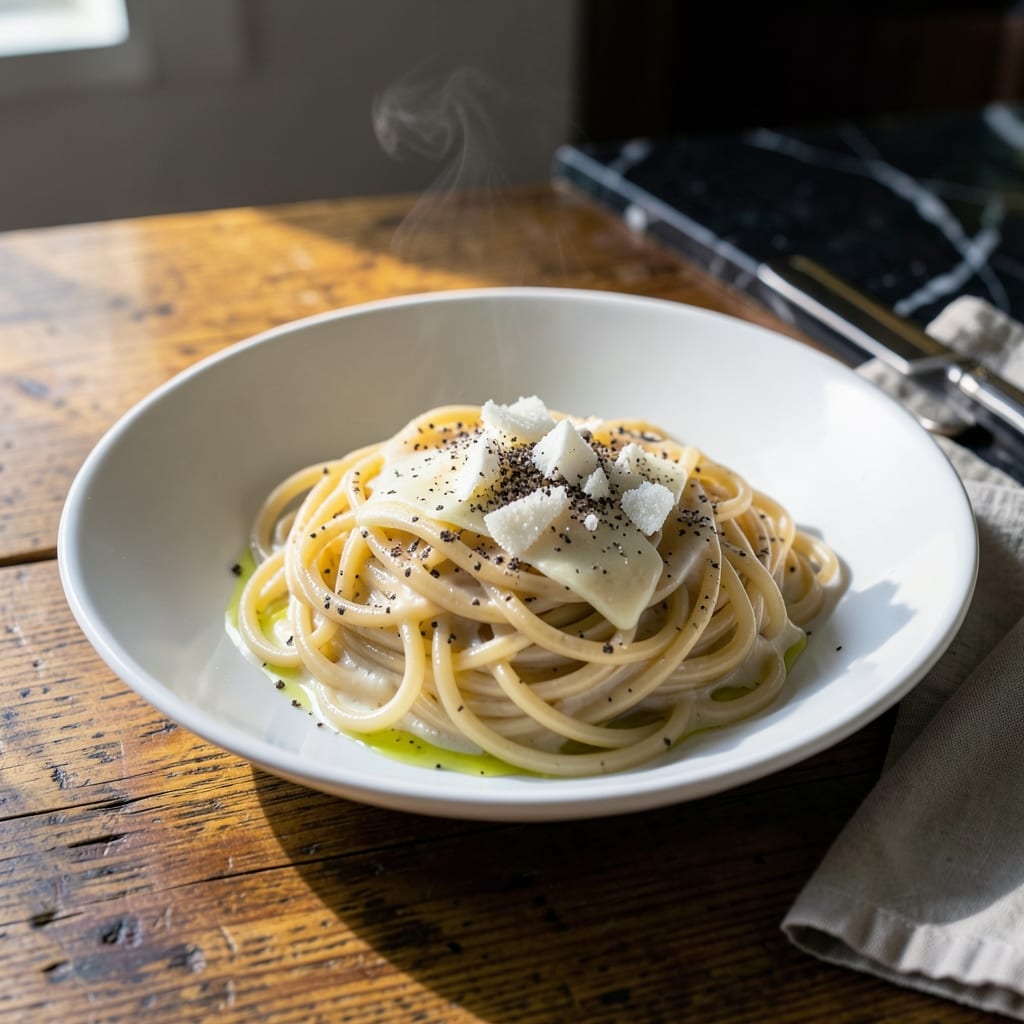
This Roman classic requires just three ingredients to create a dish that’s both simple and extraordinary. The secret lies in the technique—tossing hot pasta with pecorino and black pepper to form a silky, emulified sauce.
I’ve perfected this method to ensure every strand of spaghetti is coated in a rich, creamy cheese sauce without a single clump. It’s the kind of dish that proves less can indeed be more.
Ingredients for Cacio E Pepe Recipe Stanley Tucci
Five simple ingredients transform into a Roman masterpiece with silky texture and bold flavor.
| Ingredient | Amount | Notes |
|---|---|---|
| Spaghetti 🍝 | 1 lb | Dried, high-quality durum wheat |
| Pecorino Romano Cheese 🧀 | 2 cups | Finely grated, authentic Italian |
| Freshly Ground Black Pepper 🌶️ | 1 ½ tbsp | Coarsely ground for texture |
| Reserved Pasta Water 💧 | 1 cup | Starchy, for sauce emulsion |
| Sea Salt 🧂 | 2 tbsp | For pasta water, divided |
[recipeingredientscaler]
The cheese is non-negotiable here—Pecorino Romano is the authentic choice, not Parmesan. Look for it at Whole Foods or Italian specialty markets. Imported from Italy is ideal, but domestic works in a pinch. The pasta should be high-quality bronze-die extruded for the right texture. I prefer De Cecco or Barilla for this dish. Grate the cheese yourself (the good stuff, not the pre-shredded kind).
No Pecorino? Parmesan at 1:1 ratio works, though the flavor will be milder. Skip the pre-ground pepper—it lacks the bite and aroma of freshly cracked. For a vegetarian twist, ensure your cheese is made with vegetarian rennet. The pasta water is key for the sauce—don’t drain it all away. Use a microplane for the cheese if you don’t have a fine grater (worth the extra minute).
This dish is best served immediately. Leftovers? Reheat gently with a splash of water to restore the sauce. Keeps in the fridge for 2-3 days, though the pasta absorbs the sauce over time. Freezing isn’t recommended—the texture changes too much.
Why You’ll Love This Recipe
- 20-Minute Magic: I can have this on the table faster than it takes to order takeout. Just boil pasta, toast pepper, and let the cheese melt into silky perfection.
- Pecorino Punch: The sharp, salty bite of Pecorino Romano mixed with that crack of fresh black pepper is ridiculous. It’s rich without being heavy.
- Fancy Enough for Guests: Honestly, it feels gourmet but costs pennies. I’ve served it at dinner parties and no one believes how simple it is.
- Leftovers Reborn: The pasta soaks up the cheese overnight, so reheating with a splash of water brings it back to life. Even better the next day.
Step-by-Step Instructions for Cacio E Pepe
Master this Roman classic with authentic technique and a few simple ingredients.
Step 1: Cook the Spaghetti Al Dente
Bring a large pot of water to a rolling boil and add 2 tbsp sea salt. The water should taste like the sea. Add the 1 lb Spaghetti and cook until 1 minute shy of the package directions for al dente. You want the pasta slightly underdone because it will finish cooking in the sauce.
Reserve 1 cup Reserved Pasta Water before draining—the starchy liquid is essential for creating the silky sauce. I keep a measuring cup right by the stove to ensure I don’t forget. Drain the pasta but do not rinse it; the surface starch helps the sauce cling beautifully.
Step 2: Toast the Freshly Ground Black Pepper
In a large skillet over medium-low heat, add the 1.5 tbsp Freshly Ground Black Pepper. Toast for 1-2 minutes until fragrant, stirring constantly. Be careful not to burn it—you want to enhance its aroma, not make it bitter.
This step is crucial for developing the deep, warm pepper flavor that defines cacio e pepe. The pepper should smell rich and slightly smoky when it’s ready. Remove the skillet from heat and set it aside for now.
Step 3: Combine Pasta, Cheese, and Pepper Off Heat
Reduce the heat to low and add the drained spaghetti to the skillet with the toasted pepper. Toss to coat the pasta evenly. Remove the skillet from heat entirely—this prevents the cheese from clumping or turning stringy.
Add ½ cup Reserved Pasta Water and toss vigorously. Then, gradually sprinkle in the 2 cups Pecorino Romano Cheese, one handful at a time, tossing constantly and adding small splashes of pasta water as needed. The sauce should become creamy and coat each strand of spaghetti evenly.
Step 4: Finish with Remaining Pasta Water and Serve
Continue tossing the pasta off heat until the sauce is smooth and silky. If it’s too thick, add the remaining ½ cup Reserved Pasta Water a little at a time until it reaches the perfect consistency. The sauce should cling to the pasta and have a glossy finish.
Taste and adjust seasoning if needed, though the Pecorino Romano and sea salt should provide enough flavor. Serve immediately in warm bowls, garnished with a little extra Pecorino and a crack of black pepper. The dish should be creamy, peppery, and rich with the sharpness of the cheese.
Pro Tips For Making Cacio E Pepe Recipe Stanley Tucci
- Toast the Pepper: I learned this the hard way—blooming the freshly ground black pepper in a dry pan for 30 seconds before adding pasta water brings out its depth. Sounds weird, but it works.
- Grate the Cheese Fresh: Pre-grated Pecorino Romano just won’t melt the same. Grab a microplane and do it yourself—about 1 cup per 2 servings of spaghetti.
- Skip the Oil: Resist the urge to add olive oil to the pasta water or sauce. Stanley Tucci’s version relies on the starchy water and cheese to emulsify perfectly.
- Use Less Water: Cook the spaghetti in well-salted water, but use about 25% less than usual. The extra starch in the concentrated water makes the sauce cling better.
Wine and Beer Pairings for These Flavors
Beer Pairings
The crisp, peppery notes of Cacio e Pepe pair beautifully with light, effervescent beers. A pilsner like Peroni or Stella Artois cuts through the richness of the cheese with its clean, slightly bitter finish. For a bolder match, try a Belgian witbier such as Hoegaarden, which offers citrusy and spicy undertones that complement the dish’s black pepper kick.
Wine Pairings
Stanley Tucci’s Roman classic shines alongside Italian whites. A Frascati or Verdicchio delivers bright acidity and mineral notes, balancing the creamy pecorino. For red lovers, a light-bodied Sangiovese like Chianti Classico adds earthy depth without overpowering the simple yet bold flavors of the pasta.
Non-Alcoholic Options
Sparkling water with a squeeze of lemon or lime enhances the dish’s freshness, while a San Pellegrino Aranciata brings a citrusy sweetness that contrasts the salty pecorino. For a cozy touch, try a herbal iced tea with hints of rosemary or thyme to echo the peppery notes.
Nutrition Facts

- 6 Egg Cake Recipe with Oil: Light as Air With Buttery Moisture - October 4, 2026
- 4 Bean Casserole Recipe: One-Pan Heartiness With Smoky Paprika Depth - October 4, 2026
- 3-Ingredient Keto Mug Cake Recipe: Microwave Magic in 2 Minutes - October 4, 2026