
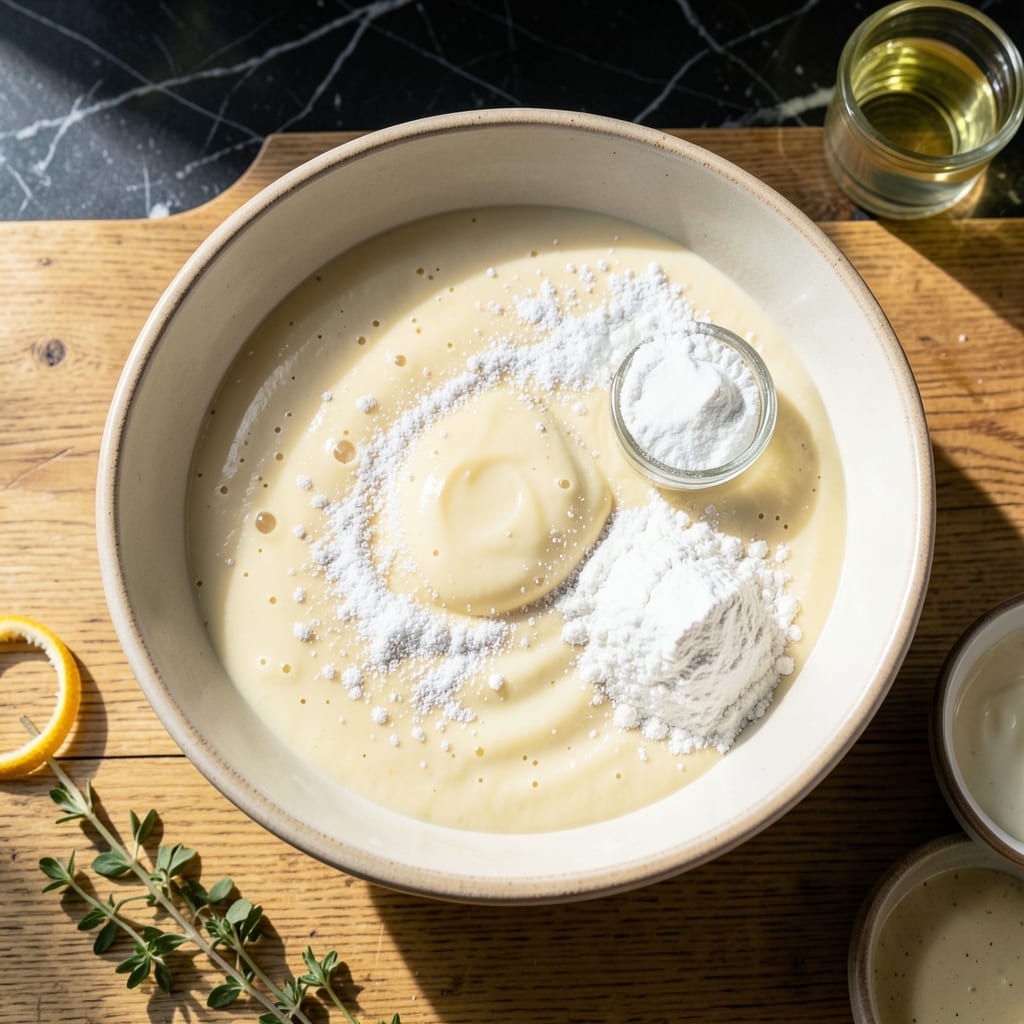
This dairy-free cake proves that moist, tender layers don’t require milk to achieve perfect texture. I developed this recipe after realizing many traditional cakes rely on dairy unnecessarily, and the results speak for themselves.
The secret lies in using simple plant-based substitutions that enhance rather than replace. Vinegar and oil create a chemical reaction that mimics the tenderness milk would provide, while ensuring the crumb stays light and delicate.
What you get is a cake that’s indistinguishable from its dairy-laden counterparts—moist throughout, with a fine crumb and rich flavor. The batter comes together quickly with pantry staples you likely already have on hand.
Perfect for birthdays, celebrations, or whenever a craving strikes. This method delivers consistent results every time.
Ingredients for Cake Recipe with No Milk
Pantry staples come together for a dairy-free cake that’s just as moist and tender.
| Ingredient | Amount | Notes |
|---|---|---|
| All-Purpose Flour 🌾 | 2 ½ cups | Sifted for lighter texture |
| Granulated Sugar 🍚 | 1 ½ cups | Fine grain for even distribution |
| Baking Powder 🧂 | 2 tsp | Ensures proper rise |
| Baking Soda 🧂 | 1 tsp | React with vinegar for lift |
| Salt 🧂 | ½ tsp | Fine sea salt preferred |
| White Vinegar 💧 | 1 tbsp | Creates chemical reaction with baking soda |
| Vegetable Oil 🫒 | ¾ cup | Neutral flavor, like canola or sunflower |
| Vanilla Extract 🌿 | 2 tsp | Pure extract for best flavor |
| Water 💧 | 1 ¼ cups | Room temperature |
| Large Eggs 🥚 | 3 whole | Room temperature for even mixing |
The vinegar and baking soda combo is non-negotiable here—this reaction is what replaces the milk’s role in tenderizing the crumb. I always use white vinegar (the mild flavor disappears), but apple cider vinegar works too. For the oil, stick with neutral options like canola or sunflower. Extra-virgin olive oil has too strong a taste and can leave a greasy texture.
No buttermilk? No problem. The vinegar-and-water mix here mimics its tang and acidity perfectly. Swap the vanilla for almond extract if you want a different flavor profile (use half the amount—it’s potent). The eggs can be replaced with flax eggs (1 tbsp ground flax + 3 tbsp water per egg), but texture will be slightly denser (still delicious though).
This batter keeps well in the fridge for 24 hours if you want to prep ahead. The baked cake stays fresh for 3-4 days at room temperature in an airtight container, or freeze layers wrapped tightly for up to 3 months.
Why You’ll Love This Recipe
- No Fuss Mixing: I just dump the dry ingredients—flour, sugar, baking powder, soda, and salt—into one bowl and stir. Honestly, it doesn’t get simpler than that.
- Rich Sweetness: The granulated sugar caramelizes just enough to give that classic cake taste without needing milk to carry the flavor.
- Pantry Staple Hero: All-purpose flour and basic baking agents mean I can make this anytime, even when my fridge is bare.
- Budget Friendly: No special dairy or pricier ingredients. Between us, it costs pennies per slice and still tastes indulgent.
Step-by-Step Instructions for Dairy-Free Cake
This method guarantees a tender crumb and perfect rise without a drop of milk.
Step 1: Combine Dry Ingredients for Even Distribution
In a large mixing bowl, whisk together the 2.5 cups All-Purpose Flour, 1.5 cups Granulated Sugar, 2 tsp Baking Powder, 1 tsp Baking Soda, and 0.5 tsp Salt. I always sift the flour first to prevent lumps and ensure a lighter texture in the final cake.
This step creates the foundation of your cake. The baking powder and baking soda work together for maximum lift, while the fine sea salt enhances all the flavors. You should see a uniform, pale mixture with no visible streaks of any individual ingredient.
Step 2: Create the Wet Mixture with Chemical Leavening
In a separate bowl, combine the 0.75 cup Vegetable Oil, 1.25 cups Water, 1 tbsp White Vinegar, and 2 tsp Vanilla Extract. The vinegar reacts with the baking soda to create additional lift, mimicking the tenderness milk would typically provide.
Add the 3 whole Large Eggs and whisk vigorously until the mixture is smooth and slightly emulsified. Real talk: room temperature eggs incorporate more evenly into the batter. You’ll notice the mixture thickens slightly as the eggs bind everything together.
Step 3: Marry Wet and Dry for a Smooth Batter
Slowly pour the wet ingredients into the dry ingredients while mixing on low speed. I like to pour in thirds, allowing each addition to incorporate fully before adding more. This prevents overmixing, which can develop gluten and result in a dense cake.
Stop mixing as soon as you see the last streaks of flour disappear. The batter should be smooth but not thick—it will be slightly thinner than traditional cake batters due to the lack of dairy. Don’t be tempted to add more flour; the chemistry here is precise.
Step 4: Bake Until Perfectly Set and Moist
Pour the batter into two 9-inch round pans lined with parchment paper. Bake at 350°F for 28-32 minutes, or until a toothpick inserted into the center comes out clean or with just a few moist crumbs attached.
Here’s the thing—don’t open the oven during the first 20 minutes. The cake needs steady heat to rise properly. You’ll know it’s done when the top springs back when lightly pressed and the edges start to pull away from the pan.
Step 5: Cool Completely Before Serving
Let the cakes cool in their pans for 10 minutes, then transfer them to a wire rack to cool completely. I know it seems weird, but cooling is crucial for moisture retention—slicing too soon causes crumbling and dryness.
Once fully cooled, the texture will be at its peak: moist, tender, and with a fine crumb. The vinegar’s tang mellows during baking, leaving only a perfectly balanced flavor. This is when you’ll see that the absence of milk didn’t compromise the quality at all.
Pro Tips For Making Cake Recipe With No Milk
- Preheat the Pan: Always start with your oven at 350°F—this cake needs stable heat to rise properly without milk to buffer temperature swings. I learned this the hard way after pulling out a dense, sad loaf from a cold oven.
- Sift Dry Ingredients: Whisk your flour, baking powder, baking soda, and salt together first, then sift. This breaks up clumps and distributes leavening agents evenly, which is crucial when there’s no milk to help with texture.
- Skip Overmixing: Once you add the wet ingredients, mix just until the flour disappears. Overworking the batter develops gluten, and without milk to tenderize it, your cake will turn out tough.
- Use Vinegar or Yogurt: Sounds weird, but it works: add a tablespoon of vinegar or plain yogurt to mimic milk’s acidity. It reacts with the baking soda for a lighter crumb and keeps the cake moist.
Perfect Pairings for cake recipe with no milk
Beverage Pairings
This cake’s subtle vanilla notes pair beautifully with a hot cup of coffee—the bitterness cuts through the sweetness. I recommend a medium roast for balance. For tea lovers, Earl Grey with its citrusy bergamot complements the vanilla perfectly. 🍵
Fruit Sides
Fresh berries add a vibrant contrast to the cake’s richness. I love serving slices with 1 cup strawberries and ½ cup blueberries tossed with 1 tbsp honey. The acidity in raspberries also works wonderfully to brighten each bite.
Creamy Toppings
While dairy-free, you can still add luxurious toppings. Coconut whipped cream (chilled 13.5 oz can of full-fat coconut milk) makes an excellent substitute. I also love a drizzle of dairy-free caramel for extra decadence.
Ice Cream Options
Serve warm cake with dairy-free vanilla ice cream—brands like So Delicious or Ben & Jerry’s Non-Dairy work perfectly. The contrast of warm cake and cold ice cream is irresistible. Honestly, this might be my favorite way to enjoy it. 🔥
Garnish Ideas
A dusting of powdered sugar adds a simple, elegant touch. For more flair, sprinkle with toasted coconut flakes or chopped nuts. Edible flowers make a beautiful presentation for special occasions.
Sauce Drizzles
A fruit compote can elevate this cake to dessert centerpiece status. Simmer 2 cups frozen mixed berries with ¼ cup sugar and 1 tbsp lemon juice for 10 minutes until thickened. The tartness pairs wonderfully with the cake’s sweetness.
Nutrition Facts
Frequently Asked Questions
Can I use almond milk instead?
While this recipe doesn’t require milk, you can use 1.25 cups almond milk in place of water for extra flavor. Just ensure it’s unsweetened to avoid altering the cake’s taste.
Why does this recipe use vinegar?
The 1 tbsp vinegar reacts with baking soda to create lift and tenderness, replacing milk’s role. It’s a classic trick for dairy-free baking that ensures a light crumb.
How do I make it egg-free too?
Replace the 3 eggs with flax eggs (1 tbsp ground flax + 3 tbsp water per egg). The texture will be slightly denser but still delicious.
Can I bake this in a sheet pan?
Yes! Pour the batter into a greased 9×13-inch pan and bake at 350°F for 25-30 minutes. Check for doneness with a toothpick.

- 6 Egg Cake Recipe with Oil: Light as Air With Buttery Moisture - October 4, 2026
- 4 Bean Casserole Recipe: One-Pan Heartiness With Smoky Paprika Depth - October 4, 2026
- 3-Ingredient Keto Mug Cake Recipe: Microwave Magic in 2 Minutes - October 4, 2026