
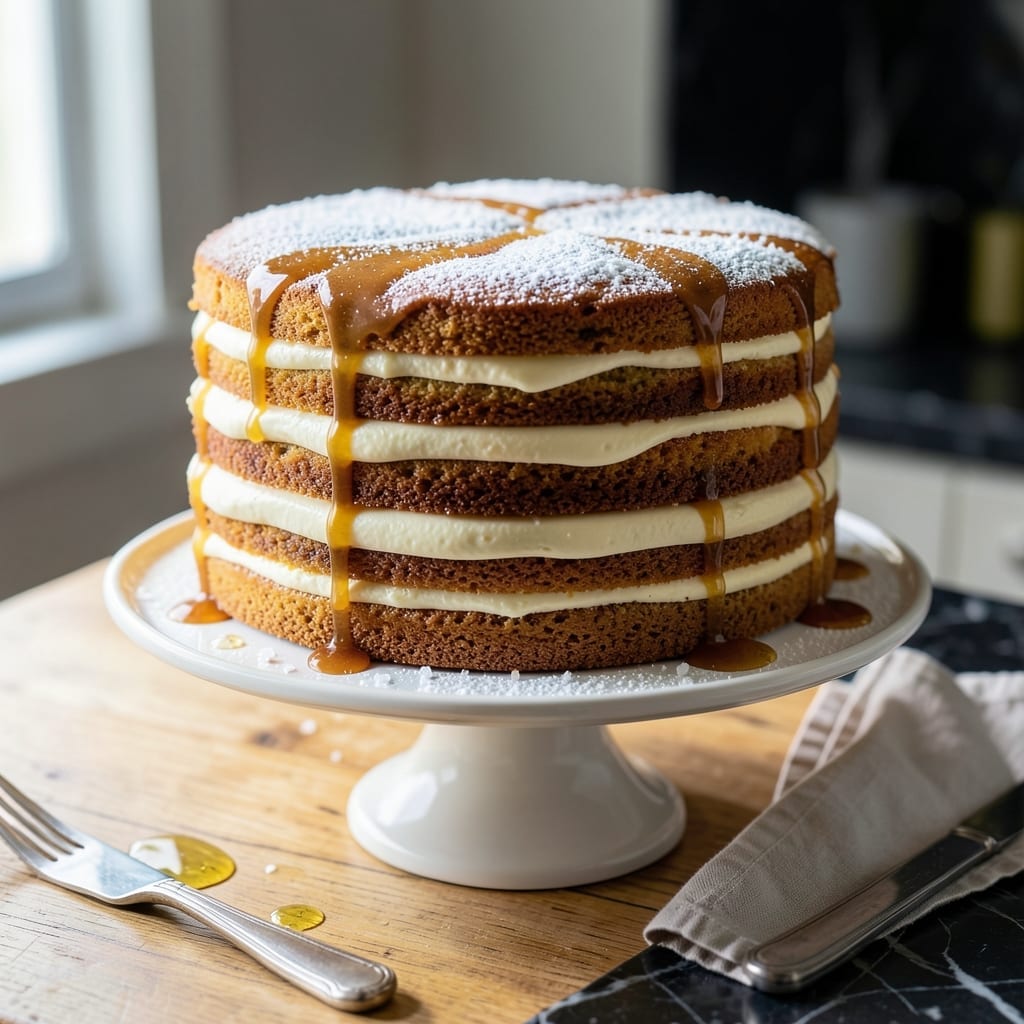
There’s a reason bakeries swear by salted butter—it transforms ordinary cake into something extraordinary. This recipe proves that a simple ingredient choice can elevate flavor without extra effort. The salt enhances sweetness while adding depth that unsalted versions simply can’t match.
What makes this cake special is its balance. The salted butter creates a rich, caramelized base that pairs perfectly with the tender crumb. No complicated techniques are needed—just quality ingredients and precise timing. The result is a moist, flavorful cake that tastes like it came from a professional kitchen.
You’ll notice the difference from the first bite. The butter’s natural saltiness complements the sugar, creating a harmony that’s both comforting and sophisticated. It’s the kind of dessert that impresses without requiring advanced skills.
Perfect for celebrations or a quiet afternoon treat. This is baking at its best.
Ingredients for Cake Recipe with Salted Butter
Quality ingredients elevate this cake with salted butter’s rich, caramelized depth and perfect balance.
| Ingredient | Amount | Notes |
|---|---|---|
| Salted Butter 🧈 | 1 cup | Room temperature for creaming |
| Granulated Sugar 🥄 | 1 ½ cups | Fine white sugar preferred |
| Large Eggs 🥚 | 3 whole | Room temperature for volume |
| All-Purpose Flour 🌾 | 2 cups | Sifted for even texture |
| Baking Powder 🧂 | 2 tsp | Fresh for optimal rise |
| Vanilla Extract 🌿 | 2 tsp | Pure vanilla for best flavor |
| Whole Milk 🥛 | ½ cup | Room temperature for blending |
| Fine Sea Salt 🧂 | ¼ tsp | Adjust to taste with salted butter |
| Unsweetened Cocoa Powder 🍫 | ¼ cup | Optional for chocolate variation |
| Sour Cream 🥣 | ½ cup | Full-fat for moisture and richness |
The salted butter is non-negotiable here—European-style brands like Plugrá or Kerrygold offer superior flavor and fat content. Most grocery stores carry them, but Whole Foods or Trader Joe’s often have the freshest stock. Ensure it’s truly salted; some ‘light’ butters skimp on sodium. Room temperature is critical for proper creaming with sugar—pull it out at least an hour before baking.
Out of salted butter? Unsalted plus 1/4 tsp fine sea salt per stick works in a pinch, but the flavor balance won’t be identical. The sour cream can be swapped with full-fat Greek yogurt for a tangier crumb. For the flour, cake flour at the same volume yields a finer texture, though all-purpose is standard. Always check your baking powder’s expiration—old leaveners lose potency fast.
Baked cakes keep 3-4 days at room temperature in an airtight container, or 1 week refrigerated. For longer storage, wrap slices tightly and freeze for up to 3 months. The salted butter’s richness actually improves flavor after a day—ideal for make-ahead desserts.
Why You’ll Love This Recipe
- One Bowl Wonder: I love that I can mix everything in a single bowl—no fancy equipment, just salted butter, sugar, and eggs beaten together before folding in the flour.
- Rich & Salty Sweetness: The salted butter gives it this deep, caramelized flavor that balances the sugar perfectly, like a grown-up version of classic vanilla cake.
- Birthday Ready: Honestly, it’s my go-to for celebrations, but also just because Tuesdays deserve cake too.
- Budget Friendly: Five basic pantry staples, and I already have them all—no last-minute grocery runs.
Step-by-Step Instructions for Cake With Salted Butter
Master the technique for a moist, tender crumb with rich, balanced flavor in every bite.
Step 1: Cream Butter and Sugar to Aerate
In a stand mixer fitted with the paddle attachment, beat the 1 cup Salted Butter with the 1.5 cups Granulated Sugar on medium speed for 4-5 minutes. The mixture should become pale and noticeably increased in volume—this incorporates air for a light texture.
Scrape the bowl halfway through to ensure even mixing. The salted butter provides depth and enhances the sweetness of the sugar, so resist the urge to reduce the amount. Stop mixing when the combination appears fluffy and leaves ribbons on the bowl’s sides.
Step 2: Incorporate Eggs and Vanilla Gradually
Add the 3 whole Large Eggs one at a time, mixing for 30 seconds after each addition until fully emulsified. Then add the 2 tsp Vanilla Extract and mix for another 15 seconds.
The eggs should be at room temperature to prevent the butter from seizing up. This gradual process builds structure and ensures the batter remains smooth. If the mixture looks curdled, continue mixing—it will come together as the flour is added.
Step 3: Alternate Dry and Wet Ingredients
Whisk together the 2 cups All-Purpose Flour, 2 tsp Baking Powder, and 0.25 tsp Fine Sea Salt in a separate bowl. With the mixer on low, add one-third of the flour mixture to the butter-sugar blend, mixing until just combined.
Pour in half of the 0.5 cup Whole Milk and 0.5 cup Sour Cream, mixing until incorporated. Repeat, ending with the final third of flour. Stop as soon as the last streaks disappear—over-mixing develops gluten, resulting in a dense cake.
Step 4: Fold in Cocoa Powder and Bake
Gently fold in the 0.25 cup Unsweetened Cocoa Powder by hand using a spatula until no streaks remain. This ensures even distribution without overworking the batter. Pour the mixture into a greased and floured 9-inch round pan.
Bake in a preheated 350°F oven for 30-35 minutes, or until a toothpick inserted in the center comes out clean. Rotate the pan halfway through for even browning. The top should spring back lightly when touched.
Let the cake cool in the pan for 10 minutes, then transfer to a wire rack to cool completely before slicing. This prevents crumbling and allows the flavors to meld.
Pro Tips For Making Cake Recipe With Salted Butter
- Room-Temp Butter: Take the salted butter out 1-2 hours before baking—it creams smoother with sugar, and I learned this the hard way after ending up with dense cakes from cold butter.
- Skip Extra Salt: Since you’re using salted butter, taste the batter before adding more salt; I ruined a batch by not accounting for the butter’s saltiness.
- Cream Long Enough: Beat the butter and sugar for a full 3-5 minutes until pale and fluffy—this isn’t the prettiest method, but it’s the only way to get that light, airy crumb.
- Fold Dry Gently: When adding flour, use a spatula and fold just until combined; overmixing develops gluten, and my first few cakes turned out tough because I skipped this.
Essential Equipment for Perfect Results
Mixing Essentials
A stand mixer with paddle attachment is my top pick for creaming butter and sugar evenly. I use my KitchenAid 5-Quart for this—it handles 1 cup salted butter and 1.5 cups sugar without strain. A hand mixer works too, but requires more effort and vigilance.
Baking Pan Choice
For even baking, I swear by a 9-inch round cake pan with 2-inch sides. I prefer Fat Daddio’s anodized aluminum pans—they conduct heat beautifully and release cakes cleanly. Always grease and flour your pan, even if it’s non-stick.
Cooling Rack
A wire cooling rack is non-negotiable for proper airflow. I use a stainless steel rack that fits over my sink for easy cleanup. Cooling the cake completely prevents crumbling when slicing. 💡
Measuring Tools
Accurate measurements matter in baking. I keep a set of stainless steel measuring cups and spoons for dry ingredients. For liquids like 0.5 cup milk, a glass measuring cup with clear markings ensures precision.
Spatula Selection
A silicon spatula is perfect for scraping every bit of batter from the bowl. I love OXO’s heat-resistant spatulas—they’re flexible yet sturdy. The curved edge helps fold in 0.25 cup cocoa powder without overmixing.
Oven Thermometer
Don’t trust your oven’s built-in thermometer. I always use an oven-safe thermometer to verify 350°F. This small tool prevents uneven baking and ensures your cake rises perfectly every time. 🌡️
Nutrition Facts
Frequently Asked Questions
Why use salted butter instead of unsalted?
Salted butter adds depth and enhances sweetness naturally. The salt balances flavors, creating a richer taste without extra effort. European-style brands work best for this recipe.
Can I substitute unsalted butter?
Yes, but add 1/4 tsp fine sea salt per stick to match the flavor. The texture will be similar, though the balance won’t be identical. Always use room temperature butter.
How do I prevent a dense cake?
Avoid overmixing the batter after adding flour. Cream the butter and sugar for 4-5 minutes to incorporate air. Use fresh baking powder for optimal rise.
What’s the best way to store leftovers?
Keep at room temperature in an airtight container for 3-4 days. For longer storage, refrigerate up to 1 week or freeze for 3 months.

- 6 Egg Cake Recipe with Oil: Light as Air With Buttery Moisture - October 4, 2026
- 4 Bean Casserole Recipe: One-Pan Heartiness With Smoky Paprika Depth - October 4, 2026
- 3-Ingredient Keto Mug Cake Recipe: Microwave Magic in 2 Minutes - October 4, 2026