
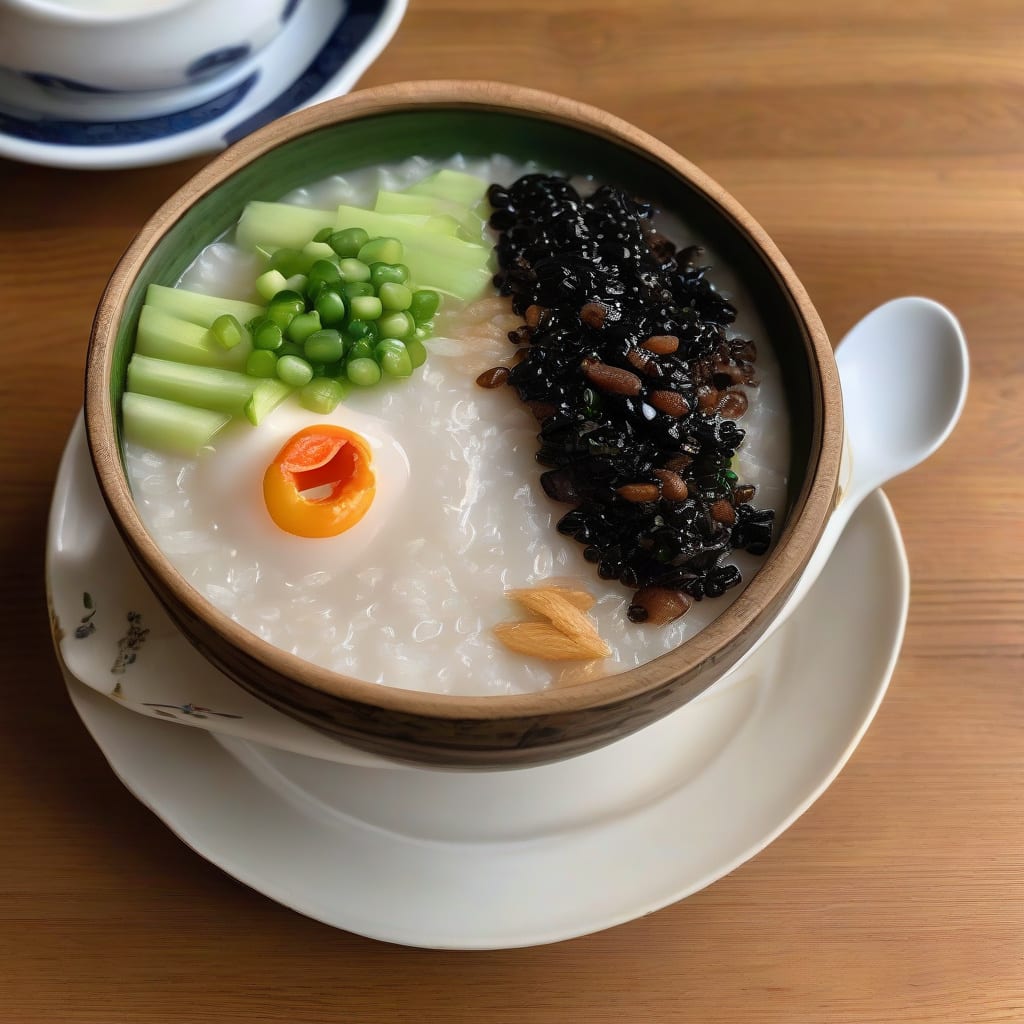
Cantonese congee is a staple comfort food that warms both body and soul. This silky smooth rice porridge is a traditional Cantonese dish that’s both nourishing and easy to digest, making it perfect for any time of day.
By using short-grain rice and a low and slow cooking method, you’ll achieve a creamy, comforting congee that’s rich in texture and flavor. Customize it with your favorite proteins and garnishes for a truly satisfying meal.
Ingredients for Cantonese Congee
Simple, nourishing ingredients come together in this traditional Cantonese comfort food recipe.
| Ingredient | Amount | Notes |
|---|---|---|
| Short-Grain White Rice 🍚 | 1 cup | Uncooked, rinsed thoroughly |
| Chicken Broth 🍜 | 4 cups | Low-sodium preferred |
| Water 💧 | 2 cups | Filtered for best taste |
| Ginger 🧄 | 2 slices | Fresh, peeled, sliced thin |
| Garlic Cloves 🧄 | 2 cloves | Minced, for depth |
| Green Onions 🌿 | ¼ cup | Chopped, for garnish |
| Soy Sauce 🧂 | 2 tbsp | Light or regular variety |
| Sesame Oil 🫒 | 1 tsp | For finishing |
| Salt 🧂 | ½ tsp | Kosher or sea salt |
| White Pepper 🌶️ | ¼ tsp | Freshly ground preferred |
| Cooked Chicken 🍗 | 1 cup | Shredded or diced, optional |
| Century Eggs 🥚 | 2 whole | Diced, optional |
The rice matters here. Short-grain white rice is essential for that creamy texture—don’t substitute with long-grain. Most Asian markets carry it, and some larger supermarkets have it in their international section. For the best flavor, use a good quality chicken broth that’s low in sodium.
No chicken broth? You can substitute with vegetable broth or a mix of water and dashi powder for added depth. Fresh ginger is a must for that authentic flavor, but if you don’t have it, dried ginger powder can work in a pinch. For added protein, shredded chicken or diced century eggs are traditional additions.
This congee reheats beautifully and actually tastes better the next day. Store it in airtight containers in the fridge for up to 5 days. When reheating, add a splash of water or broth to thin it out if needed. You can also freeze portions for up to 3 months.
Why You’ll Love This Recipe
- I’ll be real: this recipe is a total money-saver because it uses affordable ingredients like rice and chicken broth, and it’s perfect for using up leftover rice or veggies.
- Minimal Fuss Cooking: I can throw all the ingredients – Short-Grain White Rice, Chicken Broth, Water, Ginger, and Garlic Cloves – into a pot and let it simmer while I get on with my day.
- Rich, Savory Flavor: The combination of ginger and garlic creates a depth of flavor that’s ridiculously good, and I love how the chicken broth adds a richness to the congee.
- Weeknight Meal Prep: This Cantonese congee recipe is my go-to for busy weeknights because it’s so versatile – I can make a big batch on Sunday and reheat it throughout the week.
Step-by-Step Instructions for Silky Smooth Cantonese Congee
Here’s the method for creating this comforting Cantonese congee – straightforward and effective.
Step 1: Prepare the Rice and Aromatics
Start by rinsing the 1 cup Short-Grain White Rice thoroughly until the water runs clear. I like to rinse it at least three times to remove excess starch, which helps achieve that silky texture we’re after. Once rinsed, drain well and set aside.
Next, prepare your aromatics. You’ll need 2 slices Ginger and 2 cloves Garlic Cloves. I prefer to slice the ginger thinly so it infuses more easily into the congee, while the garlic gets minced to release its full flavor potential. Having these aromatics ready before you start cooking makes the process smoother.
Step 2: Cook the Congee Base
In a large pot, combine the rinsed 1 cup Short-Grain White Rice, 4 cups Chicken Broth, and 2 cups Water. Add the prepared 2 slices Ginger and 2 cloves Garlic Cloves to the pot. Bring the mixture to a boil over high heat, stirring occasionally to prevent the rice from sticking to the bottom.
Once boiling, reduce the heat to low and simmer, covered, for about 1.5 hours, stirring occasionally. You’ll know it’s ready when the rice has broken down and the congee has achieved a smooth, creamy consistency. If you prefer a thicker consistency, you can simmer for another 30 minutes, adding more liquid if needed.
Step 3: Season and Finish the Congee
Once the congee has reached your desired consistency, it’s time to season. Stir in 2 tbsp Soy Sauce, 1 tsp Sesame Oil, 0.5 tsp Salt, and 0.25 tsp White Pepper. I like to add these seasonings towards the end so their flavors remain vibrant and don’t cook off during the long simmering process.
If you’re using 1 cup Cooked Chicken and 2 whole Century Eggs, now’s the time to add them. Gently fold in the cooked chicken and diced century eggs, allowing their flavors to meld with the congee. Cook for an additional 5-10 minutes to heat everything through.
Step 4: Serve with Garnishes
To serve, ladle the congee into bowls and garnish with 0.25 cup Green Onions. I prefer to use freshly chopped green onions for their bright flavor and crunchy texture, which provides a nice contrast to the smooth congee. Serve hot, adjusting the seasoning as needed.
For an extra touch, you can drizzle a bit more Sesame Oil on top or add additional soy sauce to taste. This congee is best enjoyed fresh, but it can be refrigerated and reheated for later use, making it a versatile comfort food option.
Pro Tips For Making Cantonese Congee
- Soak Your Rice: Soaking the short-grain white rice for at least 30 minutes before cooking makes it break down faster and results in a creamier congee. I learned this the hard way—before, my congee was always a bit too grainy.
- Layer Your Flavors: Sauté minced ginger and garlic cloves in a bit of oil before adding the chicken broth and water to release their flavors. This step actually changes the outcome by adding depth to your congee.
- Simmer Slowly: Cooking the congee over low heat and stirring occasionally prevents it from sticking to the bottom of the pot. My grandmother swore by this, and she was right: it makes all the difference in achieving a smooth texture.
- Use Rich Broth: Using high-quality chicken broth instead of just water elevates the dish significantly. I was skeptical until I tried it, and now I always make sure to use a rich, homemade broth for the best flavor.
Common Mistakes When Making Perfect Results
Rice Preparation Mistakes
One common error is not rinsing the short-grain white rice thoroughly enough. I rinse mine at least three times until the water runs clear to remove excess starch. This step is crucial for achieving that silky smooth texture.
Incorrect Cooking Liquid Ratio
Using too little liquid is another mistake that can lead to thick, unpleasant congee. I use a 6:1 liquid-to-rice ratio (4 cups chicken broth and 2 cups water for 1 cup rice) for the perfect consistency.
Improper Heat Control
Cooking congee at too high a heat can cause it to burn or stick to the pot. I always bring it to a boil over high heat, then reduce to low and simmer gently. This low and slow method ensures even cooking.
Skipping Stirring
Not stirring the congee regularly can result in uneven texture and rice sticking to the bottom. I stir mine every 10-15 minutes during the 1.5-hour cooking time to prevent this.
Overcomplicating Seasoning
Some people over-season their congee with too many ingredients. I keep it simple with 2 tbsp soy sauce, 1 tsp sesame oil, 0.5 tsp salt, and 0.25 tsp white pepper. These basic seasonings allow the natural flavors to shine through.
Adding Protein Too Early
If you’re adding protein like cooked chicken or century eggs, do it towards the end. Adding it too early can cause the protein to break down too much and lose its texture. I add mine in the last 5-10 minutes of cooking.
Nutrition Facts
Frequently Asked Questions
What’s the best type of rice for Cantonese congee?
Short-grain white rice is essential for Cantonese congee as it creates a creamy texture. Rinse it thoroughly until the water runs clear to remove excess starch. This helps achieve that silky smooth consistency.
Can I make Cantonese congee without chicken broth?
While chicken broth adds rich flavor, you can substitute it with vegetable broth or water if needed. For added depth, consider using dashi powder mixed with water. The key is to use a flavorful liquid to enhance the congee’s taste.
How do I prevent my congee from becoming too thick?
To maintain the right consistency, use a 6:1 liquid-to-rice ratio and adjust as needed during cooking. If it thickens too much, simply add a bit more broth or water. Stirring regularly during cooking also helps achieve a smooth texture.
Can I add protein to my congee?
Yes, adding protein like cooked chicken or century eggs is traditional. Add these ingredients towards the end of cooking, about 5-10 minutes before serving, to preserve their texture and flavor.

- 6 Egg Cake Recipe with Oil: Light as Air With Buttery Moisture - October 4, 2026
- 4 Bean Casserole Recipe: One-Pan Heartiness With Smoky Paprika Depth - October 4, 2026
- 3-Ingredient Keto Mug Cake Recipe: Microwave Magic in 2 Minutes - October 4, 2026