
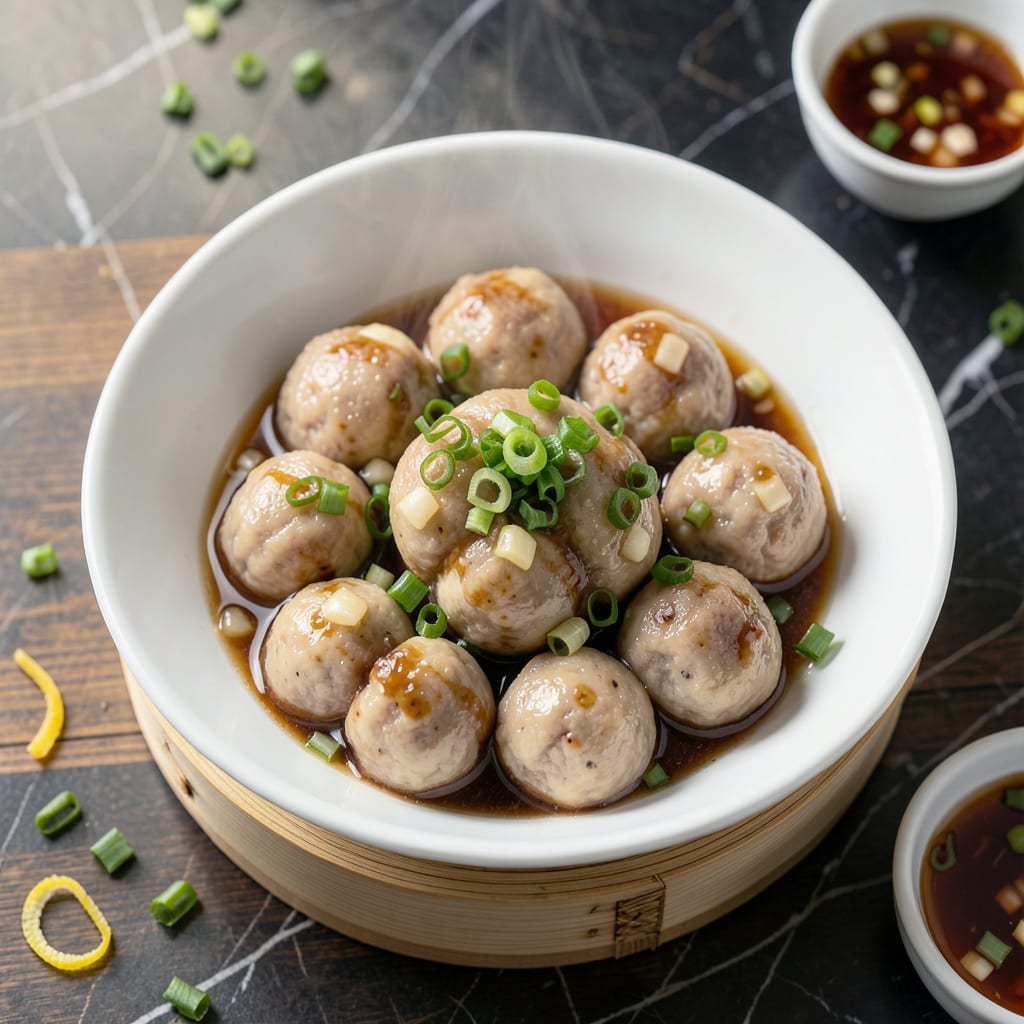
This Cantonese classic delivers airy beef balls with incredible umami depth. The secret lies in proper fat-to-meat ratio and a light touch when shaping.
Steaming transforms the mixture into tender, bouncy spheres that absorb sauce beautifully. The result is a dish that’s both delicate and deeply flavorful.
Ingredients for Cantonese Steamed Beef Balls
Ground meats, aromatics, and binders create these tender, flavorful Cantonese beef balls with perfect texture.
| Ingredient | Amount | Notes |
|---|---|---|
| Ground Beef 🥩 | 1 lb | 80/20 fat ratio for juiciness |
| Ground Pork 🥩 | ½ lb | Adds moisture and tenderness |
| Water Chestnuts 🌰 | ¼ cup | Finely diced for texture |
| Green Onions 🧅 | 3 whole | Finely chopped, white parts only |
| Soy Sauce 🫒 | 2 tbsp | Light or all-purpose variety |
| Oyster Sauce 🫒 | 1 tbsp | Essential for umami depth |
| Sesame Oil 🫒 | 1 tsp | Toasted for aroma |
| White Pepper 🌶️ | ½ tsp | Freshly ground preferred |
| Cornstarch 🌾 | 2 tbsp | For binding and tenderness |
| Baking Soda 🧂 | ½ tsp | Tenderizes the meat |
| Garlic Cloves 🧄 | 2 cloves | Minced for even distribution |
| Ginger Root 🌿 | 1 tbsp | Freshly grated |
| Sugar 🧈 | 1 tsp | Balances savory flavors |
The meat quality is paramount for authentic Cantonese steamed beef balls. Ground chuck with 20% fat provides the ideal fat-to-meat ratio for airy texture. Freshly ground pork from a trusted butcher enhances moisture retention. Water chestnuts, found in Asian markets or the international aisle, add the characteristic crunch. Always select firm water chestnuts without soft spots for optimal texture.
For dietary adaptations, substitute mushroom-based oyster sauce for traditional oyster sauce. Ground chicken or turkey can replace beef with a slight texture difference. White pepper is non-negotiable for authentic flavor, but black pepper works in a pinch (though the flavor profile changes). The cornstarch is essential—do not substitute flour as it lacks the binding properties needed for the proper bounce.
The mixture should be used immediately after combining for best texture. Store uncooked beef balls in the refrigerator for up to 24 hours before steaming. Cooked beef balls keep in the fridge for 3-4 days or freeze for up to 3 months. Reheat by steaming until hot throughout to maintain the delicate texture.
Why You’ll Love This Recipe
- Minimal Effort: I mix the beef, pork, and water chestnuts in one bowl—no fancy techniques, just shape and steam.
- Umami Bomb: The soy sauce soaks into every bite, while the water chestnuts add that perfect crunch.
- Feeds the Crew: I make a double batch for dim sum nights, and the kids devour them before I can blink.
- Stretches Far: A pound of ground meat turns into two meals, and leftovers reheat beautifully for lunch.
Step-by-Step Instructions for Cantonese Steamed Beef Balls
Master the technique for achieving that signature airy texture and delicate bounce with this method.
Step 1: Prepare the Aromatics and Add-Ins
Finely dice the 0.25 cup Water Chestnuts into ⅛-inch pieces for consistent texture throughout. This adds the characteristic crunch that contrasts beautifully with the tender meat. Finely chop the white parts of the 3 whole Green Onions, ensuring no large pieces remain.
Mince the 2 cloves Garlic Cloves and freshly grate the 1 tbsp Ginger Root. The ginger should yield about 1 tablespoon of grated pulp. These aromatics form the flavor base that defines the dish’s authentic profile.
Step 2: Combine and Mix the Meat Mixture
In a large mixing bowl, combine the 1 lb Ground Beef and 0.5 lb Ground Pork. The pork fat is essential for moisture retention during steaming. Add the diced water chestnuts, green onions, garlic, and ginger to the bowl.
In a small bowl, whisk together the 2 tbsp Soy Sauce, 1 tbsp Oyster Sauce, 1 tsp Sesame Oil, 0.5 tsp White Pepper, 1 tsp Sugar, 2 tbsp Cornstarch, and 0.5 tsp Baking Soda. The baking soda is critical—it raises the pH of the meat, resulting in that coveted bouncy texture.
Pour the liquid mixture over the meat and add-ins. Using your hands or a fork, mix vigorously in one direction for 5-7 minutes until the mixture becomes sticky and slightly elastic. You’ll notice the texture transform from loose to cohesive as the proteins develop.
Step 3: Shape the Beef Balls
Wet your hands with cold water to prevent sticking. Scoop about 1.5 tablespoons of the mixture and roll it between your palms to form a smooth ball. The mixture should hold together easily—if it doesn’t, mix for another 1-2 minutes to develop more binding.
Arrange the balls on a plate, spacing them apart to prevent sticking. For uniform cooking, aim for 16-18 balls total, which will yield 4 servings of about 4-5 pieces each. Cover with plastic wrap and refrigerate for 15 minutes to firm up before steaming.
Step 4: Steam to Perfection
Line a steamer basket with parchment paper or cabbage leaves to prevent sticking. Poke small holes in the parchment to allow steam circulation. Bring 2 inches of water to a rolling boil in a pot that fits your steamer.
Place the beef balls in the steamer, leaving 1 inch of space between each. Cover with the lid and steam over high heat for 12-15 minutes. The balls are done when they’ve expanded slightly and reach an internal temperature of 160°F. They should appear matte rather than shiny, with a firm yet springy texture.
Turn off the heat and let them rest in the steamer with the lid on for 2 minutes. This final rest allows the internal temperature to equalize and the texture to set completely before serving.
Pro Tips For Making Cantonese Steamed Beef Balls
- Chill the Mixture: After mixing the beef, pork, and water chestnuts, refrigerate for at least 30 minutes—I learned this the hard way when my first batch fell apart in the steamer.
- Finely Dice Water Chestnuts: Chop them smaller than you think, almost to a minced texture, so they blend seamlessly into the meatballs without breaking the tender texture.
- Skip Overpacking: Resist the urge to press the mixture too tightly when forming balls; a gentle touch keeps them light and fluffy after steaming.
- Use Parchment Paper: Line your steamer with parchment paper and poke a few holes in it—this prevents sticking and makes cleanup a breeze.
Storing and Reheating cantonese steamed beef balls
Refrigerator Storage
Let your beef balls cool for no more than 2 hours before transferring to an airtight container. Store in the fridge at 40°F or below for up to 3-4 days. The flavors deepen as they rest, making leftovers even more delicious. ❄️
Freezer Storage
For longer storage, freeze cooked beef balls in a single layer on a tray first. Once frozen, transfer to freezer bags for up to 3 months. I recommend quart-sized bags for portion control. Leave ½ inch headspace to prevent freezer burn.
Steaming Reheating
This is the best method to maintain texture. Steam frozen beef balls directly from the freezer for 10-12 minutes. For refrigerated ones, 6-8 minutes brings them back to perfect temperature. Add 1 tbsp water to the steamer to prevent drying.
Microwave Reheating
Place beef balls on a microwave-safe plate with a damp paper towel cover. Heat on 70% power for 1-2 minutes, flipping halfway. This prevents rubbery texture while warming through. 🔥
Sauce Pairing Tip
Reheat with a splash of the original steaming liquid or 2 tbsp soy sauce to refresh moisture. I always keep a small container of the cooking liquid for this purpose. The beef balls will absorb the extra flavor beautifully.
Nutrition Facts
Frequently Asked Questions
Why does the recipe use both beef and pork?
The pork adds essential fat for moisture and tenderness during steaming. Using only beef can result in dry, dense balls. The 80/20 beef-to-pork ratio creates the perfect airy texture.
Can I skip the baking soda?
No, it’s critical for the signature bounce. Baking soda raises the meat’s pH, helping it retain moisture and develop that springy texture. Without it, your balls may turn out tough.
How do I prevent them from falling apart?
Mix the meat vigorously for 5-7 minutes until sticky and elastic. Also, chill shaped balls for 15 minutes before steaming. This helps the proteins bind properly.
What if I don’t have a steamer?
Use a heatproof colander or sieve over a pot of boiling water. Line it with parchment paper and ensure the bottom doesn’t touch the water. Cover tightly with a lid.

- 6 Egg Cake Recipe with Oil: Light as Air With Buttery Moisture - October 4, 2026
- 4 Bean Casserole Recipe: One-Pan Heartiness With Smoky Paprika Depth - October 4, 2026
- 3-Ingredient Keto Mug Cake Recipe: Microwave Magic in 2 Minutes - October 4, 2026