
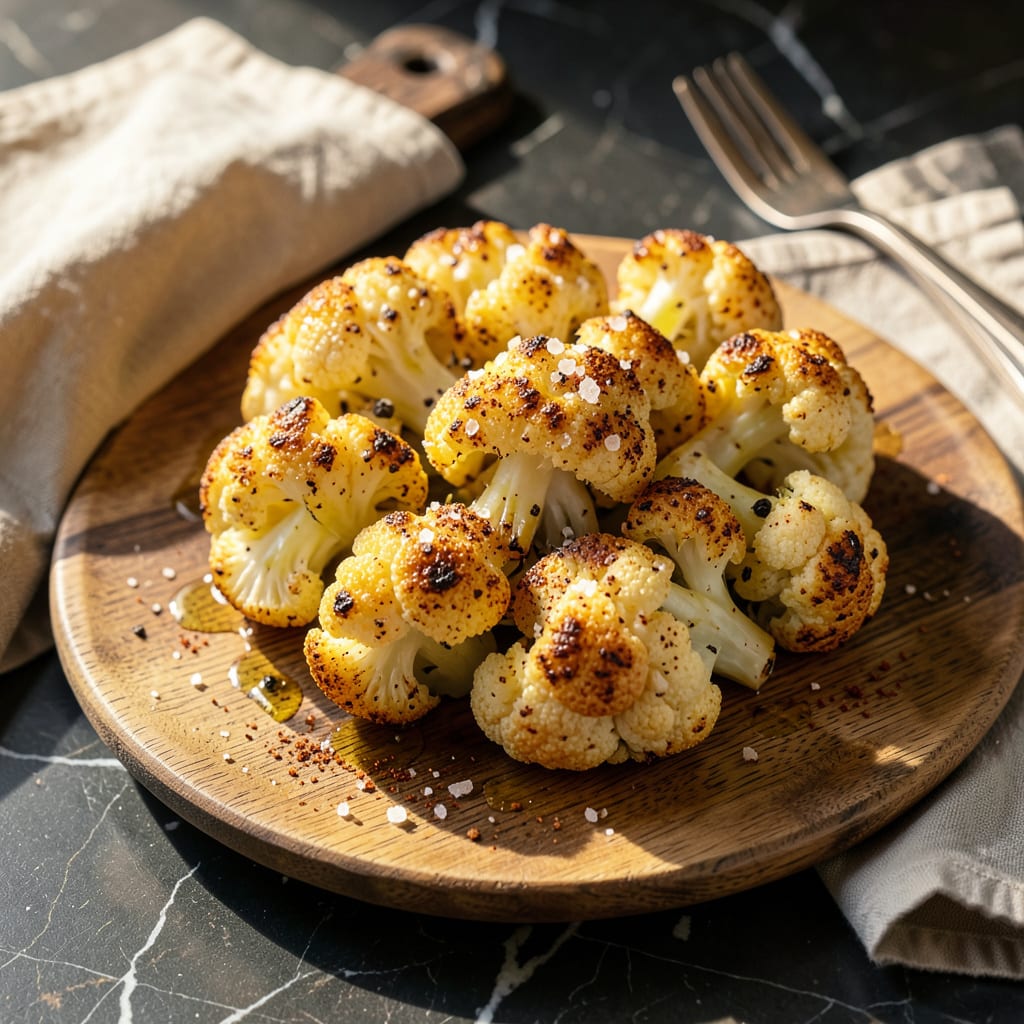
Roasting cauliflower transforms this humble vegetable into a dish with crispy, caramelized edges and tender centers—all with minimal hands-on time. This method delivers professional results without complicated techniques, making it ideal for busy weeknights or elegant side dishes.
The key lies in high-heat roasting at 425°F, which creates that coveted golden-brown exterior while keeping the florets tender. A simple blend of olive oil, salt, and garlic powder enhances the natural sweetness, proving that extraordinary flavor doesn’t require elaborate preparation.
Ingredients for Cauliflower Oven
Professional-quality roasted cauliflower requires just eleven ingredients, emphasizing texture and caramelization through precise technique.
| Ingredient | Amount | Notes |
|---|---|---|
| Cauliflower 🥦 | 1 whole | Cut into even 1.5-inch florets |
| Extra-virgin olive oil 🫒 | 3 tbsp | Divided for coating and drizzling |
| Garlic powder 🧄 | 1 ½ tsp | Freshly ground preferred |
| Smoked paprika 🌶️ | 1 tsp | For depth and color |
| Diamond Crystal kosher salt 🧂 | 1 tsp | Plus additional to taste |
| Freshly ground black pepper 🌶️ | ½ tsp | Coarse grind recommended |
| Onion powder 🧅 | 1 tsp | Balances sweetness |
| Lemon zest 🍋 | 1 tsp | From 1 medium lemon |
| Fresh flat-leaf parsley 🌿 | ¼ cup | Finely chopped for garnish |
| Nutritional yeast 🧀 | 2 tbsp | For umami depth (optional) |
| Cayenne pepper 🔥 | ¼ tsp | Adjust for heat preference |
The cauliflower quality directly impacts final texture. Select firm, unblemished heads with tight florets—avoid pre-cut varieties, as they dry out during roasting. Extra-virgin olive oil should be high-quality (California Olive Ranch or Colavita recommended) for optimal caramelization. Diamond Crystal kosher salt is specified for its clean flavor and precise measurement; table salt would require half the quantity by volume.
Smoked paprika substitutions alter the profile significantly. Sweet paprika lacks depth, while chipotle powder adds smokiness with heat. For onion powder, granulated onion works at double the volume. Nutritional yeast may be omitted, but it contributes essential umami—vegan Parmesan (like Follow Your Heart brand) offers similar functionality. Fresh parsley is non-negotiable for brightness; dried cannot replicate the fresh, grassy finish.
Prepared cauliflower stores well. Roasted florets maintain texture refrigerated in an airtight container for 3-4 days, though crispness diminishes. Reheat at 375°F for 8-10 minutes to restore some texture. The spice blend (excluding fresh ingredients) keeps in a cool, dark pantry for 6 months. For meal prep, roast florets in advance but add lemon zest and parsley immediately before serving to preserve vibrant flavors.
Why You’ll Love This Recipe
- One Sheet Pan: I toss the cauliflower florets with olive oil and spices right on the pan—no extra bowls, no mess. Cleanup is just a quick rinse while the cauliflower roasts, and honestly, that’s half the battle on busy nights.
- Smoky, Garlicky Crunch: The smoked paprika and garlic powder turn plain cauliflower into something ridiculously good—crispy edges, tender centers, and that deep, savory flavor that makes you forget it’s a vegetable. I’ve caught my husband sneaking bites straight from the pan.
- Meal Prep MVP: Roast a double batch on Sunday, and you’ve got sides for lunches, a topping for grain bowls, or even a quick snack. It reheats surprisingly well (400°F for 5 minutes to crisp it back up), which is rare for roasted veggies.
- Budget-Friendly Flex: A single head of cauliflower costs less than takeout and stretches further than you’d think. I’ve served it as a weeknight side, a party appetizer with dip, and even chopped into “rice” the next day—no waste, just flavor.
Step-by-Step Instructions for Cauliflower Oven Recipe
This method delivers perfectly crispy, golden florets with minimal hands-on preparation.
Step 1: Prepare the Cauliflower Florets
Begin by cutting the cauliflower into even 1.5-inch florets. I prefer this size because it ensures uniform cooking—smaller pieces would burn before caramelizing, while larger ones might not crisp properly. Use a sharp chef’s knife and cut through the stem to maintain the floret’s integrity.
Transfer the florets to a large mixing bowl. The key here is consistency—each piece should be roughly the same size to cook evenly. Discard any loose leaves or thick stems, as they won’t crisp like the florets will.
Step 2: Season and Coat the Cauliflower
Drizzle 2 tablespoons of the extra-virgin olive oil over the florets, then add the garlic powder, smoked paprika, Diamond Crystal kosher salt, black pepper, onion powder, lemon zest, nutritional yeast, and cayenne pepper. The nutritional yeast adds a subtle umami depth that complements the smoky paprika beautifully.
Toss everything together until the florets are evenly coated. I like to use my hands for this step—it allows me to ensure every surface is covered with the seasoning mixture. The florets should glisten with oil but not be dripping wet, which would prevent proper crisping.
Step 3: Roast at High Heat
Preheat your oven to 425°F and arrange the seasoned florets in a single layer on a rimmed baking sheet. Crowding the pan will cause the florets to steam rather than roast, so use two pans if necessary. Drizzle the remaining 1 tablespoon of extra-virgin olive oil over the top.
Roast for 20-25 minutes, then carefully flip each floret using tongs. Return to the oven and roast for another 15-20 minutes until the edges are deep golden brown and crispy. The florets should be tender when pierced with a fork but maintain their shape.
Step 4: Finish and Serve
Remove the cauliflower from the oven and immediately sprinkle with the finely chopped flat-leaf parsley. The residual heat will gently wilt the parsley, releasing its fresh aroma without losing its vibrant green color. Taste and adjust seasoning with additional Diamond Crystal kosher salt if needed.
Transfer to a serving platter while still hot. The contrast between the crispy exterior and tender interior is most pronounced when served immediately. For best results, enjoy within 10 minutes of removing from the oven, as the florets will gradually lose their crispness as they cool.
Troubleshooting cauliflower oven
Uneven Browning Issues
If your cauliflower florets are browning unevenly, the most likely culprit is inconsistent sizing. I always double-check that my 1.5-inch florets are uniform before roasting. Another common issue is oven hot spots—rotate your baking sheet halfway through cooking to ensure even exposure to heat. 🌡️
For stubborn cases, try moving florets from the outer edges toward the center of the pan where heat is more consistent. I’ve found that parchment paper can sometimes insulate too much, so I prefer bare metal pans for better heat conduction and browning.
Soggy Instead of Crispy
Sogginess usually means there was too much moisture during roasting. First, make sure your florets are completely dry after washing—pat them with paper towels or let them air-dry for 10 minutes before seasoning. Overcrowding is another culprit; use two pans if needed to give each floret space.
If you’re still struggling, try increasing the oven temperature to 450°F for the last 5 minutes of cooking. This final blast helps drive off any remaining moisture and creates that perfect crispy texture we’re after.
Burnt Before Cooking Through
When florets burn on the outside but remain raw inside, your oven is likely running too hot. Invest in an oven thermometer (I use the Taylor Precision model) to verify the actual temperature—many home ovens run 25-50°F hotter than their dial indicates. If confirmed, reduce heat to 400°F and extend cooking time by 5-7 minutes.
Another trick: place the baking sheet on the middle rack rather than the top position. This provides more gentle, even heat distribution while still allowing for good browning.
Seasoning Not Sticking
If your spices are sliding off during roasting, the issue is usually insufficient oil. I recommend tossing the florets with 1 additional tablespoon of olive oil beyond what the recipe calls for. The oil acts as a glue that helps the seasonings adhere during the high-heat cooking process.
For extra insurance, let the seasoned florets sit for 5 minutes before roasting. This brief rest allows the spices to absorb slightly into the oil coating, creating better adhesion during cooking.
Lacking Flavor Depth
When the roasted cauliflower tastes flat, it often needs more salt or acid. I always taste before serving and adjust with either additional Diamond Crystal kosher salt (start with ¼ teaspoon) or a squeeze of fresh lemon juice. The lemon brightens all the flavors beautifully.
For next time, consider adding ½ teaspoon of cumin to the spice blend or finishing with grated Parmesan (if not keeping it vegan). These small additions create layers of flavor that make the dish truly memorable. 💫
Leftovers Lost Crispness
Reheating roasted cauliflower requires strategy to revive that coveted texture. I spread leftovers on a baking sheet and reheat at 375°F for 8-10 minutes rather than microwaving. The dry heat helps restore some crispness to the edges while warming through.
For meal prep, store cooked florets in a single layer in the fridge (not stacked) and reheat only what you’ll eat immediately. The parsley garnish is best added fresh after reheating to maintain its vibrant color and flavor.
Nutrition Facts

- 6 Egg Cake Recipe with Oil: Light as Air With Buttery Moisture - October 4, 2026
- 4 Bean Casserole Recipe: One-Pan Heartiness With Smoky Paprika Depth - October 4, 2026
- 3-Ingredient Keto Mug Cake Recipe: Microwave Magic in 2 Minutes - October 4, 2026