
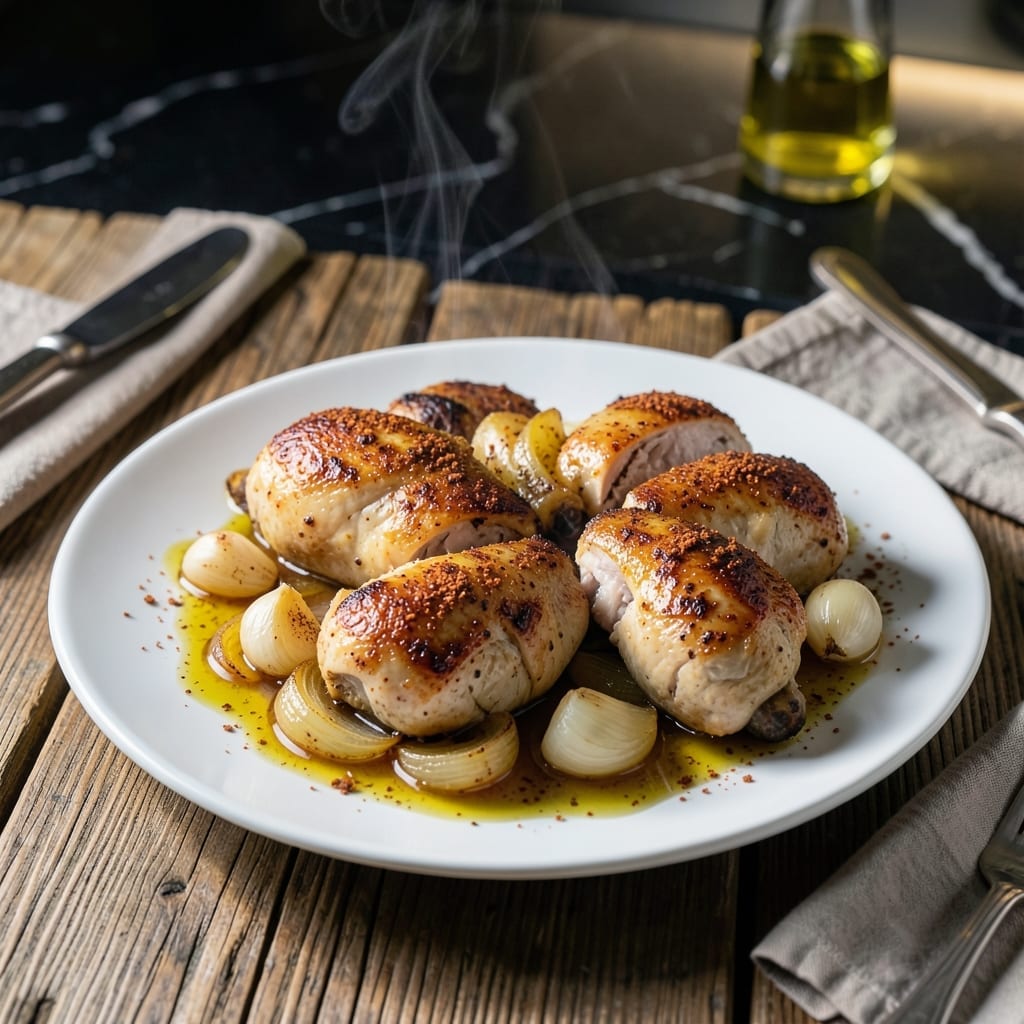
Spanish-style chicken braised in cava delivers a dish that balances elegance with simplicity. This method transforms ordinary ingredients into something extraordinary through the magic of sparkling wine.
The cava adds a bright, effervescent note that tenderizes the chicken while building layers of depth in the sauce. It’s a foolproof technique that yields restaurant-quality results without complicated steps.
By the end, you’ll have tender chicken in a velvety, aromatic sauce that’s rich yet refined. The wine’s acidity cuts through the richness, creating a harmonious bite every time.
Perfect for a dinner party or a special weeknight meal. Let’s begin.
Ingredients for Cava Chicken Recipe 7 Steps to an Amazing
Elevated yet approachable ingredients create this Spanish-inspired braised chicken with sparkling depth.
| Ingredient | Amount | Notes |
|---|---|---|
| Chicken Thighs 🍗 | 2 lb | Boneless, skin-on preferred |
| Dry Cava 🍾 | 1 ½ cups | Spanish sparkling wine |
| Olive Oil 🫒 | 2 tbsp | Extra-virgin for depth |
| Yellow Onion 🧅 | 1 whole | Medium, finely diced |
| Garlic Cloves 🧄 | 6 cloves | Minced for aromatic base |
| Smoked Paprika 🌶️ | 1 tsp | Spanish variety preferred |
| Dried Oregano 🍃 | 1 tsp | Mediterranean blend ideal |
| Bay Leaves 🌿 | 2 whole | Dried, for infusion |
| Chicken Stock 🥣 | 1 cup | Low-sodium preferred |
| Tomato Paste 🍅 | 2 tbsp | Concentrated for richness |
| Green Olives 🫒 | ½ cup | Pitted, sliced |
| Fresh Parsley 🌿 | ¼ cup | Chopped, for garnish |
| Kosher Salt 🧂 | 1 ½ tsp | Diamond Crystal brand ideal |
| Black Pepper 🌶️ | 1 tsp | Freshly ground preferred |
The cava is non-negotiable for authentic flavor. Freixenet or Codorníu are widely available and perfect for cooking—save the expensive bottles for toasting. Chicken thighs (bone-in adds richness) should have golden, crispy skin before braising. For the olives, manzanilla from a jar works fine—just rinse off excess brine. Smoked paprika must be Spanish; the American stuff lacks depth.
No cava? Dry prosecco or champagne work in a pinch but lack the nutty complexity. Chicken breasts can substitute (reduce cooking time by half) but won’t be as succulent. Fresh oregano at one-third the amount if you’re lucky enough to find it. Tomato paste in tubes (Amoretti brand) lets you use just what you need without waste. Skip pre-minced garlic—it’s bitter.
Braised dishes improve overnight. Store in an airtight container for up to 4 days in the fridge or freeze for 3 months. Reheat gently to preserve the sauce’s velvety texture. The olives and parsley garnish are best added fresh when serving.
Why You’ll Love This Recipe
- 7 Steps Only: I love that this comes together in just seven simple moves—no complicated techniques, just layering chicken thighs with cava, garlic, and onions.
- Cava’s Secret Punch: The dry cava does something magical, cutting through the richness of the chicken while the garlic and onions mellow into this deep, savory sauce.
- Weeknight Winner: Honestly, it’s my go-to for busy evenings when I need something that feels special but doesn’t demand all night in the kitchen.
- Leftovers? Even Better: Between us, the flavors taste even richer the next day, and it reheats like a dream for lunch the following afternoon.
Step-by-Step Instructions for Spanish-Style Wine Braised Chicken
This refined method delivers tender chicken with a complex, wine-infused sauce every time.
Step 1: Sear the Chicken Thighs
Pat the 2 lb Chicken Thighs dry with paper towels—this ensures proper browning. Season both sides generously with the 1.5 tsp Kosher Salt and 1 tsp Black Pepper. Heat the 2 tbsp Olive Oil in a large, heavy Dutch oven over medium-high heat until shimmering.
Add the chicken thighs skin-side down and sear undisturbed for 5-6 minutes until the skin is deep golden brown and crisp. Flip and sear the other side for 3-4 minutes until equally browned. Remove the chicken to a plate and set aside.
Step 2: Build the Aromatic Base
In the same pot, add the finely diced 1 whole Yellow Onion. Cook over medium heat for 4-5 minutes, stirring occasionally, until the onion softens and turns translucent. Add the 6 cloves Garlic Cloves and cook for 30 seconds until fragrant.
Stir in the 1 tsp Smoked Paprika, 1 tsp Dried Oregano, and 2 tbsp Tomato Paste. Cook for 1-2 minutes, stirring constantly, until the tomato paste darkens slightly. This step deepens the flavor base and prevents a raw tomato taste.
Step 3: Deglaze and Braise
Pour in the 1.5 cups Dry Cava and scrape up any browned bits from the bottom of the pot with a wooden spoon. Add the 2 whole Bay Leaves and 1 cup Chicken Stock. Bring the mixture to a gentle simmer over medium heat.
Return the chicken thighs to the pot, skin-side up, along with any accumulated juices. Add the 0.5 cup Green Olives. The liquid should mostly cover the chicken—if not, add a splash more stock. Reduce the heat to low, cover, and simmer gently for 35-40 minutes.
Step 4: Reduce and Finish
Remove the lid and simmer for an additional 10-15 minutes until the sauce has thickened slightly and the chicken is fork-tender. The sauce should coat the back of a spoon but still be pourable. Discard the bay leaves.
Taste and adjust seasoning if needed, though the olives and cava should provide ample saltiness. The chicken is done when it reaches an internal temperature of 165°F and the sauce has reduced to a rich, velvety consistency.
Step 5: Rest and Garnish
Transfer the chicken to a serving platter. Spoon the sauce and olives over the top. Let the dish rest for 5 minutes to allow the flavors to meld. This brief rest ensures the chicken reabsorbs some of its juices.
Garnish with the 0.25 cup Fresh Parsley just before serving. The parsley adds a fresh contrast to the deep, wine-infused flavors. Serve hot with crusty bread or over mashed potatoes to soak up the luxurious sauce.
Pro Tips For Making Cava Chicken Recipe 7 Steps To An Amazing
- Brown the Thighs: Get a deep golden sear on the chicken thighs first—about 4-5 minutes per side in hot olive oil. I learned this the hard way when my first batch turned out pale and bland.
- Deglaze with Cava: After removing the chicken, pour in the dry cava immediately to scrape up all those browned bits from the pan. Sounds weird, but it works—this builds the base of your sauce.
- Skip the Skinless: Use bone-in, skin-on thighs for richer flavor and juicier meat. My grandmother swore by this, and she was right: skinless just doesn’t hold up as well in the cava sauce.
- Simmer Low and Slow: Once the chicken’s back in the pan, keep the heat at a gentle simmer for about 20 minutes. After burning three batches, I finally figured out that high heat turns the cava bitter.
Flavor Customization for cava chicken recipe 7 steps to an amazing
Spice It Up
For heat lovers, add ½ tsp cayenne pepper with the paprika and oregano. This brings a subtle warmth that complements the cava’s brightness without overpowering the dish. I love how it balances the richness of the chicken.
Citrus Twist
Stir in 1 tbsp lemon zest and 2 tbsp lemon juice at the end for a vibrant, zesty finish. The acidity enhances the wine’s effervescence and cuts through the dish’s depth. It’s a simple addition that makes a big difference.
Herb Variations
Swap the oregano for 1 tsp fresh thyme or 1 tsp rosemary for a different aromatic profile. Thyme adds earthiness, while rosemary brings a piney note. Both pair beautifully with the cava and olives. 🌿
Sweet Addition
Add ½ cup raisins or ¼ cup honey with the olives for a touch of sweetness. This Spanish-inspired twist creates a sweet-savory balance that’s both unexpected and delightful. I find it especially appealing in cooler months.
Creamy Finish
Stir in ¼ cup heavy cream or 2 tbsp crème fraîche at the end for a velvety texture. This adds a luxurious mouthfeel, though it slightly mutes the cava’s acidity. Perfect for those who prefer a richer sauce.
Extra Umami
Boost depth with 1 tbsp soy sauce or 1 anchovy fillet melted into the sauce. It enhances the savory notes without making the dish taste fishy or Asian-inspired. A chef’s trick I swear by! 💡
Nutrition Facts
Frequently Asked Questions
Can I use prosecco instead of cava?
Yes, dry prosecco works in a pinch, though cava’s nutty complexity is ideal. Avoid sweet sparkling wines as they’ll make the dish cloying. Stick to 1.5 cups for the best balance.
Why sear the chicken skin first?
Searing renders fat and creates a golden, crispy skin that locks in juices. It also builds fond (browned bits) for a deeper, richer sauce. Skip this, and you’ll miss layers of flavor.
How do I know when the chicken is done?
The chicken is ready when it reaches 165°F internally and the sauce thickens enough to coat a spoon. If unsure, pierce a thigh—the juices should run clear, not pink.
Can I make this ahead of time?
The flavors improve overnight. Store in an airtight container for up to 4 days in the fridge or freeze for 3 months. Reheat gently to preserve the sauce.

- 6 Egg Cake Recipe with Oil: Light as Air With Buttery Moisture - October 4, 2026
- 4 Bean Casserole Recipe: One-Pan Heartiness With Smoky Paprika Depth - October 4, 2026
- 3-Ingredient Keto Mug Cake Recipe: Microwave Magic in 2 Minutes - October 4, 2026