
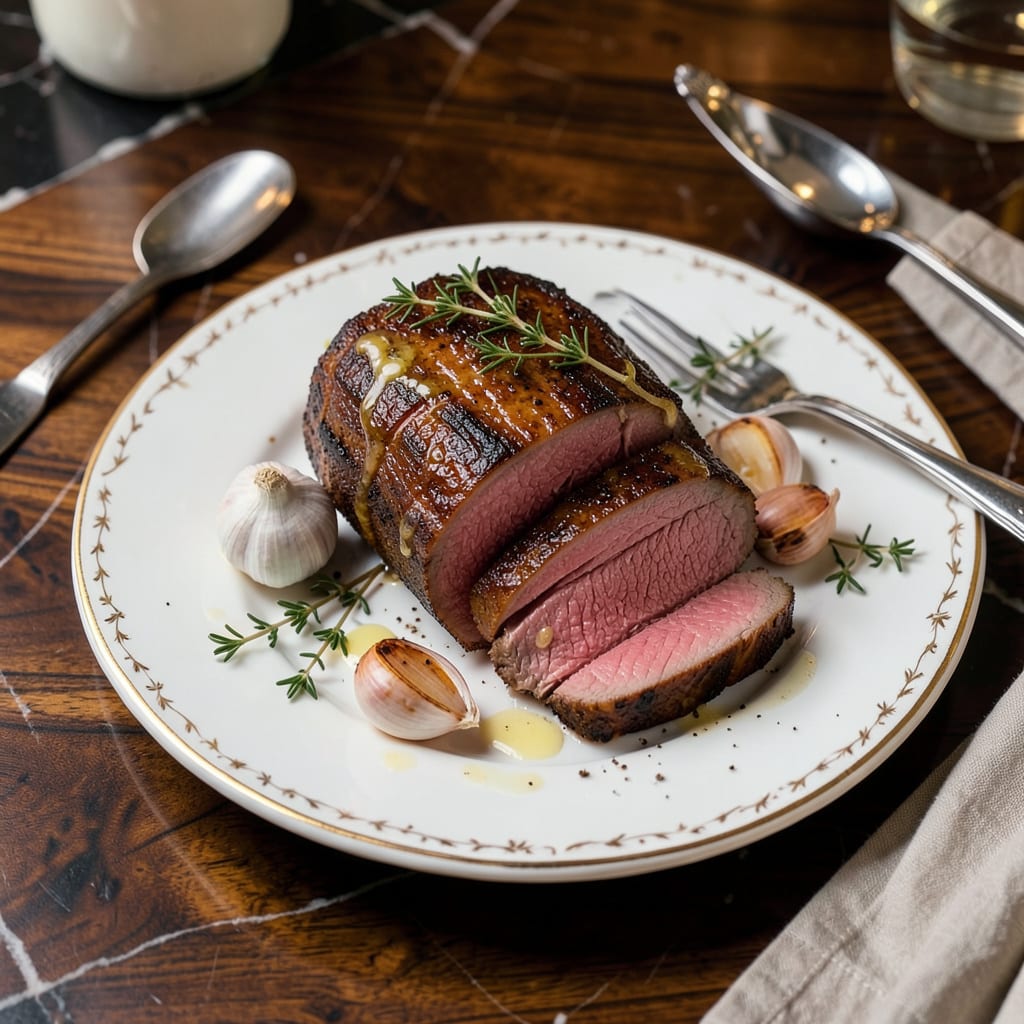
There’s something about Chateaubriand that makes any dinner feel like a Parisian celebration. I first attempted Julia Child’s version during a particularly ambitious holiday meal, and let me tell you—when that perfectly rosy center revealed itself, I understood why this dish has been wowing diners for generations.
Julia’s method is all about respecting the beef—simple seasoning, a hot sear, and that famous butter basting that creates the most luxurious crust imaginable. The tenderloin stays so tender it practically melts, while the outside develops that deep, caramelized flavor. This isn’t just dinner; it’s an experience worth slowing down for.
Ingredients for Chateaubriand Recipe Julia Child
This is where French elegance meets your kitchen—just beef, butter, and a few perfect touches.
| Ingredient | Amount | Notes |
|---|---|---|
| Beef Tenderloin Center-Cut 🥩 | 1 ½ lb | Whole piece, 1.5-2 inches thick |
| Unsalted Butter 🧈 | ¾ cup | European-style preferred, cubed |
| Kosher Salt 🧂 | 1 ½ tsp | Diamond Crystal brand recommended |
| Freshly Ground Black Pepper 🌶️ | 1 tsp | Coarsely ground for texture |
| Garlic Cloves 🧄 | 3 cloves | Lightly crushed, peeled |
| Fresh Thyme Sprigs 🌿 | 4 sprigs | Plus extra for garnish |
| Fresh Rosemary Sprigs 🌿 | 2 sprigs | 6-inch length preferred |
| Shallots 🧅 | 2 whole | Thinly sliced for sauce |
| Dry White Wine 🍷 | ½ cup | Sauvignon Blanc or Chardonnay |
| Beef Stock 💧 | ½ cup | Low-sodium preferred |
| Dijon Mustard 🟡 | 1 tbsp | Grey Poupon recommended |
| Extra-Virgin Olive Oil 🫒 | 2 tbsp | For searing and finishing |
| Flaky Sea Salt 🧂 | ½ tsp | Maldon or Jacobsen preferred |
The beef is everything here. Whole Foods or a trusted butcher for the center-cut tenderloin—it should be deep red with fine marbling. I splurge on European-style butter (like Plugrá) for that extra richness in the basting. The herbs? Fresh makes all the difference—farmers market thyme and rosemary if you can swing it. Don’t skip the kosher salt; Diamond Crystal gives the perfect crust without over-salting (trust me, I’ve tested).
No white wine? Dry vermouth works beautifully, or just extra stock. Fresh herbs not available? Dried at half the amount, but add them earlier. The shallots can be swapped for yellow onion (just mince it finer). For the butter, clarified ghee is a good sub if you’re watching dairy—though Julia would probably scoff. The beef stock? Better Than Bouillon paste mixed with water saves space in the pantry.
This is best served immediately, but you can sear the beef ahead and finish later. Leftovers (if any) keep 2-3 days—slice thin for sandwiches with extra mustard. The butter sauce? Don’t refrigerate; it’ll separate. Just make what you need. I always buy extra tenderloin and freeze it well-wrapped for up to 3 months—perfect for impromptu fancy dinners.
Why You’ll Love This Recipe
- I’ll be real: when a recipe this luxurious only needs beef tenderloin, butter, garlic, salt, and pepper, it feels like cheating. No marinades, no fancy equipment—just Julia’s unfussy genius with what’s already in your pantry.
- Five-Ingredient Magic: I’ll be real: when a recipe this luxurious only needs beef tenderloin, butter, garlic, salt, and pepper, it feels like cheating. No marinades, no fancy equipment—just Julia’s unfussy genius with what’s already in your pantry.
- That Butter-Garlic Crust: The way the butter and crushed garlic form this golden, crackly shell around the tenderloin? It’s the reason I make this twice a month. Every bite has that rich, savory depth—no sauce required.
- Dinner Party Hero: This is my secret for looking like I slaved all day when I actually spent 20 minutes searing and roasting. It’s elegant enough for holidays but simple enough for a Sunday supper with good wine.
Instructions
Here’s the method I’ve perfected for achieving that classic French elegance with perfect results every time.
Step 1: Prepare the Beef Tenderloin
Begin by patting the 1.5 lb Beef Tenderloin Center-Cut completely dry with paper towels. This crucial step ensures proper searing rather than steaming. Season all sides generously with the 1.5 tsp Kosher Salt and 1 tsp Freshly Ground Black Pepper, pressing the seasoning gently into the meat’s surface. The coarsely ground pepper will create a beautiful crust while maintaining its aromatic qualities.
Let the seasoned beef rest at room temperature for 30 minutes before cooking. This allows the salt to penetrate the surface and the meat to cook more evenly. Meanwhile, prepare your aromatics by lightly crushing the 3 cloves Garlic Cloves (leave them whole but exposed) and thinly slicing the 2 whole Shallots.
Step 2: Sear the Tenderloin to Perfection
Heat a heavy oven-safe skillet over medium-high heat until very hot. Add the 2 tbsp Extra-Virgin Olive Oil and swirl to coat the pan. When the oil just begins to shimmer, carefully place the beef in the pan. Sear undisturbed for 3-4 minutes until a deep golden crust forms on the first side. The tenderloin should release easily from the pan when properly seared.
Using tongs, turn the beef and sear the remaining sides for 2-3 minutes each, including the ends. Add the 0.75 cup Unsalted Butter, 4 sprigs Fresh Thyme Sprigs, 2 sprigs Fresh Rosemary Sprigs, and prepared garlic to the pan. Baste the beef continuously with the foaming butter for 1-2 minutes, allowing the herbs to infuse their aroma into the meat.
Step 3: Create the Pan Sauce
Transfer the seared beef to a warm plate and tent loosely with foil. Return the skillet to medium heat and add the sliced shallots. Cook for 2-3 minutes, stirring frequently, until softened and just beginning to caramelize. Pour in the 0.5 cup Dry White Wine to deglaze the pan, scraping up all the flavorful browned bits with a wooden spoon.
Simmer until the wine reduces by half, then add the 0.5 cup Beef Stock and 1 tbsp Dijon Mustard. Whisk to combine and let the sauce reduce by about one-third, 5-7 minutes, until it coats the back of a spoon. The sauce should be rich and velvety, with a perfect balance of acidity from the wine and depth from the beef stock.
Step 4: Rest and Serve with Elegance
Slice the beef tenderloin into ½-inch thick medallions against the grain. Arrange the slices on a warmed platter, slightly overlapping them. Spoon the warm sauce over the beef, allowing it to pool attractively around the slices. The sauce should glisten but not overwhelm the meat.
Finish with a sprinkle of 0.5 tsp Flaky Sea Salt for texture and brightness. Garnish with additional fresh thyme sprigs for color. Serve immediately while the beef is still warm but not piping hot – the ideal temperature showcases the tender texture and allows the flavors to shine in perfect harmony.
Common Mistakes When Making This Dish
Skipping the Dry Brine
I can’t stress this enough—don’t rush the 30-minute rest after seasoning your tenderloin. That salt needs time to penetrate the surface and start breaking down proteins. When I first tried this, I impatiently cut the rest to 15 minutes, and the crust just didn’t develop that perfect golden color. The salt also helps the meat retain moisture during cooking. 💡
Overcrowding the Pan
Your 1.5 lb Beef Tenderloin Center-Cut needs space to sear properly. If you use a pan that’s too small, the beef will steam instead of brown. I learned this the hard way when I tried using my 10-inch skillet instead of the 12-inch. The result? A gray, sad crust instead of that beautiful mahogany sear we’re after.
Neglecting the Butter Temperature
When you add that 0.75 cup Unsalted Butter, it should foam but not burn. If your pan is too hot, the butter will brown too quickly and turn bitter. I keep my heat at medium during basting—just enough to keep the butter active but not smoking. Watch for that nutty aroma; that’s your cue the butter is working its magic.
Underestimating the Rest
Cutting into your Chateaubriand too soon is the fastest way to lose all those precious juices. I know it’s tempting when it smells so incredible, but give it a full 10-15 minutes under that foil tent. The internal temperature will rise another 5-10°F while resting, and the fibers will relax for that perfect tender bite.
Skipping the Sauce Reduction
That pan sauce is where all the flavor lives! Don’t rush the reduction—let the 0.5 cup Dry White Wine and 0.5 cup Beef Stock simmer until they coat the back of a spoon. My first attempt was too watery because I pulled it off the heat too soon. Now I let it reduce until it’s rich enough to leave a trail when I drag my finger through it on the spoon.
Using Dull Knives
Nothing ruins a beautiful Chateaubriand faster than tearing the meat with a dull knife. I use my 8-inch chef’s knife (recently sharpened) to slice ½-inch thick medallions in one clean motion. If you hear any resistance, your knife isn’t sharp enough. A properly sliced Chateaubriand should look like it’s been cut with a laser—smooth edges that show off that perfect pink center. ✨
Nutrition Facts

- 6 Egg Cake Recipe with Oil: Light as Air With Buttery Moisture - October 4, 2026
- 4 Bean Casserole Recipe: One-Pan Heartiness With Smoky Paprika Depth - October 4, 2026
- 3-Ingredient Keto Mug Cake Recipe: Microwave Magic in 2 Minutes - October 4, 2026