
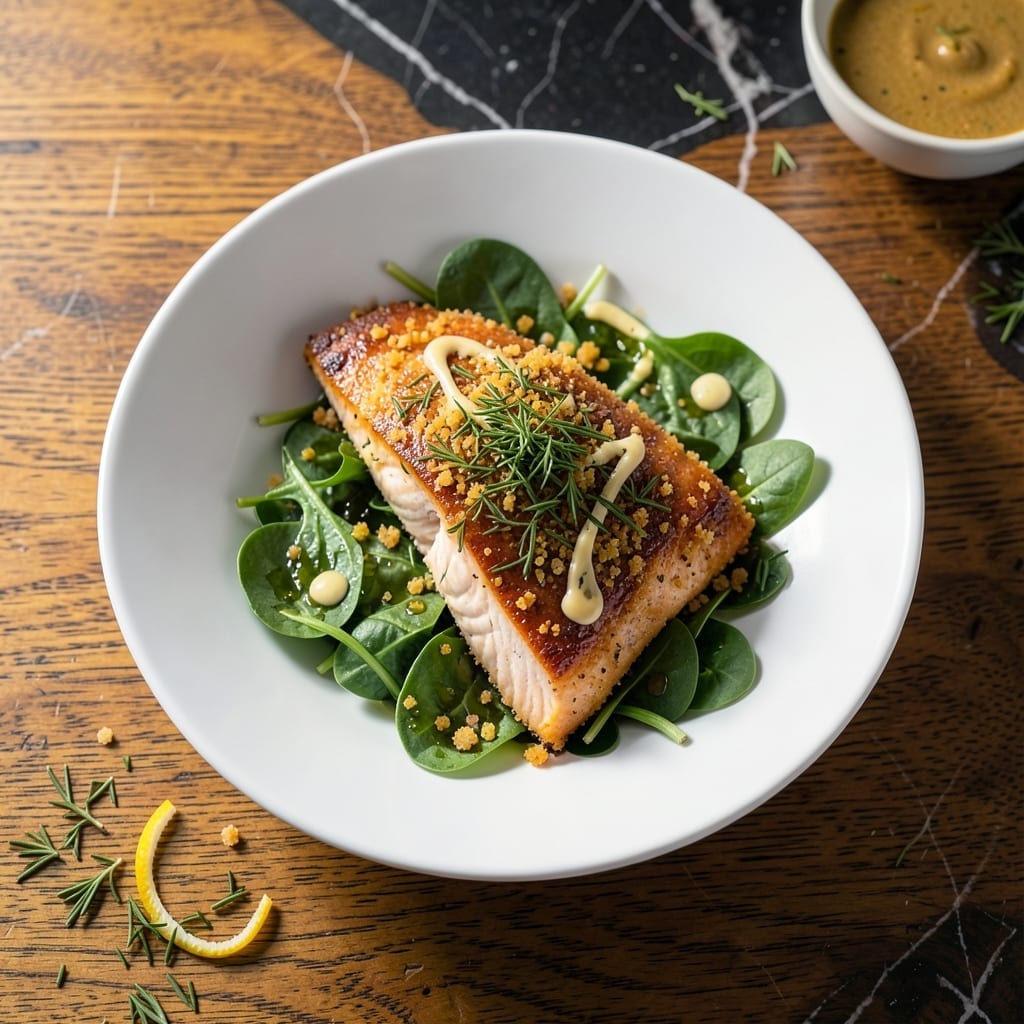
This herb-crusted salmon delivers the flaky, restaurant-style results you expect from Cheesecake Factory, right in your own kitchen. The secret lies in a perfectly balanced herb crust that forms a golden, fragrant seal over tender fish.
I’ve refined this method to ensure every bite offers that signature crisp exterior and moist interior. The key is using fresh herbs and a precise baking temperature to achieve professional-quality texture without overcooking.
What sets this dish apart is its simplicity—just a few ingredients and 15 minutes in the oven. The herb crust locks in moisture while adding layers of aromatic flavor that elevate the natural richness of the salmon.
Serve it with a squeeze of lemon for brightness, and you’ll have a dish that rivals any fine dining experience. This is salmon done right.
Ingredients for Cheesecake Factory Herb Crusted Salmon
Fresh salmon, bright herbs, and a crispy crust create that signature restaurant quality at home.
| Ingredient | Amount | Notes |
|---|---|---|
| Salmon Fillets 🐟 | 4 whole | Skin-on, center-cut preferred |
| Fresh Dill 🌿 | ¼ cup | Chopped, stems removed |
| Fresh Parsley 🍃 | ¼ cup | Chopped, flat-leaf variety |
| Fresh Thyme 🌿 | 2 tbsp | Leaves only, stems discarded |
| Panko Breadcrumbs 🍞 | ½ cup | Japanese-style for crispiness |
| Dijon Mustard 🟡 | 2 tbsp | Smooth, no seeds |
| Unsalted Butter 🧈 | 3 tbsp | Melted for crust binding |
| Garlic Cloves 🧄 | 3 cloves | Minced finely |
| Lemon 🍋 | 1 whole | Zested and juiced |
| Olive Oil 🫒 | 1 tbsp | For greasing baking sheet |
| Salt 🧂 | 1 tsp | Kosher or sea salt |
| Black Pepper 🌶️ | ½ tsp | Freshly ground preferred |
| Paprika 🌶️ | ½ tsp | Sweet or smoked variety |
The salmon is the star here. Center-cut fillets stay even during cooking—avoid the tail end (too thin). Wild-caught if your budget allows, but farmed works too. I grab mine from Whole Foods or Costco when it’s on sale. Fresh herbs matter more than you think—skip the dried stuff for this crust. Trader Joe’s has great fresh herb bundles if you don’t want to buy individual bunches.
No fresh dill? Dried at one-third the amount (but fresh is better). Out of panko? Regular breadcrumbs in a pinch, though the texture won’t be as crisp. The Dijon can be swapped for whole-grain mustard if that’s what you’ve got. If you’re missing lemon, lime works too—just don’t skip the acid. The butter is key for binding, but olive oil works if you’re avoiding dairy.
The crust can be prepped 1 day ahead and stored in the fridge. Baked salmon keeps for 2 days max—it’s best fresh. To reheat, pop it in a 300°F oven for 10 minutes (microwave ruins the texture). Leftovers? Flake into salads or pasta for a quick lunch.
Why You’ll Love This Recipe
- One Pan Wonder: I just mix the panko with fresh dill, parsley, and thyme, press it on the salmon, and bake—no extra dishes, no fuss.
- Crispy Herbed Perfection: That panko crust gets golden and crunchy while the salmon stays tender, and the fresh herbs make every bite sing.
- Date Night Ready: I’ve served this for weeknight dinners and anniversary celebrations—it feels fancy but takes zero effort.
- Leftovers? Yes Please: Honestly, it tastes even better the next day flaked into a salad or wrapped in a tortilla for lunch.
Step-by-Step Instructions for Herb Crusted Salmon
This method delivers that signature crispy crust and tender, flaky interior every time.
Step 1: Prepare the Herb Crust Mixture
In a medium bowl, combine the 0.25 cup Fresh Dill, 0.25 cup Fresh Parsley, and 2 tbsp Fresh Thyme with the 0.5 cup Panko Breadcrumbs, 1 tsp Salt, 0.5 tsp Black Pepper, and 0.5 tsp Paprika. I like to use my fingers to really mix everything together—that ensures the herbs are evenly distributed throughout the breadcrumbs.
Next, pour in the 3 tbsp Unsalted Butter (already melted) and stir until the mixture resembles wet sand. The butter acts as a glue, helping the crust adhere to the salmon. If it seems too dry, don’t worry—the mustard in the next step will help bind it further.
Step 2: Coat the Salmon Fillets
Pat the 4 whole Salmon Fillets dry with paper towels—this is non-negotiable for achieving that perfect sear and crust adhesion. Place them skin-side down on a plate and brush the tops evenly with the 2 tbsp Dijon Mustard. I find that using a pastry brush gives me the most even coverage without tearing the delicate fish.
Press the herb-breadcrumb mixture firmly onto the mustard-coated side of each fillet. Don’t be shy—really pack it on there. The mustard’s slight tang cuts through the richness of the salmon while helping the crust stay put during cooking. Any excess crust that doesn’t stick can be sprinkled on top.
Step 3: Sear and Bake to Perfection
Preheat your oven to 400°F. Heat the 1 tbsp Olive Oil in a large oven-safe skillet over medium-high heat until it shimmers. Add the 3 cloves Garlic Cloves (minced) and sauté for 30 seconds until fragrant—just don’t let it brown, or it’ll turn bitter.
Carefully place the salmon fillets crust-side down in the hot skillet. Sear undisturbed for 2-3 minutes until the crust is golden brown and crisp. You’ll know it’s ready to flip when the edges look set and the crust releases easily from the pan.
Step 4: Finish in the Oven
Transfer the skillet to the preheated oven and bake for 8-10 minutes until the salmon is cooked through but still flaky and moist. The internal temperature should reach 145°F when checked with an instant-read thermometer inserted into the thickest part.
While the salmon bakes, zest the 1 whole Lemon and set the zest aside. Once the salmon is done, remove it from the oven, squeeze fresh lemon juice over the top, and sprinkle with the reserved zest. This bright, citrusy finish cuts through the richness and adds that restaurant-quality touch.
Pro Tips For Making Cheesecake Factory Herb Crusted Salmon
- Pat Salmon Dry: I learned this the hard way—blot the fillets with paper towels before coating. Wet salmon steams the crust instead of letting it crisp up, and nobody wants a soggy herb topping.
- Toast Panko First: Spread the breadcrumbs on a sheet pan and toast for 3-4 minutes at 375°F until golden. This keeps them from turning gummy under the herbs and adds that restaurant-style crunch.
- Use Room-Temp Salmon: Pull the fillets out 15-20 minutes before cooking. Cold salmon from the fridge cooks unevenly, and you’ll end up with dry edges before the center is done.
- Press Crust Firmly: After coating the salmon with the herb-panko mix, press down hard with your fingers so it sticks. I skip this when I’m in a hurry, but the crust falls off in the pan every time I do.
Dietary Considerations for These Flavors
Gluten-Free Option
For a gluten-free version, replace the 0.5 cup Panko Breadcrumbs with gluten-free panko or crushed gluten-free cornflakes. I’ve tested this with Kikkoman gluten-free panko and the texture is nearly identical. The crust still gets that perfect golden crisp. 💪
Dairy-Free Adaptation
To make this dairy-free, swap the 3 tbsp Unsalted Butter for olive oil or vegan butter. Miyoko’s or Earth Balance brands work beautifully. The herb crust will still bind well and develop a delicious crunch.
Low-Carb Variation
Reducing carbs is simple—replace the breadcrumbs with 0.5 cup almond flour or crushed pork rinds. The almond flour version gives a nuttier flavor, while pork rinds add extra crispiness. Both keep the crust intact without added sugars.
Pescatarian-Friendly
This dish is naturally pescatarian, but ensure your Panko Breadcrumbs and Dijon Mustard are free from animal-derived additives. I always check labels for hidden anchovies or fish sauce in mustards. Most store brands are safe, though.
Allergy Considerations
For nut allergies, avoid almond flour in the low-carb version. For mustard allergies, replace Dijon with olive oil or a light mayonnaise coating. The herb crust will still adhere, though it may be less tangy without the mustard’s bite.
Sodium Control
Cutting back on salt? Use low-sodium Dijon and reduce added salt to ½ tsp. The fresh herbs and lemon zest still pack plenty of flavor. I find the natural salinity of the salmon often needs little extra seasoning anyway. 💡
Nutrition Facts
Frequently Asked Questions
Can I use frozen salmon for this?
Yes, but thaw it completely in the fridge overnight first. Pat it very dry before coating to prevent a soggy crust. Avoid refreezing after thawing.
What if my crust burns before the salmon cooks?
Lower the oven temp to 375°F and tent with foil. This prevents over-browning while ensuring the center reaches 145°F.
How do I keep the crust from falling off?
Press the mixture firmly onto the mustard-coated salmon. Let it rest 5 minutes after coating before searing. This helps the crust set.
Can I make this ahead of time?
Prepare the crust mixture 1 day ahead and refrigerate. Coat the salmon just before cooking for the best texture and adhesion.

- 6 Egg Cake Recipe with Oil: Light as Air With Buttery Moisture - October 4, 2026
- 4 Bean Casserole Recipe: One-Pan Heartiness With Smoky Paprika Depth - October 4, 2026
- 3-Ingredient Keto Mug Cake Recipe: Microwave Magic in 2 Minutes - October 4, 2026