
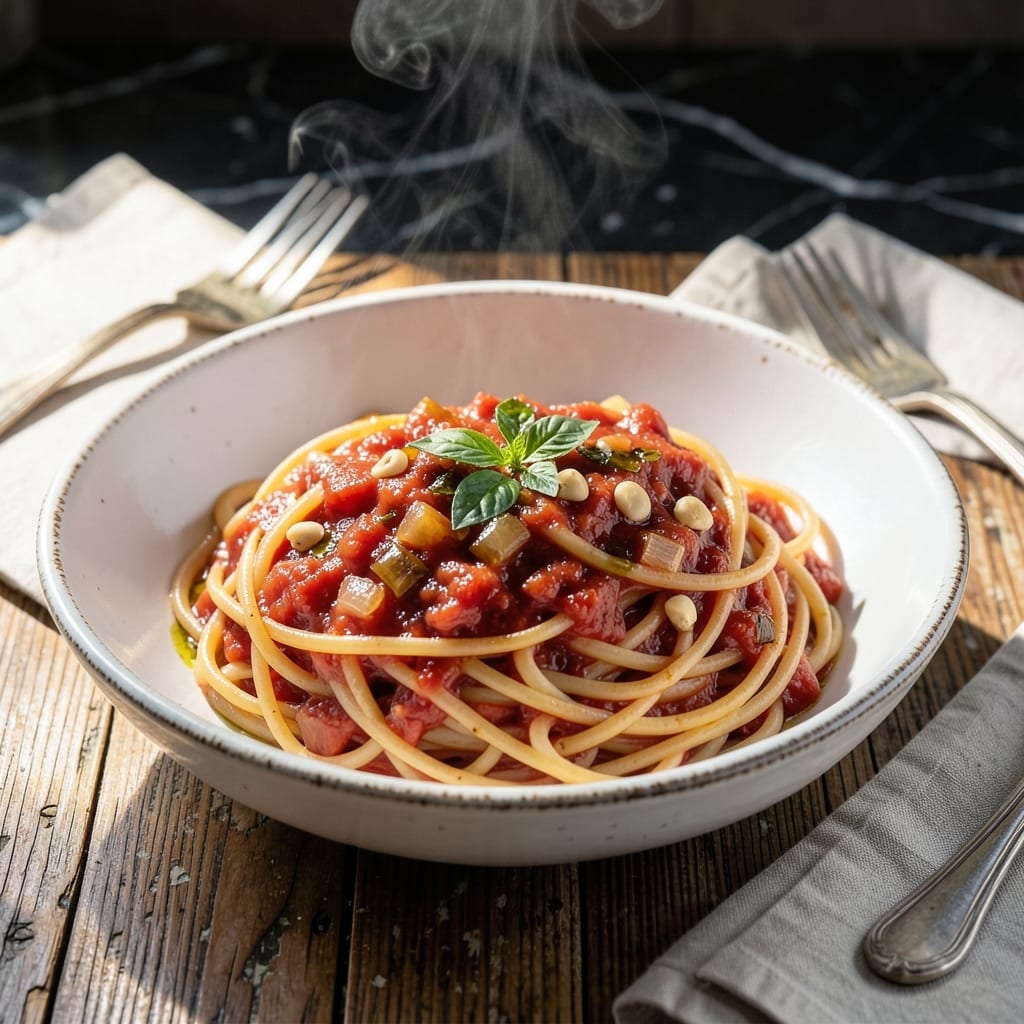
This restaurant-style spaghetti delivers the exact flavors you’d expect from The Cheesecake Factory, right in your own kitchen.
I’ve refined this recipe to capture that signature balance of al dente pasta, rich tomato sauce, and just the right amount of herbs. The key is cooking the pasta 1 minute less than package instructions before finishing it in the sauce.
The sauce itself is simple but packed with depth—garlic, basil, and a touch of sugar bring out the natural sweetness of the tomatoes. It’s a foolproof method that never fails to impress.
Serve it with a sprinkle of parmesan and fresh basil for that authentic touch. This is comfort food at its finest.
Ingredients for Cheesecake Factory Spaghetti
Restaurant-quality ingredients for that signature Cheesecake Factory taste at home.
| Ingredient | Amount | Notes |
|---|---|---|
| Spaghetti 🍝 | 12 oz | Dried, al dente texture |
| Canned San Marzano Tomatoes 🍅 | 28 oz | Whole, crushed by hand |
| Olive Oil 🫒 | ¼ cup | Extra-virgin for depth |
| Garlic Cloves 🧄 | 4 cloves | Minced for sauce |
| Yellow Onion 🧅 | 1 whole | Finely diced, sweet variety |
| Dried Basil 🌿 | 1 tsp | Or fresh basil leaves |
| Dried Oregano 🍃 | 1 tsp | Mediterranean variety preferred |
| Granulated Sugar 🍚 | 1 tsp | Balances acidity in tomatoes |
| Salt 🧂 | 1 ½ tsp | Diamond Crystal kosher |
| Black Pepper 🌶️ | ½ tsp | Freshly ground preferred |
| Red Pepper Flakes 🔥 | ¼ tsp | Optional for heat |
| Parmesan Cheese 🧀 | ½ cup | Freshly grated from wedge |
| Fresh Basil Leaves 🌿 | ¼ cup | Chopped, for garnish |
The tomatoes make this dish. San Marzano cans from Italy are the gold standard—look for the DOP certification on the label. Most Whole Foods or Italian markets carry them. The onion should be sweet (Vidalia if you can find it) to balance the acidity. For the Parmesan, skip the pre-grated—it’s coated in anti-caking agents that dull the flavor. A wedge of Parmigiano-Reggiano melted fresh is worth the extra effort.
No San Marzano? Any good-quality canned tomato works (try Muir Glen or Stanislaus). Fresh herbs instead of dried? Use three times the amount and add them later in cooking. The sugar can be swapped for a pinch of baking soda—it neutralizes acid just as well. If you’re short on garlic, garlic powder at one-third the quantity does the trick in a pinch.
The sauce actually improves overnight. Store leftovers in an airtight container for up to 5 days in the fridge, or freeze for 3 months. Reheat gently on the stove with a splash of water to loosen it up (the good stuff, not the pre-shredded kind).
Why You’ll Love This Recipe
- One Pot Wonder: I toss in the spaghetti, tomatoes, garlic and onion—everything cooks together with barely any cleanup.
- San Marzano Magic: Those canned tomatoes bring a sweet, rich depth that makes the sauce taste like it simmered all day.
- Weeknight Hero: Honestly, it’s my go-to for busy evenings when I need something hearty on the table fast.
- Budget Friendly: A pound of pasta and a can of tomatoes stretch to feed four, often with leftovers for lunch.
Step-by-Step Instructions for Restaurant-Style Al Dente Pasta
Here’s the method I use to get that perfect Cheesecake Factory texture every time.
Step 1: Sauté Aromatics in Extra-Virgin Olive Oil
Heat the 0.25 cup Olive Oil in a large, deep skillet over medium heat until it shimmers. Add the finely diced Yellow Onion and cook for 5-6 minutes, stirring occasionally, until it turns translucent and just starts to develop a golden edge.
This is where the foundation of flavor builds. I add the 4 cloves Garlic Cloves (minced) and the 0.25 tsp Red Pepper Flakes at this stage, cooking for just 30-45 seconds until the garlic becomes fragrant. Watch closely—you want the garlic to soften but not brown or it will turn bitter.
Step 2: Build the Tomato Base with San Marzano Tomatoes
Add the 28 oz Canned San Marzano Tomatoes (crushed by hand) to the skillet along with the 1 tsp Granulated Sugar. The sugar balances the natural acidity of the tomatoes. Stir in the 1 tsp Dried Basil, 1 tsp Dried Oregano, 1.5 tsp Salt, and 0.5 tsp Black Pepper.
Simmer the sauce for 15-20 minutes over medium-low heat, stirring occasionally, until it thickens slightly and the tomatoes break down completely. You’ll know it’s ready when the sauce has a deep, rich color and the oil starts to separate slightly at the edges. This is how you achieve that signature restaurant depth of flavor.
Step 3: Cook Spaghetti to Perfect Al Dente Texture
While the sauce simmers, bring a large pot of salted water to a rolling boil. Add the 12 oz Spaghetti and cook for 1 minute less than the package instructions for al dente. I always taste a strand to check—it should have a slight bite to it, with a firm center.
Reserve ½ cup of pasta water before draining. This starchy liquid is your secret weapon for binding the sauce to the pasta. Drain the spaghetti but don’t rinse it—the surface starch helps the sauce cling better.
Step 4: Combine Pasta and Sauce with Parmesan Finish
Add the cooked spaghetti to the skillet with the tomato sauce. Toss everything together over medium heat for 1-2 minutes, adding a splash of reserved pasta water as needed to loosen the sauce. The pasta should be well-coated but not swimming in sauce.
Remove from heat and stir in the 0.5 cup Parmesan Cheese (freshly grated). The heat from the pasta will melt it slightly, creating a creamy, cohesive texture. Taste and adjust seasoning if needed. Finish with the 0.25 cup Fresh Basil Leaves (chopped) for a bright, fresh note that cuts through the richness.
Serve immediately while hot, with extra Parmesan on the side if desired. The pasta should be perfectly al dente with a sauce that clings to every strand, just like the restaurant version.
Pro Tips For Making Cheesecake Factory Spaghetti
- Sauté Onions Low: Cook the yellow onion on medium-low heat for at least 8-10 minutes until soft and translucent—I learned this the hard way after burning three batches rushing it.
- Crush Tomatoes by Hand: Break up the San Marzano tomatoes with your hands before adding them to the pan; it gives a rustic texture that blended or chopped tomatoes just can’t match.
- Salt the Pasta Water: Use about 1-2 tablespoons of salt in your pasta water—sounds like a lot, but it’s the only chance to season the spaghetti itself.
- Reserve Pasta Water: Before draining, scoop out a cup of starchy pasta water; it’s the easiest way to loosen the sauce and help it cling to the noodles.
Storing and Reheating cheesecake factory spaghetti
Refrigerator Storage
Let your spaghetti cool for no more than 2 hours before transferring to airtight containers. I use glass ones with snap-on lids. Store at 40°F or below for up to 5 days—the flavors deepen as they meld together. ❄️
Freezer Storage
This dish freezes well for up to 3 months without texture loss. Use flat freezer bags (quart or gallon size) for efficient stacking. Leave 1 inch of headspace for expansion and squeeze out excess air to prevent freezer burn.
Stovetop Reheating
My preferred method for best texture. Heat in a skillet over medium-low heat with 2 tbsp water or broth to prevent sticking. Stir occasionally for 5-7 minutes until reaching 165°F. The pasta will absorb the liquid and revive beautifully. 🔥
Microwave Reheating
For quick meals, microwave individual portions covered with a damp paper towel. Heat on 70% power for 2-3 minutes, stir, then continue in 1-minute intervals until hot. Add a splash of water if it looks dry.
Nutrition Facts
Frequently Asked Questions
Can I use regular canned tomatoes instead of San Marzano?
Yes, but look for high-quality brands like Muir Glen or Stanislaus. San Marzano tomatoes are sweeter and less acidic, so you may need to add a pinch more sugar to balance flavors.
How do I prevent the pasta from sticking together?
Use plenty of water when boiling and stir occasionally. Drain the pasta just before it’s fully done, then finish cooking in the sauce. This keeps it perfectly separated.
Can I make this ahead of time?
The sauce can be made 2 days in advance. Store it in the fridge and reheat gently before combining with freshly cooked pasta.
What’s the best way to reheat leftovers?
Use a skillet over medium-low heat with 2 tbsp water or broth. Stir occasionally for 5-7 minutes until hot. This revives the texture better than a microwave.

- 6 Egg Cake Recipe with Oil: Light as Air With Buttery Moisture - October 4, 2026
- 4 Bean Casserole Recipe: One-Pan Heartiness With Smoky Paprika Depth - October 4, 2026
- 3-Ingredient Keto Mug Cake Recipe: Microwave Magic in 2 Minutes - October 4, 2026