
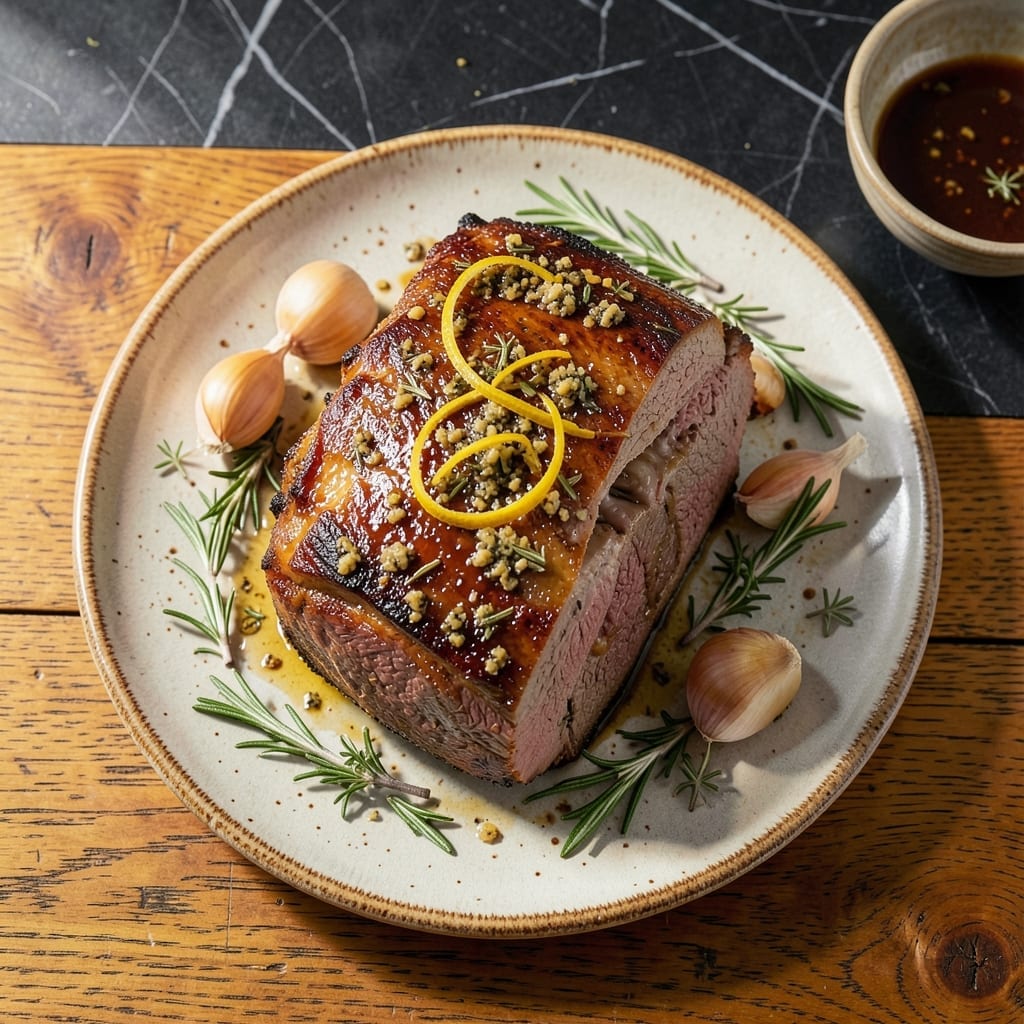
There’s a method to prime rib that guarantees buttery tenderness every time, and the reverse-sear technique is the secret. This approach starts low and slow in the oven, allowing the meat to cook evenly before a final high-heat sear locks in juices.
By controlling the temperature precisely, you ensure the roast reaches the perfect doneness from edge to edge. The result is a prime rib with a tender, rosy center and a deeply flavorful crust that’s impossible to resist.
The reverse-sear method eliminates the guesswork, delivering consistent results whether you’re cooking for a holiday crowd or a special Sunday dinner. It’s a foolproof way to achieve restaurant-quality prime rib at home.
No fancy tools required—just patience and a reliable thermometer. The payoff is a roast so tender it practically melts on your tongue.
Ingredients for Chef John’s Prime Rib
Quality ingredients elevate this classic roast to restaurant standards every time.
| Ingredient | Amount | Notes |
|---|---|---|
| Prime Rib Roast 🥩 | 5 lb | Bone-in, ribeye end preferred |
| Kosher Salt 🧂 | 2 tbsp | Diamond Crystal brand preferred |
| Freshly Ground Black Pepper 🌶️ | 2 tbsp | Coarse grind for crust |
| Garlic Cloves 🧄 | 6 cloves | Peeled, crushed into paste |
| Fresh Rosemary Sprigs 🌿 | 4 whole | Leaves stripped, finely chopped |
| Fresh Thyme Sprigs 🍃 | 4 whole | Leaves stripped, finely chopped |
| Olive Oil 🫒 | 2 tbsp | Extra-virgin for herb paste |
| Dijon Mustard 🟡 | 2 tbsp | For crust binding |
| Unsalted Butter 🧈 | 4 tbsp | Softened, for finishing |
| Red Wine 🍷 | 1 cup | Dry variety for au jus |
| Beef Stock 🥩 | 2 cups | Low-sodium preferred |
| All-Purpose Flour 🌾 | 1 tbsp | For optional au jus thickening |
The prime rib is everything here. USDA Prime grade delivers unmatched marbling (that’s the fat that melts into buttery tenderness). Costco or Whole Foods carry excellent options—ask for the ribeye end for more flavor. Bone-in roasts cook more evenly and add richness. If buying from a butcher, request a 3-rib roast (about 5 lbs) for even cooking and a dramatic presentation.
No fresh herbs? Dried at one-third the amount, but fresh makes a visible difference in the crust. Out of red wine? Substitute 1 cup beef stock with 1 tbsp balsamic vinegar. The Dijon can be swapped for whole-grain mustard (just strain the seeds). For the butter finish, European-style butter (higher fat content) adds extra richness. Skip the flour if making gluten-free au jus—it’ll just be slightly thinner.
Store the roast uncovered in the fridge 24 hours before cooking for a better crust. Leftovers keep 4-5 days wrapped tightly, or freeze for 3 months. Always bring the meat to room temperature (about 2 hours) before starting the reverse-sear process.
Why You’ll Love This Recipe
- Set It and Forget It: I rub the prime rib with salt, pepper, garlic, and rosemary, pop it in the oven, and let it do its thing—no babysitting required.
- That Herby Crust: The garlic and rosemary form this ridiculous crust that cracks open to reveal the most tender, juicy meat inside.
- Holiday Hero: I serve this at Christmas and birthdays, but honestly, it’s fancy enough for New Year’s Eve yet simple enough for a Sunday supper.
- Leftovers for Days: One roast feeds us for two meals, and the cold slices make killer sandwiches the next day.
Step-by-Step Instructions for Prime Rib
Here’s the proven method for achieving perfectly tender, evenly cooked prime rib every time.
Step 1: Create the Herb Crust and Prep the Roast
In a small bowl, combine the 6 cloves garlic cloves (crushed into paste), chopped leaves from the 4 whole fresh rosemary sprigs and 4 whole fresh thyme sprigs, 2 tbsp olive oil, 2 tbsp Dijon mustard, 2 tbsp kosher salt, and 2 tbsp freshly ground black pepper. This forms a fragrant paste that will create an incredible crust.
Pat the 5 lb prime rib roast completely dry with paper towels. This is critical—moisture prevents proper browning. Rub the herb paste evenly over the entire surface of the roast, pressing it in firmly to ensure it adheres during cooking. Place the roast on a wire rack set over a baking sheet.
Step 2: Begin the Reverse-Sear in a Low Oven
Preheat your oven to 250°F. This low temperature ensures even cooking from edge to edge. Place the roast in the oven with the fatty side up. Cook until the internal temperature reaches 110-115°F for medium-rare, which should take approximately 2 to 2.5 hours for a 5 lb prime rib roast.
Use a reliable meat thermometer to monitor the temperature—this is the only way to guarantee perfect doneness. The low-and-slow method prevents the outer layers from overcooking while the center comes up to temperature, resulting in that coveted even pink from crust to crust.
Step 3: Sear to Develop the Crust
Remove the roast from the oven and increase the oven temperature to 500°F. Once preheated, return the roast to the oven and cook for 10-15 minutes to develop a deep, flavorful crust. Watch closely—the exterior should turn a rich dark brown but not burn.
This high-heat finish is what creates the beautiful Maillard reaction on the surface, adding depth of flavor and that desirable textural contrast to the tender interior. The herb paste will caramelize, forming a crust that’s packed with aromatic intensity.
Step 4: Rest and Prepare the Au Jus
Transfer the roast to a cutting board and tent loosely with foil. Let it rest for 20-30 minutes—this allows the juices to redistribute, ensuring every slice is moist and flavorful. Meanwhile, place the baking sheet with the roasting rack on the stovetop over medium heat.
Add the 1 cup red wine to the pan and deglaze, scraping up all the browned bits. Simmer for 3-4 minutes until reduced by half, then add the 2 cups beef stock. For a thicker sauce, whisk in the 1 tbsp all-purpose flour and simmer for another 2-3 minutes. Finish by whisking in the 4 tbsp unsalted butter for a glossy, luxurious au jus.
Step 5: Slice and Serve
Slice the roast between the ribs into 1-inch thick pieces. The meat should be a uniform medium-rare with a well-browned crust. Arrange the slices on a warm platter and spoon some of the au jus over the top.
Serve immediately with the remaining au jus on the side. Each bite should deliver tender, juicy meat with a robust herb crust, perfectly complemented by the rich, savory sauce. This method guarantees a show-stopping centerpiece for any special occasion.
Pro Tips For Making Chef John’S Prime Rib
- Start Room Temp: Take the roast out of the fridge 2-3 hours before cooking—I learned this the hard way after serving tough, cold-center slices to my in-laws.
- Salt Aggressively: Use more kosher salt than feels right, especially on the fat cap. After under-seasoning my first three prime ribs, I finally realized this cut can handle it.
- Avoid Overcrowding: Give the rosemary sprigs and garlic cloves space between them when placing under the fat cap—steer clear of piling everything in one spot, or you’ll get uneven flavor.
- Rest 30 Minutes: Tent it loosely with foil and walk away for a full 30 minutes before carving. Sounds tedious, but it’s the only way to guarantee juicy slices every time.
Flavor Customization for This Dish
Herb Crust Variations
Swap the rosemary and thyme for 4 tbsp chopped fresh sage and 1 tbsp juniper berries (crushed) for a piney, earthy crust. I love this combination for winter holiday dinners. It pairs beautifully with the rich beef flavors. 🌿
Spice-Enhanced Crust
Add 1 tsp smoked paprika and ½ tsp cayenne pepper to your herb paste for a subtle smoky heat. This works particularly well if you’re serving the prime rib with barbecue-inspired sides.
Coffee and Cocoa Rub
For a deeper, more complex crust, mix 1 tbsp finely ground coffee and 1 tbsp unsweetened cocoa powder into your salt and pepper rub. The coffee enhances the beef’s natural flavors while the cocoa adds a subtle sweetness.
Mustard and Horseradish
Replace the Dijon with 3 tbsp prepared horseradish for a bold, spicy kick. This variation is perfect for those who enjoy a little heat with their roast. Balance it with a touch of honey in the au jus.
Citrus and Herb
Add the zest of 1 lemon and 1 orange to your herb paste for a bright, citrusy note. This cuts through the richness of the beef and adds a refreshing contrast to the dish.
Garlic and Herb Butter
Mix 4 tbsp softened butter with your herb paste and spread it under the fat cap before cooking. This creates an incredibly flavorful and juicy prime rib that melts in your mouth. 💛
Nutrition Facts
Frequently Asked Questions
What’s the ideal internal temperature for medium-rare?
Remove the roast at 110-115°F—it’ll rise to 125-130°F while resting. This ensures even doneness throughout the cut.
How long should I rest the roast before slicing?
Let it rest for 20-30 minutes tented with foil. This allows juices to redistribute for moist, tender slices every time.
Can I use a boneless roast instead of bone-in?
Yes, but bone-in cooks more evenly and adds flavor. For boneless, reduce cooking time by about 15% and monitor temperature closely.
What if my roast isn’t browning during the sear?
Pat it completely dry before searing and ensure the oven reaches 500°F. The herb paste’s sugars help create that deep, flavorful crust.

- 6 Egg Cake Recipe with Oil: Light as Air With Buttery Moisture - October 4, 2026
- 4 Bean Casserole Recipe: One-Pan Heartiness With Smoky Paprika Depth - October 4, 2026
- 3-Ingredient Keto Mug Cake Recipe: Microwave Magic in 2 Minutes - October 4, 2026