
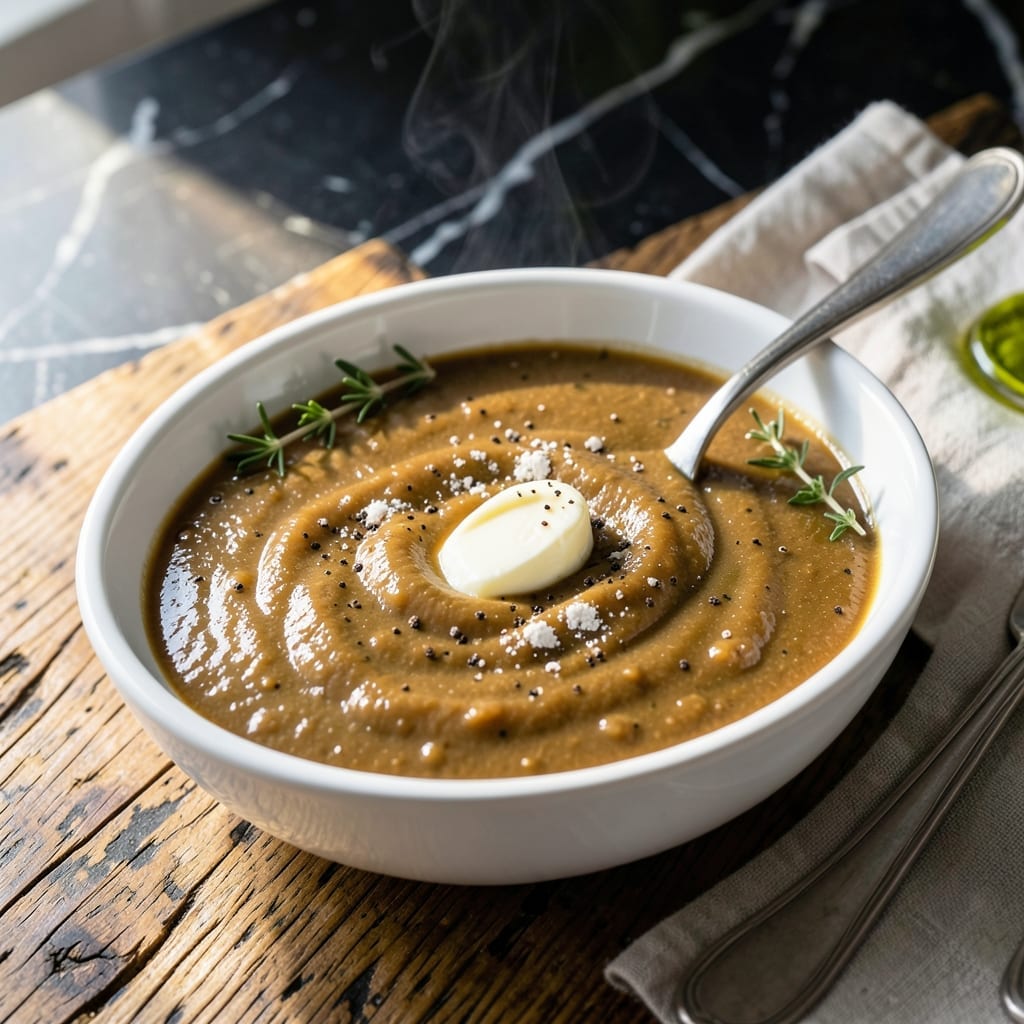
There’s a simple secret to making homemade chicken gravy that tastes richer than any restaurant version. This method relies on the natural flavors of chicken broth to build depth without overwhelming the sauce.
The key is creating a smooth, velvety base by whisking pan drippings with flour, then gradually incorporating warm broth. This ensures a lump-free consistency with a perfect balance of savory and subtle richness.
What you’ll get is a silky gravy with a deep, golden color and a taste that enhances everything from mashed potatoes to biscuits. It’s the kind of sauce that turns a good meal into an unforgettable one.
Ready in minutes, this technique delivers professional results with minimal effort. Here’s how to make it perfectly every time.
Ingredients for Chicken Gravy Recipe with Chicken Broth
Nine ingredients transform into a rich, velvety sauce that elevates any meal.
| Ingredient | Amount | Notes |
|---|---|---|
| Pan Drippings 🍗 | ½ cup | From roasted chicken or turkey |
| All-Purpose Flour 🌾 | ¼ cup | For thickening the gravy |
| Chicken Broth 🥣 | 2 ½ cups | Low-sodium preferred for control |
| Unsalted Butter 🧈 | 2 tbsp | For richness and shine |
| Salt 🧂 | ½ tsp | Adjust to taste at the end |
| Black Pepper 🌶️ | ½ tsp | Freshly ground preferred |
| Garlic Powder 🧄 | ¼ tsp | Optional for extra depth |
| Onion Powder 🧅 | ¼ tsp | Balances the savory notes |
| Worcestershire Sauce 🍶 | 1 tsp | Adds umami complexity |
The chicken broth is the backbone here. Low-sodium lets you control the salt, which is key for that perfect balance. I always keep a few Cartons of Swanson or Better Than Bouillon in the pantry—they’re consistent and flavorful. Pan drippings from a roasted chicken add serious depth (use the good stuff, not the pre-shredded kind). If you’re making this separately, chicken fat from bacon works too.
No pan drippings? Melted butter with a splash of oil gets you close. Short on broth? Water plus bouillon paste in a pinch. The flour thickens it up but cornstarch slurry works if you’re gluten-free. Skip the garlic powder if you don’t have it—fresh minced garlic is even better. The Worcestershire sauce adds that restaurant-quality depth, but soy sauce can sub in.
Gravy thickens as it cools, so make it a little thin. Stores 3-4 days in the fridge, but honestly it’s best fresh. Reheat gently with extra broth to loosen. Freezes for 3 months if you’ve got leftovers (unlikely).
Why You’ll Love This Recipe
- One-Pan Magic: I just use the pan drippings from roasted chicken, stir in flour, and let the broth do the rest—no extra bowls, no fuss.
- Rich & Savory: The chicken broth deepens the flavor so much that even the simplest roast chicken tastes like a fancy meal.
- Weeknight Hero: I’ve poured this over mashed potatoes, biscuits, even rice—it turns any plain dish into something special.
- Budget Stretch: A little flour, some broth, and those leftover drippings make a luxurious gravy without spending a dime extra.
Step-by-Step Instructions for Chicken Gravy With Chicken Broth
Here is the method for creating a smooth, flavorful sauce that elevates any meal.
Step 1: Create the Roux Base
Pour the 0.5 cup Pan Drippings into a saucepan and place over medium heat. Once hot and shimmering, whisk in the 0.25 cup All-Purpose Flour all at once. This is your roux—the foundation for thickening the gravy.
Stir constantly with a whisk for 2-3 minutes until the mixture turns a light golden color. You’ll notice the raw flour smell disappear as it cooks. This step is crucial for removing the starchy taste and building depth of flavor. Don’t let it darken too much, or it will overpower the final sauce.
Step 2: Gradually Incorporate the Broth
Slowly pour in the 2.5 cups Chicken Broth, a little at a time, while whisking continuously. This prevents lumps from forming and ensures a smooth consistency. I find that pouring from a measuring cup with a spout gives me better control.
Keep whisking as the mixture comes to a gentle simmer. You’ll see it thicken slightly after 3-4 minutes. The gravy should coat the back of a spoon but still be thin enough to pour easily. If it thickens too much, add a splash more broth to adjust.
Step 3: Add Seasonings and Finish
Reduce heat to low and stir in the 2 tbsp Unsalted Butter, 0.5 tsp Salt, 0.5 tsp Black Pepper, 0.25 tsp Garlic Powder, 0.25 tsp Onion Powder, and 1 tsp Worcestershire Sauce. Each ingredient adds its own layer of flavor.
The butter gives the gravy a glossy finish and rich mouthfeel. Taste and adjust the salt if needed—remember, the pan drippings and broth may already contain some. Simmer for another 2-3 minutes to let the flavors meld together completely.
Step 4: Strain and Serve
For an ultra-smooth texture, pour the gravy through a fine-mesh strainer into a serving bowl or gravy boat. This removes any small lumps or bits of flour that might have formed during cooking.
Serve immediately while hot. The gravy should be velvety and pourable, with a deep, savory flavor that complements roasted meats perfectly. If it thickens as it sits, stir in a little warm broth or water to restore the desired consistency.
Pro Tips For Making Chicken Gravy Recipe With Chicken Broth
- Deglaze While Hot: Pour the chicken broth into the pan while it’s still hot—this lifts all those browned bits from the bottom, packing your gravy with flavor. I learned this the hard way after scrubbing burnt bits off a cooled pan.
- Use Cold Butter: Stir in cold, cubed unsalted butter at the end for a silky finish. My grandmother swore by this, and she was right: warm butter just melts into a greasy pool.
- Skip the Lumps: Whisk the flour into the drippings gradually, not all at once, to avoid clumps. Sounds tedious, but it saves you from fishing out floury bits later.
- Reduce First: Simmer the broth for 2-3 minutes before adding flour—this concentrates the flavor and prevents a thin, watery gravy. I was skeptical until I tried it, but now it’s non-negotiable.
Common Mistakes When Making chicken gravy recipe with chicken broth
Lumpy Gravy Disaster
Pouring cold broth into hot roux causes instant clumping. Always warm your 2.5 cups Chicken Broth first—I microwave it for 1-2 minutes until steaming. Then add it slowly while whisking constantly. This creates a smooth, velvety base. 💡
Overcooked Roux
Letting your roux darken too much gives gravy a bitter, burnt flavor. Cook the 0.25 cup All-Purpose Flour in pan drippings just until golden—about 2-3 minutes. If it turns brown, start over. The perfect roux smells nutty, not toasted.
Thin or Watery Gravy
If your gravy is too thin, don’t add more flour directly—it’ll clump. Instead, mix 1 tbsp flour with 1 tbsp cold water to make a slurry, then whisk it in. Simmer for 2-3 minutes to reach desired thickness.
Salty Overload
Using regular broth plus salty pan drippings can ruin your sauce. I always choose low-sodium Chicken Broth and taste before adding the 0.5 tsp Salt. You can add more at the end, but you can’t take it out.
Raw Flour Taste
Undercooked flour leaves a starchy, pasty flavor. Ensure your roux cooks for the full 2-3 minutes until bubbly and golden. If you taste raw flour, simmer the gravy for another 5 minutes to cook it through. 🔥
Skipping the Strain
Even with careful whisking, tiny lumps can form. For restaurant-quality smoothness, always strain through a fine-mesh sieve before serving. This removes any bits of flour or herb stems, giving that perfect silky texture.
Nutrition Facts
Frequently Asked Questions
Can I use cornstarch instead of flour?
Yes! Mix 2 tbsp cornstarch with 2 tbsp cold water to make a slurry. Whisk it in at the end instead of flour. Cornstarch creates a glossier finish and works well for gluten-free diets.
Why did my gravy turn out too thin?
It needs more thickening time. Simmer for an extra 3-5 minutes after adding broth. If still thin, make a quick slurry with 1 tbsp cornstarch and 1 tbsp cold water, then whisk in.
How do I fix gravy that’s too salty?
Add 1/2 cup unsalted broth or water and simmer. For quick fixes, stir in 1 tsp lemon juice or a pinch of sugar to balance flavors. Always taste as you go.
Can I make this ahead of time?
Store in an airtight container in the fridge for up to 3-4 days. Reheat gently on the stove with a splash of broth to restore creaminess.

- 6 Egg Cake Recipe with Oil: Light as Air With Buttery Moisture - October 4, 2026
- 4 Bean Casserole Recipe: One-Pan Heartiness With Smoky Paprika Depth - October 4, 2026
- 3-Ingredient Keto Mug Cake Recipe: Microwave Magic in 2 Minutes - October 4, 2026