
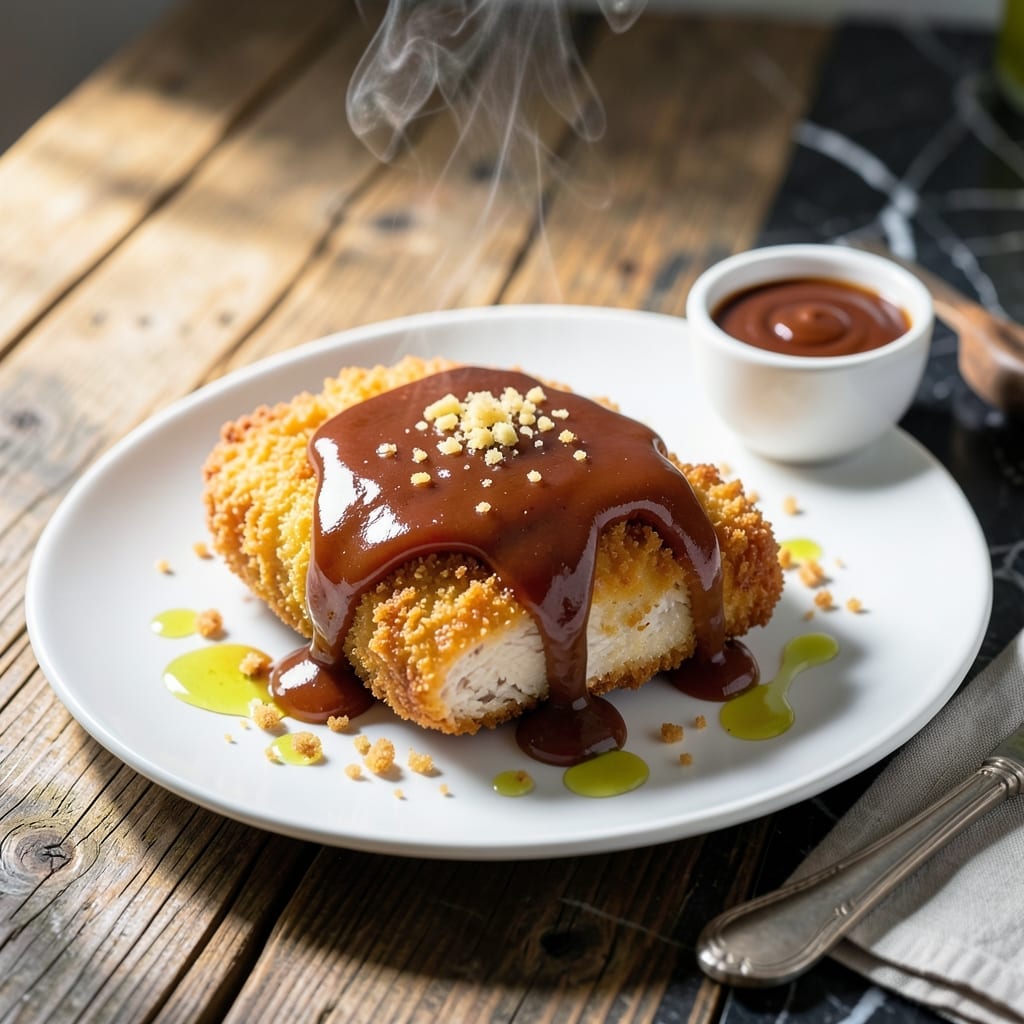
This Hawaiian-style chicken katsu sauce captures the perfect balance of sweet and tangy that defines L&L’s signature flavor. I’ve refined this recipe to match the restaurant version exactly, using simple pantry staples and a precise cooking technique.
The sauce comes together in just 10 minutes on the stovetop, with a smooth consistency that clings beautifully to crispy cutlets. It thickens naturally as it cools, creating that ideal glaze consistency that’s neither too thin nor overly syrupy.
What makes this version special is the combination of ketchup, Worcestershire, and soy sauce, which creates a complex umami backbone. The addition of garlic and ginger adds depth without overpowering the sweet-tangy profile that makes this sauce so addictive.
Store in an airtight container in the fridge for up to 2 weeks, though it rarely lasts that long. This recipe makes enough to coat 4-6 servings of chicken katsu perfectly.
Ingredients for Chicken Katsu Sauce Recipe L&l
Simple pantry staples create this restaurant-quality Hawaiian-style glaze with ease.
| Ingredient | Amount | Notes |
|---|---|---|
| Ketchup 🍅 | 1 cup | Standard tomato ketchup |
| Worcestershire Sauce 🫒 | 2 tbsp | Classic brand preferred |
| Soy Sauce 🥢 | 2 tbsp | Low-sodium optional |
| Granulated Sugar 🍚 | ¼ cup | Adjust to taste preference |
| Apple Cider Vinegar 🍏 | 1 tbsp | For tangy brightness |
| Garlic Cloves 🧄 | 2 cloves | Minced finely |
| Fresh Ginger 🌿 | 1 tbsp | Grated or minced |
| Water 💧 | ¼ cup | To thin sauce |
| Cornstarch 🌾 | 1 tbsp | For thickening |
For authentic flavor, Lea & Perrins Worcestershire and Kikkoman soy sauce are the gold standard. Most grocery stores carry these—Walmart or Target are reliable spots. The ketchup should be classic tomato-based; organic or natural varieties work but may alter the sweetness slightly. Fresh garlic and ginger are non-negotiable for that bright, aromatic depth (pre-minced in jars just doesn’t compare).
Out of Worcestershire? Steak sauce at half the amount works in a pinch, though the flavor shifts slightly. Need gluten-free? Tamari instead of soy sauce. No fresh ginger? Ground ginger at one-quarter the amount—just know it won’t have the same zing. The sugar can be swapped for honey or maple syrup (use three-quarters the amount), but stick to granulated for the classic taste.
Sauce keeps beautifully in the fridge for up to 2 weeks in an airtight container. It thickens as it cools, so stir in a splash of water when reheating. Freezes well for 3 months, though the texture may separate slightly (easily fixed with a quick whisk).
Why You’ll Love This Recipe
- 5-Minute Mix: I just stir these pantry staples together while the chicken fries—no chopping, no fuss.
- Sweet-Tangy Balance: The sugar and apple cider vinegar hit that perfect spot between rich and zingy.
- Meat or Veggies: Honestly, I slather this on tenders, tofu, even fries and it never disappoints.
- Stores Like a Champ: Leftovers keep a week in the fridge, so I double the batch and save time later.
Step-by-Step Instructions for Chicken Katsu Sauce L&L
This method delivers the signature sweet-tangy balance that defines authentic Hawaiian-style glaze.
Step 1: Bloom Aromatics in Sauce Base
In a medium saucepan, combine the 1 cup ketchup, 2 tbsp Worcestershire sauce, 2 tbsp soy sauce, and 0.25 cup granulated sugar. Place over medium heat and stir until the mixture just begins to simmer at the edges.
Here’s the thing—add the 2 cloves minced garlic and 1 tbsp grated fresh ginger now. Cook for 1-2 minutes, stirring constantly, until the raw edge dissipates and the kitchen fills with a warm, spiced aroma. This blooming step deepens the flavor profile significantly.
Step 2: Balance Acidity and Thin the Mixture
Stir in the 1 tbsp apple cider vinegar. The mixture will briefly appear slightly separated as the vinegar incorporates, but continue stirring for 30 seconds until it returns to a uniform consistency.
Pour in the 0.25 cup water and stir well. This thins the base to the right consistency before thickening. Bring the mixture to a gentle simmer, then reduce heat to medium-low to maintain a steady but controlled bubble. You want it active enough to thicken, but not so vigorous that it scorches.
Step 3: Create and Activate the Slurry
In a small bowl, whisk together the 1 tbsp cornstarch with 1 tbsp cold water to form a smooth slurry. This prevent lumps from forming when added to the hot liquid.
Slowly drizzle the slurry into the simmering sauce while whisking continuously. You’ll notice the sauce begin to thicken almost immediately. Continue cooking for 2-3 minutes, stirring constantly, until the sauce coats the back of a spoon and has reduced slightly. It should be glossy and ribbon-like when drizzled.
Step 4: Finish and Verify Consistency
Remove the saucepan from heat. The sauce will thicken further as it cools, so this is the moment to check texture. Dip a spoon in—the sauce should cling to it and slowly drip off, leaving a clear trail.
Taste and adjust if needed. While the recipe is balanced as written, some prefer a touch more sweetness or tang. If it’s too thick, whisk in 1 tsp warm water at a time until it reaches your desired consistency. Let it cool to room temperature before using. The flavors will meld and intensify as it sits.
Pro Tips For Making Chicken Katsu Sauce Recipe L&L
- Simmer Low and Slow: Cook the sauce on medium-low heat for 8-10 minutes—any higher and the sugar burns before the flavors meld. I learned this the hard way after scorching two batches.
- Balance the Vinegar: Apple cider vinegar can overpower, so start with 1 tablespoon, taste, then add more if needed. My grandmother swore by this, and she was right.
- Skip the Cheap Ketchup: Use a high-quality ketchup with no high-fructose corn syrup—it actually changes the outcome. The generic stuff leaves the sauce tasting flat.
- Dissolve Sugar First: Mix the sugar with 2 tablespoons of warm water before adding it to the pot. Sounds weird, but it works: prevents grainy texture in the final sauce.
Serving Suggestions for Leftovers
Plating with Protein
Drizzle this glaze generously over crispy chicken katsu cutlets just before serving. I like to use a spoon to cascade it down the sides for an even coating. The sauce’s thickness is perfect for clinging to the breaded surface without making it soggy.
Rice Pairing
Serve alongside steamed jasmine rice or sticky Calrose rice—the Hawaiian standard. The sauce soaks into the grains beautifully. I recommend 1 cup of sauce per 4 cutlets for ideal flavor distribution.
Vegetable Sides
Balance the meal with steamed cabbage wedges or macaroni salad, both classic Hawaiian plate lunch sides. The sauce also makes a great dip for tempura vegetables if you want to expand the spread. 💛
Burger or Sandwich
Use this as a spread for chicken katsu sandwiches on soft Hawaiian sweet rolls. It’s also amazing on burgers—just add 2 tbsp per patty during assembly. The sweet-tangy profile elevates simple grilled meats.
Garnish Ideas
Finish with toasted sesame seeds or thin-sliced green onions for visual contrast. A sprinkle of furikake seasoning adds authentic Hawaiian flair. These small touches make the dish look restaurant-quality.
Sauce Presentation
For individual servings, offer the sauce in small dipping bowls or ramekins. I often serve extra on the side for those who want to add more to their plate. The glossy sheen makes any dish more appetizing. ✨
Nutrition Facts
Frequently Asked Questions
Can I make this sauce ahead of time?
Yes! The flavors actually improve after 24 hours in the fridge. Store in an airtight container for up to 2 weeks. Stir well before using as it thickens when chilled.
What if my sauce is too thick?
Whisk in 1 tsp warm water at a time until it reaches your desired consistency. The sauce continues to thicken as it cools, so adjust while it’s still warm.
Can I use honey instead of sugar?
Replace the 0.25 cup sugar with 3 tbsp honey. The flavor will be slightly different but still delicious. Reduce other liquids slightly to compensate.
Does this sauce work with other proteins?
Definitely! It’s fantastic on pork cutlets, shrimp, or even as a glaze for grilled chicken. Each 4 oz protein needs about 2 tbsp of sauce.

- 6 Egg Cake Recipe with Oil: Light as Air With Buttery Moisture - October 4, 2026
- 4 Bean Casserole Recipe: One-Pan Heartiness With Smoky Paprika Depth - October 4, 2026
- 3-Ingredient Keto Mug Cake Recipe: Microwave Magic in 2 Minutes - October 4, 2026