
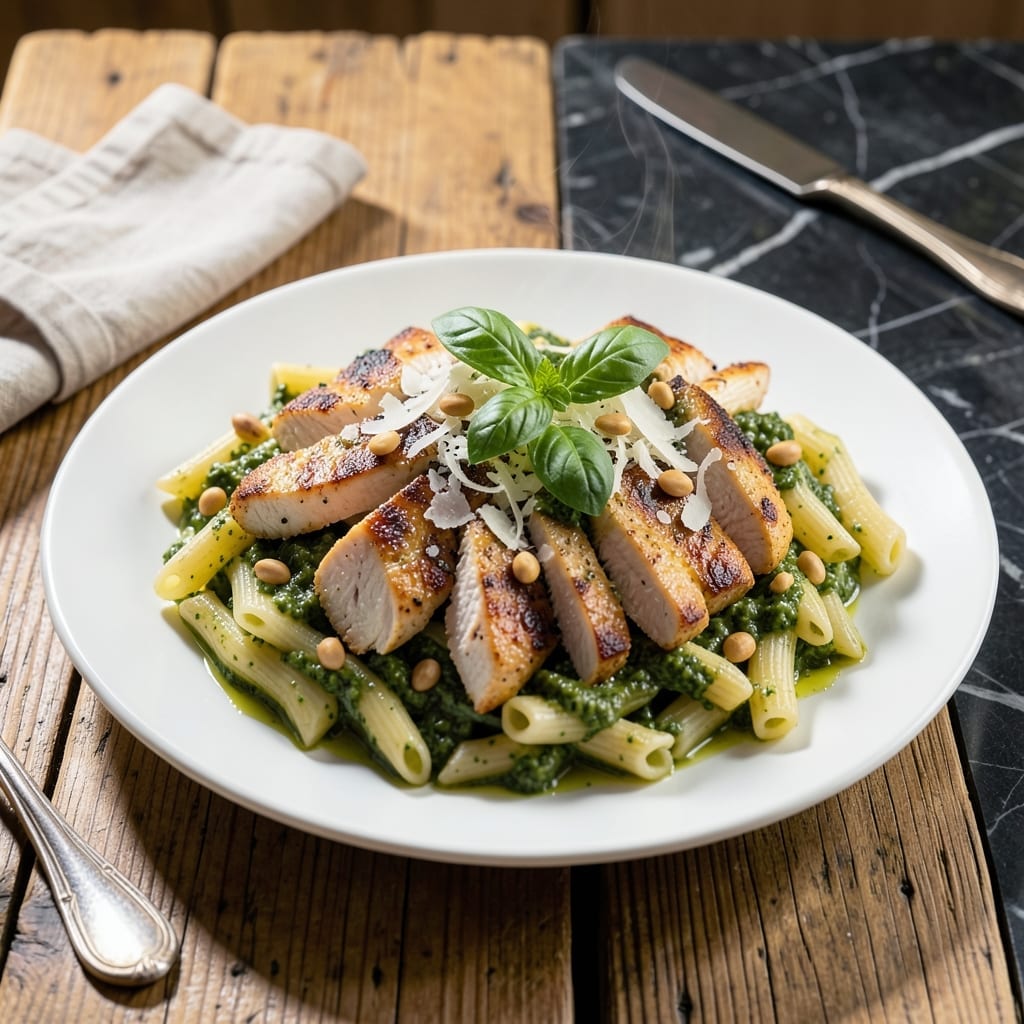
This dish brings together tender chicken, al dente pasta, and vibrant fresh basil pesto in perfect harmony. The combination of flavors and textures makes it a standout meal for any occasion.
The chicken stays juicy while the pasta maintains its bite, all coated in a rich, herbaceous pesto sauce. It’s a balanced plate that feels both comforting and refined.
What sets this recipe apart is its simplicity—no complicated techniques, just fresh ingredients coming together beautifully. The pesto ties everything with its bright, aromatic character.
Ready in under 30 minutes, this is a dish that delivers restaurant-quality results with minimal effort. A satisfying meal that’s as easy as it is delicious.
Ingredients for Chicken Pasta Recipe Pesto
Fresh basil, tender chicken, and al dente pasta create this vibrant, restaurant-quality dish in minutes.
| Ingredient | Amount | Notes |
|---|---|---|
| Chicken Breast 🍗 | 1 ½ lb | Boneless, skinless, cut into strips |
| Pasta 🍝 | 12 oz | Dried penne or fusilli |
| Fresh Basil Leaves 🌿 | 2 cups | Packed, stems removed |
| Pine Nuts 🥜 | ½ cup | Toasted for depth of flavor |
| Garlic Cloves 🧄 | 4 cloves | Peeled and minced |
| Parmesan Cheese 🧀 | ¾ cup | Freshly grated from wedge |
| Extra-Virgin Olive Oil 🫒 | ¾ cup | Divided for pesto and cooking |
| Lemon Juice 🍋 | 1 tbsp | Freshly squeezed for brightness |
| Salt 🧂 | 1 tsp | Diamond Crystal kosher preferred |
| Black Pepper 🌶️ | ½ tsp | Freshly ground for best aroma |
| Red Pepper Flakes 🔥 | ¼ tsp | Optional for subtle heat |
| Heavy Cream 🥛 | ¼ cup | For optional creamier pesto |
The chicken quality is paramount. Boneless, skinless chicken breast ensures tenderness, while air-chilled options from Whole Foods or Costco offer superior texture. For pasta, bronze-cut dried varieties like De Cecco or Barilla provide the ideal al dente bite. Fresh basil must be vivid green and aromatic—avoid wilted or pre-packaged leaves for maximum flavor impact.
No pine nuts? Walnuts or cashews work beautifully (toast them first). Substitute Pecorino Romano for Parmesan if you prefer a sharper profile. For a lighter option, half-and-half or whole milk can replace heavy cream. The pasta shape can vary—rigatoni or farfalle hold pesto just as well as penne.
Store fresh basil wrapped in damp paper towels for up to 5 days. Cooked chicken and pesto keep separately for 4 days in the fridge. The dish freezes well for 2 months—thaw and reheat gently to preserve texture.
Why You’ll Love This Recipe
- One Pan Wonder: I toss everything in while the pasta boils—chicken, garlic, basil—minimal cleanup, maximum flavor.
- Fresh Herb Magic: That first bite with the pine nuts and basil? It tastes like summer in a bowl.
- Weeknight Lifesaver: Between us, this is my go-to when I need dinner ready before the kids start asking.
- Budget Stretcher: One chicken breast feeds us all, and the leftovers taste even better the next day.
Step-by-Step Instructions for Chicken Pasta with Pesto
Master the technique for perfectly cooked chicken and vibrant pesto with these precise steps.
Step 1: Prepare and Cook the Chicken
Cut the 1.5 lb chicken breast into even 1-inch strips to ensure uniform cooking. Season both sides with 1 tsp salt and 0.5 tsp black pepper—this enhances flavor and helps create a golden sear.
Heat 2 tablespoons of the 0.75 cup extra-virgin olive oil in a large skillet over medium-high heat until shimmering. Add the chicken in a single layer, working in batches if needed to avoid overcrowding. Cook for 4-5 minutes per side until golden brown and the internal temperature reaches 165°F. Transfer to a plate and set aside.
Step 2: Toast the Pine Nuts and Cook the Pasta
In the same skillet, reduce heat to medium and add the 0.5 cup pine nuts. Toast for 2-3 minutes, stirring constantly, until they turn light golden brown and emit a nutty aroma. Immediately transfer to a small bowl to prevent over-toasting.
While the pine nuts cool, bring a large pot of salted water to a rolling boil. Add the 12 oz pasta and cook according to package directions until al dente. Reserve ½ cup of pasta water before draining—this starchy liquid will help bind the pesto to the pasta later.
Step 3: Make the Pesto Sauce
In a food processor, combine the 2 cups fresh basil leaves, toasted 0.5 cup pine nuts, 4 cloves garlic cloves, and 0.75 cup parmesan cheese. Pulse until finely chopped but not puréed—you want some texture for authenticity.
With the processor running, slowly drizzle in the remaining 0.75 cup extra-virgin olive oil (minus the 2 tablespoons used for cooking). Add the 1 tbsp lemon juice and 0.25 tsp red pepper flakes for brightness and subtle heat. For a creamier pesto, blend in the 0.25 cup heavy cream until smooth. Taste and adjust seasoning if needed.
Step 4: Combine and Finish
Return the drained pasta to its pot and add the cooked chicken. Pour the pesto over everything and toss gently to coat evenly. If the sauce seems too thick, add reserved pasta water 1 tablespoon at a time until it reaches your desired consistency.
Let the dish sit for 2-3 minutes off heat to allow the flavors to meld. The pesto should cling to the pasta and chicken with a glossy, vibrant green coating. Serve immediately while still warm, garnished with additional parmesan cheese if desired.
Pro Tips For Making Chicken Pasta Recipe Pesto
- Sear Chicken Hot: Crank the pan to medium-high and don’t move the chicken for 5-6 minutes per side—I learned this the hard way after too many rubbery breasts.
- Toast Pine Nuts First: Toss them in a dry pan for 2-3 minutes until golden and fragrant, or they’ll taste raw in the pesto.
- Salt Pasta Water Well: Use about 1 tablespoon of salt per gallon of water, otherwise your pasta will taste flat no matter how good the pesto is.
- Use Warm Pasta: Toss the cooked pasta with the pesto right away while it’s still hot—it soaks up the sauce better than cold noodles.
Flavor Customization for This Recipe
Herb Variations
Swap ½ cup basil with fresh spinach or cilantro for a different herb profile. Spinach adds earthiness, while cilantro brings a bright, citrusy note. I love spinach pesto in fall for its deeper, more robust flavor. 🌿
Nut Swaps
Replace pine nuts with walnuts or cashews for a budget-friendly twist. Walnuts add a slightly bitter edge, while cashews make the pesto sweeter. Toast them first for maximum flavor—2-3 minutes in a dry pan does the trick.
Spice Adjustments
Add ½ tsp red pepper flakes for noticeable heat, or 1 tsp for a spicy kick. For smokiness, mix in ½ tsp smoked paprika. Honestly, a little heat elevates the dish without overpowering the fresh herbs.
Creamy vs. Light
For extra richness, blend in ¼ cup heavy cream as the recipe suggests. For a lighter version, skip the cream and add 2 tbsp pasta water to thin the pesto while keeping it luscious.
Cheese Alternatives
Substitute Parmesan with Pecorino Romano for a sharper, saltier bite. For a milder option, try Asiago. I prefer Pecorino when I want a bolder flavor profile.
Citrus Boosts
Enhance brightness with zest from 1 lemon added to the pesto. For a twist, use lime juice instead of lemon—it pairs beautifully with cilantro-based pesto. 💛
Nutrition Facts
Frequently Asked Questions
Can I use store-bought pesto instead?
Yes, but fresh tastes far better. If using store-bought, choose refrigerated over shelf-stable for better flavor. You may need to thin it with 2-3 tbsp pasta water to coat properly.
What pasta shape works best?
Short, sturdy shapes like penne or fusilli hold pesto beautifully. Long pasta like spaghetti works too, but may require more tossing to coat evenly.
How do I prevent the pesto from separating?
Blend the pesto thoroughly and add it to warm pasta. The heat helps emulsify the sauce. Stir in 1-2 tbsp pasta water if it starts to separate.
Can I make this ahead of time?
Cook components separately: pesto (2 days), chicken (3 days), pasta (1 day). Combine just before serving to maintain texture.

- 6 Egg Cake Recipe with Oil: Light as Air With Buttery Moisture - October 4, 2026
- 4 Bean Casserole Recipe: One-Pan Heartiness With Smoky Paprika Depth - October 4, 2026
- 3-Ingredient Keto Mug Cake Recipe: Microwave Magic in 2 Minutes - October 4, 2026