
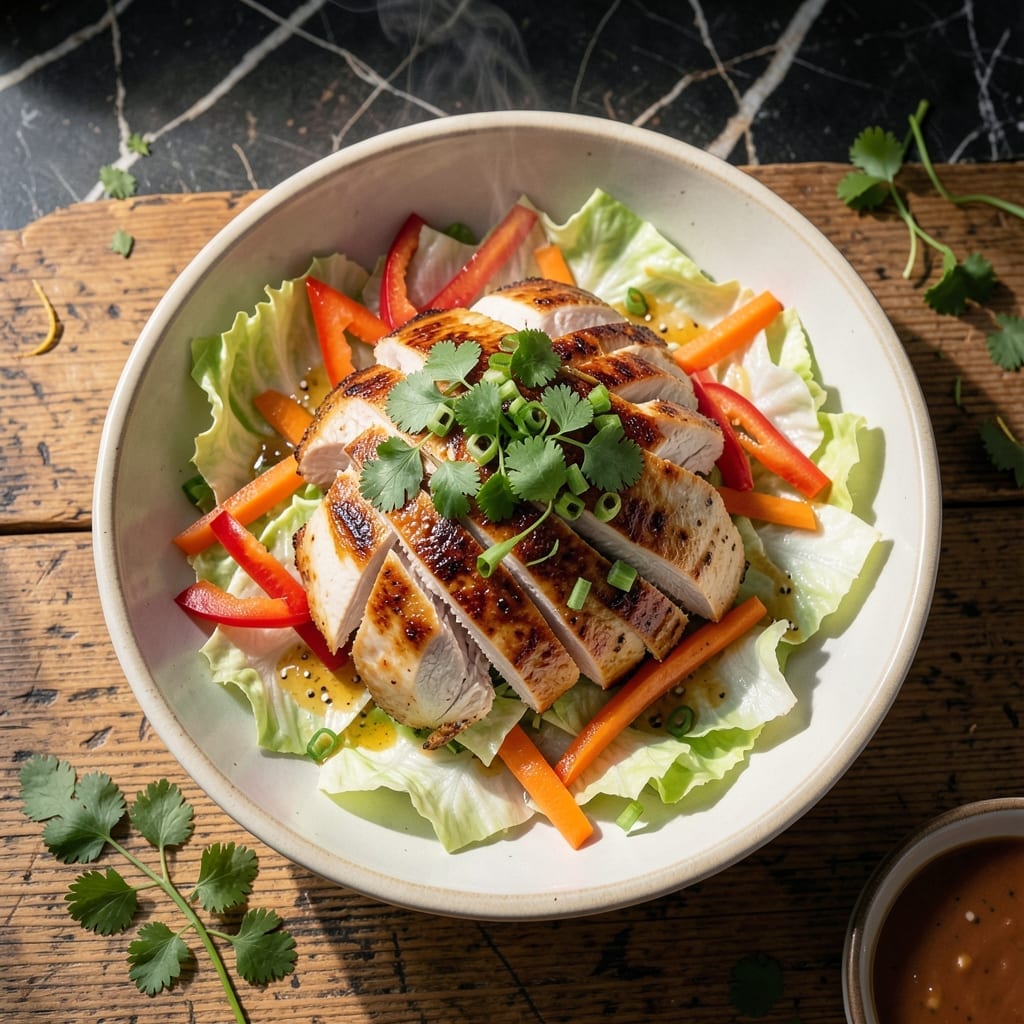
This Asian-inspired chicken salad delivers bold flavors with every bite. The wok-tossed method ensures crisp vegetables and perfectly cooked chicken, while a sesame-ginger dressing ties everything together.
I developed this recipe to bring restaurant-quality taste to your kitchen without complicated techniques. The dressing combines soy sauce, rice vinegar, and sesame oil for an authentic zing that complements the fresh crunch.
The chicken stays juicy and tender, while the vegetables maintain their vibrant texture. A sprinkle of sesame seeds and green onions adds the finishing touch, creating a dish that’s as beautiful as it is delicious.
Serve it chilled or at room temperature for a refreshing meal that’s ready in under 30 minutes.
Ingredients for Chicken Salad Recipe Asian
Bright, crisp, and packed with sesame-ginger zing. Probably have most of this already.
| Ingredient | Amount | Notes |
|---|---|---|
| Boneless Skinless Chicken Breasts 🍗 | 1 ½ lb | Thinly sliced for quick cooking |
| Napa Cabbage 🥬 | 3 cups | Thinly shredded for crunch |
| Red Bell Pepper 🌶️ | 1 whole | Julienned for color and texture |
| Carrots 🥕 | 2 whole | Julienned or matchstick cut |
| Green Onions 🧅 | ½ cup | Thinly sliced for garnish |
| Fresh Cilantro 🌿 | ¼ cup | Chopped, stems removed |
| Sesame Seeds 🌰 | 2 tbsp | Toasted for extra nuttiness |
| Soy Sauce 🫒 | 3 tbsp | Low-sodium preferred for balance |
| Rice Vinegar 🍯 | 2 tbsp | Unseasoned for clean acidity |
| Sesame Oil 🫒 | 1 tbsp | Toasted for depth of flavor |
| Fresh Ginger 🌿 | 1 tbsp | Grated or minced finely |
| Garlic Cloves 🧄 | 3 cloves | Minced for dressing |
| Honey 🍯 | 1 tbsp | For balancing sweetness |
| Neutral Oil 🫒 | 2 tbsp | For wok-tossing vegetables |
| Salt 🧂 | ½ tsp | To taste for seasoning |
The chicken is the foundation here. Buy boneless, skinless breasts—they cook fast and stay juicy when sliced thin. For the vegetables, Napa cabbage is ideal (that crinkly kind), but regular green cabbage works in a pinch. Trader Joe’s has great pre-shredded options if you’re short on time. Look for firm, vibrant bell peppers and carrots—they should snap when you bend them.
No Napa cabbage? Savoy or regular green cabbage both work well. Missing rice vinegar? Apple cider vinegar at the same amount gets you close. The sesame oil is non-negotiable for that authentic flavor—Kadoya brand is my go-to. To make it gluten-free, swap soy sauce for tamari. Can’t find fresh ginger? Ground ginger at one-quarter the amount works (but fresh is better).
This keeps great in the fridge for 3-4 days—the flavors actually deepen overnight. Store in an airtight container. Best served chilled or at room temperature, so it’s perfect for meal prep. Don’t dress it until you’re ready to eat, or the veggies will get soggy.
Why You’ll Love This Recipe
- One Pan Wonder: I just toss the chicken with the cabbage, peppers, and carrots—no fancy techniques, just chop and mix.
- Umami Bomb: The green onions and napa cabbage bring that fresh, slightly sweet crunch that makes every bite addictive.
- Meal Prep Hero: I make a big batch Sunday and it stays crisp and flavorful for lunches all week.
- Budget Stretcher: Honestly, a pound of chicken breasts and a head of cabbage feed my family for two meals easy.
Step-by-Step Instructions for Asian Chicken Salad
Here’s the method I use for maximum crunch and flavor in every bite.
Step 1: Sear the Chicken Until Just Cooked
Heat 2 tbsp neutral oil in a wok or large skillet over medium-high heat until it shimmers. Add the 1.5 lb boneless skinless chicken breasts (thinly sliced) in a single layer. Let it sear undisturbed for 2-3 minutes until the edges turn opaque and lightly golden.
Flip and cook for another 1-2 minutes until just cooked through. The chicken should reach 165°F internally but stay tender. Transfer to a plate and sprinkle with 0.5 tsp salt—this seasons the meat while it rests.
Step 2: Wok-Toss the Vegetables to Perfection
In the same wok, add the 3 cups napa cabbage, 1 whole red bell pepper (julienned), and 2 whole carrots (julienned). Stir-fry over high heat for 3-4 minutes until the vegetables soften slightly but retain their vibrant color and crunch.
This high-heat tossing preserves the crisp texture that makes this dish special. Don’t overcrowd the wok—if needed, cook in batches. The vegetables should still have a satisfying bite when you’re done.
Step 3: Whisk Together the Sesame-Ginger Dressing
In a small bowl, combine 3 tbsp soy sauce, 2 tbsp rice vinegar, 1 tbsp sesame oil, 1 tbsp fresh ginger (minced), 3 cloves garlic cloves (minced), and 1 tbsp honey. Whisk vigorously until the honey dissolves and the mixture emulsifies slightly.
The dressing should be glossy and well combined. Taste and adjust—if it’s too sharp, add a touch more honey; if it’s too sweet, a splash of vinegar balances it. This is where the signature zing comes from.
Step 4: Combine and Finish with Fresh Garnishes
Slice the cooked chicken into thin strips and return it to the wok with the vegetables. Pour the dressing over everything and toss gently to coat evenly. The heat from the wok will warm the dressing slightly, helping it cling to the ingredients.
Transfer to a serving bowl and top with 0.5 cup green onions (sliced), 0.25 cup fresh cilantro (chopped), and 2 tbsp sesame seeds. The herbs add freshness, while the sesame seeds provide a nutty crunch. Serve immediately while the chicken is still warm.
Pro Tips For Making Chicken Salad Recipe Asian
- Poach the Chicken: Simmer the boneless breasts in lightly salted water with a splash of rice vinegar for 12-15 minutes—keeps them juicy and adds a subtle tang that pairs perfectly with the Asian flavors.
- Shred While Warm: I learned this the hard way—shred the chicken as soon as it’s cool enough to handle; it absorbs the dressing better than when it’s cold.
- Salt the Cabbage: Toss the shredded Napa cabbage with ½ teaspoon of salt and let it sit for 10 minutes, then squeeze out the excess water—prevents a soggy salad.
- Julienne the Veggies: Cut the red bell pepper, carrots, and green onions into thin, even strips (about 2 inches long)—makes every bite consistent and easier to eat.
Dietary Considerations for This chicken salad recipe asian
Gluten-Free Adaptation
To make this dish gluten-free, simply swap the soy sauce for tamari—it has the same rich, savory depth without the wheat. I always keep a bottle of San-J brand tamari in my pantry for exactly this reason. The flavor difference is minimal, and your gluten-sensitive guests won’t feel left out. 💪
Lower Sodium Option
Cut the sodium by using low-sodium soy sauce or tamari in the dressing. You can also reduce the amount by 1 tbsp and add a splash of lime juice for brightness. I find the vegetables and chicken still taste vibrant with this adjustment.
Dairy-Free and Vegan
For a vegan version, replace the chicken with 1.5 lb extra-firm tofu, pressed and sliced into thin strips. Sear it in the wok until golden on both sides. The dressing is already dairy-free, so no changes needed there—just keep an eye on the tofu to prevent sticking.
Nut-Free Variation
If nut allergies are a concern, skip the sesame seeds and replace the sesame oil with an additional 1 tbsp neutral oil. The dish will still have great flavor from the ginger, garlic, and soy. I’ve made it this way for friends with nut allergies, and they never miss the sesame.
Lower Calorie Swap
Reduce calories by using chicken breast tenderloins instead of regular breasts—they’re leaner but just as tender. You can also bulk up the salad with extra cabbage or shredded lettuce. The dressing is light as is, but you could cut the honey to 1 tsp if you prefer less sweetness.
Meal Prep Friendly
This salad keeps well for 3-4 days in the fridge, but store the dressing separately to keep the veggies crisp. When ready to eat, toss everything together. It’s perfect for lunches throughout the week, and the flavors only get better with time. ❄️
Nutrition Facts
Frequently Asked Questions
Can I use rotisserie chicken instead?
Yes! Shred 3 cups of rotisserie chicken for a quick shortcut. Skip the cooking step and just warm it through with the vegetables for 1-2 minutes.
What if I don’t have a wok?
A large skillet works fine. Use high heat and cook in batches to avoid steaming the vegetables. The key is keeping the heat high for that perfect crunch.
How long will leftovers stay fresh?
Store in an airtight container in the fridge for up to 3-4 days. Keep dressing separate until serving to maintain the best texture.
Can I add other vegetables?
Try snap peas, shredded purple cabbage, or sliced cucumbers. Just ensure they’re cut thin for even cooking and texture.

- 6 Egg Cake Recipe with Oil: Light as Air With Buttery Moisture - October 4, 2026
- 4 Bean Casserole Recipe: One-Pan Heartiness With Smoky Paprika Depth - October 4, 2026
- 3-Ingredient Keto Mug Cake Recipe: Microwave Magic in 2 Minutes - October 4, 2026