
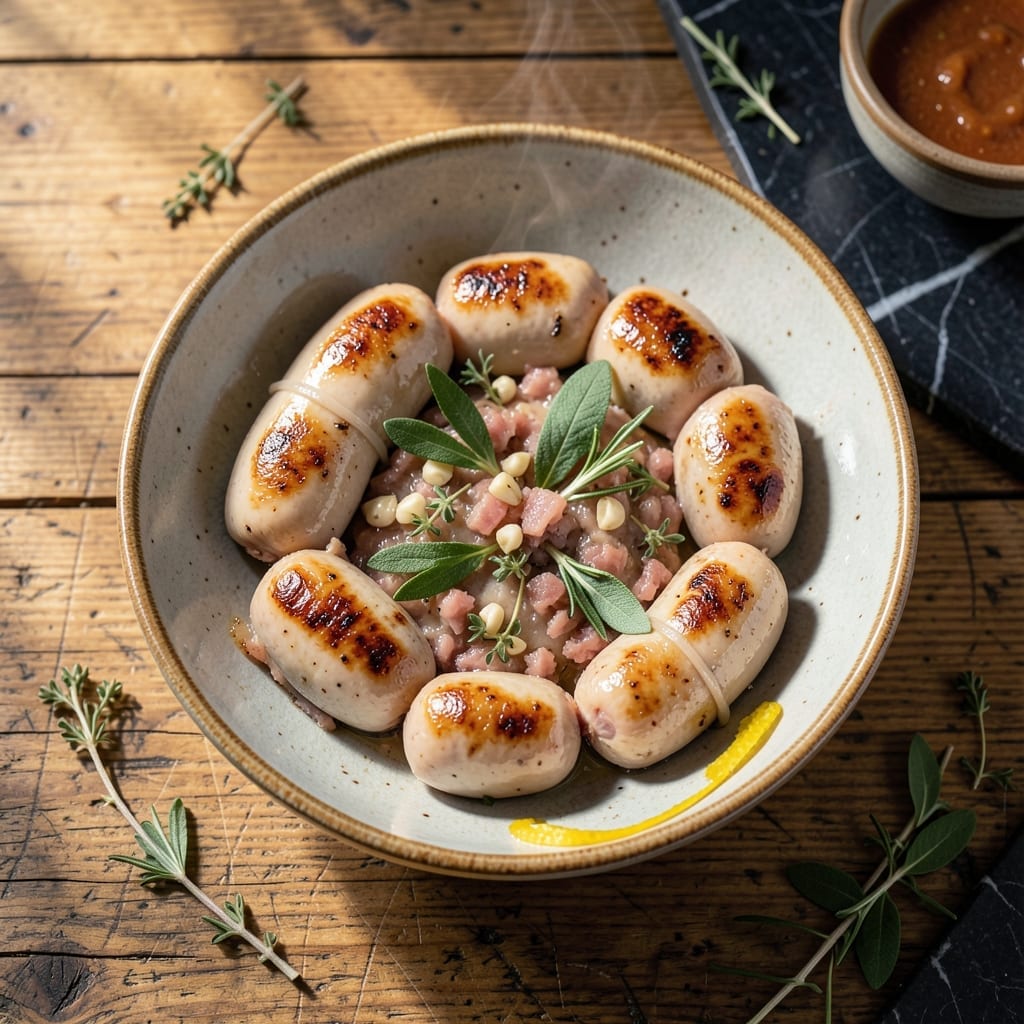
Making homemade sausage transforms your kitchen into a craft butchery with minimal effort. This recipe delivers juicy, herb-infused links that outshine store-bought versions every time.
The secret lies in the fat ratio and proper seasoning distribution. Using ground chicken with skin ensures moisture, while fresh herbs and spices create layers of flavor that store-bought can’t match.
You’ll control every ingredient, from the meat quality to the herb blend. The result is tender, flavorful sausage with a texture that’s perfectly balanced between firm and succulent.
Once you taste these, you’ll never go back to pre-made. Let’s create sausage that’s truly your own.
Ingredients for Chicken Sausage Recipe Homemade
Ground chicken, fresh herbs, and a few spices create these juicy links at home.
| Ingredient | Amount | Notes |
|---|---|---|
| Ground Chicken with Skin 🍗 | 2 lb | Dark meat preferred for juiciness |
| Pork Fat 🥓 | ½ lb | Or substitute chicken fat |
| Fresh Sage Leaves 🌿 | 2 tbsp | Finely chopped, stems removed |
| Fresh Rosemary 🌿 | 1 tbsp | Finely chopped, woody stems discarded |
| Fresh Thyme Leaves 🍃 | 1 tbsp | Stripped from stems |
| Garlic Cloves 🧄 | 4 cloves | Minced to fine paste |
| Kosher Salt 🧂 | 2 tsp | Diamond Crystal preferred |
| Black Pepper 🌶️ | 1 tsp | Freshly cracked for boldness |
| Fennel Seeds 🌿 | 1 tsp | Lightly crushed to release oils |
| Red Pepper Flakes 🔥 | ½ tsp | Adjust for heat preference |
| Dried Oregano 🍃 | 1 tsp | Rubbed between fingers to activate |
| Ground Nutmeg 🌰 | ¼ tsp | Freshly grated for best aroma |
| Ice Water 💧 | ¼ cup | For binding mixture |
| Natural Hog Casings 🌭 | 8 pieces | Soaked in water 30 minutes |
The ground chicken with skin is non-negotiable here—it’s what guarantees that juicy texture the intro promises. Butcher shops often carry it, or ask them to grind fresh chicken thighs with skin on. If you’re buying pre-ground, look for dark meat blends. Pork fat keeps everything moist, but chicken fat works too (render it down from skin first). Whole Foods has good-quality hog casings if you’re not making your own.
No pork fat? Olive oil at half the amount works in a pinch, though the texture won’t be quite the same. Fresh herbs are ideal, but dried at one-third the quantity gets you close—just soak them in the ice water first. Out of casings? Skip them entirely and shape into patties. The fennel seeds are key for that classic sausage taste, but anise seeds can substitute if that’s what you’ve got.
The mixture keeps in the fridge for 2 days before stuffing, or freeze the raw sausage for 3 months. Once cooked, it’s best eaten fresh but reheats well—just don’t overcook. Leftovers? 5 days in the fridge, or freeze cooked links for 2 months.
Why You’ll Love This Recipe
- Minimal Effort: Honestly, mixing ground chicken with pork fat and fresh herbs takes less time than scrolling for takeout options.
- Herb Heaven: The fresh sage, rosemary, and thyme make every bite taste like a gourmet butcher’s best work.
- Freezer Friendly: I double the batch and freeze half—breakfast patties or pasta topping in minutes.
- Budget Winner: Ground chicken with skin stretches further with pork fat, and it’s still ridicuously good.
Step-by-Step Instructions for Chicken Sausage
Here’s the method I use to create perfectly seasoned, juicy links every single time.
Step 1: Prepare the Natural Hog Casings
Begin by soaking the 8 pieces natural hog casings in a bowl of cold water for 30 minutes. This softens them and makes them easier to handle. I like to change the water once during the soaking process to ensure they’re fully hydrated.
After soaking, rinse the casings under cold running water to remove any excess salt. Slide one casing onto the spout of your kitchen faucet and gently run water through it to check for any blockages or tears. Pat them dry with paper towels—they should feel supple and smooth, not brittle.
Step 2: Combine the Meat and Fat with Seasonings
In a large mixing bowl, combine the 2 lb ground chicken with skin and 0.5 lb pork fat. The pork fat is essential for moisture and flavor, so don’t skip it. Add the 2 tbsp fresh sage leaves, 1 tbsp fresh rosemary, 1 tbsp fresh thyme leaves, and 4 cloves garlic cloves (minced to a fine paste).
Sprinkle over the 2 tsp kosher salt, 1 tsp black pepper, 1 tsp fennel seeds (lightly crushed), 0.5 tsp red pepper flakes, 1 tsp dried oregano, and 0.25 tsp ground nutmeg. Using your hands, mix everything together thoroughly—you want the seasonings evenly distributed throughout the meat.
Step 3: Incorporate Ice Water and Test the Mixture
Pour in the 0.25 cup ice water and mix again. The water helps bind the mixture and keeps the sausages moist during cooking. The mixture should feel slightly tacky but not wet—if it’s too loose, the casings won’t hold their shape.
To test the seasoning, take a small piece of the mixture and microwave it for 30 seconds or pan-fry it until cooked through. Taste it and adjust the seasoning if needed. I find this step crucial—it’s easier to fix the flavor now than after the sausages are stuffed.
Step 4: Stuff the Casings and Form the Links
Slide a length of casing onto the nozzle of your sausage stuffer or meat grinder attachment. Tie a knot at the end, leaving a small tail. Begin feeding the meat mixture into the casing, filling it gently but firmly. Avoid overfilling—this can cause the casings to burst during cooking. Aim for links that are about 1 inch in diameter.
Once the casing is filled, twist the sausage into 4-6 inch links, alternating the direction of each twist to create even, uniform links. Use a sharp knife to separate the links, but don’t cut all the way through if you prefer them connected. Prick any visible air bubbles with a needle to prevent them from expanding during cooking.
Step 5: Rest and Cook the Sausages
Place the sausages on a plate or tray and refrigerate uncovered for 1 hour. This resting period allows the flavors to meld and the casings to dry slightly, which helps them brown better when cooked.
To cook, heat a skillet over medium heat and add the sausages. Cook them for 15-20 minutes, turning occasionally, until they’re golden brown on all sides and the internal temperature reaches 165°F. Avoid pricking the sausages while they cook—this lets the juices escape. Serve hot and enjoy the herb-infused juiciness in every bite.
Pro Tips For Making Chicken Sausage Recipe Homemade
- Chill Before Stuffing: Pop your ground chicken and pork fat mixture in the fridge for 20-30 minutes before stuffing—this makes the mixture firmer and way easier to handle, and I learned this the hard way after wrestling with a sticky, uncooperative mess.
- Finely Chop Herbs: Take the extra minute to mince the fresh sage, rosemary, and thyme leaves as finely as possible, about 1/16-inch pieces. Sounds tedious, but it actually changes the outcome by distributing the flavor evenly throughout the sausage.
- Skip Overmixing: Mix just until the ingredients are combined—no more. Overworking the mixture will give you dense, tough sausage instead of that light, tender texture you’re after.
- Test with a Pat: Cook a small patty of the mixture in a pan before stuffing all your casings. Taste it, adjust seasoning if needed—this saves you from ending up with a whole batch of under-seasoned sausage.
Dietary Considerations for chicken sausage recipe homemade
Gluten-Free Friendly
This recipe is naturally gluten-free as written, making it perfect for anyone avoiding wheat. Just ensure your natural hog casings are labeled gluten-free, as some brands process them with shared equipment. I always check the packaging to be safe. 💪
Low-Carb Option
With 0 grams of carbs per serving (excluding casings), this fits perfectly into keto and low-carb diets. The casings add minimal carbs, but you can skip them entirely and form patties if you’re watching your intake closely.
Dairy-Free by Default
There’s no dairy in this recipe, so it’s safe for lactose-intolerant cooks. The only potential concern is cross-contamination if you’re using shared equipment. I recommend cleaning your grinder thoroughly if you’ve previously processed cheese.
Allergen Notes
The primary allergens here are pork fat and hog casings. For a pork-free version, substitute chicken fat and use collagen casings (derived from beef). Always verify casing ingredients if allergies are a concern.
Lower-Fat Adaptation
To reduce fat, replace the pork fat with olive oil at half the amount. The texture won’t be identical, but it’ll still be flavorful. I’ve found adding 1 extra tbsp ice water helps compensate for the missing fat.
Remember that some fat is essential for moisture and flavor in sausage-making.
Nutrition Facts
Frequently Asked Questions
What can I use instead of hog casings?
Collagen casings work well and are easier to handle. For a casing-free option, shape the mixture into patties. Just note that patties won’t have the traditional snap of linked sausages.
Why does my sausage turn out dry?
This usually means the fat ratio was too low. Stick with 2 lb chicken to 0.5 lb fat minimum, and avoid overcooking. Internal temp should reach 165°F but not exceed it.
Can I make this without a meat grinder?
Buy pre-ground chicken with skin and mix by hand. A stand mixer with paddle attachment works too—just don’t overmix or the texture will turn pasty.
How long should I rest the meat mixture before stuffing?
Refrigerate the seasoned meat for 30-60 minutes before stuffing. This helps the flavors meld and makes the mixture easier to handle.

- 6 Egg Cake Recipe with Oil: Light as Air With Buttery Moisture - October 4, 2026
- 4 Bean Casserole Recipe: One-Pan Heartiness With Smoky Paprika Depth - October 4, 2026
- 3-Ingredient Keto Mug Cake Recipe: Microwave Magic in 2 Minutes - October 4, 2026