
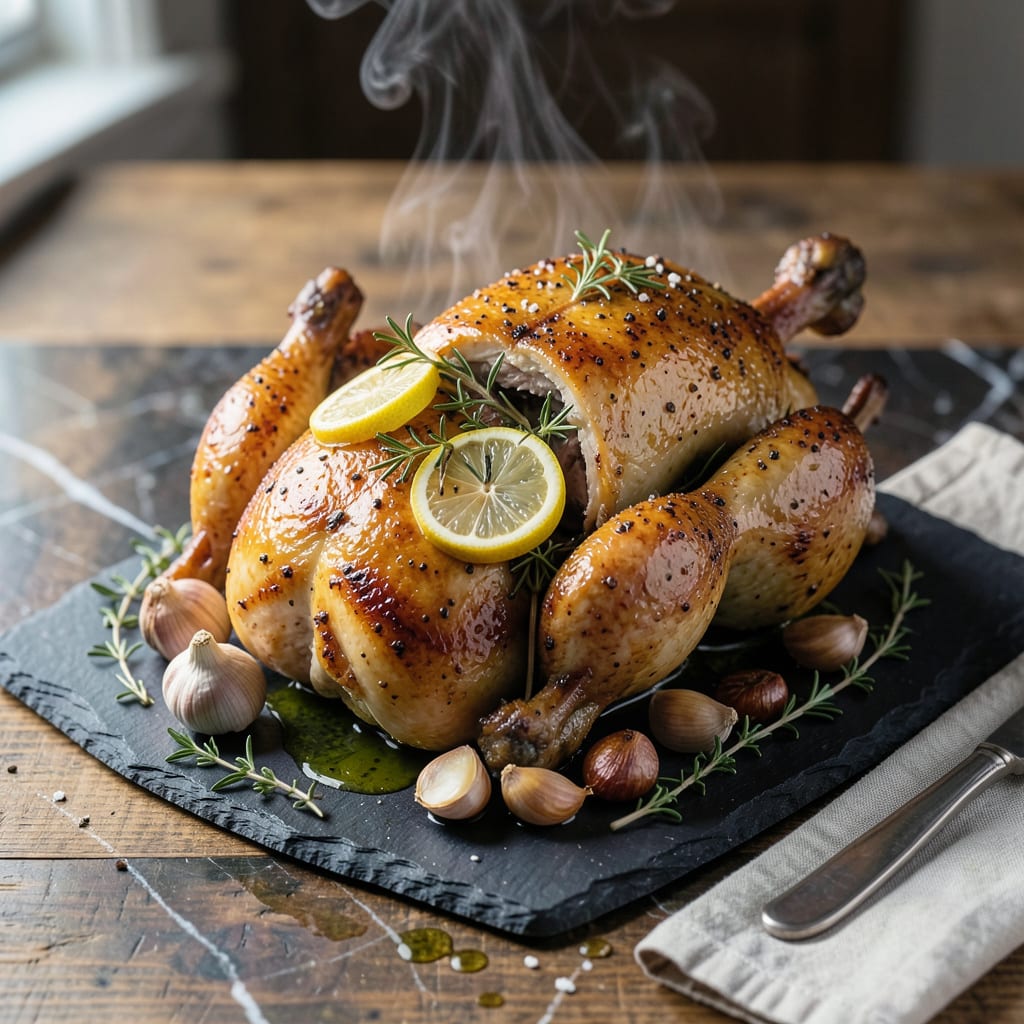
This steam-roast method delivers juicy chicken with an aromatic depth that traditional roasting can’t match. The technique locks in moisture while infusing the meat with layers of flavor from the steaming process.
With precise temperature control and timing, you’ll achieve perfectly cooked chicken every time. The result is tender, flavorful meat with a subtle complexity that elevates this dish above ordinary roasted chicken.
Ingredients for Chicken Steam Roast
Whole chicken and aromatic vegetables create this steam-infused roast with juicy, flavorful results.
| Ingredient | Amount | Notes |
|---|---|---|
| Whole Chicken 🍗 | 1 whole | 3-4 lb, giblets removed |
| Kosher Salt 🧂 | 1 ½ tbsp | Diamond Crystal preferred |
| Black Pepper 🌶️ | 1 tsp | Freshly cracked for best flavor |
| Garlic Cloves 🧄 | 6 cloves | Smashed, unpeeled |
| Fresh Thyme Sprigs 🌿 | 4 whole | Plus 1 tbsp chopped |
| Fresh Rosemary Sprigs 🌿 | 2 whole | Plus 1 tbsp chopped |
| Lemon 🍋 | 1 whole | Halved, for cavity |
| Yellow Onion 🧅 | 1 whole | Quartered, for aromatics |
| Carrots 🥕 | 2 whole | Cut into 2-inch chunks |
| Celery Stalks 🥬 | 2 whole | Cut into 2-inch chunks |
| Chicken Stock 🍲 | 1 cup | Low-sodium preferred |
| White Wine 🍷 | ½ cup | Dry variety like Sauvignon Blanc |
| Unsalted Butter 🧈 | 2 tbsp | Melted, for basting |
| Olive Oil 🫒 | 1 tbsp | For initial searing |
The chicken quality is paramount for this technique. Opt for a 3-4 lb bird with smooth, unblemished skin—air-chilled if available at Whole Foods or specialty markets. Avoid pre-brined chickens as they can become overly salty during the steam process. Fresh herbs should be vibrant green with no wilting; organic when possible for maximum aromatic impact.
For the stock, homemade is ideal, but low-sodium store-bought from Swanson or Imagine Foods works perfectly. No white wine? Substitute with additional chicken stock plus 1 tbsp lemon juice. The butter can be replaced with olive oil for a lighter finish, though the flavor profile will be slightly different.
Store the chicken in its original packaging in the coldest part of your refrigerator for up to 2 days before cooking. Fresh herbs keep 5-7 days wrapped in damp paper towels. The roast can be made 1 day ahead—reheat gently in a 300°F oven with a splash of stock.
Why You’ll Love This Recipe
- One Pan Wonder: Honestly, I just toss the chicken with salt, pepper, garlic, and thyme, then let the oven do the work.
- Garlic-Thyme Magic: The aroma of roasted garlic and fresh thyme filling my kitchen is reason enough.
- Sunday or Wednesday: I make this for lazy Sundays, but it’s just as good sliced into sandwiches for lunch the next day.
- Leftovers for Days: One whole chicken means meals for two nights—soup, tacos, you name it.
Step-by-Step Instructions for Chicken Steam Roast
This method guarantees succulent meat with layers of aromatic flavor throughout.
Step 1: Season and Prepare the Chicken
Pat the whole chicken completely dry with paper towels to ensure crisp skin. Season the cavity generously with 1.5 tbsp kosher salt and 1 tsp black pepper, then stuff it with the 6 cloves garlic cloves, 4 whole fresh thyme sprigs, 2 whole fresh rosemary sprigs, and 1 whole lemon halves.
This aromatic foundation infuses the meat from within as it cooks. Truss the legs together with kitchen twine to maintain an even shape, which promotes uniform cooking and prevents the breast from drying out.
Step 2: Sear for Color and Flavor
Heat 1 tbsp olive oil in a large roasting pan or Dutch oven over medium-high heat. When the oil shimmers, add the chicken breast-side down and sear for 4-5 minutes until the skin turns deep golden brown.
Flip the chicken and sear the back for another 3-4 minutes. This initial sear develops the Maillard reaction, creating complex flavors and a beautiful color. The pan will be hot, so use tongs to handle the bird safely.
Step 3: Add Aromatics and Liquid for Steam
Scatter the 1 whole yellow onion (quartered), 2 whole carrots (cut into 2-inch chunks), and 2 whole celery stalks (cut into 2-inch chunks) around the chicken in the pan. Pour in the 1 cup chicken stock and 0.5 cup white wine around the base, not over the bird.
The liquid creates steam that circulates through the oven, basting the chicken continuously. This steam-roasting technique locks in moisture while allowing the skin to brown beautifully. The vegetables will absorb the flavors and can be served alongside the chicken.
Step 4: Roast to Perfection
Transfer the pan to a preheated 375°F oven. Roast uncovered for 1 hour to 1 hour 15 minutes, basting the chicken with the 2 tbsp unsalted butter (melted) every 20 minutes.
You’ll know it’s done when an instant-read thermometer inserted into the thickest part of the thigh (not touching bone) reads 165°F and the juices run clear. The skin should be crisp and golden brown.
Step 5: Rest and Serve
Transfer the chicken to a cutting board and let it rest for 15 minutes before carving. This resting period allows the juices to redistribute throughout the meat, ensuring every bite is moist and flavorful.
Strain the pan juices and serve them as a light sauce over the carved chicken. The combination of steam and dry heat creates a bird that’s impossibly juicy with skin that crackles at the touch of a knife.
Pro Tips For Making Chicken Steam Roast
- Preheat Your Steam: Start with a screaming hot oven—450°F for the first 20 minutes to sear the skin, then drop to 350°F to let the steam finish the job. I learned this the hard way after ending up with pale, rubbery skin more times than I’d like to admit.
- Dry the Bird Well: Pat that chicken bone dry with paper towels before seasoning—every bit of moisture left on the skin is a missed opportunity for crispiness. Sounds tedious, but it actually changes the outcome.
- Skip the Overcrowding: Use a roasting rack or a bed of chopped veggies to elevate the chicken so steam can circulate underneath. After burning the bottom of my chicken twice, I finally figured out this was the culprit.
- Stuff with Aromatics: Cram the cavity with those garlic cloves and thyme sprigs—it infuses the meat from the inside out while the steam does its work. My grandmother swore by this, and she was right.
Storing and Reheating This Recipe
Refrigerator Storage
Let the chicken cool completely before storing. Wrap leftovers tightly in aluminum foil or place in airtight containers and refrigerate for up to 3-4 days. The steam-roasting method preserves moisture, so the meat stays tender. ❄️
Freezer Storage
For longer storage, freeze portions in heavy-duty freezer bags with excess air removed. The chicken maintains quality for up to 3 months. Label with the date—I always use freezer-safe markers to track freshness.
Oven Reheating
Preheat your oven to 325°F and place the chicken in a baking dish with 2 tbsp chicken stock. Cover with foil and heat for 15-20 minutes until reaching 165°F. This keeps the meat juicy. 🔥
Stovetop Method
Slice the chicken and warm in a skillet over medium-low heat with a splash of stock. Cover and heat for 5-7 minutes, stirring occasionally. Add any pan juices from storage for extra flavor.
Microwave Option
For quick reheating, place portions on a microwave-safe plate with a damp paper towel. Heat on 50% power in 1-minute intervals, checking until warmed through to 165°F.
Serving Again
Reheated steam-roast chicken tastes almost as good as fresh. I love serving it with the reheated vegetables and a drizzle of the reserved pan juices for maximum flavor.
Nutrition Facts
Frequently Asked Questions
Why use steam when roasting chicken?
Steam keeps the meat incredibly juicy while allowing the skin to crisp. The circulating moisture infuses flavor without making the bird soggy, creating perfect texture throughout.
Can I use a different cooking vessel?
A Dutch oven works best, but any heavy oven-safe pan with a lid will work. Avoid glass or ceramic as they don’t conduct heat as evenly for searing.
What if my chicken isn’t browning?
Pat the skin completely dry before searing and roast uncovered. For extra crispiness, broil for 2-3 minutes at the end, watching closely.
How do I know when it’s done?
Use a meat thermometer—the thickest part of the thigh should reach 165°F. The juices should run clear, not pink.

- 6 Egg Cake Recipe with Oil: Light as Air With Buttery Moisture - October 4, 2026
- 4 Bean Casserole Recipe: One-Pan Heartiness With Smoky Paprika Depth - October 4, 2026
- 3-Ingredient Keto Mug Cake Recipe: Microwave Magic in 2 Minutes - October 4, 2026