
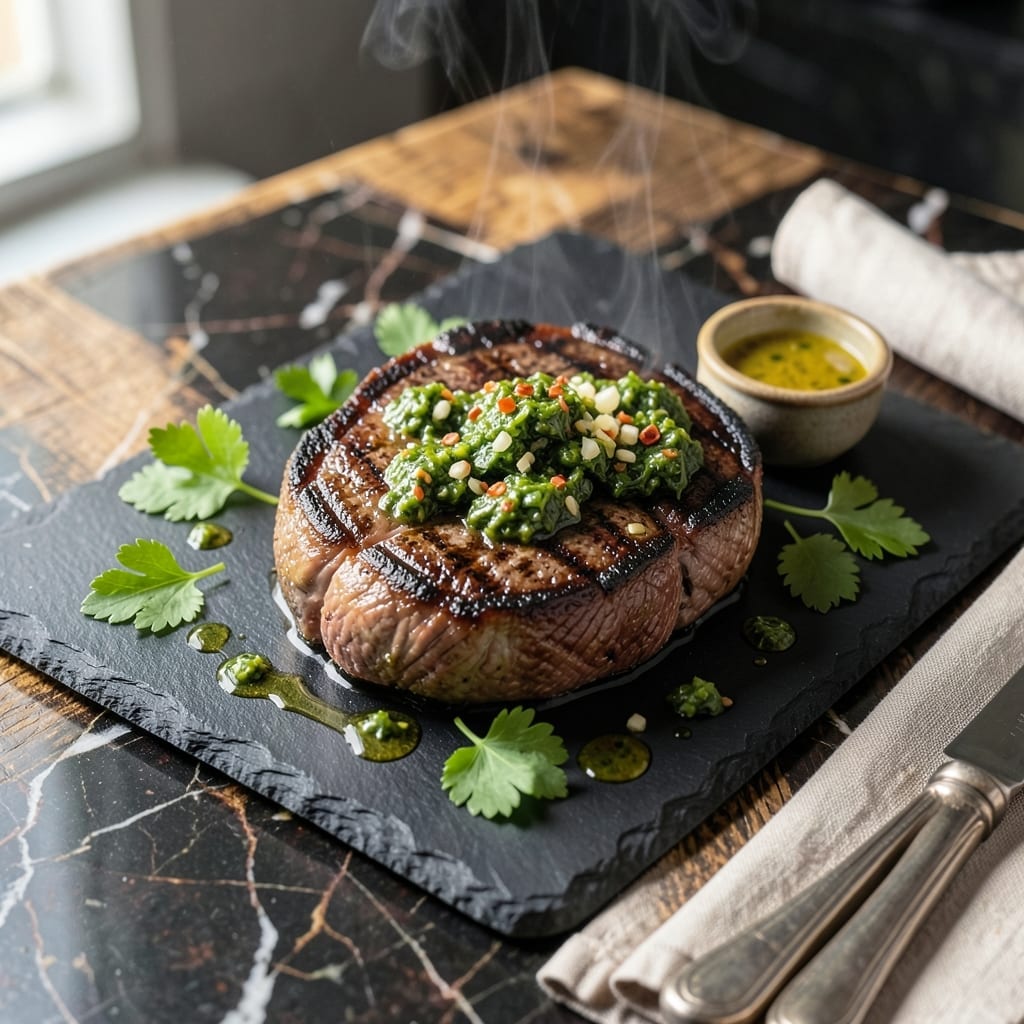
This vibrant herb sauce transforms any grilled cut into a restaurant-quality experience. A staple in Argentine cuisine, it brings fresh, bright flavors that cut through rich meats.
With just a handful of simple ingredients and 10 minutes of prep, you’ll have a versatile condiment that elevates steak, chicken, or even roasted vegetables.
Ingredients for Chimichurri Sauce Recipe for Steak
Nine ingredients deliver bold Argentine flavor for any grilled dish.
| Ingredient | Amount | Notes |
|---|---|---|
| Fresh Flat-Leaf Parsley 🌿 | 1 cup | Packed, stems removed |
| Fresh Cilantro 🌿 | ½ cup | Packed, stems removed |
| Garlic Cloves 🧄 | 4 cloves | Peeled, minced |
| Red Wine Vinegar 💧 | 3 tbsp | High-quality for acidity |
| Extra-Virgin Olive Oil 🫒 | ¾ cup | Fruity, high-quality preferred |
| Red Pepper Flakes 🌶️ | ½ tsp | Adjust for heat preference |
| Dried Oregano 🍃 | 1 tsp | Mexican oregano if available |
| Sea Salt 🧂 | ½ tsp | Fine grain preferred |
| Freshly Ground Black Pepper 🌶️ | ¼ tsp | Coarse grind works too |
The herbs are non-negotiable here. Fresh flat-leaf parsley and cilantro must be vibrant and free of wilt—Whole Foods or a farmers market will have the best selection. Garlic should be fresh and pungent; avoid pre-minced jars. For the vinegar, Colavita or Lucini brands offer the right balance of acidity without overpowering. The olive oil should be extra-virgin and robust enough to stand up to the bold flavors.
Out of cilantro? Fresh basil at one-to-one ratio works in a pinch, though the flavor profile shifts. No red wine vinegar? Sherry vinegar or apple cider vinegar can substitute, but reduce by one-fourth as they’re more assertive. For a milder heat, omit the red pepper flakes entirely. The oregano can be fresh if you prefer—use three times the amount since dried is more concentrated.
Chimichurri keeps beautifully. Store in an airtight container with a thin layer of olive oil on top to preserve color and freshness. Lasts 1 week refrigerated or 3 months frozen. The flavors meld and deepen over time, making it even better the next day.
Why You’ll Love This Recipe
- 5-Minute Blend: I toss everything in the blender—parsley, cilantro, garlic, vinegar, oil—and it’s ready before the steak finishes resting.
- Bright and Zesty: That punch of red wine vinegar and fresh herbs cuts through rich steak like nothing else I’ve tried.
- Drizzle on Everything: Honestly, I use leftovers on sandwiches, eggs, even roasted veggies the next day.
- Budget-Friendly Flavor: A handful of herbs and pantry staples turn a cheap cut into a restaurant-worthy meal.
Step-by-Step Instructions for Chimichurri Sauce For Steak
Master the technique for this vibrant sauce that transforms any grilled cut into a restaurant-quality dish.
Step 1: Prepare and Chop the Fresh Herbs
Remove the stems from the 1 cup Fresh Flat-Leaf Parsley and 0.5 cup Fresh Cilantro, then pack them into their respective measuring cups. I recommend using a chef’s knife to finely mince the leaves—this releases their essential oils and creates a more cohesive sauce.
Place the chopped herbs on a cutting board and continue chopping until they’re uniformly fine but not puréed. The texture should be vibrant and rustic, not pasty. This step ensures every bite of sauce carries the bright, fresh flavors that make chimichurri so special.
Step 2: Mince the Garlic and Toast the Spices
Peel and mince the 4 cloves Garlic Cloves until they’re as fine as possible. Raw garlic can be overpowering, so I mince it thoroughly to distribute its flavor evenly throughout the sauce. This prevents any single bite from being too sharp or bitter.
In a small dry skillet over low heat, lightly toast the 0.5 tsp Red Pepper Flakes and 1 tsp Dried Oregano for 30 seconds until fragrant. This step deepens their flavors and enhances the sauce’s complexity. Let them cool before adding to the mixture.
Step 3: Combine Wet and Dry Ingredients
In a medium mixing bowl, combine the minced herbs, garlic, toasted spices, 0.5 tsp Sea Salt, and 0.25 tsp Freshly Ground Black Pepper. Pour in the 3 tbsp Red Wine Vinegar and stir to blend. The vinegar will begin to break down the herbs and release their flavors.
Let the mixture sit for 5 minutes to allow the flavors to meld. This short rest period is critical—it softens the harshness of the raw garlic and lets the herbs infuse into the vinegar, creating a more balanced and harmonious base for the sauce.
Step 4: Emulsify with Olive Oil
Slowly drizzle in the 0.75 cup Extra-Virgin Olive Oil while whisking constantly. This emulsification process is what gives chimichurri its signature creamy yet chunky texture. Use a high-quality, fruity extra-virgin olive oil for the best flavor.
Continue whisking until the sauce is well combined but still retains its rustic texture. You’ll notice the oil slightly thickens and the herbs become suspended in the mixture. The sauce should be vibrant green with visible herb flecks, not a smooth purée.
Step 5: Rest and Serve
Transfer the chimichurri to a jar or bowl and let it rest at room temperature for at least 20 minutes before serving. This resting time allows the flavors to fully develop and the herbs to soften slightly in the acidity of the vinegar.
Spoon generously over grilled steaks, chicken, or fish. For the best experience, serve it fresh—the bright, herbaceous flavors are most pronounced when the sauce is newly made. Store any leftovers in an airtight container in the refrigerator for up to 3 days.
Pro Tips For Making Chimichurri Sauce Recipe For Steak
- Hand Chop Herbs: Skip the food processor—I learned this the hard way—finely mincing the parsley and cilantro by hand releases the oils better and gives the sauce that perfect rustic texture.
- Bloom the Garlic: Mince the garlic and let it sit for 5 minutes before mixing; it mellows the harshness and actually changes the outcome of your chimichurri.
- Balance the Vinegar: Start with half the red wine vinegar, taste, then add more—sounds weird, but it works: too much upfront can overpower the herbs.
- Use Room-Temp Oil: After burning three batches of sauce with cold oil separating, I finally figured out that room-temperature olive oil blends smoothly and carries the flavors better.
Pro Cooking Tips for This Recipe
💡 Balance the Acidity
Chimichurri thrives on a bright, tangy kick. Use fresh lime or lemon juice for the best flavor, but taste as you go. Too much acid can overpower the herbs, so start with 2 tablespoons and adjust. A pinch of sugar can mellow harshness if needed.
🌡️ Rest the Steak First
Let your steak rest for 5–10 minutes after cooking before adding chimichurri. This keeps the juices inside the meat, not on the cutting board. The sauce will cling better to a warm, rested surface.
Pro move: Spoon chimichurri over the steak while it rests to let the flavors meld.
✨ Chop, Don’t Blend
For the best texture, hand-chop the herbs and garlic instead of using a food processor. This keeps the sauce rustic and vibrant. A fine dice ensures even distribution of flavors in every bite.
🎯 Oil Quality Matters
Use a high-quality extra-virgin olive oil—it’s the backbone of chimichurri. A robust, peppery oil adds depth, while a mild one keeps the focus on the herbs. Avoid overheating the oil to preserve its fresh, fruity notes.
Nutrition Facts

- 6 Egg Cake Recipe with Oil: Light as Air With Buttery Moisture - October 4, 2026
- 4 Bean Casserole Recipe: One-Pan Heartiness With Smoky Paprika Depth - October 4, 2026
- 3-Ingredient Keto Mug Cake Recipe: Microwave Magic in 2 Minutes - October 4, 2026