
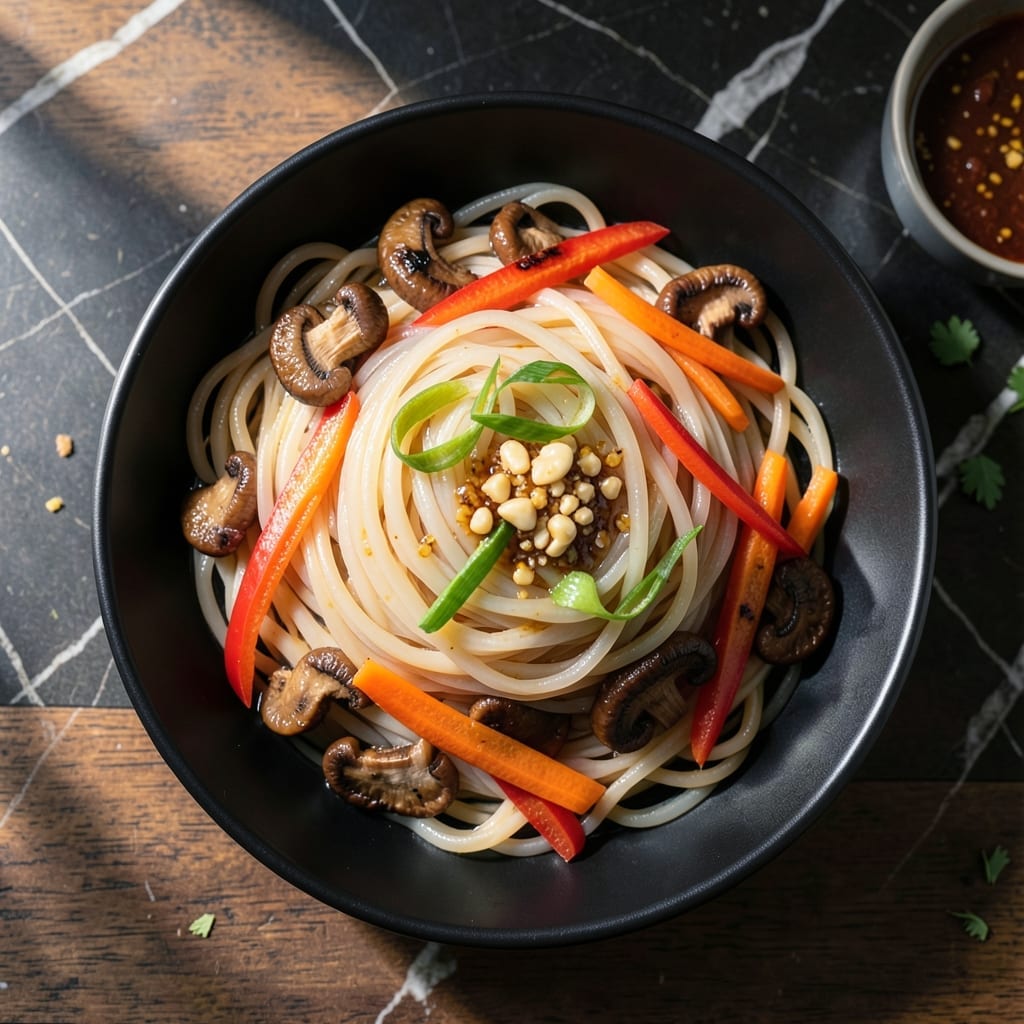
There’s something magical about glass noodles—their translucent strands soak up flavors like a sponge while maintaining a satisfying chew. This recipe transforms simple ingredients into a dish with umami depth and delicate texture that feels restaurant-worthy.
I’ve refined this method to ensure the noodles cook evenly without turning mushy. The key is soaking them first, then stir-frying with vegetables and a savory sauce that clings perfectly to every bite.
What you’ll get is a bowl of noodles that are tender yet resilient, with layers of garlic, soy, and a hint of sweetness. It’s a dish that balances simplicity with bold flavor.
Serve it as a main or alongside your favorite protein. Here’s how to make it right.
Ingredients for Chinese Glass Noodle
Transform simple pantry staples into a dish with translucent strands and bold flavor.
| Ingredient | Amount | Notes |
|---|---|---|
| Mung Bean Cellophane Noodles 🍜 | 8 oz | Dry, also called glass noodles |
| Shiitake Mushrooms 🍄 | 6 whole | Fresh, sliced thinly |
| Carrots 🥕 | 2 whole | Julienned for even cooking |
| Red Bell Pepper 🌶️ | 1 whole | Thinly sliced into strips |
| Garlic Cloves 🧄 | 4 cloves | Minced finely for sauce |
| Green Onions 🧅 | 4 whole | Thinly sliced, white and green parts |
| Light Soy Sauce 🫒 | ⅓ cup | Low-sodium preferred for balance |
| Dark Soy Sauce 🫒 | 1 tbsp | For depth and color |
| Oyster-Free Vegetarian Stir-Fry Sauce 🫒 | 2 tbsp | Substitute for oyster sauce |
| Sesame Oil 🫒 | 1 tbsp | Toasted for aroma |
| Vegetable Broth 🥣 | ½ cup | Low-sodium for control |
| Brown Sugar 🍚 | 1 tsp | For subtle sweetness |
| Cornstarch 🌾 | 1 tbsp | Mixed with water for slurry |
| Neutral Cooking Oil 🫒 | 2 tbsp | High smoke point, like avocado or peanut |
The noodles are everything here. Look for mung bean-based cellophane noodles at Asian markets or the international aisle—brands like Swan or Thai Kitchen are reliable. Avoid rice noodles; they won’t deliver the same chew. Fresh shiitake mushrooms add depth, but dried rehydrated works too (just reserve the soaking liquid for extra umami).
No vegetarian stir-fry sauce? Hoison sauce plus a dash of soy is a solid swap. For the mushrooms, cremini or white button can stand in, though shiitake’s meaty texture is ideal. The cornstarch slurry is non-negotiable—it’s what gives the sauce that glossy, clingy finish. If you’re gluten-free, tamari instead of soy sauce keeps everything intact.
Store dry noodles in a cool, dark place—they’ll last 12-18 months. Once soaked, cook immediately or they’ll turn gummy. Leftovers keep 3-4 days in the fridge, though the noodles firm up as they sit. Reheat gently with a splash of water to revive the texture.
Why You’ll Love This Recipe
- No Soaking Needed: I just toss the mung bean noodles straight into hot broth—no pre-soaking, no fuss.
- Umami Bomb: The shiitake and garlic combo hits that deep, savory note I crave.
- Weeknight Hero: Honestly, it’s my Tuesday dinner MVP—fast, filling, and the kids actually eat the bell peppers.
- Stretches Far: One batch feeds us twice, and the leftovers taste even better the next day.
Step-by-Step Instructions for Chinese Glass Noodles
Master the technique for perfectly chewy noodles and a glossy, umami-rich sauce every time.
Step 1: Soak and Prepare the Noodles
Place the 8 oz Mung Bean Cellophane Noodles in a large bowl and cover with hot tap water. I use water just off the boil—hot enough to soften the noodles but not boiling, which can make them gummy. Let them soak for 8-10 minutes until pliable and translucent.
Drain immediately and rinse under cold water to stop the cooking process. This prevents them from sticking together and becoming mushy. Use kitchen shears to snip the noodles into manageable lengths if desired. Set aside while you prepare the remaining ingredients.
Step 2: Stir-Fry the Vegetables and Aromatics
Heat the 2 tbsp Neutral Cooking Oil in a wok or large skillet over high heat until shimmering. Add the 6 whole Shiitake Mushrooms, 2 whole Carrots, and 1 whole Red Bell Pepper, all prepped as directed. Stir-fry for 4-5 minutes until the vegetables are crisp-tender and the mushrooms begin to brown.
Add the 4 cloves Garlic Cloves and white parts of the 4 whole Green Onions. Cook for an additional 30-45 seconds until the garlic is fragrant but not burnt. The vegetables should retain some bite—this dish relies on textural contrast.
Step 3: Create and Thicken the Sauce
In a small bowl, whisk together the 0.33 cup Light Soy Sauce, 1 tbsp Dark Soy Sauce, 2 tbsp Oyster-Free Vegetarian Stir-Fry Sauce, 0.5 cup Vegetable Broth, 1 tsp Brown Sugar, and 1 tbsp Sesame Oil. Pour this mixture into the wok with the vegetables.
Bring to a gentle simmer. In a separate small bowl, mix the 1 tbsp Cornstarch with 2 tablespoons of cold water to create a slurry. Stir this into the sauce and cook for 1-2 minutes until it thickens enough to coat the back of a spoon. The sauce should be glossy and slightly syrupy.
Step 4: Combine and Finish the Dish
Add the drained noodles to the wok, tossing gently to coat them evenly in the sauce. Use tongs to separate any clumps. The noodles should absorb the sauce within 2-3 minutes of cooking, becoming fully tender and deeply flavored.
Stir in the green parts of the 4 whole Green Onions just before serving to retain their fresh, oniony bite. The noodles should be translucent and chewy, with the sauce clinging to each strand. Serve immediately while hot, as the noodles will continue to absorb the sauce as they sit.
Pro Tips For Making Chinese Glass Noodle
- Soak Noodles First: Cover the mung bean noodles in hot water for 5-7 minutes until pliable—I learned this the hard way after chewing through rock-hard strands.
- Slice Veggies Thin: Julienne the carrots and bell pepper into matchstick pieces so they cook evenly with the mushrooms, no one wants a crunchy carrot in a soft noodle dish.
- Don’t Overcook Noodles: After soaking, stir-fry them just 1-2 minutes to heat through; they’ll turn to mush if left too long in the pan.
- Bloom the Garlic: Cook the minced garlic in oil for 15-20 seconds until fragrant before adding anything else—sounds simple, but it actually changes the outcome.
Common Mistakes When Making chinese glass noodle
Over-Soaking Noodles
Soaking the 8 oz noodles for longer than 10 minutes turns them mushy. I set a timer to ensure they reach that perfect pliable stage without crossing into gummy territory. Hot tap water works better than boiling for even softening.
Skipping the Rinse
After soaking, always rinse the noodles under cold water. This stops the cooking process and removes excess starch, preventing clumping. I’ve learned the hard way that skipping this step leads to a sticky, gluey mess. 💡
Use your hands to gently agitate them while rinsing for the best results.
High Heat Overload
Cooking over high heat is essential, but adding all ingredients at once can lower the temperature too much. I stir-fry the vegetables first, then add aromatics like 4 cloves garlic at the end to prevent burning.
Sauce Too Thin
If your sauce isn’t thickening, it’s likely the cornstarch slurry wasn’t mixed well. Always dissolve 1 tbsp cornstarch in cold water first, then stir continuously as it simmers. The sauce should coat the back of a spoon.
Premature Noodle Addition
Adding noodles before the sauce thickens means they’ll absorb liquid unevenly. Wait until the sauce is glossy and syrupy—about 1-2 minutes after adding the slurry—before tossing them in. This ensures every strand gets coated perfectly.
Overcrowding the Wok
Glass noodles need space to cook evenly. If your wok is too full, the noodles steam instead of stir-fry. I cook in batches if needed, using tongs to turn them frequently for even exposure to the heat. 🔥
Nutrition Facts
Frequently Asked Questions
What can I use instead of vegetarian stir-fry sauce?
Hoisin sauce plus a dash of soy sauce works perfectly. For a simpler option, use 1 tbsp soy sauce mixed with 1 tsp sugar and 1/2 tsp rice vinegar to mimic the flavor.
Why did my noodles turn out gummy?
Over-soaking or skipping the cold water rinse causes this. Soak for only 8-10 minutes in hot tap water, then rinse immediately to stop cooking. Always drain well before stir-frying.
Can I make this ahead of time?
Prepare components separately but combine just before serving. Cooked noodles keep 3-4 days refrigerated, though they firm up. Reheat gently with a splash of water to restore texture.

- 6 Egg Cake Recipe with Oil: Light as Air With Buttery Moisture - October 4, 2026
- 4 Bean Casserole Recipe: One-Pan Heartiness With Smoky Paprika Depth - October 4, 2026
- 3-Ingredient Keto Mug Cake Recipe: Microwave Magic in 2 Minutes - October 4, 2026