
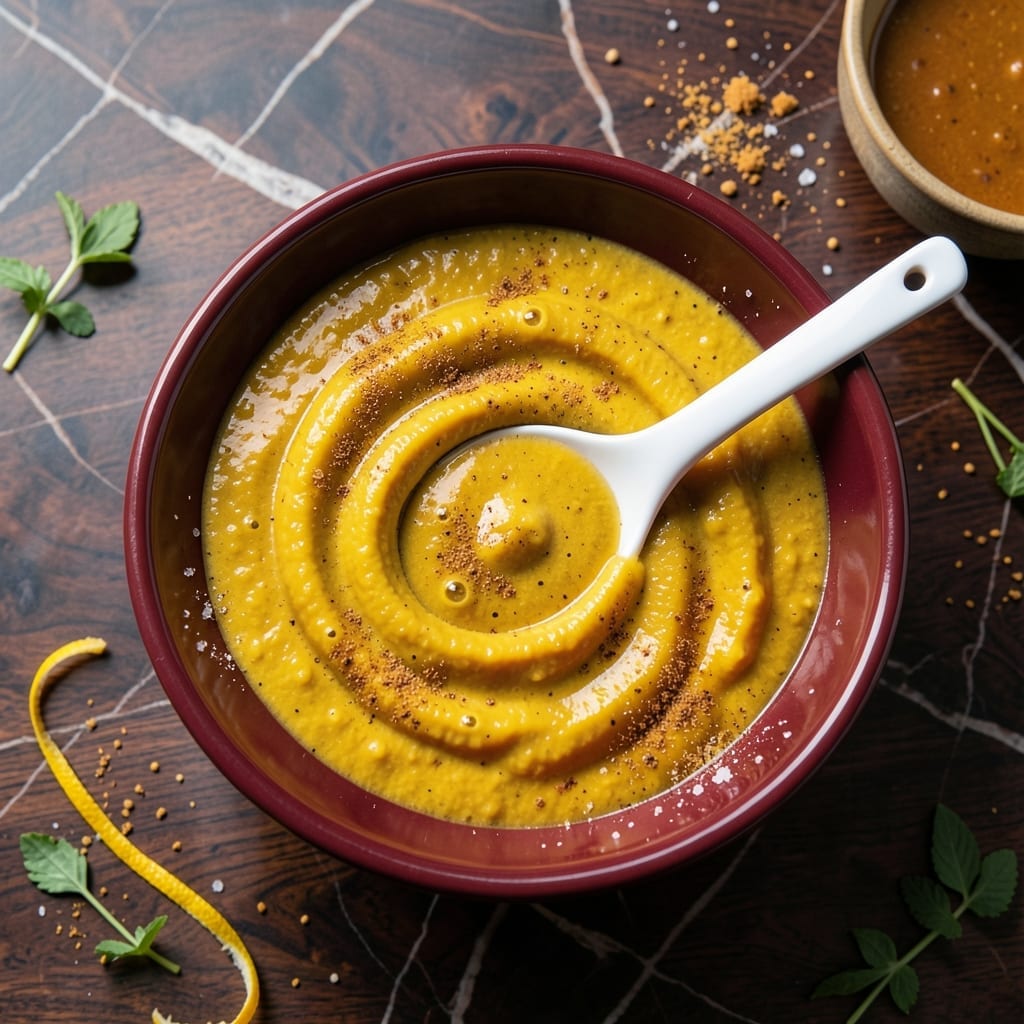
This bold condiment delivers the spicy kick that elevates dumplings, noodles, and stir-fries from ordinary to extraordinary. I developed this recipe after years of searching for the perfect balance of heat and depth that defines authentic Chinese hot mustard.
The secret lies in the combination of dry mustard powder, water, and a touch of vinegar, which creates a smooth paste with a sharp, fiery flavor. It comes together in minutes with minimal effort, yet the result is far superior to store-bought versions.
What you get is a versatile sauce that can be adjusted for heat level while maintaining its distinctive character. The sharpness mellows slightly over time, allowing the flavors to meld into a complex, punchy condiment.
Make a small batch to keep on hand for whenever your dish needs that signature spicy punch.
Ingredients for Chinese Hot Mustard
Seven simple ingredients create this fiery, complex condiment for dumplings and noodles.
| Ingredient | Amount | Notes |
|---|---|---|
| Dry Mustard Powder 🌶️ | ½ cup | High-quality, fresh powder preferred |
| Water 💧 | ⅓ cup | Room temperature for best consistency |
| White Vinegar 🍶 | 2 tbsp | Distilled or rice vinegar works |
| Turmeric Powder 🌿 | ¼ tsp | For color, optional but traditional |
| Salt 🧂 | ½ tsp | Fine sea salt recommended |
| Sugar 🍚 | 1 tsp | Balances heat, optional adjustment |
| Garlic Powder 🧄 | ½ tsp | Adds depth to flavor profile |
The mustard powder is non-negotiable here. Colman’s is the gold standard (find it at Whole Foods or Amazon), but any pure powder without additives works. Avoid pre-mixed mustards—they won’t give you that sharp, clean heat. Turmeric adds the classic yellow hue (McCormick or Badia brands are reliable). I skip it sometimes for a paler sauce, but tradition wins most days.
No white vinegar? Rice vinegar at equal amount keeps it authentic. Out of mustard powder? Mustard seeds ground fresh (1 tbsp seeds = ~2 tbsp powder) work in a pinch. Sugar haters can omit it—the heat will be sharper. The water amount can be adjusted (add slowly) for your preferred thickness. Too thick? A splash more water. Too thin? Wait 10 minutes, it’ll tighten up.
This keeps in the fridge for 1 month in a sealed jar. The flavor deepens after 24 hours—if you can wait that long. For longer storage, freeze in ice cube trays (3 months max). Stir before using, as separation is natural (and expected).
Why You’ll Love This Recipe
- 5-Minute Mix: I just stir mustard powder, water, vinegar, and a pinch of turmeric and salt—no cooking, no waiting.
- Sinuses Clear: That first hit of sharp, tangy heat from the mustard and vinegar wakes up any dish it touches.
- Dip or Spread: Honestly, it’s my go-to for dumplings, sandwiches, or even a quick marinade glaze.
- Pantry Staples: Between us, it costs pennies and lasts weeks in the fridge, so I always have some on hand.
Step-by-Step Instructions for Chinese Hot Mustard
This method ensures a smooth, vibrant condiment with the perfect balance of heat and tang.
Step 1: Combine Dry Ingredients
In a medium bowl, whisk together the 0.5 cup dry mustard powder, 0.25 tsp turmeric powder, 0.5 tsp salt, 1 tsp sugar, and 0.5 tsp garlic powder until fully combined. I always start with dry ingredients to prevent clumping when the liquid is added.
Use a fine-mesh sieve if your mustard powder has lumps. The turmeric adds that signature golden color, while the garlic powder deepens the flavor profile with a subtle savory note. Ensure there are no visible streaks of individual spices before moving to the next step.
Step 2: Add Liquid Components Gradually
Slowly pour in the 0.33 cup water while whisking continuously. This gradual incorporation prevents the mustard powder from forming stubborn clumps that are difficult to dissolve. The mixture will thicken as you work, transforming from a dry blend to a thick paste.
Once the water is fully incorporated, add the 2 tbsp white vinegar and whisk again. The vinegar not only adds tang but also helps stabilize the emulsion. You’ll notice the color deepen and the mixture smooth out as the vinegar reacts with the mustard powder.
Step 3: Rest and Develop Flavor
Cover the bowl with a clean kitchen towel or plastic wrap and let the mustard sit at room temperature for 10-15 minutes. This resting period allows the mustard powder to fully hydrate and the flavors to meld together harmoniously.
I’ve found that this step is crucial for achieving the right consistency. If the mustard seems too thick after resting, you can add a teaspoon of water to loosen it slightly, but avoid making it runny. The texture should be similar to a thick, spoonable paste.
Step 4: Adjust and Taste
Give the mustard a final whisk to ensure it’s smooth. Taste a small amount and adjust the seasoning if needed. If you prefer a milder heat, you can add a tiny pinch more sugar to balance the spiciness. Conversely, for extra heat, a dash more dry mustard powder can be whisked in.
Remember, the flavor will intensify slightly as it sits, so err on the side of caution with adjustments. The mustard should have a bold, sharp heat that mellows into a warm finish with hints of garlic and turmeric.
Step 5: Store for Future Use
Transfer the finished mustard to a clean, airtight jar or container. It will keep in the refrigerator for up to 1 month, though I doubt it will last that long once you start using it. The flavors will continue to develop and deepen over the first 24 hours.
Before each use, give it a good stir, as the ingredients may separate slightly over time. This mustard is incredibly versatile—perfect for dipping dumplings, spreading on sandwiches, or stirring into dressings for an extra kick.
Pro Tips For Making Chinese Hot Mustard
- Mix Last Minute: Combine the mustard powder and water just 10-15 minutes before serving—I learned this the hard way after my first batch turned bitter from sitting too long.
- Use Cold Water: Always start with ice-cold water when mixing the mustard powder; hot water kills the sharpness you want.
- Skip the Lumps: Sift your dry mustard powder first if it’s been sitting awhile, or you’ll end up with stubborn clumps no amount of stirring fixes.
- Adjust Turmeric Carefully: Start with 1/4 teaspoon turmeric for color, then add more to taste—it can overpower the mustard’s heat if you’re heavy-handed.
Wine and Beer Pairings for This chinese hot mustard
Crisp White Wines
A dry Riesling from Germany or Alsace cuts through the mustard’s heat with its bright acidity and subtle stone fruit notes. I also love Pinot Grigio from Friuli—its mineral edge refreshes your palate between spicy bites. 🍷
Light Lager Beers
The clean, crisp profile of a Pilsner or Helles Lager balances the sharpness beautifully. Try Tsingtao or Sapporo for an authentic pairing. The effervescence cleanses your mouth and preps you for the next dumpling. 🍺
Sparkling Options
For celebrations, Prosecco or Cava works wonders. The bubbles lift the mustard’s intensity while the light sweetness tempers the burn. I always keep a chilled bottle on hand for impromptu feasts.
Non-Alcoholic Pairs
Jasmine tea (hot or iced) enhances the condiment’s floral undertones. A ginger ale with real ginger, like Fever-Tree, adds a spicy-sweet contrast. Both options let the mustard shine without competition. ✨
Nutrition Facts
Frequently Asked Questions
What’s the best mustard powder for this?
Use Colman’s dry mustard powder for authentic flavor and heat. It’s the gold standard, but any pure powder without additives works. Avoid pre-mixed mustards as they won’t give you that sharp, clean heat.
How do I adjust the heat level?
For milder heat, add a pinch of sugar to balance. For extra spice, whisk in more dry mustard powder. Remember, the flavor intensifies slightly as it rests.
Can I make it without turmeric?
Yes, you can omit the turmeric, but it adds the classic golden color. Without it, your mustard will be paler but just as flavorful. The choice is purely aesthetic.
How long does it keep?
Stored in an airtight jar in the fridge, it lasts up to 1 month. The flavors deepen after 24 hours. Stir before using as separation is natural.

- 6 Egg Cake Recipe with Oil: Light as Air With Buttery Moisture - October 4, 2026
- 4 Bean Casserole Recipe: One-Pan Heartiness With Smoky Paprika Depth - October 4, 2026
- 3-Ingredient Keto Mug Cake Recipe: Microwave Magic in 2 Minutes - October 4, 2026