
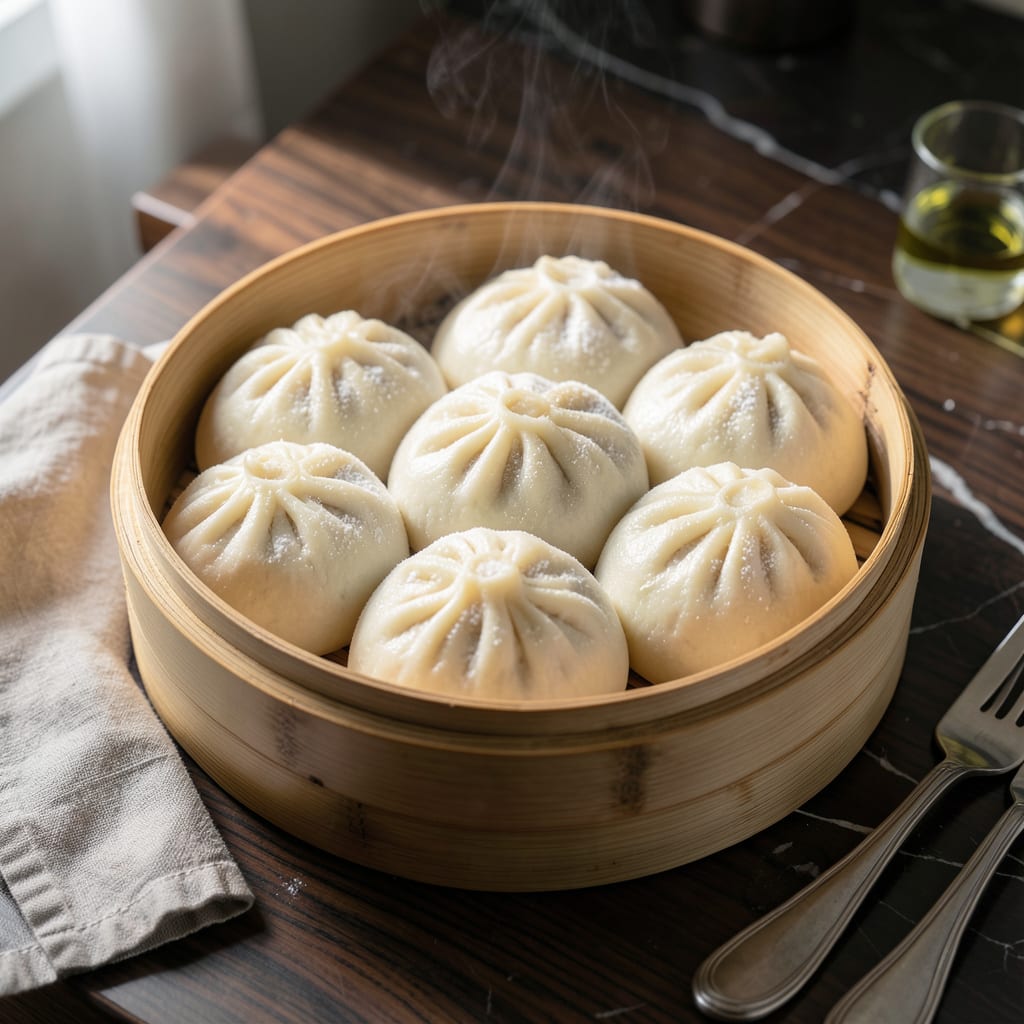
This traditional steaming method produces the softest, most pillowy bread you’ll ever taste. The gentle heat creates a tender texture that’s impossible to achieve through baking.
With just a few simple ingredients and 30 minutes of inactive proofing time, you can master this authentic technique. The result is a light, slightly sweet bread that pairs perfectly with any meal.
Ingredients for Chinese Steamed Bread
These humble pantry staples transform into ethereally soft, cloud-like bread through traditional steaming.
| Ingredient | Amount | Notes |
|---|---|---|
| All-Purpose Flour 🌾 | 4 cups | Plus extra for dusting |
| Granulated Sugar 🍚 | ¼ cup | Adjust for sweetness preference |
| Active Dry Yeast 🍞 | 2 ¼ tsp | One standard packet |
| Warm Water 💧 | 1 ¼ cups | 110°F, not hotter |
| Vegetable Oil 🫒 | 2 tbsp | Neutral flavor preferred |
| Baking Powder 🧂 | 1 tsp | For extra lift |
| Salt 🧂 | 1 tsp | Fine sea salt |
| Unsweetened Soy Milk 🥛 | ¼ cup | Room temperature |
| Cornstarch 🌽 | 1 tbsp | For dusting parchment |
| Sesame Seeds 🌰 | 1 tbsp | Optional, for topping |
The flour is the foundation—King Arthur or Bob’s Red Mill all-purpose gives the best rise. Yeast must be fresh (check the expiration date) and proofed in warm, not hot, water. The sugar activates the yeast, but you can reduce it slightly for a less sweet bread. I always keep a bag of Diamond Crystal salt on hand for consistent seasoning. The soy milk adds tenderness without dairy (perfect for vegetarian diets).
No soy milk? Any plant-based milk works at a 1:1 ratio. Out of yeast? You can’t skip it—this bread relies on fermentation. For a richer flavor, swap half the water for coconut milk. The vegetable oil can be any neutral oil (avocado or canola work well). If you don’t have cornstarch, all-purpose flour works for dusting, but the bread might stick slightly.
Dough can rest in the fridge overnight for a slower proof (enhances flavor). Steamed bread stays fresh for 2 days in an airtight container at room temperature. For longer storage, freeze for up to 1 month—re-steam to revive. Always bring ingredients to room temperature before mixing.
Why You’ll Love This Recipe
- No-Knead Magic: I just mix, shape, and steam—no fancy techniques or stand mixer required.
- Soft & Slightly Sweet: The sugar and yeast give it that pillowy texture with just a hint of sweetness.
- Pairs with Anything: Honestly, it’s my go-to for soups, stews, or even slathered with jam for breakfast.
- Pocket-Friendly Feast: A bag of flour and a packet of yeast make a dozen buns for pennies.
Step-by-Step Instructions for Chinese Steamed Bread
Master the technique for achieving light, fluffy texture with a slightly sweet flavor profile.
Step 1: Activate the Yeast and Prepare the Dough Base
Begin by dissolving the 2.25 tsp Active Dry Yeast and the 0.25 cup Granulated Sugar in the 1.25 cups Warm Water at precisely 110°F. The water should feel warm to the touch but not hot—too high a temperature will kill the yeast.
Let this mixture stand for 5-7 minutes until it becomes frothy and cloudy, indicating the yeast is active. This activation step is crucial for proper rising. Meanwhile, combine the 4 cups All-Purpose Flour, 1 tsp Baking Powder, and 1 tsp Salt in a large mixing bowl to ensure even distribution of leavening agents.
Step 2: Incorporate Wet Ingredients and Knead the Dough
Pour the yeast mixture into the dry ingredients along with the 0.25 cup Unsweetened Soy Milk and 2 tbsp Vegetable Oil. Use a wooden spoon or dough whisk to combine until a shaggy dough forms. The soy milk adds a subtle richness while keeping the dough soft and pliable.
Turn the dough onto a lightly floured surface and knead for 8-10 minutes until smooth and elastic. The dough should pass the windowpane test—when stretched thin, it should hold light without tearing. This develops the gluten structure necessary for the bread’s signature chewy yet tender texture.
Step 3: First Rise and Dough Preparation
Place the kneaded dough in a lightly oiled bowl, turning to coat all sides. Cover with a damp kitchen towel and let it rise in a warm, draft-free environment for 1 to 1.5 hours, or until doubled in volume. Proper proofing is essential for achieving the airy, cloud-like crumb.
Once risen, gently punch down the dough to release excess air. Divide it into 4 equal portions for individual steamed buns, or leave whole for a loaf. Shape each portion into a smooth ball, then flatten slightly into a disc. This prepares the dough for its final rise before steaming.
Step 4: Final Proof and Steamer Preparation
Line a bamboo steamer or metal steam rack with parchment paper dusted with the 1 tbsp Cornstarch to prevent sticking. Place the shaped dough pieces on the parchment, spacing them at least 2 inches apart to allow for expansion. Cover and let proof for an additional 30-45 minutes until puffy.
The cornstarch creates a non-stick barrier while adding a subtle tenderness to the finished product. Ensure your steamer is ready—fill the base with 2-3 inches of water and bring to a rolling boil before adding the dough.
Step 5: Steam to Perfection and Finish
Carefully place the steamer over the boiling water, ensuring the lid is tightly sealed to trap steam. Steam the bread for 15-20 minutes until the buns have expanded significantly and the dough is set. Avoid lifting the lid during the first 10 minutes to prevent collapsing the rising dough.
Remove the steamer from heat and let the bread cool for 2-3 minutes before handling. For added flavor and visual appeal, sprinkle with 1 tbsp Sesame Seeds while still warm. Serve immediately for the best texture, as steamed bread is most pillowy when fresh.
Pro Tips For Making Chinese Steamed Bread
- Proof the Yeast: Always dissolve the yeast in warm water (around 110°F) with a pinch of sugar first—if it doesn’t bubble within 5-10 minutes, your bread won’t rise. I learned this the hard way after wasting a whole batch of flour.
- Knead Thoroughly: Spend at least 10 minutes kneading the dough until it’s smooth and elastic. Sounds tedious, but it ensures a soft, chewy texture that’s non-negotiable for good steamed bread.
- Skip Cold Water: Using water that’s too cold slows down yeast activation, and too hot kills it. Aim for warm water that feels like a baby’s bath—about 110°F.
- Oil the Dough: Brush the dough with a little vegetable oil before the first rise. It prevents a dry crust from forming, making it easier to shape later.
Troubleshooting chinese steamed bread
Dense or Heavy Texture
If your bread feels dense, your yeast may have been inactive. Always check that the yeast mixture is frothy after 5-7 minutes. Also, ensure you kneaded the dough for the full 8-10 minutes to develop proper gluten structure. Underproofing can also cause this, so let it rise until fully doubled. 💡
Bread Doesn’t Rise
This usually means the yeast didn’t activate. Verify your water temperature is exactly 110°F—too hot kills the yeast, too cold won’t wake it up. Also, check your yeast’s expiration date and make sure you’re using the full 2.25 tsp specified in the recipe.
Sticking to Parchment
Dust your parchment thoroughly with the full 1 tbsp Cornstarch to create a reliable non-stick barrier. If you’re still having trouble, lightly grease the parchment with some of the 2 tbsp Vegetable Oil before dusting. Avoid opening the steamer lid during the first 10 minutes of cooking.
Collapsing After Steaming
This happens when the bread isn’t fully set. Steam for the full 15-20 minutes without peeking. Also, ensure your dough has completed its final proof—it should look visibly puffy before steaming. The 1 tsp Baking Powder helps, but proper proofing is essential. 🔥
Bland Flavor
If your bread lacks flavor, try increasing the 0.25 cup Granulated Sugar slightly or adding a pinch more 1 tsp Salt. The 0.25 cup Unsweetened Soy Milk also contributes to flavor, so don’t skip it. For extra depth, let the dough proof overnight in the fridge.
Dry or Crumbly Texture
Oversteaming can dry out the bread. Stick to the 15-20 minutes range and check at 15 minutes. Also, ensure you’re using the full 2 tbsp Vegetable Oil for moisture. Serve immediately after steaming while it’s still warm and pillowy.
Nutrition Facts
Frequently Asked Questions
What’s the ideal water temperature for activating yeast?
Use 110°F water—warm to the touch but not hot. Too hot will kill the yeast, while too cold won’t activate it properly. A kitchen thermometer ensures accuracy.
Can I skip the soy milk?
For best texture, use the full 0.25 cup Unsweetened Soy Milk. Any plant-based milk works as a 1:1 substitute, but soy adds tenderness and richness.
Why did my bread collapse after steaming?
Likely underproofed or steamed too briefly. Ensure dough is puffy before steaming and cook the full 15-20 minutes without opening the lid early.
How do I prevent sticking?
Dust parchment with the full 1 tbsp Cornstarch or lightly grease it first. Avoid lifting the lid during the first 10 minutes of steaming.

- 6 Egg Cake Recipe with Oil: Light as Air With Buttery Moisture - October 4, 2026
- 4 Bean Casserole Recipe: One-Pan Heartiness With Smoky Paprika Depth - October 4, 2026
- 3-Ingredient Keto Mug Cake Recipe: Microwave Magic in 2 Minutes - October 4, 2026