
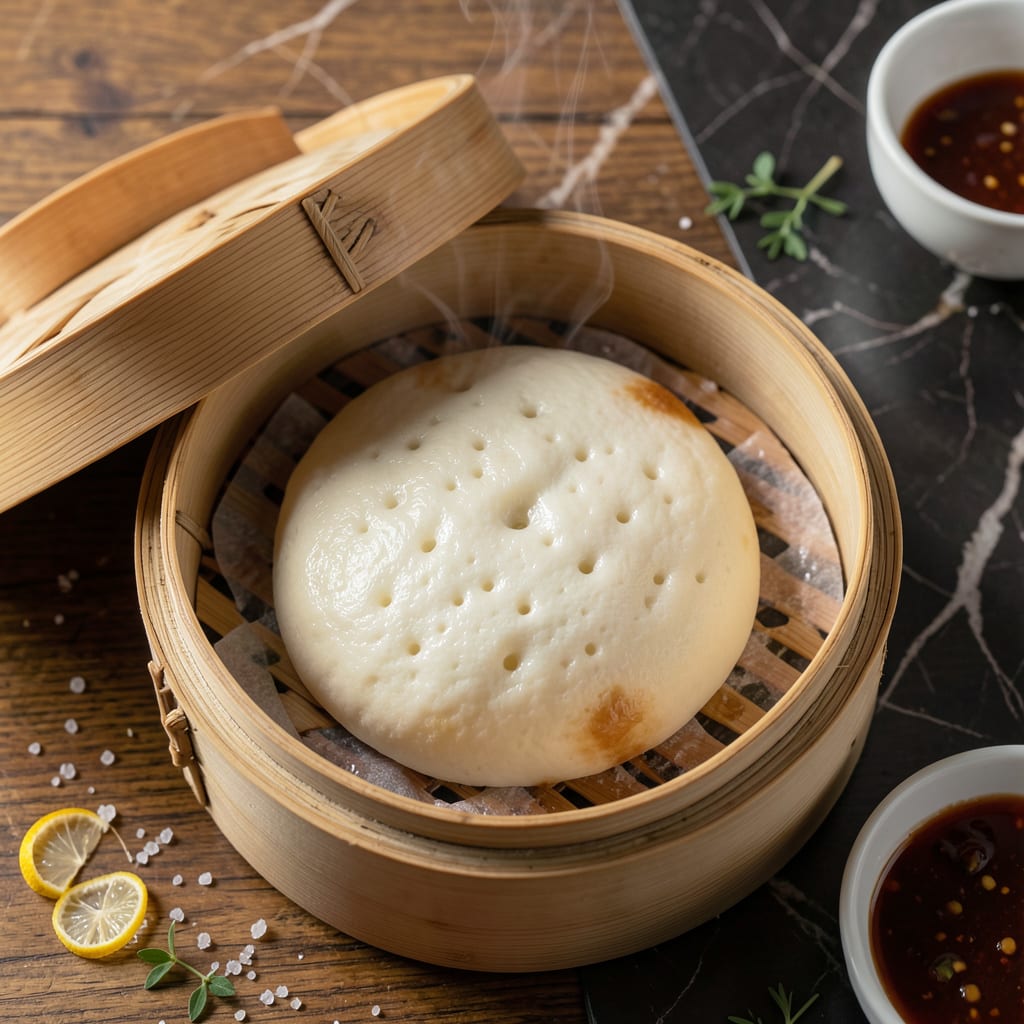
This traditional steamed cake delivers the delicate, airy texture that defines authentic Chinese desserts. The secret lies in precise fermentation and gentle steaming.
Using simple pantry staples and a foolproof rising technique, you’ll achieve that signature cloud-like softness in every bite. No special equipment required.
Ingredients for Chinese Steamed Cake
Simple pantry staples create this delicate, cloud-like traditional dessert with ease.
| Ingredient | Amount | Notes |
|---|---|---|
| All-Purpose Flour 🌾 | 2 cups | Sifted for lighter texture |
| Granulated Sugar 🧂 | ¾ cup | Fine grain for even distribution |
| Active Dry Yeast 🍞 | 1 tsp | Instant or traditional, proofed |
| Warm Water 💧 | ¾ cup | 110°F for yeast activation |
| Vegetable Oil 🫒 | 2 tbsp | Neutral flavor preferred |
| Baking Powder 🧂 | 1 tsp | Ensures proper rise |
| Vanilla Extract 🌿 | 1 tsp | Pure for best aroma |
| Salt 🧂 | ¼ tsp | Balances sweetness |
| Cornstarch 🌽 | 2 tbsp | For tender crumb |
| Large Eggs 🥚 | 2 whole | Room temperature for even mixing |
| Whole Milk 🥛 | ¼ cup | Warm for yeast activation |
| Sesame Seeds 🌰 | 1 tbsp | Toasted for garnish |
The flour forms the foundation, so King Arthur or Bob’s Red Mill all-purpose delivers consistent results. Yeast freshness is critical—check the expiration date and store unopened packets in the freezer for maximum shelf life. Warm liquids should register between 110-115°F on an instant-read thermometer; too hot kills the yeast, too cool prevents activation.
No all-purpose flour? Cake flour plus 2 tbsp cornstarch per cup works as a substitute. For a dairy-free version, unsweetened almond milk replaces whole milk at a 1:1 ratio. The vegetable oil can be melted coconut oil (cool to room temperature first) or any neutral oil you prefer. Eggs are essential for structure, but in a pinch, flax eggs (1 tbsp ground flax + 3 tbsp water per egg) can work with adjusted expectations.
The batter rests for 1-2 hours until doubled—don’t rush this step. Steamed cakes keep 2-3 days at room temperature in an airtight container, or freeze for up to 1 month. Re-steam for 5-10 minutes to refresh before serving.
Why You’ll Love This Recipe
- No Fuss Mixing: I just stir the flour, sugar, yeast, warm water, and oil together—no fancy equipment, no kneading, just a smooth batter ready for steaming.
- Sweet Simplicity: That delicate, slightly sweet flavor from the sugar and yeast? It’s subtle but so satisfying, especially warm from the steamer.
- Breakfast or Snack: Honestly, it’s my go-to for busy mornings or an afternoon pick-me-up. One batch makes enough for the week.
- Pocket-Friendly Treat: All-purpose flour and basic pantry staples mean I can whip this up without a special grocery trip. Between us, it costs pennies per serving.
Step-by-Step Instructions for Chinese Steamed Cake
Master this technique for an ethereally light texture that melts in your mouth.
Step 1: Activate the Yeast and Prepare Wet Ingredients
In a small bowl, combine the 1 tsp Active Dry Yeast with the 0.75 cup Warm Water and 0.75 cup Granulated Sugar. Stir gently and let it sit for 5-7 minutes until the mixture becomes frothy and slightly bubbly—this confirms the yeast is active and ready to work.
In a separate large bowl, whisk together the 2 whole Large Eggs, 2 tbsp Vegetable Oil, 0.25 cup Whole Milk, and 1 tsp Vanilla Extract until fully combined and smooth. The milk should be warm to help activate the yeast further when combined.
Step 2: Combine Dry Ingredients and Create the Batter
In a medium bowl, sift together the 2 cups All-Purpose Flour, 2 tbsp Cornstarch, 1 tsp Baking Powder, and 0.25 tsp Salt. Sifting ensures a lighter texture, which is crucial for the cake’s signature cloud-like consistency.
Gradually add the dry ingredients to the wet mixture, whisking gently until just combined. Avoid overmixing—small lumps are fine and will dissolve during steaming. The batter should be smooth but not overly thick, with a consistency similar to pancake batter.
Step 3: Proof the Batter
Cover the bowl with a clean kitchen towel or plastic wrap and let the batter proof in a warm, draft-free area for 1 hour. The batter should rise slightly and develop small bubbles on the surface, indicating the yeast is working.
This step is critical for achieving the airy texture. If your kitchen is cool, place the bowl near a warm spot, such as on top of the fridge or near a preheating oven. The ideal proofing environment is around 80-85°F.
Step 4: Steam the Cake to Perfection
Pour the batter into a greased or parchment-lined heatproof dish that fits inside your steamer. I use a round cake pan for even cooking. Ensure the steamer is filled with 2-3 inches of boiling water before placing the dish inside.
Cover the steamer with a lid and steam over medium-high heat for 25-30 minutes. Check the water level periodically and replenish with hot water if needed. The cake is done when the top springs back lightly when touched and a toothpick inserted in the center comes out clean.
Step 5: Garnish and Serve
Once steamed, carefully remove the cake from the steamer and let it cool in the pan for 5 minutes. This brief rest helps it set and makes it easier to remove without breaking.
Transfer the cake to a serving plate and sprinkle the 1 tbsp Sesame Seeds evenly over the top. The seeds add a subtle nutty flavor and a delightful crunch. Slice and serve warm for the best texture and flavor.
Pro Tips For Making Chinese Steamed Cake
- Proof the Yeast: Always activate your yeast in warm water (around 110°F) with a pinch of sugar first—I learned this the hard way after a few dense cakes that refused to rise.
- Sift the Flour: Aerate your all-purpose flour by sifting it before mixing, or your steamed cake might turn out heavier than it should.
- Skip Cold Water: Resist the urge to use cold water for the batter; it shocks the yeast and stalls the rise, leaving you with a flat cake.
- Oil the Mold: Lightly grease your steaming mold with vegetable oil before adding the batter—this prevents sticking and makes cleanup a breeze.
Wine and Beer Pairings for These Flavors
Tea Pairings
Traditional jasmine tea complements the subtle sweetness beautifully—its floral notes enhance the cake’s delicate flavor. Brew at 195°F for 3-4 minutes to avoid bitterness. I serve it hot alongside warm slices. 🍵
Light Beers
A crisp pilsner like Tsingtao or Sapporo cuts through the soft texture with its clean finish. Serve chilled at 40-45°F—the carbonation refreshes your palate between bites. Perfect for casual gatherings.
Fruit-Infused Options
For a non-alcoholic pairing, try lychee sparkling water with a squeeze of lime. The tropical sweetness mirrors the cake’s gentle flavor profile. Chill for 2 hours before serving for maximum refreshment.
Dessert Wines
A glass of Moscato d’Asti offers a sweet contrast with its peach and apricot notes. Serve slightly chilled at 45°F—its low alcohol content makes it ideal for dessert pairings. 🍷
Herbal Infusions
I love pairing this with chrysanthemum tea for its soothing properties. Steep dried flowers in hot water for 5-7 minutes. The mild, earthy flavor balances the cake’s sweetness perfectly.
Nutrition Facts
Frequently Asked Questions
Why does my cake collapse after steaming?
This usually happens if the batter wasn’t proofed long enough or the yeast was inactive. Ensure your water is 110°F and proof for a full 1 hour until bubbly.
Can I use a rice cooker for steaming?
Yes! Add 2 cups water to the cooker, place a rack inside, then put your cake pan on top. Steam for 30 minutes with the lid closed.
How do I store leftovers?
Keep in an airtight container at room temperature for 2-3 days. Re-steam for 5-10 minutes to restore softness before serving.
Can I make this without eggs?
Try substituting with flax eggs (1 tbsp ground flax + 3 tbsp water per egg), but expect a slightly denser texture.

- 6 Egg Cake Recipe with Oil: Light as Air With Buttery Moisture - October 4, 2026
- 4 Bean Casserole Recipe: One-Pan Heartiness With Smoky Paprika Depth - October 4, 2026
- 3-Ingredient Keto Mug Cake Recipe: Microwave Magic in 2 Minutes - October 4, 2026