
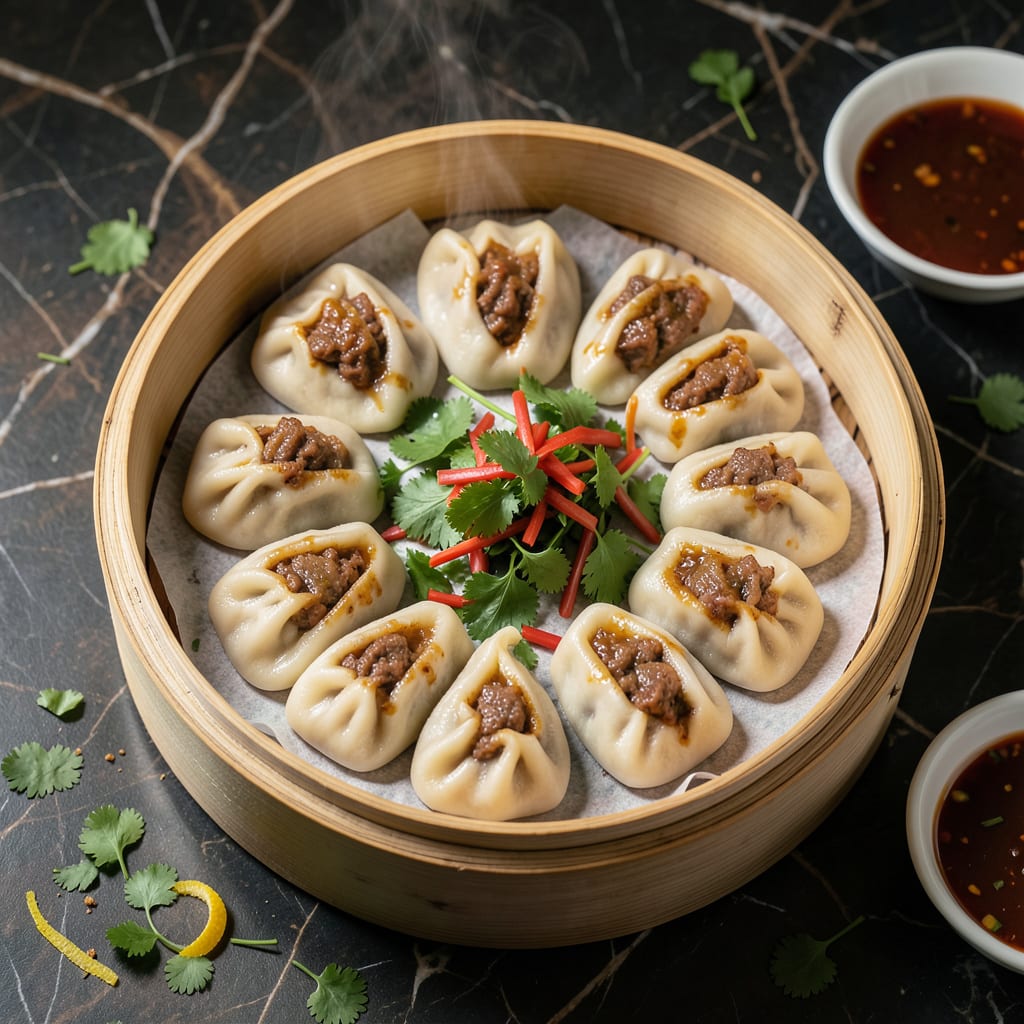
These fluffy, cloud-like buns represent the essence of Chinese dim sum tradition. The secret lies in a precise balance of yeast, sugar, and resting time to achieve that signature soft texture.
The filling combines ground pork with aromatic ginger, scallions, and soy sauce for a savory depth that perfectly complements the delicate dough. Steaming transforms them into pillowy perfection.
Ingredients for Chinese Steamed Pork Buns Baozi
These precise ingredients create pillowy steamed buns with a rich, aromatic pork filling.
| Ingredient | Amount | Notes |
|---|---|---|
| All-Purpose Flour 🌾 | 4 cups | Plus extra for dusting |
| Active Dry Yeast 🍞 | 1 tbsp | Or instant yeast, same amount |
| Granulated Sugar 🍚 | ¼ cup | For activating yeast |
| Lukewarm Water 💧 | 1 ¼ cups | About 105-110°F |
| Vegetable Oil 🫒 | 3 tbsp | Neutral flavor preferred |
| Ground Pork 🥩 | 1 lb | 80/20 fat ratio for juiciness |
| Fresh Ginger 🌿 | 1 tbsp | Finely minced or grated |
| Scallions 🧅 | 4 whole | Thinly sliced, white and green parts |
| Soy Sauce 🥢 | 3 tbsp | Low-sodium if preferred |
| Sesame Oil 🫒 | 1 tbsp | Toasted for depth of flavor |
| Light Brown Sugar 🍯 | 1 tbsp | For caramelizing the filling |
| Shaoxing Wine 🍶 | 2 tbsp | Or dry sherry as substitute |
| Salt 🧂 | 1 tsp | Divided between dough and filling |
| Baking Powder 🍞 | ½ tsp | For extra lift in dough |
The flour is foundational—King Arthur or Gold Medal all-purpose yield consistent results. Yeast freshness is critical; check expiration dates and store unopened packets in the freezer. For the pork filling, ground pork shoulder offers superior fat content compared to lean ground pork. Asian markets typically stock Shaoxing wine and high-quality soy sauces essential for authentic flavor.
No Shaoxing wine? Dry sherry works in a pinch (avoid cooking sherry). Ground chicken or turkey can replace pork, though flavor will be milder. For gluten-free versions, tapioca starch blends with xanthan gum mimic the chewy texture. The ginger and scallions are non-negotiable for authentic aroma—fresh only, no powders or dried substitutes.
Dough rests best in a slightly warm, draft-free spot (an unheated oven with the light on works). Filled buns freeze beautifully before steaming—3 months maximum. Steamed buns keep 2-3 days refrigerated; reheat by steaming, never microwaving (it destroys the texture).
Why You’ll Love This Recipe
- One Bowl Wonder: I love that I can mix the dough with just flour, yeast, sugar, water, and oil—no fancy equipment, just my hands and a bowl.
- Pillowy Perfection: The steamed buns turn out so soft and fluffy, with that slightly sweet dough balancing the savory pork filling every time.
- Freezer Friendly: I make a big batch on Sunday and freeze half—they reheat beautifully in the steamer for a quick lunch.
- Budget Stretcher: A little pork goes a long way here, and the basic pantry staples keep this recipe kind to my wallet. Honestly, it’s my go-to when I need to feed a crowd without breaking the bank.
Step-by-Step Instructions for Chinese Steamed Pork Buns Baozi
This method ensures pillowy dough and a flavorful filling with authentic texture and taste.
Step 1: Activate the Yeast and Prepare the Dough
In a small bowl, combine the 1 tbsp active dry yeast with the 0.25 cup granulated sugar and 1.25 cups lukewarm water (about 105-110°F). Let it sit for 5-10 minutes until foamy and bubbly—this confirms the yeast is active and ready to work.
In a large mixing bowl, whisk together the 4 cups all-purpose flour, 0.5 tsp baking powder, and ½ tsp salt. Create a well in the center and pour in the yeast mixture along with the 3 tbsp vegetable oil. Stir with a wooden spoon until a shaggy dough forms, then turn it out onto a lightly floured surface.
Step 2: Knead and First Rise
Knead the dough for 8-10 minutes until smooth and elastic. The dough should spring back slowly when pressed with a finger, indicating proper gluten development. If it feels too sticky, add a dusting of all-purpose flour, but avoid over-flouring, as this can make the buns dense.
Place the dough in a lightly oiled bowl, cover with a damp towel, and let it rise in a warm, draft-free place for 1 to 1.5 hours, or until doubled in size. This first rise is crucial for achieving that soft, pillowy texture.
Step 3: Prepare the Filling
In a bowl, combine the 1 lb ground pork, 1 tbsp fresh ginger (finely minced), 4 whole scallions (thinly sliced), 3 tbsp soy sauce, 1 tbsp sesame oil, 1 tbsp light brown sugar, 2 tbsp Shaoxing wine, and the remaining ½ tsp salt. Mix thoroughly in one direction until the filling becomes slightly sticky—this helps it hold together when steaming.
For best results, cover and refrigerate the filling for 30 minutes to allow the flavors to meld. This step ensures the pork remains juicy and the seasoning penetrates evenly.
Step 4: Shape the Buns
Punch down the risen dough and divide it into 12 equal portions (about 80-90 grams each). Roll each piece into a ball, then flatten into a 3-inch circle with a rolling pin, keeping the edges thinner than the center. This prevents the buns from tearing during steaming.
Place 1.5 tbsp of filling in the center of each dough circle. Pleat the edges upward, pinching and twisting to seal tightly. Tap the bottom gently on the counter to flatten slightly, ensuring the buns stand upright during steaming.
Step 5: Steam to Perfection
Line a bamboo steamer with parchment paper, poking small holes to allow steam to circulate. Place the buns inside, leaving 1 inch of space between each for expansion. Cover and let them rise for another 30 minutes until puffy and slightly increased in size.
Bring 2 inches of water to a boil in a wok or large pot. Place the steamer over the boiling water, cover, and steam for 15-18 minutes over medium-high heat. Avoid lifting the lid during steaming, as this can cause the buns to collapse. They’re done when the dough is translucent and the filling is cooked through.
Pro Tips For Making Chinese Steamed Pork Buns Baozi
- Proof the Yeast: Always bloom your active dry yeast in lukewarm water with a pinch of sugar first—if it doesn’t foam within 5-10 minutes, your buns won’t rise. I learned this the hard way after ending up with dense, sad baozi.
- Knead Longer: Don’t stop kneading the dough just because it looks smooth—give it a full 10-12 minutes by hand or 6-8 in a stand mixer. The gluten needs that time to develop enough elasticity for those fluffy, pillowy layers.
- Skip Cold Water: Lukewarm water is non-negotiable for activating the yeast and keeping the dough tender. Cold water slows fermentation, and hot water kills the yeast—both lead to buns that refuse to puff up properly.
- Oil the Dough: After kneading, coat the dough ball with a thin layer of vegetable oil before letting it rise. This keeps the surface from drying out and makes the dough easier to work with when shaping the buns.
Perfect Pairings for This Recipe
Tea Pairings
The classic accompaniment is jasmine tea—its floral notes complement the savory filling beautifully. I brew 1 tsp loose leaves in 8 oz hot water at 195°F for 2-3 minutes to avoid bitterness. The light aroma cleanses your palate between bites. 🍵
Dipping Sauces
Mix 2 tbsp soy sauce with 1 tbsp rice vinegar, 1 tsp sesame oil, and ½ tsp chili crisp for a tangy kick. For a sweeter option, combine 3 tbsp hoisin with 1 tsp sriracha—perfect for dipping the soft dough.
Side Dishes
Serve with quick-pickled cucumbers for crunch. Thinly slice 1 English cucumber, toss with ½ tsp salt, and let sit 10 minutes. Drain, then mix with 1 tbsp rice vinegar and 1 tsp sugar. The cool acidity balances the richness.
Soups to Serve
A light egg drop soup with 4 cups chicken broth, 2 beaten eggs, and 1 tsp white pepper makes a comforting pairing. The warm, silky broth contrasts the chewy buns beautifully. Simmer for 5 minutes before serving.
For a heartier option, try hot and sour soup with tofu and bamboo shoots. The bold flavors stand up to the umami filling. 💫
Nutrition Facts
Frequently Asked Questions
Why did my buns collapse after steaming?
This usually happens if the lid was lifted too early or steam escaped. Keep the lid closed for the full 15-18 minutes. Also, ensure dough is properly risen before steaming.
Can I use a metal steamer instead of bamboo?
Yes, but line it with parchment to prevent sticking. Bamboo allows better steam circulation, but a metal steamer works if that’s what you have. Just avoid aluminum.
How do I store leftovers?
Let cool completely, then store in an airtight container in the fridge for up to 3 days. Reheat by steaming for 5-8 minutes until warm. Never microwave.
Can I make these ahead of time?
Shape and fill the buns, then freeze on a tray before transferring to a bag. Steam from frozen, adding 5-7 extra minutes. Perfect for meal prep.

- 6 Egg Cake Recipe with Oil: Light as Air With Buttery Moisture - October 4, 2026
- 4 Bean Casserole Recipe: One-Pan Heartiness With Smoky Paprika Depth - October 4, 2026
- 3-Ingredient Keto Mug Cake Recipe: Microwave Magic in 2 Minutes - October 4, 2026