
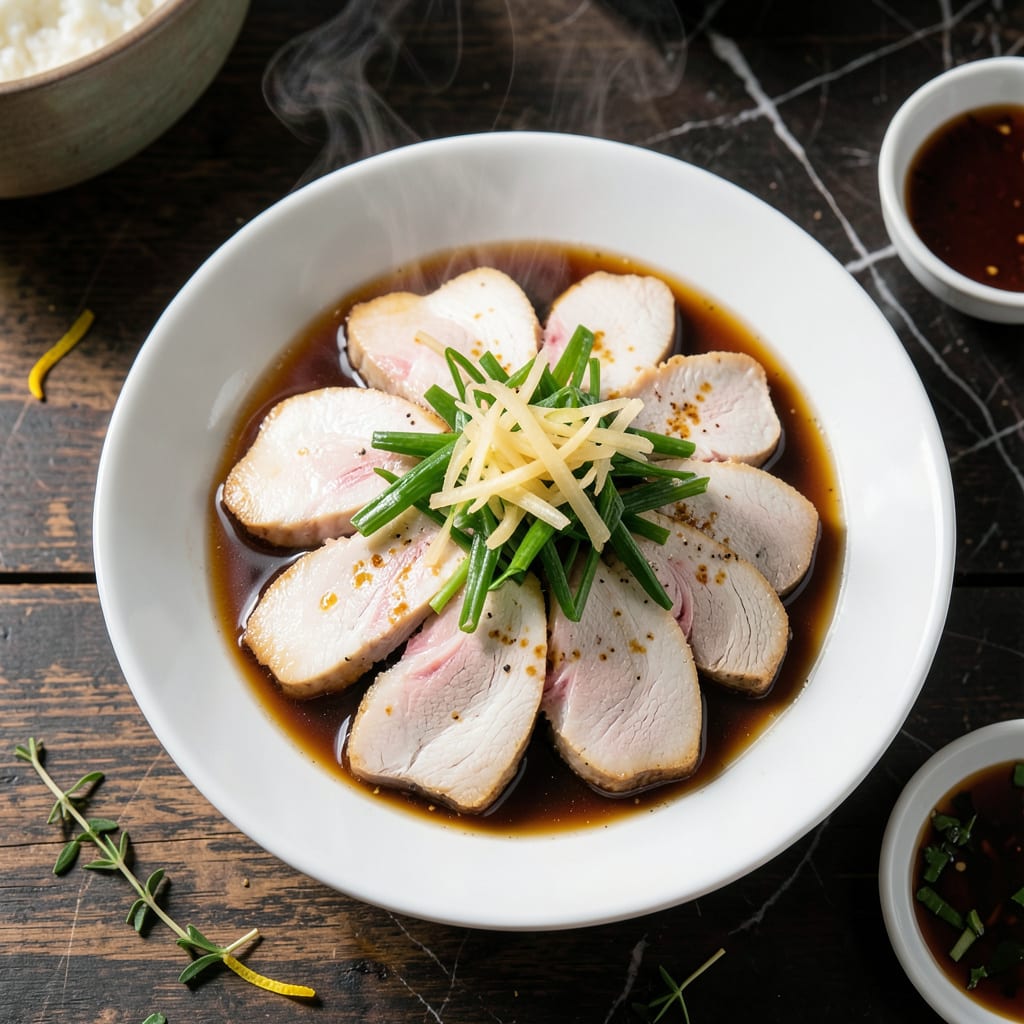
This traditional method transforms humble pork into a melt-in-your-mouth dish with minimal effort. The secret lies in the steaming process, which preserves moisture while infusing every bite with ginger’s aromatic warmth.
You’ll achieve silky texture and delicate flavor by combining simple ingredients with precise timing. The result is a tender, juicy pork dish that pairs perfectly with steamed rice.
Ingredients for Chinese Steamed Pork
Transform humble pork with ginger, soy, and a handful of staples into a melt-in-your-mouth masterpiece.
| Ingredient | Amount | Notes |
|---|---|---|
| Pork Shoulder 🥩 | 1 ½ lb | Cut into 1-inch thick slices |
| Fresh Ginger 🌿 | 2 whole | Peeled and julienned |
| Green Onions 🧅 | 4 whole | Cut into 2-inch pieces |
| Soy Sauce 🫒 | 3 tbsp | Low-sodium preferred |
| Shaoxing Wine 🍶 | 2 tbsp | Or dry sherry substitute |
| Sesame Oil 🫒 | 1 tsp | Toasted for depth of flavor |
| Granulated Sugar 🍚 | 1 tsp | Balances savory flavors |
| Ground White Pepper 🌶️ | ½ tsp | Traditional in Chinese cooking |
| Cornstarch 🌾 | 1 tbsp | For velvety texture |
| Water 💧 | 2 tbsp | For cornstarch slurry |
| Neutral Oil 🫒 | 1 tbsp | For marinade |
| Salt 🧂 | ½ tsp | To taste |
The pork shoulder is non-negotiable for this dish—its marbling ensures that silky texture the recipe promises. Look for pieces with visible fat streaks at Asian markets or well-stocked supermarkets. The ginger must be fresh, not powdered; its aromatic oils are essential for the marinade. Select firm, smooth roots with vibrant tan skin. The soy sauce should be light or all-purpose, never dark, which can overpower the delicate flavors.
No Shaoxing wine? Dry sherry works in a pinch, though the depth won’t be identical. Green onions can be swapped for chives if absolutely necessary, but the mild bite of scallions is ideal. For a gluten-free version, use tamari instead of soy sauce. The cornstarch is critical—do not substitute flour, as it won’t create the same velvety finish. White pepper is traditional, but black pepper can be used if that’s all you have.
Marinate the pork for at least 2 hours (overnight is optimal) to let the flavors penetrate. The dish steams beautifully and reheats well, keeping in the fridge for 3-4 days. Freeze portions for up to 3 months, though the texture is best fresh. Always bring the pork to room temperature before steaming for even cooking.
Why You’ll Love This Recipe
- One Pot Wonder: I just layer the pork with ginger and green onions, then let the steamer do the work.
- Umami Bomb: The soy sauce and Shaoxing wine soak into the pork shoulder until it’s ridiculously tender and packed with savory depth.
- My Sunday Staple: Honestly, I make a big batch and we eat it for days—over rice, in noodles, or straight from the fridge.
- Budget Hero: Pork shoulder is cheap, and this stretches it into multiple meals without feeling like leftovers.
Step-by-Step Instructions for Chinese Steamed Pork
Master this technique for tender, velvety pork infused with aromatic ginger and green onion.
Step 1: Prepare and Marinate the Pork
Begin by cutting the 1.5 lb pork shoulder into 1-inch thick slices. This uniform thickness ensures even cooking during steaming. Place the slices in a bowl and add the 3 tbsp soy sauce, 2 tbsp Shaoxing wine, 1 tsp sesame oil, 1 tsp granulated sugar, 0.5 tsp salt, and 0.5 tsp ground white pepper.
Mix gently to coat each piece evenly. The soy sauce and Shaoxing wine form the flavor base, while the sugar balances the saltiness. Let it marinate for 15-20 minutes while you prepare the aromatics—this allows the pork to absorb the flavors fully.
Step 2: Create the Cornstarch Slurry and Combine
In a small bowl, whisk together the 1 tbsp cornstarch and 2 tbsp water until smooth. This slurry will coat the pork, creating that signature silky texture after steaming. Pour the slurry over the marinated pork and mix until each piece is evenly coated.
The cornstarch acts as a tenderizer and helps the pork retain moisture during cooking. Additionally, add the 1 tbsp neutral oil to the pork and mix again. This step ensures the pork stays juicy and doesn’t dry out during the steaming process.
Step 3: Prepare the Aromatics for Steaming
Peel and julienne the 2 whole fresh ginger and cut the 4 whole green onions into 2-inch pieces. These aromatics will infuse the pork with their essence during steaming. Arrange the ginger and green onions on a heatproof plate, creating a bed for the pork slices to rest on.
This layering technique allows the steam to carry the aromatic flavors directly into the pork. The ginger’s warmth and the green onions’ mild sharpness will complement the savory marinade perfectly.
Step 4: Steam to Silky Perfection
Arrange the marinated pork slices on top of the ginger and green onions on the plate. Place the plate in a steamer basket or on a rack set over boiling water in a large pot. Cover with a lid and steam over high heat for 20-25 minutes.
Check that the water doesn’t touch the plate, and add more boiling water if needed. The pork is done when it reaches an internal temperature of 160°F and the thickest pieces are no longer pink inside. The texture should be tender and slightly bouncy, with the aromatics deeply infused.
Pro Tips For Making Chinese Steamed Pork
- Steam on High: Use full rolling boil in your steamer—anything less and the pork turns out pale and dense. I learned this the hard way after serving sad, gray meat to my in-laws.
- Slice Against Grain: Cut pork shoulder into 1/2-inch thick slices against the grain before marinating. Makes a real difference in tenderness, especially with this tougher cut.
- Skip the Overcrowding: Leave at least 1 inch between pork pieces in the steamer basket. Steaming too close traps moisture and gives you soggy, unevenly cooked meat.
- Marinate 30 Minutes: Give the pork shoulder its soy sauce, Shaoxing wine, ginger, and green onion marinade a full 30 minutes. Sounds weird, but it works—shortcuts here make the flavor noticeably weaker.
Dietary Considerations for This Dish
Gluten-Free Adaptation
For a gluten-free version, simply swap the soy sauce for tamari or a certified gluten-free soy sauce. I use San-J Tamari because it has the same depth of flavor without the wheat. The rest of the ingredients are naturally gluten-free. 💪
Low-Sodium Option
Reduce the soy sauce to 2 tbsp and add 1 tsp fish sauce for umami depth. I also recommend skipping the added salt in the marinade. The Shaoxing wine and aromatics will still pack plenty of flavor.
Dairy-Free Naturally
This dish is inherently dairy-free—no modifications needed. The marinade relies on soy sauce, Shaoxing wine, and sesame oil for flavor, with no butter, milk, or cheese involved. Perfect for lactose-intolerant foodies.
Lower Fat Version
Trim visible fat from the pork shoulder before slicing, and use pork tenderloin instead for a leaner option. The texture will be slightly less silky but still tender. I’d avoid going leaner than this, as fat is key to the dish’s richness.
Allergen Notes
This recipe contains soy (in soy sauce) and sesame (in sesame oil). For soy allergies, use coconut aminos as a substitute. For sesame allergies, replace with avocado oil or another neutral oil.
Keto-Friendly Adjustments
Replace the 1 tsp sugar with 1 tsp erythritol or monk fruit sweetener. Skip the cornstarch slurry entirely—it’s only for texture, not flavor. The pork itself is low-carb, so this keeps the dish keto-compliant. 🌟
Nutrition Facts
Frequently Asked Questions
What cut of pork works best?
Use pork shoulder for the best texture—its marbling keeps the meat tender and juicy. Pork belly also works well, but avoid lean cuts like tenderloin, as they can dry out during steaming.
Can I skip the cornstarch slurry?
It’s not recommended—the slurry creates the signature velvety texture. Without it, the pork may turn out drier and less tender. If avoiding cornstarch, try a 1 tsp potato starch substitute.
How do I know when it’s done?
The pork is ready when it reaches 160°F internally and is no longer pink. It should feel slightly bouncy and glisten with moisture. Over-steaming can make it tough.
Can I use a bamboo steamer?
A bamboo steamer works perfectly for this dish. Just ensure the lid fits snugly to trap steam, and keep the water boiling to maintain consistent heat.

- 6 Egg Cake Recipe with Oil: Light as Air With Buttery Moisture - October 4, 2026
- 4 Bean Casserole Recipe: One-Pan Heartiness With Smoky Paprika Depth - October 4, 2026
- 3-Ingredient Keto Mug Cake Recipe: Microwave Magic in 2 Minutes - October 4, 2026