
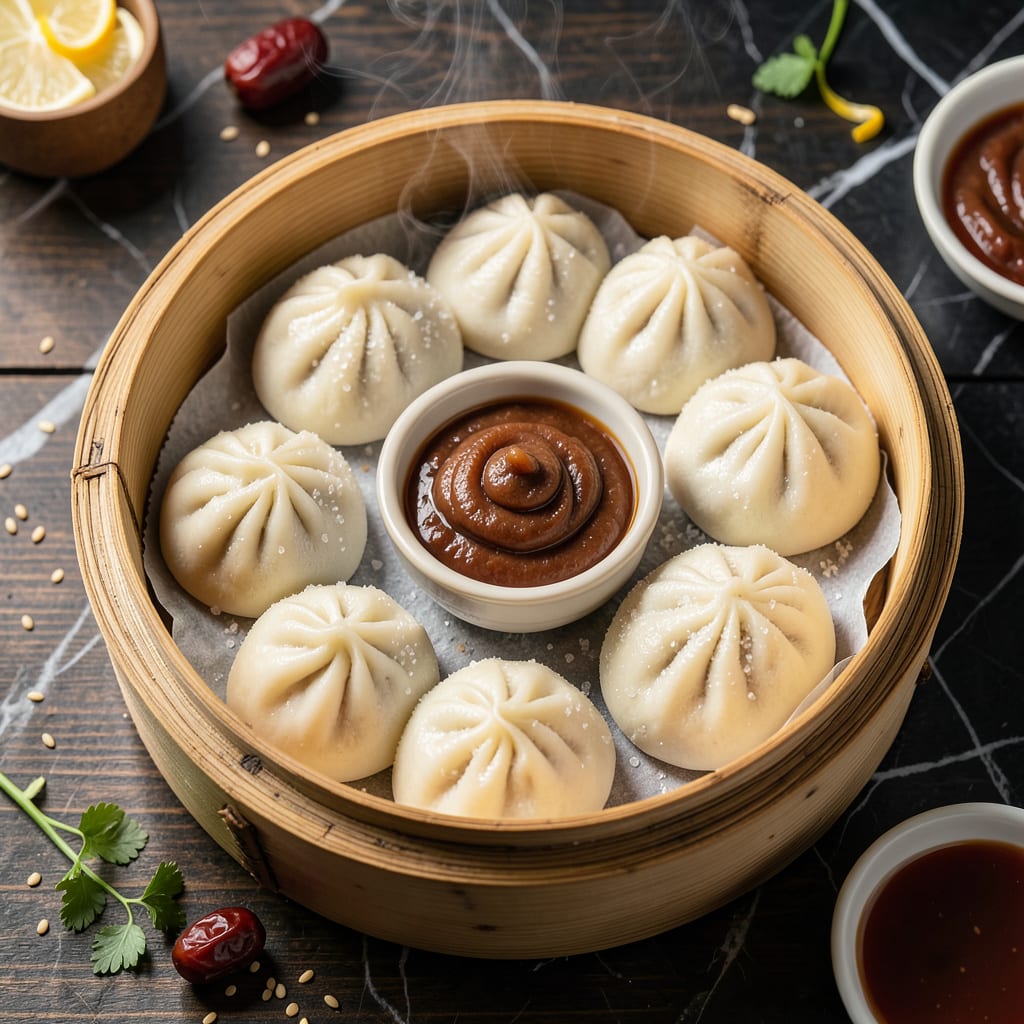
These fluffy buns deliver the authentic taste of traditional Chinese bao with a sweet red bean filling. The dough comes together with simple ingredients and a precise proofing technique.
Steaming transforms them into pillowy soft delights that are tender and slightly sweet. The filling adds a rich, velvety texture that perfectly complements the airy dough.
Ingredients for Chinese Sweet Steamed Buns
Traditional ingredients create authentic steamed buns with pillowy texture and sweet filling. Simple yet precise.
| Ingredient | Amount | Notes |
|---|---|---|
| All-Purpose Flour 🌾 | 4 cups | Bread flour works too for chewier texture |
| Granulated Sugar 🍚 | ½ cup | Fine white sugar preferred |
| Active Dry Yeast 🍃 | 1 package | 2 1/4 tsp, check expiration date |
| Warm Water 💧 | 1 ¼ cups | 110-115°F for yeast activation |
| Vegetable Oil 🫒 | ¼ cup | Neutral flavor, plus extra for greasing |
| Sweet Red Bean Paste 🟤 | 1 ½ cups | Store-bought or homemade, thick consistency |
| Baking Powder 🧂 | 1 tsp | Ensures light, fluffy texture |
| Salt 🧂 | ½ tsp | Fine sea salt preferred |
| Parchment Paper 📄 | 12 sheets | For steaming, cut into squares |
| Sesame Seeds 🌰 | 2 tbsp | White or black, for garnish |
The flour is foundational—King Arthur or Bob’s Red Mill all-purpose are reliable choices. Yeast freshness is critical; check the expiration date and store unopened packets in the freezer. For the red bean paste, Asian markets carry authentic versions, but well-stocked supermarkets like H Mart or Whole Foods often have it too. The paste should be thick, not runny, for proper filling consistency.
No red bean paste? Sweetened black bean paste or lotus seed paste are traditional alternatives. Bread flour can replace all-purpose for a chewier bun (use the same amount). If you’re avoiding added sugar, reduce the sugar by half—the buns will be less sweet but still delicious. The oil can be any neutral type; avocado or canola oil work just as well as vegetable.
Dough can be refrigerated overnight for a slower proof—just bring it to room temperature before shaping. Filled buns freeze beautifully for up to 3 months. Steam from frozen, adding 5-7 minutes to the cooking time. Always store leftover paste in an airtight container in the fridge for up to 1 week.
Why You’ll Love This Recipe
- One Bowl Wonder: I mix everything in a single bowl—flour, yeast, sugar, water—no fancy equipment, just my hands and 10 minutes of kneading.
- Melt-in-Mouth Sweetness: The sugar in the dough caramelizes slightly while steaming, giving that soft, pillowy texture with just the right hint of sweetness.
- Breakfast to Dessert: Honestly, these buns work for dim sum brunch, a quick snack, or even a light dessert—just stuff them with red bean paste or leave plain.
- Penny-Wise Feast: A bag of flour and a few pantry staples make a dozen buns for less than the cost of takeout. I’ll be real: leftovers reheat beautifully for days.
Step-by-Step Instructions for Chinese Sweet Steamed Buns
Master the technique to achieve perfectly pillowy buns with a sweet red bean center every time.
Step 1: Activate the Yeast and Prepare the Dough
In a small bowl, dissolve the 1 package Active Dry Yeast in the 1.25 cups Warm Water (110-115°F) along with the 0.5 cup Granulated Sugar. Let it sit for 5-10 minutes until the mixture becomes foamy—this confirms the yeast is active and ready to work.
In a large mixing bowl, combine the 4 cups All-Purpose Flour, 1 tsp Baking Powder, and 0.5 tsp Salt. Pour the yeast mixture and the 0.25 cup Vegetable Oil into the dry ingredients. Stir with a wooden spoon until a shaggy dough forms, then turn it out onto a lightly floured surface.
Step 2: Knead and Proof the Dough
Knead the dough for 8-10 minutes by hand until it becomes smooth and elastic. The dough should feel slightly tacky but not sticky—if it sticks to your hands, add a small amount of flour, 1 tablespoon at a time. You’ll know it’s ready when it springs back slowly after pressing your finger into it.
Lightly oil a clean bowl, place the dough inside, and cover it with a damp kitchen towel. Let it proof in a warm, draft-free place for 1-2 hours, or until it has doubled in size. This step is crucial for achieving the light, airy texture that defines these buns.
Step 3: Shape the Buns and Add the Filling
Once the dough has risen, punch it down to release the air and divide it into 12 equal portions. Roll each portion into a ball, then flatten it into a 3-inch circle with your hands. Place 2 tablespoons of Sweet Red Bean Paste in the center of each circle, being careful not to overfill—this prevents the buns from bursting open during steaming.
To seal, pleat the edges of the dough circle upward, pinching them together at the top to fully enclose the filling. Twist the pleats slightly to ensure a tight seal, then place each bun on a square of the 12 sheets Parchment Paper. This prevents sticking and makes handling easier.
Step 4: Steam the Buns to Perfection
Arrange the buns in a steamer basket, leaving 1-2 inches of space between each to allow for expansion. Bring 2-3 inches of water to a boil in the steamer pot, then reduce the heat to medium. Place the basket over the boiling water, cover with a lid, and steam for 15-20 minutes. Avoid lifting the lid during steaming, as this can cause the buns to collapse.
You’ll know they’re done when the buns have puffed up significantly and the dough looks translucent and glossy. Remove them carefully—they’ll be hot and delicate. Sprinkle the tops with the 2 tbsp Sesame Seeds immediately after steaming for a nutty garnish.
Pro Tips For Making Chinese Sweet Steamed Buns
- Prove the Yeast: Always bloom your active dry yeast in warm water with a pinch of sugar first—if it doesn’t foam within 5-10 minutes, start over. I learned this the hard way after wasting a whole batch of flour on dead yeast.
- Knead Thoroughly: Spend at least 10 minutes kneading the dough until it’s smooth and elastic. Sounds tedious, but it’s the only way to get those soft, pillowy buns.
- Skip Cold Water: Use warm water (around 110°F) for the dough—cold water slows yeast activation, and too hot will kill it. A kitchen thermometer saves guesswork here.
- Steam with Space: Leave at least 1 inch between buns in the steamer to prevent sticking. After burning three batches, I finally figured out they need room to expand.
Make-Ahead Tips for This chinese sweet steamed buns
Overnight Dough Prep
After kneading, place the dough in a lightly oiled bowl, cover tightly with plastic wrap, and refrigerate overnight. This slow proof develops deeper flavor and makes the dough easier to work with the next day. I often prep this on Sunday night for Monday treats. ❄️
Filling Prep Ahead
You can prepare the sweet red bean paste up to 3 days in advance. Store it in an airtight container in the fridge. If using store-bought paste, transfer it to a small bowl and cover with plastic wrap pressed directly on the surface to prevent drying.
Shaping Early
Shape and fill the buns up to 4 hours before steaming. Place them on parchment squares, cover with a damp towel, and let them rise at room temperature. This gives you flexibility for dinner parties or busy afternoons.
Freezing for Later
Arrange uncooked filled buns on a tray, freeze for 1 hour until solid, then transfer to a freezer bag. They’ll keep for up to 3 months. Steam directly from frozen, adding 5-7 minutes to the cooking time. 💡
Reheating Leftovers
To revive steamed buns, place them in a steamer basket over simmering water for 3-5 minutes until soft and warm. Microwaving works in a pinch—cover with a damp paper towel and heat for 30-45 seconds, but steaming preserves texture better.
Storage Tips
Keep cooked buns in an airtight container at room temperature for up to 2 days. For longer storage, refrigerate for up to 5 days or freeze for up to 1 month. Always reheat using steam for best results.
Nutrition Facts
Frequently Asked Questions
What can I use instead of red bean paste?
Try lotus seed paste or sweetened black bean paste for authentic flavor. Nutella or fruit jam work too for a Western twist.
How do I prevent buns from sticking to the steamer?
Always use parchment paper squares under each bun. Lightly grease the paper if concerned. Never skip this step!
Why did my buns collapse after steaming?
This usually means underproofed dough or opening the lid too soon. Let dough double in size and resist peeking for 15-20 minutes.
Can I make these without a steamer basket?
Use a colander or heatproof plate over a pot of boiling water. Just ensure it’s stable and covered.

- 6 Egg Cake Recipe with Oil: Light as Air With Buttery Moisture - October 4, 2026
- 4 Bean Casserole Recipe: One-Pan Heartiness With Smoky Paprika Depth - October 4, 2026
- 3-Ingredient Keto Mug Cake Recipe: Microwave Magic in 2 Minutes - October 4, 2026