
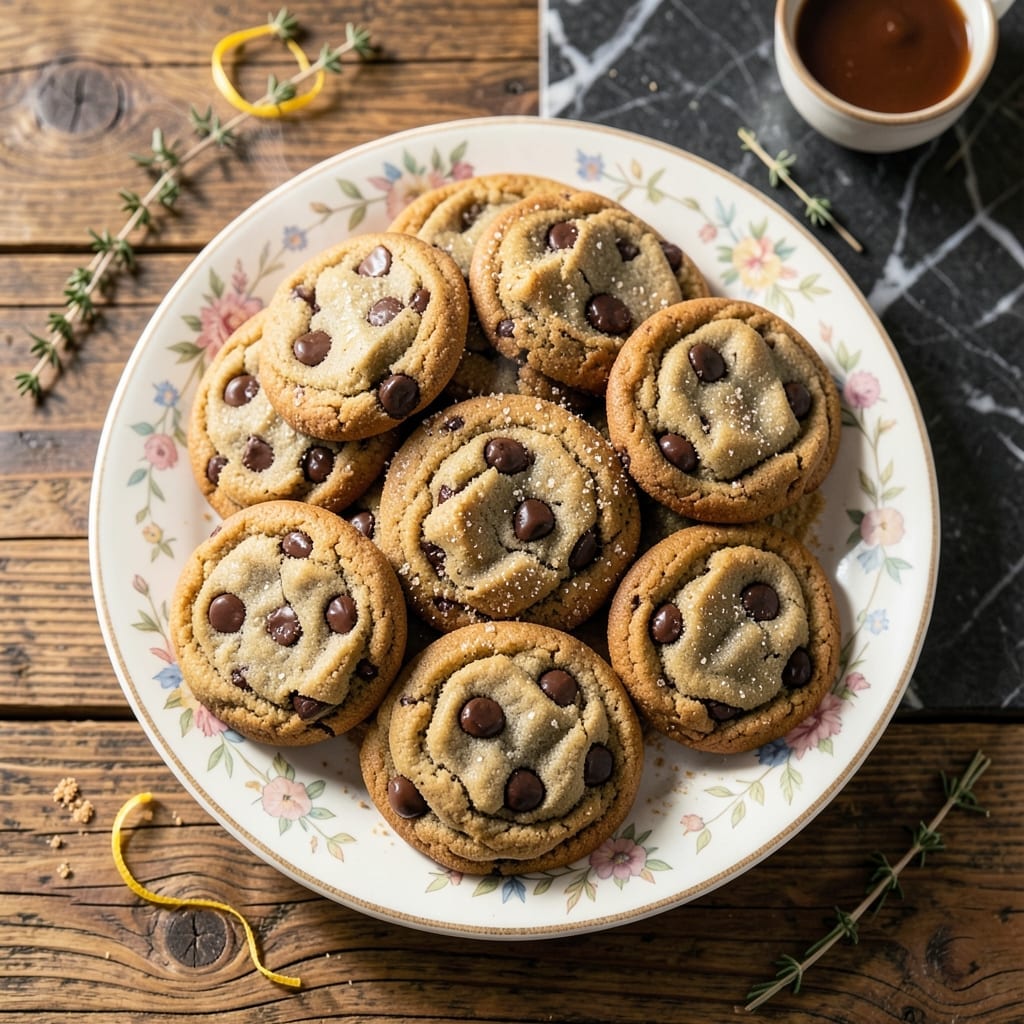
Achieving chewy chocolate chip cookies without butter is simpler than you think. This oil-based method delivers consistent results with a texture that rivals traditional recipes.
The secret lies in using vegetable oil to replace butter, creating a tender crumb while keeping the edges perfectly soft. These cookies prove that delicious results don’t require dairy.
Ingredients for Chocolate Chip Cookie Recipe No Butter
Pantry raid time. Everything you need for perfectly chewy cookies without dairy.
| Ingredient | Amount | Notes |
|---|---|---|
| All-Purpose Flour 🌾 | 2 ¼ cups | Spoon and level method |
| Granulated Sugar 🍚 | 1 cup | Fine white granulated |
| Light Brown Sugar 🟤 | ¾ cup | Packed firmly into cup |
| Vegetable Oil 🫒 | ¾ cup | Neutral flavor like canola |
| Large Eggs 🥚 | 2 whole | Room temperature preferred |
| Vanilla Extract 🌿 | 2 tsp | Pure vanilla for best flavor |
| Baking Soda 🧂 | 1 tsp | For proper rise and spread |
| Salt 🧂 | ½ tsp | Fine table salt |
| Semi-Sweet Chocolate Chips 🍫 | 2 cups | Or chopped chocolate bars |
| Chopped Walnuts 🌰 | ½ cup | Optional, lightly toasted |
| Cinnamon 🌿 | ½ tsp | Ground, for warmth |
The oil is doing heavy lifting here. Vegetable or canola oil gives that tender crumb—avoid coconut oil, it solidifies too much. I grab mine at Costco in the big jugs since you’ll use it often. The flour matters too: all-purpose is key, don’t sub in bread flour or you’ll get cakey cookies. Weigh it if you’ve got a scale (270g for the 2¼ cups), but the spoon-and-level method works fine for most.
No eggs? Flax eggs work in a pinch (1 tbsp ground flax + 3 tbsp water per egg), but the texture won’t be identical. Brown sugar can be all white in a bind, though you’ll lose some chew. Chocolate chips are flexible—Enjoy Life or Guittard for good quality. Skip the walnuts if you hate texture (or have allergies), or swap in pecans. Vanilla extract is non-negotiable though—imitation vanilla tastes like plastic here.
Dough keeps in the fridge for 3 days—perfect for baking fresh. Baked cookies stay soft for 5 days in an airtight container. Freeze dough balls for 3 months and bake straight from frozen (add 2 minutes). Pro tip: underbake by a minute for extra chew.
Why You’ll Love This Recipe
- No Fuss Mixing: I just dump, stir, and scoop—no waiting for butter to soften or creaming anything.
- Chewy & Crisp: The oil gives them this perfect texture, and the brown sugar adds that deep caramel note.
- Any Time Treat: Honestly, I’ve made these for bake sales, midnight cravings, and even breakfast (no judgment).
- Budget Friendly: Vegetable oil’s cheaper than butter, and they still taste like the cookies I grew up with.
Step-by-Step Instructions for Oil-Based Chocolate Chip Cookies
Here’s the method that delivers chewy, buttery-tasting cookies without a stick of butter.
Step 1: Whisk Dry Ingredients for Even Distribution
In a medium bowl, whisk together the 2.25 cups All-Purpose Flour, 1 tsp Baking Soda, 0.5 tsp Salt, and 0.5 tsp Cinnamon. I always whisk for at least 30 seconds to ensure the baking soda and salt are fully incorporated—this prevents any metallic or salty pockets in your cookies.
Real talk: this step matters more than you think. Oil-based cookies rely on chemical leavening (that’s the baking soda) for lift since there’s no butter to create air pockets. Proper distribution means even rise and perfect texture.
Step 2: Cream Oil and Sugars Until Emulsified
In a large bowl, combine the 0.75 cup Vegetable Oil, 1 cup Granulated Sugar, and 0.75 cup Light Brown Sugar. Using a hand mixer or stand mixer, beat on medium-high speed for 2-3 minutes until the mixture lightens slightly and looks creamy.
Here’s the thing—oil and sugar don’t cream like butter and sugar. You’re looking for a smooth, slightly thick mixture where the sugars are fully dissolved. If it looks separated, keep mixing. This emulsification is crucial for structure in butterless cookies.
Step 3: Incorporate Eggs and Vanilla for Flavor Base
Add the 2 whole Large Eggs one at a time, mixing on medium speed for 20-30 seconds after each addition. Then add the 2 tsp Vanilla Extract and mix for another 10 seconds. I use room temperature eggs here—they incorporate more evenly into the oil mixture.
Don’t be tempted to rush this. Each egg needs time to fully emulsify with the oil and sugars. You’ll notice the mixture becomes thicker and more cohesive as the eggs bind everything together. The vanilla adds depth that compensates for the lack of butter flavor.
Step 4: Combine Wet and Dry Ingredients Gently
Gradually add the dry ingredients to the wet mixture, mixing on low speed just until the flour disappears. This usually takes 45-60 seconds. Overmixing develops gluten, which would make your cookies tough instead of tender.
I stop mixing as soon as I see the last streaks of flour incorporate. The dough will be softer than traditional cookie dough—that’s normal with oil. It should pull away from the sides of the bowl but still be slightly sticky to the touch.
Step 5: Fold in Chocolate Chips and Walnuts
Using a spatula, fold in the 2 cups Semi-Sweet Chocolate Chips and 0.5 cup Chopped Walnuts by hand. Distribute them evenly throughout the dough. I press some chocolate chips into the top of each portion before baking for that bakery-style look.
The walnuts add a nice crunch that contrasts with the chewy texture. If you’re not a nut fan, you can omit them, but I’ve found they complement the cinnamon beautifully. Let the dough rest for 10 minutes before scooping—this helps the flour hydrate fully.
Step 6: Bake to Perfect Chewy Texture
Preheat your oven to 350°F and line baking sheets with parchment paper. Scoop 2-tablespoon portions of dough and place them 2 inches apart on the prepared sheets. Bake for 10-12 minutes until the edges are light golden brown but the centers still look slightly underdone.
I pull them out when the edges are set but the tops still look soft. They’ll continue cooking on the hot pan for another 5 minutes as they cool. This is the secret to keeping them chewy—underbake slightly rather than overbaking. Let them cool on the pan for 5 minutes before transferring to a wire rack.
Pro Tips For Making Chocolate Chip Cookie Recipe No Butter
- Chill the Dough: After mixing, refrigerate the dough for at least 30 minutes—I learned this the hard way when my first batch spread into flat pancakes. The oil needs time to thicken up.
- Use Room-Temp Eggs: Pull your eggs out 20 minutes before baking. Sounds weird, but it works: they blend smoother into the oil-based dough, preventing that greasy separation I used to get.
- Skip Overmixing: Mix just until the flour disappears. I was skeptical until I tried it—overworking the dough makes the cookies tough, not tender.
- Swap Some Brown Sugar: Replace 2 tablespoons of granulated sugar with extra brown sugar for chewier cookies. My grandmother swore by this, and she was right.
Troubleshooting This Recipe
🍳 Too Dry or Tough?
If your cookies turned out dry or tough, the dough may have been overmixed or baked too long. Overworking the dough develops gluten, making cookies dense.
Quick Fix: Mix just until combined, and pull cookies from the oven when edges are golden but centers are still soft.
🥘 Cookies Spread Too Thin?
Using the wrong oil or warm dough can cause excessive spreading. Oil-based recipes need a thick consistency to hold shape.
Quick Fix: Chill the dough for 30 minutes before baking, and use a neutral oil like coconut or vegetable oil for better structure.
⏰ Undercooked Centers?
If the centers look raw but edges are done, your oven may run hot. Uneven heat distribution can leave cookies uncooked in the middle.
Quick Fix: Rotate the baking sheet halfway through and extend baking time by 1-2 minutes for even cooking.
🎯 No Flavor?
Oil-based cookies can taste bland if vanilla or salt is omitted. These ingredients enhance the chocolate and sweetness.
Quick Fix: Add a splash of vanilla extract or a pinch of sea salt to the dough for depth of flavor.
Nutrition Facts

- 6 Egg Cake Recipe with Oil: Light as Air With Buttery Moisture - October 4, 2026
- 4 Bean Casserole Recipe: One-Pan Heartiness With Smoky Paprika Depth - October 4, 2026
- 3-Ingredient Keto Mug Cake Recipe: Microwave Magic in 2 Minutes - October 4, 2026