
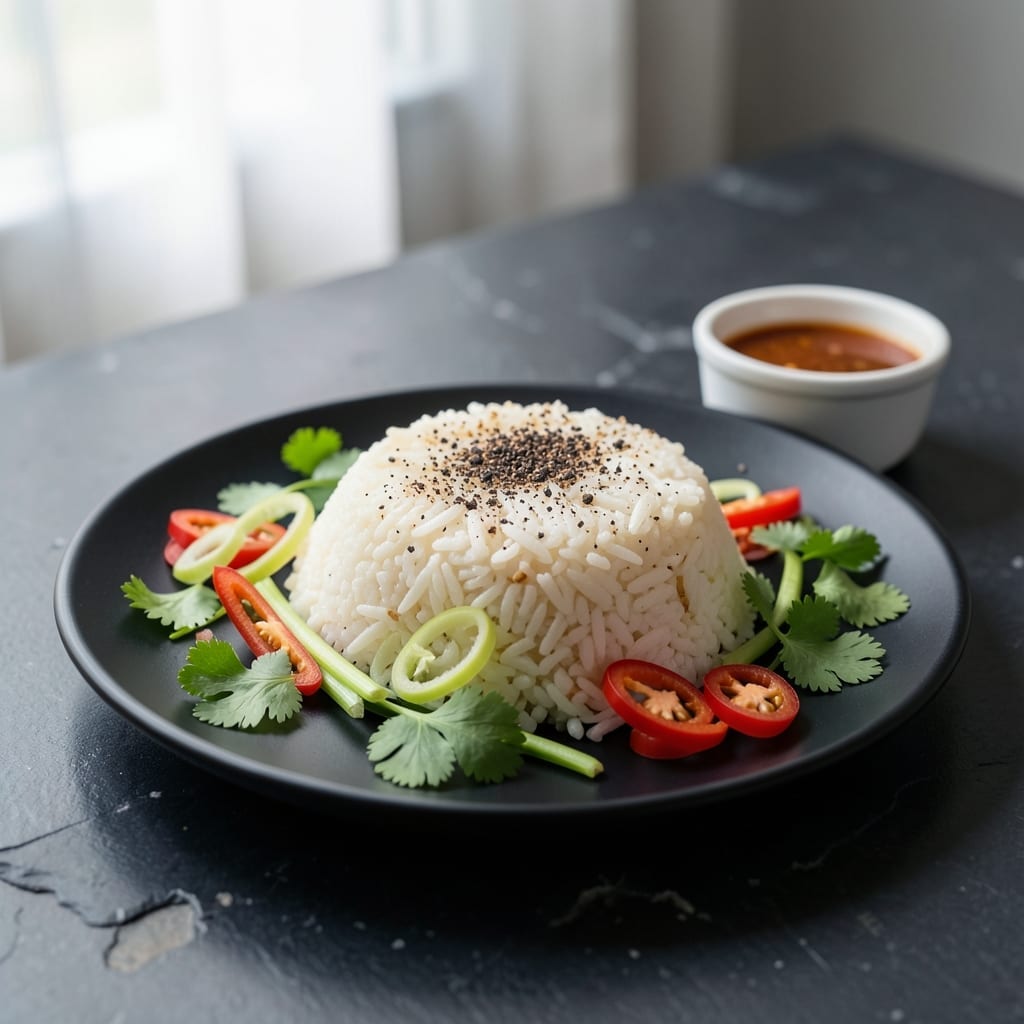
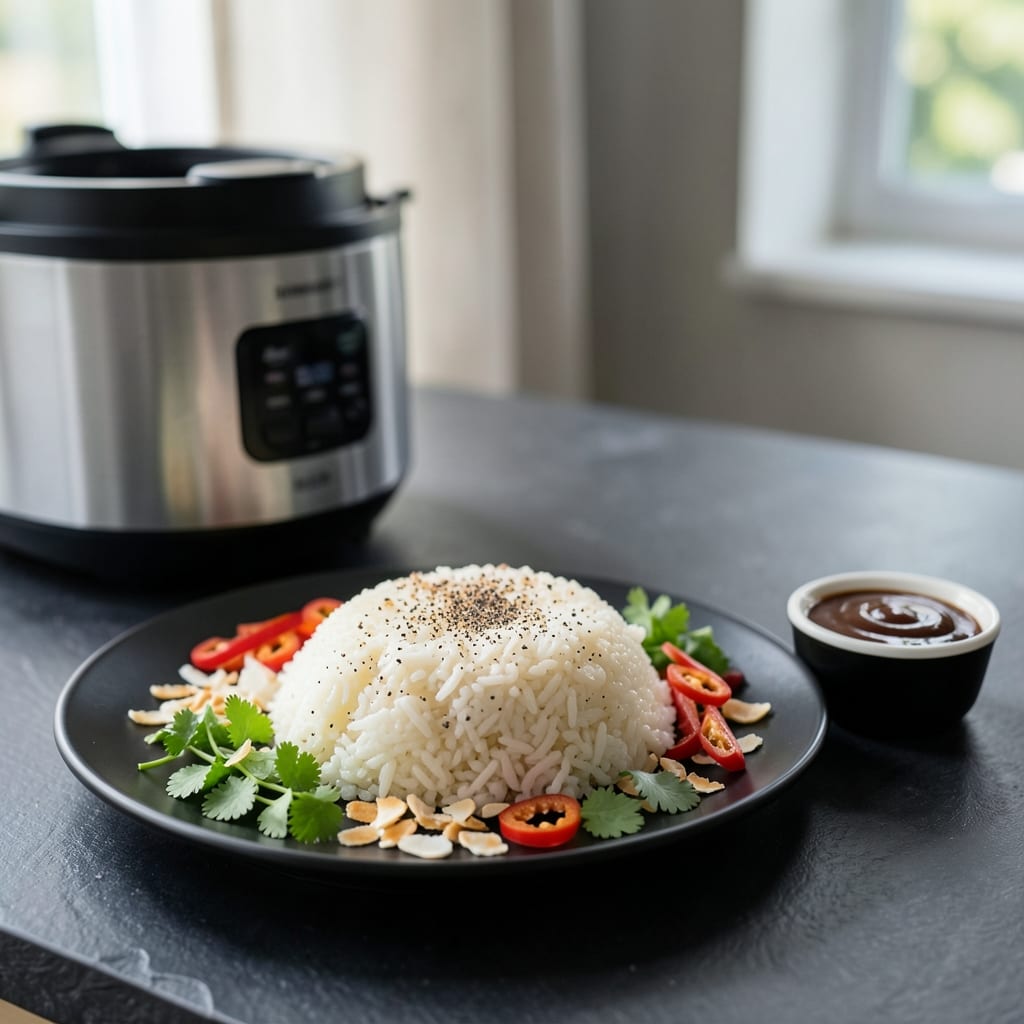
This rice cooker method delivers perfectly fragrant coconut rice with minimal effort. The appliance handles the entire process, ensuring consistent results every time.
You’ll achieve fluffy, aromatic grains infused with rich coconut flavor. The hands-off approach makes it ideal for busy cooks seeking restaurant-quality side dishes.
Ingredients for Coconut Rice Recipe Rice Cooker
Nine simple ingredients transform into fragrant, fluffy coconut rice with ease in your rice cooker.
| Ingredient | Amount | Notes |
|---|---|---|
| Jasmine Rice 🌾 | 2 cups | Rinsed until water runs clear |
| Coconut Milk 🥥 | 1 ½ cups | Full-fat for richness |
| Water 💧 | 1 ½ cups | Adjusted for desired consistency |
| Coconut Oil 🫒 | 1 tbsp | Unrefined for coconut aroma |
| Salt 🧂 | ½ tsp | Fine sea salt preferred |
| Sugar 🍚 | 1 tsp | Balances coconut sweetness |
| Lime Leaves 🍃 | 2 whole | Optional, for authentic flavor |
| Fresh Cilantro 🌿 | ¼ cup | Chopped for garnish |
| Lime Zest 🍋 | 1 tsp | Freshly grated for brightness |
| Green Onions 🧅 | 2 whole | Thinly sliced for topping |
[recipeingredientscaler]
Jasmine rice is non-negotiable here—its natural fragrance complements the coconut perfectly. Look for Thai or Vietnamese brands at Asian markets or the international aisle for authentic flavor. The coconut milk must be full-fat; light versions won’t deliver the same richness. I prefer Thai Kitchen or Chaokoh for consistent quality. Lime leaves, if using, are often found frozen at specialty stores.
No jasmine rice? Basmati works at a 1:1 ratio, though the aroma will differ. Swap coconut oil for neutral oil if needed, but you’ll lose depth. For extra sweetness, palm sugar can replace white sugar. Lime leaves can be omitted, but add 1 extra tsp lime zest for brightness. Fresh cilantro is ideal, but parsley works in a pinch.
Rice keeps 4-5 days refrigerated in an airtight container. Reheat with a splash of water to restore moisture. For meal prep, store garnishes separately and add just before serving. Freezing isn’t recommended—it alters the texture of the grains.
Why You’ll Love This Recipe
- Set and Forget: I dump everything in the rice cooker and walk away—no stirring, no babysitting, just perfectly fluffy coconut rice every time.
- Sweet and Savory: The jasmine rice soaks up the coconut milk so well it tastes like dessert for dinner. Honestly, I could eat it plain.
- Pairs with Anything: It’s my go-to base for curries, grilled chicken, or even just a fried egg on top. Between us, it makes leftovers exciting.
- Budget Stretch: A can of coconut milk and a bag of rice feeds my family for two meals. I’ll be real: that’s a win in my book.
Step-by-Step Instructions for Coconut Rice in a Rice Cooker
This method ensures perfectly fragrant and fluffy rice with minimal effort and maximum flavor.
Step 1: Rinse and Prepare the Jasmine Rice
Place the 2 cups Jasmine Rice in a fine-mesh strainer and rinse under cold water, swirling with your hand until the water runs completely clear. This removes excess starch that could make the rice gummy.
Drain thoroughly and transfer to the rice cooker pot. The rice should be damp but not wet—excess water will dilute the coconut flavor. This step is non-negotiable for achieving that ideal fluffy texture.
Step 2: Combine Liquids and Aromatics
Add the 1.5 cups Coconut Milk, 1.5 cups Water, 1 tbsp Coconut Oil, 0.5 tsp Salt, and 1 tsp Sugar to the rice cooker pot. Stir gently to combine, ensuring the rice is evenly distributed in the liquid.
The coconut oil enhances the aroma while the salt and sugar balance the richness of the coconut milk. The liquid ratio is carefully calibrated—don’t adjust it unless you prefer a softer texture.
Step 3: Add Lime Leaves and Cook
Place the 2 whole Lime Leaves on top of the rice mixture. These infuse subtle citrus notes as the rice cooks. Close the rice cooker lid and select the standard white rice setting.
Let it cook undisturbed for the full cycle, typically 20-25 minutes. Resist the urge to open the lid—steam release disrupts the cooking process and can result in unevenly cooked rice.
Step 4: Rest and Fluff
Once the rice cooker switches to “keep warm,” let the rice steam for an additional 10 minutes. This allows the grains to fully absorb any remaining liquid and set properly.
Open the lid and discard the lime leaves. Gently fluff the rice with a fork, separating any clumps while preserving the individual grains. The texture should be light and separate, with a visible sheen from the coconut milk.
Step 5: Garnish and Serve
Sprinkle the 0.25 cup Fresh Cilantro, 1 tsp Lime Zest, and thinly sliced 2 whole Green Onions over the rice. These fresh elements add brightness and contrast to the rich coconut base.
Serve immediately while warm. The cilantro and lime zest should be visible as vibrant green and yellow flecks throughout the dish, providing both visual appeal and a burst of fresh flavor in every bite.
Pro Tips For Making Coconut Rice Recipe Rice Cooker
- Rinse the Rice: Always rinse jasmine rice until the water runs clear—it removes excess starch so your coconut rice ends up fluffy, not gummy. I learned this the hard way after making a sticky, gluey batch.
- Balance the Liquids: Use a 1:1 ratio of coconut milk to water, and don’t exceed 2 cups total liquid for 1 cup rice. Sounds weird, but it works: too much liquid turns the rice mushy.
- Skip the Stirring: Resist the urge to stir the rice once the cooker starts—it breaks the grains and releases starch, leading to a dense, pasty texture.
- Add Coconut Oil Last: Stir in 1 tablespoon of coconut oil after cooking, not before. My grandmother swore by this, and she was right: it keeps the rice light and adds a subtle richness without weighing it down.
Regional Styles of These Flavors
🥥 Thai Style
In Thailand, coconut rice, or Khao Mok Maprao, is a beloved dish often served with mango or as a base for curries. The rice is cooked with coconut milk and a touch of sugar and salt, giving it a rich, slightly sweet flavor. For extra aroma, pandan leaves are sometimes added during cooking. This style is simple yet deeply flavorful, showcasing the natural creaminess of coconut.
🍛 Malaysian Style
Malaysian coconut rice, or Nasi Lemak, is a staple often enjoyed for breakfast. The rice is infused with coconut milk and pandan leaves, then steamed to perfection. It’s typically served with sambal (a spicy chili paste), fried anchovies, peanuts, and boiled eggs. The dish reflects the country’s diverse culinary influences, blending rich coconut flavors with bold, spicy accompaniments.
🌴 Indonesian Style
In Indonesia, coconut rice, or Nasi Uduk, is a popular street food. The rice is cooked in coconut milk with lemongrass, garlic, and shallots, giving it a fragrant, savory taste. It’s often paired with fried tofu, tempeh, or shredded chicken. The dish is a testament to Indonesia’s love for bold, aromatic flavors in everyday meals.
🍍 Hawaiian Style
Hawaiian coconut rice is a tropical twist on the classic, often incorporating pineapple juice or chunks for a sweet and tangy flavor. The rice is cooked with coconut milk and sometimes macadamia nuts for added crunch. This style is a refreshing take, perfect for pairing with grilled meats or seafood, embodying the islands’ laid-back, flavorful cuisine.
Nutrition Facts

- 6 Egg Cake Recipe with Oil: Light as Air With Buttery Moisture - October 4, 2026
- 4 Bean Casserole Recipe: One-Pan Heartiness With Smoky Paprika Depth - October 4, 2026
- 3-Ingredient Keto Mug Cake Recipe: Microwave Magic in 2 Minutes - October 4, 2026