
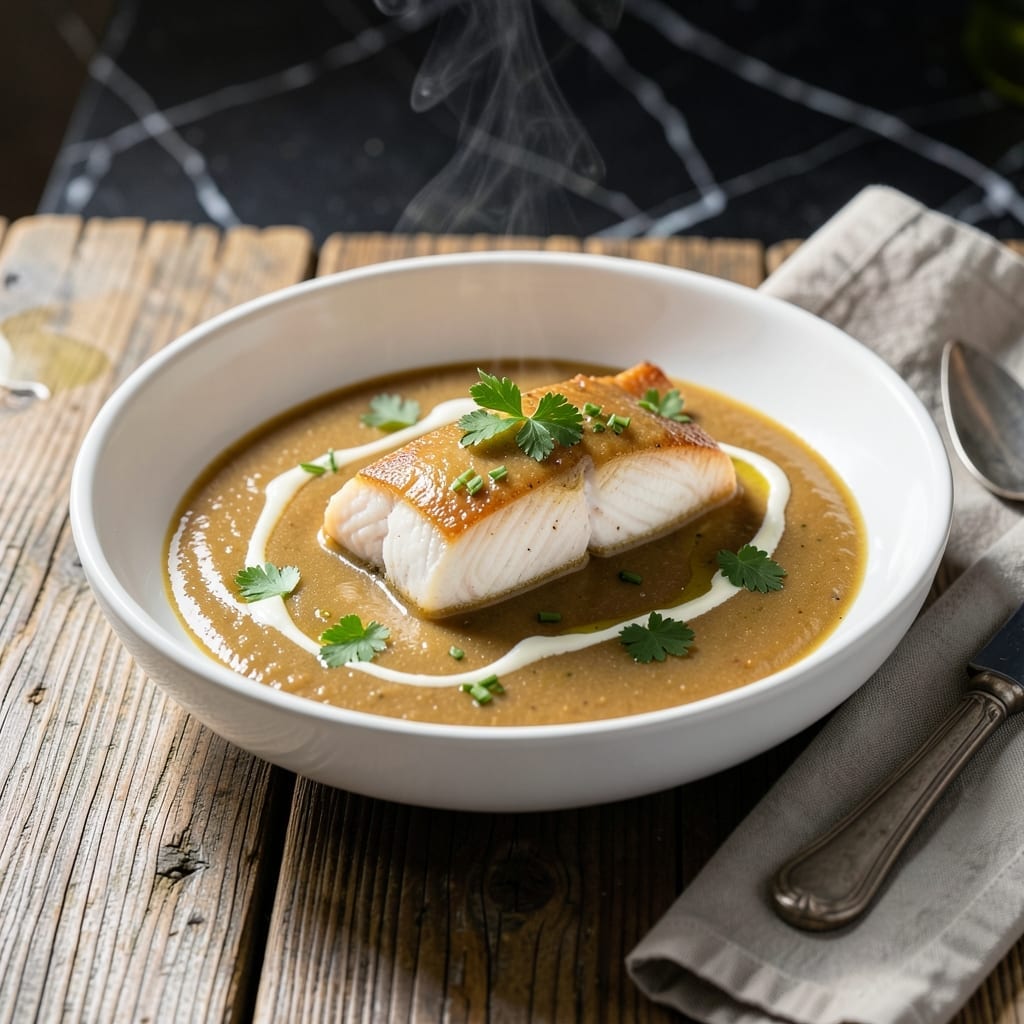
This cod fish gravy transforms any seafood dish with its silky texture and delicate flavor. I developed this recipe to complement poached or fried cod without overpowering its natural sweetness.
The secret lies in a simple roux-based white sauce enriched with fish stock and a touch of cream. It comes together in 15 minutes with ingredients you likely already have on hand.
You’ll achieve a velvety consistency that clings perfectly to flaky cod fillets. The subtle seasoning allows the seafood to shine while adding a comforting richness.
Use it immediately or store in the refrigerator for up to 3 days. This sauce elevates any fish preparation to restaurant quality.
Ingredients for Cod Fish Gravy
Ten ingredients create this silky, delicate sauce to elevate any seafood preparation.
| Ingredient | Amount | Notes |
|---|---|---|
| Unsalted Butter 🧈 | 4 tbsp | For roux base |
| All-Purpose Flour 🌾 | 4 tbsp | Creates smooth roux |
| Fish Stock 🐟 | 2 cups | High-quality for depth |
| Heavy Cream 🥛 | ½ cup | Full-fat for richness |
| White Wine 🍷 | ¼ cup | Dry variety preferred |
| Lemon Juice 🍋 | 1 tbsp | Freshly squeezed for brightness |
| Dijon Mustard 🟡 | 1 tsp | Adds subtle tang |
| Fresh Parsley 🌿 | 2 tbsp | Chopped, for garnish |
| Sea Salt 🧂 | ½ tsp | Fine grain for even dissolution |
| White Pepper ⚪ | ¼ tsp | Ground, for delicate flavor |
The roux demands precision. European-style unsalted butter (like Plugrá) yields superior emulsion stability for the white sauce base. Fish stock quality is non-negotiable—Aneto or More Than Gourmet brands deliver the clean, briny foundation this gravy requires. Avoid pre-reduced stocks; their intensity overpowers the cod’s natural sweetness.
Substitute vermouth for white wine if avoiding alcohol, or use additional stock with a splash of vinegar for acidity. Half-and-half works at half the quantity for a lighter version, though texture will be less velvety. For gluten-free adaptations, rice flour or cornstarch replaces all-purpose flour at a 1:1 ratio. The Dijon can be omitted, but add a pinch of cayenne to compensate for lost complexity.
Gravy thickens as it cools. Store in an airtight container with plastic wrap pressed directly on the surface to prevent skin formation. Refrigerates for 3 days maximum. Reheat gently over low heat, stirring constantly—boiling will cause separation. Do not freeze; the cream will curdle upon thawing.
Why You’ll Love This Recipe
- One Pan Wonder: I love that I only need a saucepan and a whisk to make this rich, velvety gravy—no fancy equipment.
- Buttery Depth: The combo of unsalted butter, white wine, and fish stock creates a sauce so luscious I could drink it with a spoon.
- Weeknight Hero: Honestly, it pairs perfectly with steamed cod, mashed potatoes, or even toasted bread for dipping.
- Budget Stretcher: Heavy cream feels indulgent, but a little goes a long way, making this gravy surprisingly affordable for how fancy it tastes.
Step-by-Step Instructions for Cod Fish Gravy
This method ensures a velvety, lump-free sauce with balanced seafood flavor and professional finish.
Step 1: Create the Roux Base
Melt the 4 tbsp unsalted butter in a heavy saucepan over medium heat. Once the butter foams but before it browns, add the 4 tbsp all-purpose flour all at once. Whisk constantly for 2-3 minutes until the mixture turns pale golden and develops a nutty aroma.
This cooking process removes the raw flour taste and builds the foundation for your sauce. The roux should resemble wet sand and bubble gently. If it darkens too quickly, reduce heat immediately—burnt roux will impart a bitter flavor to your finished sauce.
Step 2: Deglaze and Build Flavor
Gradually whisk in the 0.25 cup white wine, allowing it to absorb completely between additions. The mixture will thicken considerably at first, then loosen as the wine incorporates. Cook for 1-2 minutes until the raw alcohol smell dissipates.
This step extracts maximum flavor from the roux while the wine adds acidity to balance the richness of the cream. The sauce base should now be smooth and slightly glossy, with no visible flour lumps.
Step 3: Incorporate Liquid Elements
Slowly pour in the 2 cups fish stock, whisking continuously to maintain a smooth consistency. Bring to a gentle simmer and cook for 5-7 minutes until the sauce thickens enough to coat the back of a spoon.
Add the 0.5 cup heavy cream, 1 tsp Dijon mustard, 1 tbsp lemon juice, 0.5 tsp sea salt, and 0.25 tsp white pepper. The cream adds luxurious body while the mustard and lemon provide subtle complexity without overpowering the delicate seafood notes.
Step 4: Refine and Finish
Reduce heat to low and let the sauce simmer gently for 3-5 minutes. Stir occasionally, reaching into the corners of the pan to prevent sticking. The sauce should now have a silky, velvety texture that ribbons off your whisk.
Taste and adjust seasoning if needed, remembering that the sauce will concentrate slightly as it cools. For a perfectly smooth finish, strain through a fine-mesh sieve if any lumps remain, though proper whisking should prevent this.
Step 5: Garnish and Serve
Remove from heat and stir in the 2 tbsp fresh parsley. The residual heat will gently wilt the parsley while preserving its bright green color and fresh flavor. This final touch adds visual appeal and a clean, herbal note to complement the seafood.
Serve immediately over cod or other white fish while hot. The sauce should pool slightly around the fish without being so thin it runs off the plate. For best results, prepare this just before serving as it thickens considerably as it cools.
Pro Tips For Making Cod Fish Gravy
- Deglaze with Wine: After cooking the cod, pour in the white wine while the pan is still hot to lift all those flavorful browned bits—this builds the base for a richer gravy.
- Temper the Cream: I learned this the hard way: slowly whisk in the heavy cream to the hot stock to prevent curdling, about a tablespoon at a time.
- Skip Cold Butter: Use room-temperature unsalted butter when making the roux—it blends into the flour more evenly and prevents lumps in your gravy.
- Strain the Stock: Sounds fussy, but straining the fish stock before adding it removes any impurities that could make your gravy gritty or cloudy.
Make-Ahead Tips for Leftovers
Prep Ahead Strategy
You can make the roux base up to 2 days in advance. Cook the butter and flour as directed, then spread it on a plate to cool completely before refrigerating. This saves 5 minutes of active cooking time on serving day. 💡
Liquid Pre-Measure
Measure and combine the fish stock, white wine, and heavy cream in a pitcher the night before. This ensures smooth, lump-free incorporation when you’re ready to cook. I keep mine in the fridge with a tight lid.
Herb Prep
Wash, dry, and chop the fresh parsley up to 1 day ahead. Store it in a damp paper towel inside a sealed container. This keeps it vibrant and ready for that final garnish.
Complete Make-Ahead
The finished gravy can be made 1 day in advance and gently reheated. Store in an airtight container with plastic wrap pressed directly on the surface to prevent a skin from forming. ❄️
Reheating Method
Warm the gravy over low heat, stirring constantly to prevent separation. If it thickens too much, whisk in 1-2 tbsp of warm water or additional fish stock to restore the silky consistency.
Timing Tip
Start the gravy 30 minutes before serving. This gives you enough time to make it fresh while keeping it warm. I find this timing perfect for coordinating with poached or fried cod.
Nutrition Facts
Frequently Asked Questions
Can I use milk instead of heavy cream?
Yes, but use whole milk for best results. The sauce will be lighter and less rich. For a thicker texture, add 1 extra tbsp of flour to your roux.
Why does my gravy turn out lumpy?
Lumps usually mean the flour wasn’t fully incorporated. Whisk constantly while adding liquids and ensure your roux is smooth before deglazing. Strain through a fine sieve if needed.
How do I know when it’s thick enough?
It should coat the back of a spoon and ribbon off your whisk. Cook for 5-7 minutes after adding stock, then check consistency.
Can I make this gluten-free?
Replace all-purpose flour with rice flour or cornstarch at a 1:1 ratio. The texture will be just as silky.

- 6 Egg Cake Recipe with Oil: Light as Air With Buttery Moisture - October 4, 2026
- 4 Bean Casserole Recipe: One-Pan Heartiness With Smoky Paprika Depth - October 4, 2026
- 3-Ingredient Keto Mug Cake Recipe: Microwave Magic in 2 Minutes - October 4, 2026