
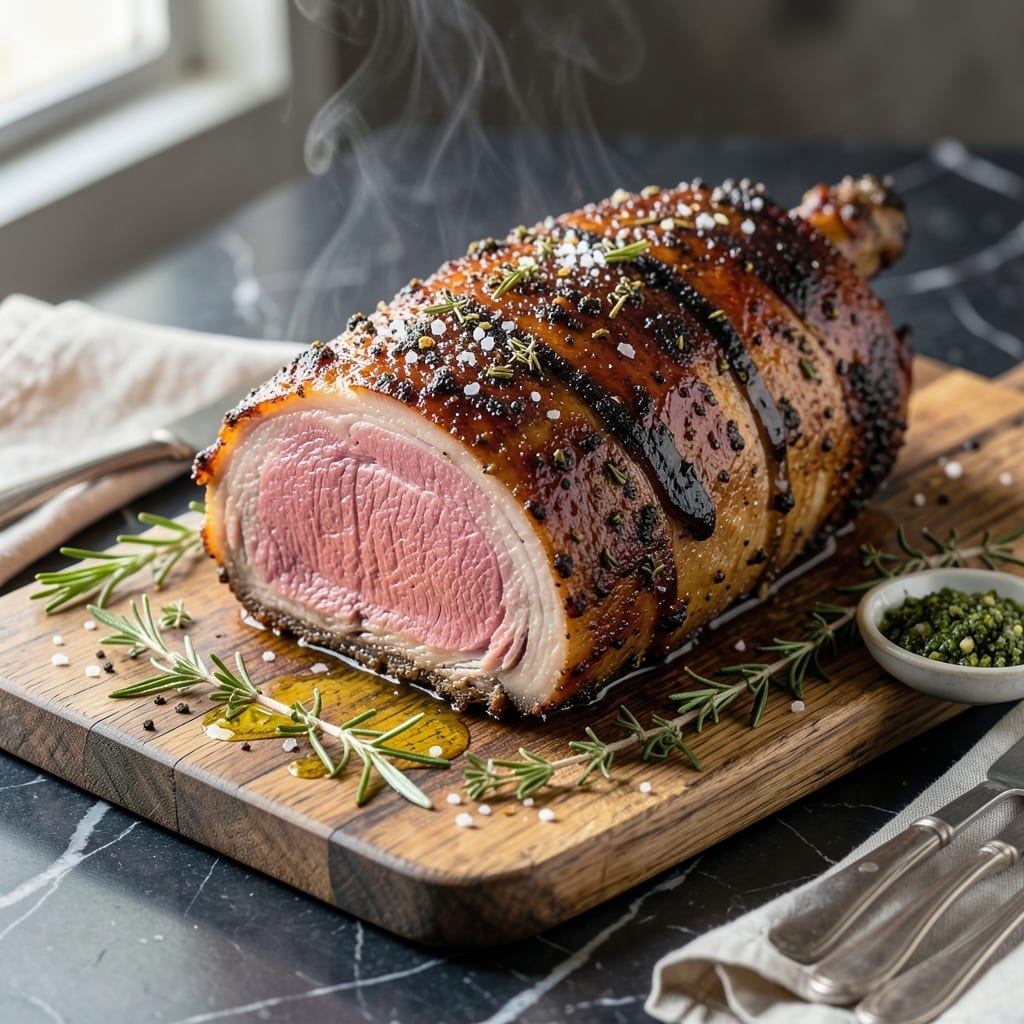
This herb-crusted prime rib transforms any dinner into a memorable holiday feast. I’ve refined this method over years of testing to ensure perfect results every time.
The secret lies in a robust herb crust that forms a flavorful seal, locking in juices while creating a golden, aromatic exterior. A slow roast at low heat guarantees tender, evenly cooked meat.
What emerges is a centerpiece worthy of special occasions—juicy, flavorful, and impressively tender with every slice. The herb crust adds depth without overpowering the natural richness of the beef.
Ideal for gatherings, this dish delivers the elegance and satisfaction your holiday table deserves.
Ingredients for Colorado Cache Prime Rib
A few high-quality ingredients create this showstopping holiday centerpiece with ease.
| Ingredient | Amount | Notes |
|---|---|---|
| Prime Rib Roast 🥩 | 5 lb | Bone-in, well-marbled preferred |
| Kosher Salt 🧂 | 2 tbsp | Diamond Crystal or Morton |
| Freshly Ground Black Pepper 🌶️ | 2 tbsp | Coarse grind preferred |
| Fresh Rosemary 🌿 | ¼ cup | Finely chopped, stems discarded |
| Fresh Thyme 🍃 | ¼ cup | Leaves stripped from stems |
| Fresh Sage 🌿 | 2 tbsp | Finely minced |
| Garlic Cloves 🧄 | 6 cloves | Peeled and minced |
| Dijon Mustard 🟡 | ¼ cup | Smooth, not whole grain |
| Olive Oil 🫒 | ¼ cup | Extra-virgin for richness |
| Red Wine 🍷 | 1 cup | Dry variety like Cabernet |
| Beef Stock 🥩 | 2 cups | Low-sodium preferred |
| Unsalted Butter 🧈 | ½ cup | Softened at room temperature |
| All-Purpose Flour 🌾 | 2 tbsp | For thickening pan sauce |
| Yellow Onion 🧅 | 1 whole | Medium-sized, diced |
| Carrots 🥕 | 3 whole | Peeled and chopped |
The prime rib is the foundation—select a well-marbled, bone-in roast from a trusted butcher or Whole Foods. Look for bright red color with creamy fat streaks; this ensures tenderness. For the herbs, fresh is non-negotiable. I source mine from local farmers markets when possible (the aroma is noticeably more potent). A 5-pound roast serves six generously, with leftovers for sandwiches.
No fresh herbs? Dried work at one-third the quantity, though the flavor profile will be less vibrant. For the wine, any bold dry red will do—Cabernet Sauvignon or Merlot are reliable choices. If avoiding alcohol, beef broth with a splash of balsamic vinegar mimics the depth. The Dijon mustard can be swapped for whole-grain if preferred, but smooth blends more evenly into the crust.
Store the roast in its packaging on a tray in the fridge for up to 3 days before cooking. The herb crust can be prepped 24 hours in advance—keep it covered and refrigerated. Leftovers? They’ll keep 4-5 days refrigerated or freeze beautifully for 3 months.
Why You’ll Love This Recipe
- Set and Forget: I just season the prime rib with salt, pepper, rosemary, and thyme the night before, then let the oven do all the work the next day.
- Herb Crust Perfection: That crust from the rosemary and thyme with the pepper gives it this ridiculous depth of flavor that’s hard to beat.
- Holiday Hero: It’s my go-to for Christmas dinner—fancy enough to impress but unfussy enough that I’m not stuck in the kitchen.
- Leftovers for Days: One roast feeds us for a week—sandwiches, tacos, you name it. Honestly, I look forward to the leftovers as much as the first meal.
Step-by-Step Instructions for Herb-Crusted Prime Rib
Master the technique for a show-stopping holiday centerpiece with perfectly medium-rare results.
Step 1: Prepare the Herb Crust and Season the Roast
In a food processor, combine the 0.25 cup Fresh Rosemary, 0.25 cup Fresh Thyme, 2 tbsp Fresh Sage, and 6 cloves Garlic Cloves. Pulse until finely minced. Add the 2 tbsp Kosher Salt and 2 tbsp Freshly Ground Black Pepper, then pulse again to incorporate evenly.
Pat the 5 lb Prime Rib Roast completely dry with paper towels. This ensures the herb crust adheres properly and promotes even browning. Rub the roast all over with the 0.25 cup Dijon Mustard, then press the herb mixture evenly onto the surface, creating a thick, flavorful crust.
Step 2: Sear and Roast the Prime Rib
Preheat your oven to 450°F. Heat the 0.25 cup Olive Oil in a large roasting pan over medium-high heat on the stovetop. Sear the roast on all sides until deeply browned, about 2-3 minutes per side. This step builds a flavorful crust and locks in juices.
Place the roast bone-side down in the pan. Transfer to the preheated oven and roast for 20 minutes at 450°F. Reduce the heat to 325°F and continue roasting until the internal temperature reaches 120-125°F for medium-rare, approximately 1.5-2 hours for this size.
Step 3: Prepare the Pan Sauce Base
While the roast cooks, add the 1 whole Yellow Onion and 3 whole Carrots to the roasting pan, scattering them around the meat. These vegetables will caramelize in the drippings, adding depth to your sauce.
Once the roast reaches temperature, transfer it to a cutting board to rest. Place the roasting pan on the stovetop over medium heat. Pour in the 1 cup Red Wine and deglaze the pan, scraping up all the browned bits with a wooden spoon.
Step 4: Finish the Pan Sauce
Stir the 2 tbsp All-Purpose Flour into the pan drippings and cook for 1-2 minutes to remove the raw flour taste. Gradually whisk in the 2 cups Beef Stock and bring to a simmer. Cook for 5-7 minutes until the sauce thickens slightly.
Reduce the heat to low and whisk in the 0.5 cup Unsalted Butter, one piece at a time, until fully melted and incorporated. Strain the sauce through a fine-mesh sieve to remove any solids, then adjust seasoning if needed.
Step 5: Rest, Slice, and Serve
Let the roast rest for 20-30 minutes before carving. This allows the juices to redistribute, ensuring a moist, flavorful result. The internal temperature will rise by 5-10°F during this time.
Slice the prime rib between the bones for elegant portions. Serve with the prepared pan sauce spooned over the top, alongside the roasted vegetables. The sauce should be rich, glossy, and packed with the deep flavors of the roast and wine.
Pro Tips For Making Colorado Cache Prime Rib
- Reverse Sear It: Start in a 250°F oven until the internal temp hits 115°F for medium-rare, then finish with a 500°F blast for 10 minutes to get that Colorado Cache crust. I learned this the hard way—low and slow first guarantees even cooking without burning the herbs.
- Salt Aggressively: Use at least 1 tablespoon of kosher salt per pound of prime rib, and coat it the night before. Sounds like overkill, but the salt penetrates deep and makes the rosemary and thyme pop.
- Skip the Water Pan: Forget adding water to the roasting pan—it steams the meat and washes away the seasoning. After ruining two roasts this way, I finally realized dry heat is what gives that prime rib its perfect crust.
- Rest Under Foil: Tent the roast with foil and let it rest for 20-30 minutes before slicing. My grandmother swore by this, and she was right: it keeps the juices inside where they belong.
Dietary Considerations for This Dish
Gluten-Free Adaptations
For a gluten-free version, replace the 2 tbsp All-Purpose Flour with cornstarch or gluten-free flour blend. Mix 1 tbsp cornstarch with 2 tbsp cold water to create a slurry, then whisk into the pan drippings. The sauce will thicken just as beautifully. 💪
Low-Sodium Options
To reduce sodium, use low-sodium beef stock and low-sodium Dijon mustard. Cut the Kosher Salt in the herb crust by half, and rely on the natural flavors of fresh herbs and garlic. I find the dish still tastes rich and satisfying.
Dairy-Free Modifications
For a dairy-free pan sauce, skip the 0.5 cup Unsalted Butter and finish with a drizzle of extra-virgin olive oil instead. The sauce will be just as flavorful, with a lighter texture. You can also add 1 tbsp dairy-free butter substitute for a similar richness.
Keto-Friendly Approach
This dish is naturally keto-friendly—prime rib is high in fat and protein with zero carbs. Skip the pan sauce thickening step entirely, and simply reduce the wine and beef stock by half for a thin, flavorful au jus. The roasted vegetables add minimal carbs. ✨
Nut Allergy Note
This recipe is naturally nut-free. Just ensure your Dijon mustard and beef stock are processed in nut-free facilities if allergies are severe. I always double-check labels when serving guests with nut allergies.
Paleo Variations
For a paleo version, replace the All-Purpose Flour with arrowroot powder to thicken the sauce. Use ghee instead of butter for a rich, dairy-free finish. The herb crust and roasting method remain unchanged.
Nutrition Facts
Frequently Asked Questions
What’s the best internal temperature for medium-rare?
Remove the roast when it hits 120-125°F internally. The temperature will rise to 130-135°F during resting, giving perfect medium-rare. Use a meat thermometer for accuracy.
Can I use dried herbs instead of fresh?
Yes, but use 1/3 the amount since dried herbs are more concentrated. The flavor will be slightly different but still delicious. Fresh herbs are preferred for the best aroma.
How long should the prime rib rest before slicing?
Let it rest for 20-30 minutes after roasting. This allows juices to redistribute, ensuring moist, tender slices. Skipping this step can result in dry meat.
What if my roast is smaller than 5 pounds?
Adjust cooking time based on weight. For a 3-4 lb roast, reduce total cooking time by 30-45 minutes. Always use a thermometer to check doneness.

- 6 Egg Cake Recipe with Oil: Light as Air With Buttery Moisture - October 4, 2026
- 4 Bean Casserole Recipe: One-Pan Heartiness With Smoky Paprika Depth - October 4, 2026
- 3-Ingredient Keto Mug Cake Recipe: Microwave Magic in 2 Minutes - October 4, 2026