
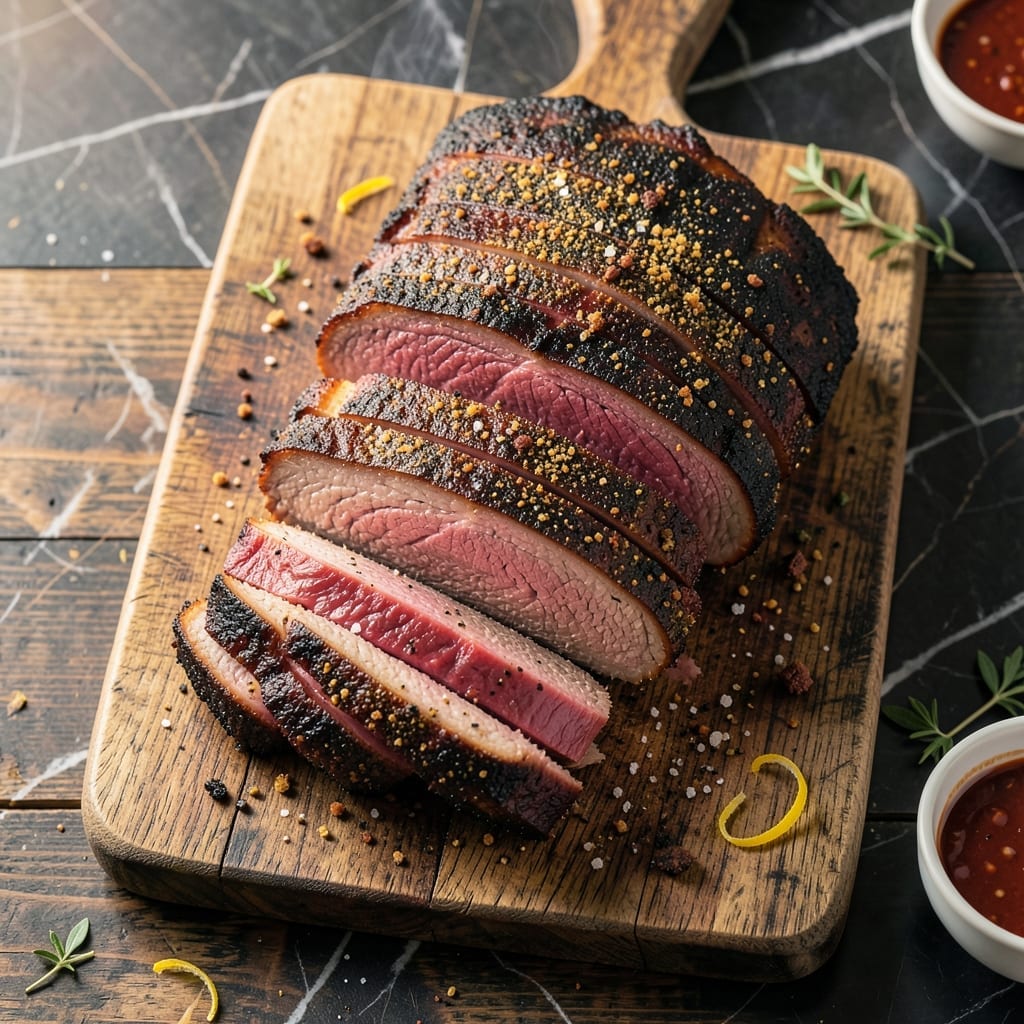
Mastering brisket requires patience, precision, and a few insider tricks I’ve gathered from years on the competition circuit. This isn’t just another smoked beef recipe—it’s a proven method for achieving that coveted tender, smoky perfection judges crave.
The secret starts with selecting the right cut, then applying a carefully balanced rub and maintaining consistent low heat for hours. I’ve refined every step, from trimming to resting, to ensure champion-level results every time.
What separates this from backyard brisket is attention to detail—bark formation, internal temperature, and a resting period that locks in juices. These techniques turn good meat into a showstopper.
Follow these methods closely, and you’ll deliver brisket that rivals the pros. The proof is in every fall-apart bite.
Ingredients for Competition Bbq Brisket Recipe Secrets
Precision starts with the right cut and a balanced rub for championship-worthy results.
| Ingredient | Amount | Notes |
|---|---|---|
| Beef Brisket 🥩 | 12 lb | Whole packer cut, untrimmed |
| Coarse Kosher Salt 🧂 | ¼ cup | Diamond Crystal preferred |
| Coarse Black Pepper 🌶️ | ¼ cup | Freshly ground for bark |
| Garlic Powder 🧄 | 2 tbsp | High-quality, fine grind |
| Onion Powder 🧅 | 2 tbsp | Fresh and aromatic |
| Paprika 🌶️ | 2 tbsp | Sweet or smoked variety |
| Brown Sugar 🍚 | ¼ cup | Light or dark, firmly packed |
| Mustard Powder 🟡 | 1 tbsp | Enhances bark formation |
| Cayenne Pepper 🔥 | 1 tsp | Adjust for heat preference |
| Yellow Mustard 🟡 | ½ cup | Binder for rub adhesion |
| Hickory Wood Chunks 🪵 | 8 pieces | Or apple/cherry for fruitwood |
| Beef Tallow 🥩 | ½ cup | For spritzing during cook |
| Apple Cider Vinegar 🍏 | 1 cup | For final spritz mixture |
| Beer 🍺 | 2 cups | Dark lager or stout preferred |
The brisket cut is non-negotiable. Whole packer cut with uniform marbling is essential—avoid pre-trimmed flats. Source from USDA Prime or Choice grade purveyors like Snake River Farms or Creekstone. The fat cap should be at least 1/4 inch thick for low-and-slow cooking. Look for meat with a vibrant red color and visible fat streaking. Never freeze before cooking—freshness impacts bark formation significantly.
No hickory? Pecan or oak wood provides excellent alternatives with different smoke profiles. For the rub, freshly ground black pepper is mandatory—pre-ground lacks the bite. Brown sugar can be substituted with turbinado for a coarser bark. The beer spritz can use apple juice mixed with vinegar if avoiding alcohol. Mustard powder is critical for bark development, but Dijon mustard at half the quantity works in a pinch.
Store untrimmed brisket in the fridge for up to 3 days before cooking. The rub can be pre-mixed and kept in an airtight container for 1 month. Leftover brisket freezes beautifully for up to 3 months—slice before freezing for easier reheating. Always bring meat to room temperature before applying the rub for even seasoning distribution.
Why You’ll Love This Recipe
- I’ll be real: one brisket makes enough for a backyard full of happy people, with leftovers for sandwiches.
- Simple Rub: That coarse salt and pepper crust with garlic and onion powder means no fancy marinades—just rub, rest, and smoke.
- Smoky Depth: The bark forms this incredible crust with layers of peppery heat and savory depth from the dry rub.
- Feeds a Crowd: I’ll be real: one brisket makes enough for a backyard full of happy people, with leftovers for sandwiches.
Step-by-Step Instructions for Competition BBQ Brisket
Master these pitmaster techniques to achieve championship-level bark, smoke penetration, and tenderness.
Step 1: Trim and Prepare the Brisket
Begin with the 12 lb Beef Brisket, whole packer cut and untrimmed. Trim the fat cap to about ¼ inch thickness, maintaining a uniform layer across the flat and point. I use a sharp boning knife for precision, removing any hard fat or membrane while preserving the natural shape.
Leave a slightly thicker fat cap on the point end to protect it during the long cook. This step ensures even smoke penetration and bark formation while preventing the meat from drying out. Take your time—proper trimming sets the foundation for a competition-quality result.
Step 2: Apply the Competition Rub
In a bowl, combine the 0.25 cup Coarse Kosher Salt, 0.25 cup Coarse Black Pepper, 2 tbsp Garlic Powder, 2 tbsp Onion Powder, 2 tbsp Paprika, 0.25 cup Brown Sugar, 1 tbsp Mustard Powder, and 1 tsp Cayenne Pepper. Mix thoroughly to distribute all spices evenly.
Brush the 0.5 cup Yellow Mustard over every surface of the brisket as a binder—this helps the rub adhere and creates a tacky surface for bark development. Apply the rub generously, pressing it into the meat with firm, even strokes. The brisket should be completely coated with no bare spots. Let it rest for 45-60 minutes at room temperature before smoking.
Step 3: Smoke with Precision
Preheat your smoker to 225-250°F using the 8 pieces Hickory Wood Chunks for smoke. Place the brisket fat-side up on the grill grates, positioning it so the thickest part of the flat faces the heat source. Maintain consistent temperature throughout the cook—fluctuations can cause uneven cooking or tough meat.
After 4-5 hours, when the bark begins to set, start spritzing every 45-60 minutes with a mixture of 0.5 cup Beef Tallow, 1 cup Apple Cider Vinegar, and 2 cups Beer. This keeps the surface moist, enhances bark formation, and adds depth of flavor. Continue smoking until the internal temperature reaches 165-170°F.
Step 4: Wrap and Finish
When the brisket hits the stall (internal temperature stops rising), remove it from the smoker and wrap tightly in pink butcher paper. This “Texas crutch” method preserves the bark while powering through the stall. Return the wrapped brisket to the smoker and continue cooking until probe-tender, typically at 200-205°F internal temperature.
Test for doneness by inserting a probe into the thickest part of the flat—it should slide in like butter with no resistance. This usually takes an additional 4-6 hours after wrapping, but trust the probe test over temperature alone. Remove the brisket and let it rest wrapped in a cooler or warm oven for 2-4 hours to allow the juices to redistribute.
Step 5: Slice and Serve
Unwrap the brisket and locate the grain direction on both the flat and point. Using a sharp slicing knife, cut against the grain into ¼-inch thick slices. The grain on the flat runs lengthwise, while the point’s grain typically runs in the opposite direction—adjust your slicing angle accordingly.
Serve immediately while still warm. Each slice should display a deep mahogany bark, a pronounced smoke ring, and a moist, tender interior. The brisket should pull apart with minimal effort but maintain enough structure to hold its shape on the plate.
Pro Tips For Making Competition Bbq Brisket Recipe Secrets
- Trim the Fat Cap: Leave about 1/4 inch of fat on the brisket—any more and it won’t render properly, any less and it’ll dry out. I learned this the hard way after my first few came out greasy or tough.
- Season Overnight: Coat the brisket with salt, pepper, garlic, and onion powder at least 12 hours before cooking. Sounds weird, but it works: the spices penetrate deep and form a better bark.
- Low and Slow: Keep the smoker at a steady 225°F—no higher, no lower. After burning three batches by rushing, I finally figured out patience is the only way to get that fall-apart texture.
- Rest in a Cooler: Wrap the cooked brisket in towels and let it rest in a cooler for at least 2 hours. This isn’t the prettiest method, but it’s the tastiest—keeps it hot while the juices redistribute.
Flavor Customization for This Recipe
Spice Level Adjustments
For milder heat, reduce the Cayenne Pepper to ½ tsp or omit entirely. I prefer keeping the full 1 tsp for that authentic Texas kick. The Coarse Black Pepper already provides significant warmth, so balance is key. 🌶️
Sweetness Variations
Increase the Brown Sugar to ⅓ cup for a sweeter bark that caramelizes beautifully. For a more savory profile, reduce it to 2 tbsp and add 1 tbsp smoked paprika instead. The sugar helps create that competition-worthy crust.
Smoke Flavor Customization
Swap the Hickory Wood Chunks for cherry or pecan wood for a fruitier, milder smoke. I love using 50/50 hickory and cherry for complexity. Avoid mesquite—it can overpower the meat’s natural flavor. 🪵
Binder Alternatives
Replace Yellow Mustard with Dijon mustard for a sharper flavor, or use olive oil for a neutral base. The binder is crucial for rub adhesion, so ensure full coverage. Mustard won’t leave a taste—it’s just the glue.
Spritz Enhancements
Add 2 tbsp Worcestershire sauce to your spritz mixture for extra umami depth. Some pitmasters use apple juice instead of beer for a non-alcoholic option. I always keep the Apple Cider Vinegar—it tenderizes while adding tang.
Resting Customization
For a tighter bark, rest uncovered on a wire rack for 30 minutes before wrapping in towels. This step prevents sogginess while maintaining texture. The full 2-4 hour rest is non-negotiable for juiciness, though. 💡
Nutrition Facts
Frequently Asked Questions
What’s the ideal smoker temperature for competition brisket?
Maintain a consistent 225-250°F throughout the cook. Fluctuations can cause uneven cooking or tough meat. Use a reliable thermometer to monitor both smoker and internal meat temps.
How do I know when the brisket is done?
It’s done when a probe slides into the thickest part like butter, typically at 200-205°F internal temp. Don’t rush it—trust the probe test over time or temp alone.
Can I skip the resting period?
No! Resting for 2-4 hours wrapped in a cooler is critical. It lets juices redistribute for maximum tenderness and prevents dryness when slicing.
What’s the best wood for smoking brisket?
Hickory delivers classic bold smoke, but pecan or cherry add sweeter notes. Avoid mesquite—it can overpower the meat’s natural flavor.

- 6 Egg Cake Recipe with Oil: Light as Air With Buttery Moisture - October 4, 2026
- 4 Bean Casserole Recipe: One-Pan Heartiness With Smoky Paprika Depth - October 4, 2026
- 3-Ingredient Keto Mug Cake Recipe: Microwave Magic in 2 Minutes - October 4, 2026