
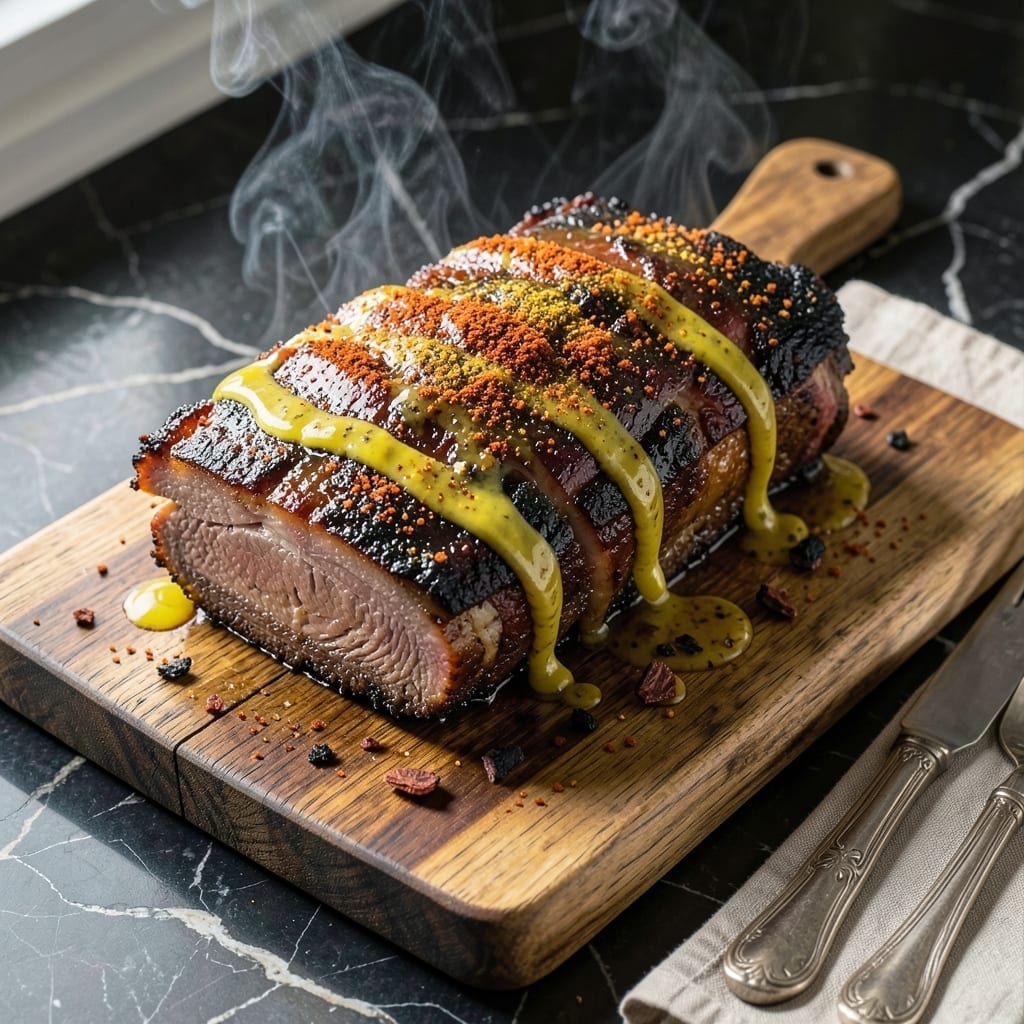
This competition-style pork shoulder delivers the smoky, tender results that win judges over every time.
I’ve refined this method through years of pitmaster experience, focusing on low-and-slow cooking with precise temperature control. The key is maintaining a consistent 225°F in your smoker while building layers of flavor through carefully selected woods and rubs.
What emerges is a pork shoulder with a perfect bark on the outside and fall-apart tenderness inside. The meat absorbs just enough smoke to complement without overpowering, creating that signature competition balance.
This technique transforms an ordinary cut into a prize-worthy centerpiece that will impress even the most discerning BBQ enthusiasts.
Ingredients for Competition Bbq Pork Recipe Shoulder
Professional-grade ingredients for a pitmaster’s championship-worthy pork shoulder with perfect bark.
| Ingredient | Amount | Notes |
|---|---|---|
| Pork Shoulder 🐖 | 8 lb | Bone-in, Boston butt cut preferred |
| Yellow Mustard 🟡 | ¼ cup | For binder on rub |
| Brown Sugar 🟤 | ½ cup | Light or dark variety |
| Paprika 🌶️ | 3 tbsp | Sweet or smoked for depth |
| Garlic Powder 🧄 | 2 tbsp | Freshly ground ideal |
| Onion Powder 🧅 | 2 tbsp | Fine grind preferred |
| Coarse Kosher Salt 🧂 | 2 tbsp | Diamond Crystal brand recommended |
| Ground Black Pepper 🌶️ | 1 tbsp | Freshly cracked for best flavor |
| Cayenne Pepper 🔥 | 1 tsp | Adjust for heat preference |
| Apple Cider Vinegar 🍏 | ½ cup | For spritzing during cook |
| Hickory Wood Chunks 🪵 | 4 pieces | Or cherry for milder smoke |
| Apple Juice 🍎 | 2 cups | For spritzing moisture |
| Butter 🧈 | ½ cup | Unsalted, for finishing |
| BBQ Sauce 🥫 | 1 ½ cups | Low-sugar competition style |
The pork shoulder is non-negotiable—bone-in Boston butt gives you that competition-grade tenderness and moisture retention. Costco or Sam’s Club offer consistent quality at bulk pricing, but your local butcher can source premium cuts with better marbling. Look for a shoulder with a thick fat cap (at least 1/4 inch) to protect the meat during the long cook. The rub ingredients should be fresh; old spices lose potency after 6 months.
Substitutions exist, but they compromise results. Pork picnic shoulder works but has less marbling—expect slightly drier meat. No brown sugar? Turbinado sugar at a 1:1 ratio gets close. For the wood, pecan or oak can replace hickory, but avoid mesquite (too strong for competition balance). If you must skip the spritz, baste with rendered pork fat every hour instead.
Store the pork shoulder in its original packaging for up to 3-4 days before cooking, or freeze for 6-12 months. The rub can be pre-mixed and kept in an airtight container for 1 month. Once cooked, pull and portion the pork—it reheats beautifully (and often tastes better) within 5 days.
Why You’ll Love This Recipe
- Set It and Forget: That pork shoulder slow-cooks while I do laundry or run errands. Honestly, the hardest part is waiting.
- Sweet Heat Balance: The brown sugar caramelizes with the paprika and garlic powder to create this sticky, smoky-sweet crust that’s ridicuously good.
- Feeds the Block: I’ve served this at summer potlucks and Sunday dinners—it’s the dish that disappears first, every time.
- Leftovers for Days: One shoulder makes enough for tacos, sandwiches, and a freezer stash. Between us, it tastes even better the next day.
Step-by-Step Instructions for Competition BBQ Pork Shoulder
Master the pit with this proven competition method for fall-apart tender pulled pork with perfect bark.
Step 1: Apply the Competition-Style Rub
Pat the 8 lb Pork Shoulder completely dry with paper towels to ensure the rub adheres properly. I use a paper towel to grip the surface and remove every trace of moisture—this is critical for bark formation.
In a bowl, combine the 0.5 cup Brown Sugar, 3 tbsp Paprika, 2 tbsp Garlic Powder, 2 tbsp Onion Powder, 2 tbsp Coarse Kosher Salt, 1 tbsp Ground Black Pepper, and 1 tsp Cayenne Pepper. Brush the 0.25 cup Yellow Mustard evenly over the pork shoulder as a binder, then apply the rub generously to all sides, pressing firmly to create an even coating. Let it rest at room temperature for 30-45 minutes before smoking.
Step 2: Set Up the Smoker and Begin the Cook
Prepare your smoker with the 4 pieces Hickory Wood Chunks for a strong, clean smoke profile. Preheat to 225-250°F—this low-and-slow temperature range ensures the collagen breaks down properly without drying out the meat.
Place the pork shoulder fat-side up on the smoker grate. The fat cap will render down during the cook, basting the meat and contributing to moisture retention. Insert a meat probe into the thickest part of the shoulder, avoiding the bone. Smoke undisturbed for the first 4-5 hours to establish a solid bark.
Step 3: Spritz and Maintain Moisture
After the initial bark has set, begin spritzing the pork every 45-60 minutes with a 50/50 mixture of the 0.5 cup Apple Cider Vinegar and 2 cups Apple Juice. This keeps the surface moist and enhances bark development while adding subtle sweetness and tang.
Continue this process until the pork reaches an internal temperature of 165-170°F (typically after 8-10 hours), at which point it will stall. This is normal—resist the urge to increase the temperature. Maintain your smoker temperature and let the stall run its course.
Step 4: Wrap and Push Through the Stall
Once the stall begins, wrap the pork shoulder tightly in pink butcher paper (or foil in a pinch) and return it to the smoker. Adding 0.5 cup Butter on top of the pork before wrapping introduces richness and helps power through the stall.
Continue cooking until the internal temperature reaches 200-205°F and the meat is probe-tender—when the probe slides in like it’s going through warm butter. This usually takes an additional 4-6 hours after wrapping.
Step 5: Rest, Pull, and Sauce
Remove the pork from the smoker and let it rest wrapped in a cooler or warm oven (set to 170°F) for at least 1 hour. This resting period allows the juices to redistribute and the collagen to fully break down.
Unwrap the pork and pull it apart using heat-resistant gloves or forks, discarding any large fat chunks. Toss the pulled pork with the 1.5 cups BBQ Sauce just before serving to maintain moisture and add competition-style flavor. Serve immediately on buns or as a platter for judging.
Pro Tips For Making Competition Bbq Pork Recipe Shoulder
- Start Low and Slow: Keep your smoker or oven at 225°F—any higher and the pork shoulder will toughen up before it has a chance to get tender. I learned this the hard way after pulling dry, chewy meat off the grill.
- Use Mustard as Binder: That yellow mustard in your rub isn’t for flavor—it’s to make the brown sugar and spices stick like glue to the pork. Slather it on thin, even if it looks messy.
- Don’t Rush the Rest: After cooking, wrap the shoulder in foil and let it sit for at least 30 minutes—cutting too soon sends all the juices running onto the cutting board instead of staying in the meat.
- Double the Garlic: The recipe says one teaspoon of garlic powder? Make it two. Sounds like overkill, but competition BBQ judges notice when the bark has that extra punch.
Flavor Customization for This Recipe
Sweet Heat Rub
Boost the sugar content by adding ¼ cup turbinado sugar to your rub for a sweeter bark. Balance it with an extra ½ tsp cayenne or 1 tsp chipotle powder for heat. I love this combo for judges who appreciate a candy-like crust with a slow-building spice. 🌶️
Tangy Mustard Base
Swap yellow mustard for Dijon mustard as your binder—it adds a sharper tang that cuts through the richness. Pair this with 1 tbsp apple cider vinegar in your rub for extra brightness. This works especially well with hickory smoke.
Coffee-Infused Depth
Add 2 tbsp finely ground dark coffee to your rub for a deep, earthy complexity. This trick, borrowed from Texas pitmasters, enhances the smoke flavor without bitterness. Use Starbucks French Roast for consistent results.
Herb-Forward Twist
Incorporate 1 tbsp dried rosemary and 1 tbsp dried thyme into your rub for a Mediterranean-inspired profile. Crush the herbs between your palms to release their oils. This pairs beautifully with cherry wood for a lighter smoke.
Spice Crust Variation
For a competition-worthy bark, mix 2 tbsp coarse black pepper with 1 tbsp coriander and press it heavily onto the fat cap. This creates a textured crust that judges notice. I use Tellicherry peppercorns for maximum impact. 💫
Fruit-Infused Spritz
Replace half the apple juice in your spritz with pineapple juice for tropical notes. The enzymes also help tenderize. Add 1 tbsp honey to the mix for extra shine on the bark. This trick keeps the meat moist during long cooks.
Nutrition Facts
Frequently Asked Questions
What’s the ideal smoker temperature?
Maintain a consistent 225-250°F throughout the cook. This low-and-slow range ensures collagen breaks down properly without drying the meat.
How long does the stall typically last?
The stall can last 2-6 hours as the meat reaches 165-170°F. Resist increasing the temperature—patience is key for competition-quality results.
When should I wrap the pork?
Wrap in butcher paper or foil once the bark sets and the internal temperature hits 165-170°F. This helps power through the stall while keeping moisture locked in.
Can I use a different wood for smoking?
Yes, cherry or pecan work well for milder smoke. Avoid mesquite—it overpowers the pork. Hickory remains the gold standard for competition BBQ.

- 6 Egg Cake Recipe with Oil: Light as Air With Buttery Moisture - October 4, 2026
- 4 Bean Casserole Recipe: One-Pan Heartiness With Smoky Paprika Depth - October 4, 2026
- 3-Ingredient Keto Mug Cake Recipe: Microwave Magic in 2 Minutes - October 4, 2026