
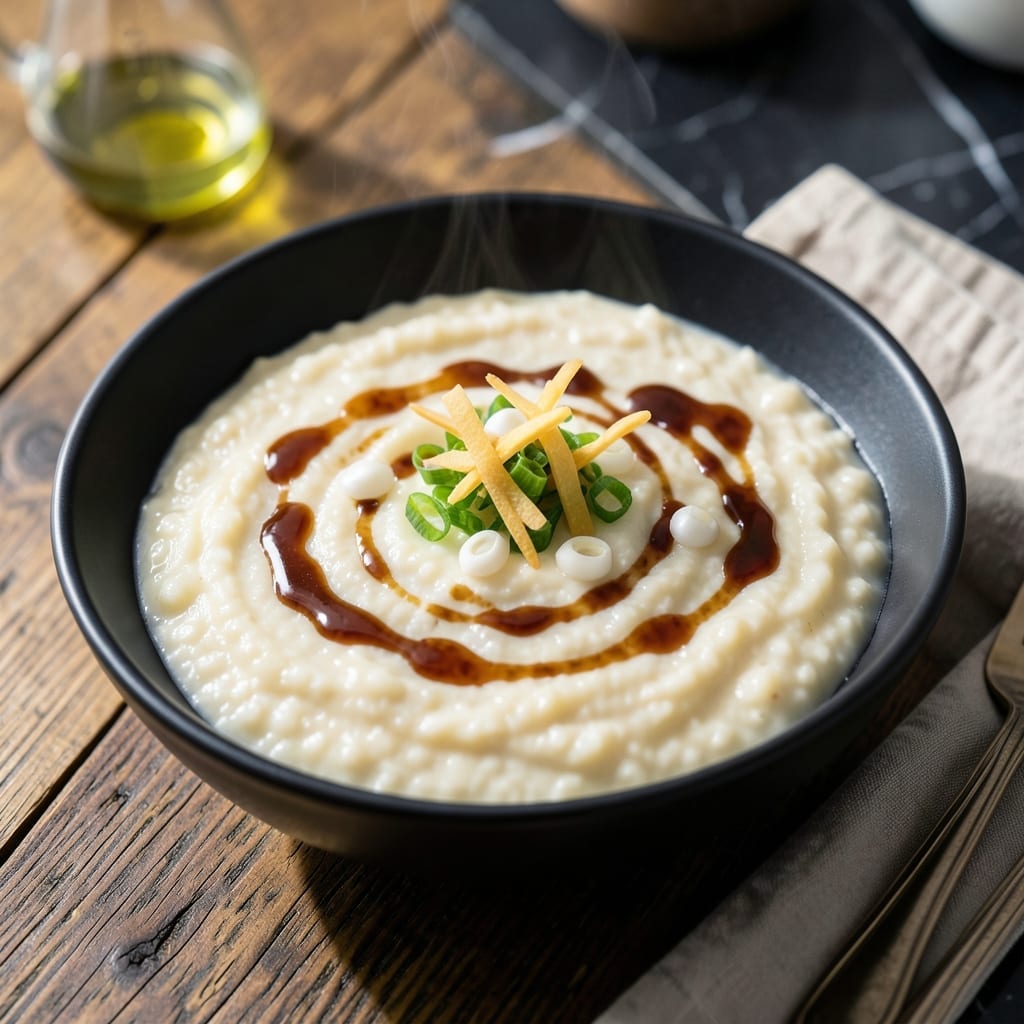
This rice cooker method delivers hands-free congee with minimal effort and maximum flavor. The appliance handles the slow cooking, breaking down rice into a creamy, comforting porridge.
You’ll achieve perfectly smooth texture every time, with the flexibility to customize with proteins or vegetables. Simple, reliable, and ideal for busy kitchens.
Ingredients for Congee Recipe Rice Cooker
Simple pantry staples transform into creamy, comforting congee with minimal effort required.
| Ingredient | Amount | Notes |
|---|---|---|
| Jasmine Rice 🌾 | 1 cup | Rinsed until water runs clear |
| Water 💧 | 8 cups | Or low-sodium chicken broth |
| Ginger Root 🌿 | 2 tbsp | Fresh, grated or julienned |
| Garlic Cloves 🧄 | 4 cloves | Minced or thinly sliced |
| Scallions 🧅 | 4 whole | Thinly sliced, white and green parts separated |
| Soy Sauce 🫒 | 3 tbsp | Low-sodium preferred for control |
| Sesame Oil 🫒 | 1 tsp | Toasted for depth of flavor |
| Salt 🧂 | 1 tsp | Diamond Crystal kosher salt recommended |
| White Pepper 🌶️ | ½ tsp | Ground, for authentic flavor |
| Dried Shiitake Mushrooms 🍄 | 4 pieces | Optional, for umami depth |
| Rotisserie Chicken 🍗 | 2 cups | Shredded, optional protein addition |
| Century Egg 🥚 | 1 whole | Peeled and chopped, traditional topping |
The rice choice matters here. Jasmine rice breaks down beautifully into that signature silky texture. Short-grain rice works too but yields a slightly stickier result. For maximum flavor, use low-sodium chicken broth instead of water—Better Than Bouillon is a solid store-bought option. Fresh ginger is non-negotiable (the jarred stuff lacks punch), and look for plump, unblemished roots at Asian markets for best quality.
No century egg? Soft-boiled eggs or even a fried egg on top works wonderfully. Vegetarian? Skip the chicken and add tofu or mushrooms for protein. The soy sauce can be swapped for tamari if you need gluten-free. White pepper is traditional but black pepper at half the amount does the job. If using dried shiitake, soak them first to rehydrate and add that soaking liquid to the pot.
Congee thickens as it cools, so stir in a little hot water when reheating. Keeps 4 days in the fridge or 3 months frozen. The ginger and scallions can be prepped ahead and stored in airtight containers for 2 days.
Why You’ll Love This Recipe
- Set It & Forget: I toss everything in the rice cooker and walk away—no stirring, no watching, just perfect congee when I come back.
- Ginger-Garlic Magic: The fresh ginger and garlic infuse the jasmine rice with this warm, savory depth that’s way more than just plain porridge.
- Breakfast to Dinner: I’ve served this for lazy Sunday brunch and as a cozy weeknight supper—it works for any meal in between.
- Leftovers for Days: Honestly, it tastes even better the next day, and it reheats like a dream for quick lunches.
Step-by-Step Instructions for Congee in a Rice Cooker
This hands-off method delivers perfectly creamy congee with minimal effort and maximum flavor.
Step 1: Rinse and Prepare the Rice
Place the 1 cup jasmine rice in a fine-mesh strainer and rinse under cold water until the water runs completely clear. This removes excess starch and prevents the congee from becoming gummy. Drain thoroughly—you don’t want any residual water diluting the final texture.
Transfer the rinsed rice to the rice cooker pot. The rice-to-liquid ratio is critical here. Add the 8 cups water (or low-sodium chicken broth for extra depth) and stir gently to combine. This high liquid ratio is what transforms the rice into a smooth, porridge-like consistency.
Step 2: Add Aromatics and Seasonings
To the rice cooker pot, add the 2 tbsp grated ginger root, 4 cloves minced garlic, 1 tsp salt, and 0.5 tsp ground white pepper. These aromatics infuse the congee with layers of flavor as it cooks. Stir to distribute them evenly throughout the liquid.
If using, add the 4 pieces dried shiitake mushrooms at this stage. They’ll rehydrate during cooking, releasing their umami-rich essence into the congee. Avoid breaking them apart—whole pieces add texture and visual appeal to the finished dish.
Step 3: Cook on the Porridge Setting
Select the porridge or congee setting on your rice cooker. If your model doesn’t have a dedicated setting, use the standard rice function but expect to extend the cooking time. Cover the pot and let the rice cooker work its magic for 45-60 minutes, depending on your machine’s power.
Resist the urge to open the lid during cooking. The steam and consistent heat are essential for breaking down the rice grains into that signature silky texture. You’ll know it’s ready when the congee has thickened to a creamy consistency and the rice grains have nearly dissolved into the liquid.
Step 4: Add Protein and Finish
Once the congee is done, stir in the 2 cups shredded rotisserie chicken if using. The residual heat will warm it through without overcooking. If you prefer a vegetarian version, simply skip this step—the congee is hearty enough on its own with the mushrooms and aromatics.
Drizzle in the 1 tsp toasted sesame oil and 3 tbsp soy sauce, then stir well to incorporate. Taste and adjust the seasoning with additional soy sauce or salt if needed. The congee should be savory, with a subtle sweetness from the rice and depth from the ginger and garlic.
Step 5: Garnish and Serve
Ladle the congee into bowls. Garnish each serving with the 4 whole thinly sliced scallions, separating the white and green parts for a pop of color. If using, top with the 1 whole peeled and chopped century egg for an authentic touch—its creamy, pungent flavor pairs beautifully with the mild congee.
Serve immediately while hot. The congee will continue to thicken as it cools, so if you’re not serving it right away, thin it with a little hot water or broth to restore the desired consistency. This dish reheats beautifully, making it perfect for meal prep or leftovers.
Pro Tips For Making Congee Recipe Rice Cooker
- Rinse the Rice: I learned this the hard way—unrinsed jasmine rice makes congee gummy. Give it a quick wash until the water runs clear.
- Use More Water: Sounds obvious, but most people underdo it. For rice cooker congee, go with a 1:8 rice-to-water ratio for that perfect porridge texture.
- Add Ginger Early: Toss the grated ginger in with the rice and water at the start so its flavor infuses the whole pot—waiting until later leaves it uneven.
- Stir Once Mid-Cook: After 30 minutes, give it one good stir to break up the rice and prevent sticking, then let the rice cooker finish the job.
Troubleshooting This Recipe
🥘 Too Dry or Tough?
This usually happens if the rice-to-water ratio is off or the cooker’s heat was too high. Congee needs plenty of liquid to break down the rice into a creamy texture.
Quick Fix: Add ½ to 1 cup of hot water or broth, stir well, and let it cook for another 10–15 minutes.
🍳 Too Watery or Thin?
Overloading with liquid or not cooking long enough can leave your congee soupy. The rice needs time to absorb the liquid and soften completely.
Quick Fix: Leave the lid off and cook on the “Keep Warm” setting for 10–20 minutes to evaporate excess liquid.
⏰ Undercooked Rice?
If your congee still has firm rice grains, the cooking time was likely too short. Older rice or insufficient liquid can also cause this issue.
Quick Fix: Stir in ¼ cup of hot water, close the lid, and cook for an additional 15–20 minutes.
🌡️ Burnt or Stuck to the Pot?
This occurs when the congee cooks too long without enough liquid or if the rice cooker’s non-stick coating is worn out. Stirring occasionally helps prevent sticking.
Quick Fix: Soak the pot in warm, soapy water immediately. Use a wooden spoon to gently scrape off residue.
Nutrition Facts

- 6 Egg Cake Recipe with Oil: Light as Air With Buttery Moisture - October 4, 2026
- 4 Bean Casserole Recipe: One-Pan Heartiness With Smoky Paprika Depth - October 4, 2026
- 3-Ingredient Keto Mug Cake Recipe: Microwave Magic in 2 Minutes - October 4, 2026