
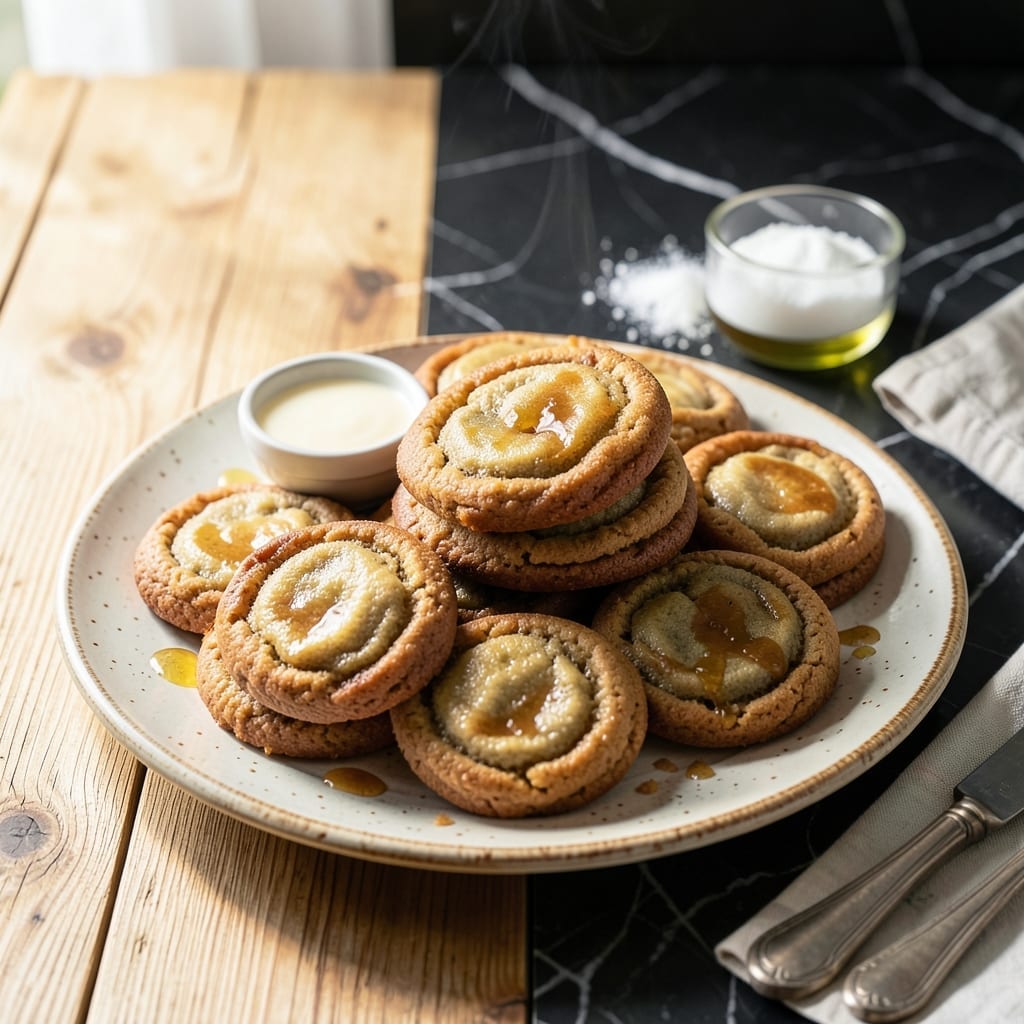
This recipe proves you can achieve soft batch cookies without baking soda by using simple substitutions.
Whipped egg whites or baking powder create the perfect texture, delivering tender centers with golden edges every time.
Ingredients for Cookie Recipe No Baking Soda
These carefully selected ingredients yield soft, chewy cookies without traditional leavening agents.
| Ingredient | Amount | Notes |
|---|---|---|
| All-Purpose Flour 🌾 | 2 ½ cups | Sifted for even texture |
| Unsalted Butter 🧈 | 1 cup | Room temperature, softened |
| Granulated Sugar 🍚 | ¾ cup | Fine white sugar |
| Light Brown Sugar 🟤 | ¾ cup | Packed firmly |
| Large Eggs 🥚 | 2 whole | Separated, whites whipped |
| Vanilla Extract 🌿 | 2 tsp | Pure vanilla preferred |
| Baking Powder 🧂 | 2 tsp | Aluminum-free for best rise |
| Salt 🧂 | ½ tsp | Fine sea salt |
| Semi-Sweet Chocolate Chips 🍫 | 2 cups | High-quality recommended |
| Walnuts 🌰 | ½ cup | Chopped, optional |
[recipeingredientscaler]
The butter quality is paramount here. Use a high-fat European-style butter like Plugrá or Kerrygold for superior texture and flavor. The flour should be all-purpose, unbleached if possible—King Arthur is a reliable brand. Room temperature ingredients incorporate more evenly, so pull your butter and eggs out 1 hour before baking. The baking powder must be fresh; test it by dropping a pinch in hot water—it should bubble vigorously.
No baking powder? Double the amount of baking soda (2 tsp) works in a pinch, though the flavor profile will differ slightly. For egg-free, aquafaba (3 tbsp per egg white) can replace the whipped whites. Brown sugar substitutes like coconut sugar are acceptable but may alter texture. Chocolate chips can be swapped for chunks of your favorite bar chocolate for a more artisanal result.
Store cookies in an airtight container at room temperature for 5 days or freeze for up to 3 months. Dough can be refrigerated for 24 hours or frozen for 1 month. Always bring chilled dough to room temperature before baking for even texture.
Why You’ll Love This Recipe
- No-Fuss Mixing: I can make these with just a bowl and spoon—no electric mixer required, and the butter creams beautifully with the brown and granulated sugar.
- Rich Buttery Taste: The combo of melted butter, brown sugar, and a touch of egg gives these cookies that deep, caramel-like richness I crave.
- Bake Sale Hero: Honestly, these disappear faster than any other treat I bring to potlucks or school events.
- Pantry Staples: Between us, I always have flour, butter, and sugar on hand, so these are my last-minute lifesaver when the cookie craving hits.
Step-by-Step Instructions for Cookie Recipe No Baking Soda
This method ensures a soft batch texture using baking powder as the sole leavening agent.
Step 1: Cream Butter and Sugars to Ideal Consistency
In a stand mixer fitted with the paddle attachment, beat the 1 cup unsalted butter with the 0.75 cup granulated sugar and 0.75 cup light brown sugar on medium speed for 3–4 minutes. The mixture should become pale and fluffy, with visible air pockets forming at the edges.
This creaming process incorporates air, which is critical for structure in the absence of baking soda. The light brown sugar adds moisture for chewiness. Stop mixing once the butter lightens in color—over-creaming can lead to dense cookies.
Step 2: Incorporate Eggs and Vanilla for Flavor Depth
Add the 2 whole large eggs one at a time, mixing on low speed for 20–30 seconds after each addition. Follow with the 2 tsp vanilla extract and mix until just combined. The eggs provide structure, while the vanilla enhances the chocolate flavor.
Scrape the bowl’s sides with a silicone spatula to ensure even distribution. The batter should appear smooth and slightly glossy at this stage, indicating proper emulsification of fat and liquid.
Step 3: Combine Dry Ingredients for Controlled Rise
In a separate bowl, whisk together the 2.5 cups all-purpose flour, 2 tsp baking powder, and 0.5 tsp salt. The baking powder, as the sole leavening agent, will create a tender crumb without the spread associated with baking soda.
Gradually add the dry ingredients to the wet mixture on low speed, mixing until just combined—about 45 seconds. Overmixing develops gluten, which can toughen the cookies. The dough should be thick and slightly sticky.
Step 4: Fold in Chocolate Chips and Walnuts
Using a silicone spatula, fold in the 2 cups semi-sweet chocolate chips and 0.5 cup walnuts by hand. This ensures even distribution without overworking the dough. The chocolate chips will melt during baking, creating pockets of gooey richness.
The walnuts add texture and a subtle bitterness to balance the sweetness. If omitting walnuts, increase the chocolate chips to 2.5 cups for a more decadent result.
Step 5: Bake to Soft Batch Perfection
Preheat the oven to 350°F and line baking sheets with parchment paper. Scoop the dough into 2-tablespoon portions (about 1.5 oz each) and space them 2 inches apart on the sheets. The baking powder will cause slight spreading, but less than recipes with baking soda.
Bake for 10–12 minutes until the edges are light golden brown but the centers still appear soft. The cookies will firm up as they cool on the baking sheet for 5 minutes before transferring to a wire rack. This method guarantees a soft, pillowy texture with a slightly crisp edge.
Pro Tips For Making Cookie Recipe No Baking Soda
- Chill the Dough: After mixing, refrigerate the dough for at least 30 minutes—I learned this the hard way when my first batch spread into a flat, greasy mess.
- Cream Butter Thoroughly: Beat the unsalted butter and sugars together for a full 3-4 minutes until light and fluffy; skipping this step leaves cookies dense and greasy.
- Measure Flour Right: Spoon the all-purpose flour into your measuring cup and level it off—scooping directly from the bag packs in too much and makes cookies tough.
- Use Room-Temp Eggs: Pull your large eggs out of the fridge 20 minutes before baking—they incorporate better into the dough and create a smoother texture.
Pro Cooking Tips for Perfect Results
💡 Heat Control
For cookie recipe no baking soda, preheat your oven to 350°F (175°C) and ensure even heat distribution. Use the middle rack to avoid hot spots, and rotate the tray halfway through for uniform baking. This prevents uneven browning and ensures a consistent texture.
🌡️ Timing Secrets
Bake for 10-12 minutes or until edges are lightly golden. Since there’s no baking soda, cookies spread less, so flatten dough slightly before baking. Underbaking by a minute keeps them soft—they’ll firm up as they cool.
✨ Texture Tips
Chill dough for 30 minutes before baking to reduce spreading. For extra chewiness, replace 1 tbsp of flour with cornstarch. This mimics the tenderness baking soda would provide while keeping the cookies thick and gooey.
🎯 Flavor Boosters
Enhance richness by browning the butter before mixing or adding a pinch of cream of tartar (½ tsp) for slight lift. A dash of cinnamon or vanilla extract deepens flavor without altering texture.
Nutrition Facts

- 6 Egg Cake Recipe with Oil: Light as Air With Buttery Moisture - October 4, 2026
- 4 Bean Casserole Recipe: One-Pan Heartiness With Smoky Paprika Depth - October 4, 2026
- 3-Ingredient Keto Mug Cake Recipe: Microwave Magic in 2 Minutes - October 4, 2026