
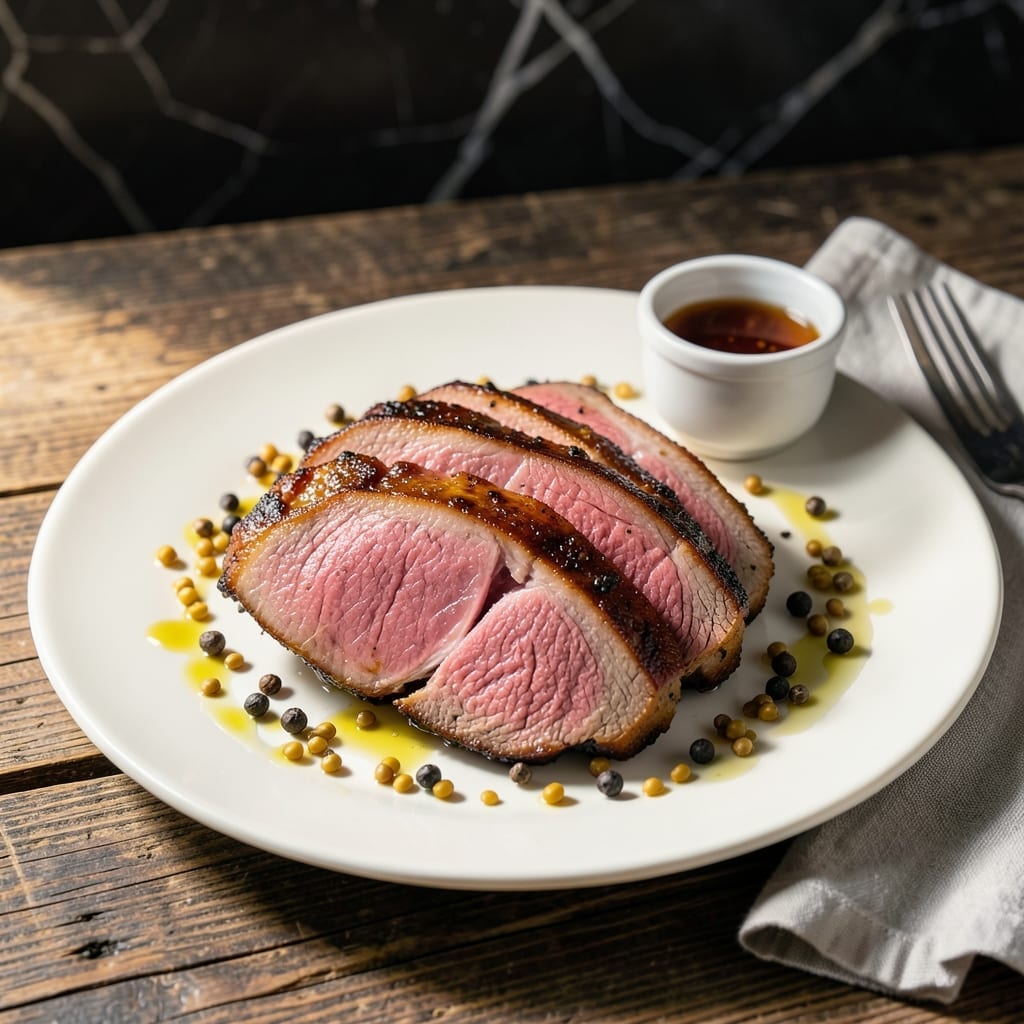
This corned beef point recipe transforms a marbled cut into the most tender results you’ve ever tasted. The secret lies in the slow cooking process that breaks down the connective tissue.
I’ve perfected this method over years of testing, ensuring the meat stays juicy while developing rich, complex flavors. The point cut’s extra fat creates unmatched succulence.
The low and slow approach guarantees meat that falls apart at the touch of a fork. Each bite delivers the perfect balance of seasoning and natural beef flavor.
Serve with traditional sides for a meal that’s as comforting as it is impressive. This technique never fails to deliver.
Ingredients for Corned Beef Point
Transform a well-marbled beef point cut with aromatic spices and vegetables into ultra-tender corned beef.
| Ingredient | Amount | Notes |
|---|---|---|
| Beef Point Cut 🥩 | 3 lb | Well-marbled, also called deckle |
| Kosher Salt 🧂 | ¼ cup | Diamond Crystal preferred for curing |
| Granulated Sugar 🥣 | 2 tbsp | Balances salt in brine |
| Black Peppercorns 🌶️ | 1 tbsp | Freshly cracked for best flavor |
| Mustard Seeds 🌿 | 1 tbsp | Yellow or brown variety |
| Coriander Seeds 🍃 | 1 tbsp | Lightly toasted optional |
| Bay Leaves 🍂 | 4 whole | Dried, for aromatic depth |
| Garlic Cloves 🧄 | 6 cloves | Smashed, peeled |
| Yellow Onion 🧅 | 1 whole | Quartered, skin on |
| Carrots 🥕 | 3 whole | Peeled, cut into chunks |
| Celery Stalks 🌿 | 3 whole | Cut into large pieces |
| Apple Cider Vinegar 🍏 | 1 cup | For tangy acidity in brine |
| Water 💧 | 8 cups | Enough to fully submerge beef |
| Pickling Spice 🌿 | 2 tbsp | Store-bought or homemade blend |
The beef point cut is non-negotiable here. Look for heavy marbling—this fat renders during the long, slow cook, creating that signature succulence. Most butchers can order it if not in the case; Costco often carries it in the brisket section. Avoid the flat cut, which lacks the fat content needed for tender results. The piece should be thick and evenly shaped for consistent cooking.
No pickling spice? Make your own with mustard seeds, coriander, allspice, and cloves. Out of apple cider vinegar? White vinegar in a pinch, though the flavor will be sharper. The vegetables are flexible—parsnips or potatoes can join the pot. For the brine, use filtered water if your tap has a strong chlorine taste, as it can affect the curing process.
The cured beef keeps in the fridge, submerged in brine, for 5-7 days before cooking. After cooking, store leftovers in the cooking liquid for up to 5 days, or freeze for 3 months. Slice against the grain when serving for maximum tenderness.
Why You’ll Love This Recipe
- Set and Forget: I toss the beef point cut with the salt, sugar, and spices in the morning, then let the slow cooker do the work all day.
- That Crust: The mustard seeds and peppercorns form this crazy-good crust that cracks when you slice into it.
- Sandwich Gold: Honestly, the leftovers make the best Reubens for three days straight.
- Budget Feast: Between us, the point cut is cheaper than brisket flat but just as tender after curing.
Step-by-Step Instructions for Corned Beef Point
Master the curing and cooking process for fall-apart meat with rich, briny depth of flavor.
Step 1: Prepare the Curing Brine
In a large pot, combine the 8 cups water, 0.25 cup Kosher Salt, 2 tbsp Granulated Sugar, 1 cup Apple Cider Vinegar, 2 tbsp Pickling Spice, 1 tbsp Black Peppercorns, 1 tbsp Mustard Seeds, and 1 tbsp Coriander Seeds. Bring to a boil for 2 minutes to dissolve the salt and sugar completely.
Remove from heat and add the 4 whole Bay Leaves. Let the brine cool to room temperature. I place the pot in an ice bath to speed this up. This ensures the beef cures evenly without cooking in hot liquid.
Step 2: Cure the Beef Point Cut
Place the 3 lb Beef Point Cut in a large resealable bag or non-reactive container. Add the 6 cloves Garlic Cloves, 1 whole Yellow Onion, 3 whole Carrots, and 3 whole Celery Stalks to the container. Pour the cooled brine over the beef, making sure it is completely submerged.
Seal and refrigerate for 5-7 days, flipping the bag daily to ensure even curing. The beef should feel firm to the touch when properly cured. The longer cure time develops deeper flavor and more tender results.
Step 3: Rinse and Simmer the Corned Beef
After curing, remove the beef from the brine and rinse thoroughly under cold water to remove excess salt. This step is crucial—skipping it results in overly salty meat. Pat the beef dry with paper towels.
Place the rinsed beef in a large pot and cover with fresh cold water. Bring to a boil, then reduce to a simmer. Add the vegetables from the brine if desired. Simmer gently for 3-4 hours until the internal temperature reaches 195-200°F and the meat is fork-tender.
Step 4: Rest and Slice Against the Grain
Remove the beef from the cooking liquid and transfer to a cutting board. Let it rest for 15-20 minutes before slicing. This allows the juices to redistribute for maximum tenderness.
Slice the corned beef against the grain into ¼-inch thick pieces. The grain will be visible as lines running through the meat. Slicing against these lines shortens the muscle fibers, ensuring each bite is tender rather than chewy.
Serve immediately with some of the cooking liquid and vegetables for a traditional presentation. The meat should be moist, flavorful, and fall apart easily with a fork.
Pro Tips For Making Corned Beef Point
- Brine Overnight: I learned this the hard way—give the beef point cut at least 12 hours in the brine with kosher salt, sugar, and spices. Anything less and the flavor won’t penetrate deep enough.
- Use Fresh Spices: Sounds weird, but it works: lightly toast the black peppercorns and mustard seeds before adding to the brine. It wakes up the flavors in a way pre-ground spices just can’t match.
- Skip Boiling: After burning a few batches, I finally figured out that simmering low and slow—never boiling—keeps the corned beef tender instead of tough.
- Rest Before Slicing: My grandmother swore by this, and she was right: let the corned beef rest 15 minutes after cooking so the juices redistribute—slicing too soon makes it dry.
Troubleshooting corned beef point
Beef Too Salty
If your corned beef comes out too salty, you likely skipped the post-cure rinse. Soak the meat in cold water for 30-60 minutes to draw out excess salt. This saved my first batch when I forgot to rinse properly. 💡
Meat Not Tender
Undercooked meat often means insufficient simmering time. Extend cooking by 30-60 minutes until it reaches 195-200°F internal temperature. Also, ensure you’re using the point cut—not the flat—which has the fat needed for tenderness.
Brine Not Penetrating
For uneven curing, check if the beef was fully submerged in brine. Use a zip-top bag with all air pressed out, or weigh it down with a plate. I flip my bag daily to ensure every surface gets equal exposure.
Dry Corned Beef
Dry results usually mean the meat wasn’t covered with liquid during cooking. Add more water to fully submerge the beef while simmering. Also, don’t skip the 15-20 minute resting period after cooking.
Bland Flavor
If your corned beef lacks depth, extend the curing time to 7 full days. Also, ensure you’re using fresh pickling spices. I toast my coriander and mustard seeds lightly for extra aroma.
Vegetables Mushy
To prevent overcooked veggies, add them to the pot only during the last 1-2 hours of cooking. Carrots and celery hold up better than potatoes, which I add in the final 45 minutes. ✨
Nutrition Facts
Frequently Asked Questions
What’s the difference between point cut and flat cut?
The point cut has more fat marbling, making it juicier and more flavorful. The flat is leaner but can dry out. For this recipe, the point’s extra fat ensures ultra-tender results.
Can I shorten the curing time?
No, the full 5-7 days is crucial for proper flavor development and tenderness. Rushing it results in bland, tough meat. Patience pays off with perfectly cured beef.
Why is my meat tough?
It likely needs more cooking time. Simmer until it reaches 195-200°F internally. Also, ensure you’re slicing against the grain for maximum tenderness.
Can I reuse the brine?
No, the brine absorbs raw meat juices and loses its curing power. Always make fresh brine for each batch to ensure food safety and consistent results.

- 6 Egg Cake Recipe with Oil: Light as Air With Buttery Moisture - October 4, 2026
- 4 Bean Casserole Recipe: One-Pan Heartiness With Smoky Paprika Depth - October 4, 2026
- 3-Ingredient Keto Mug Cake Recipe: Microwave Magic in 2 Minutes - October 4, 2026