
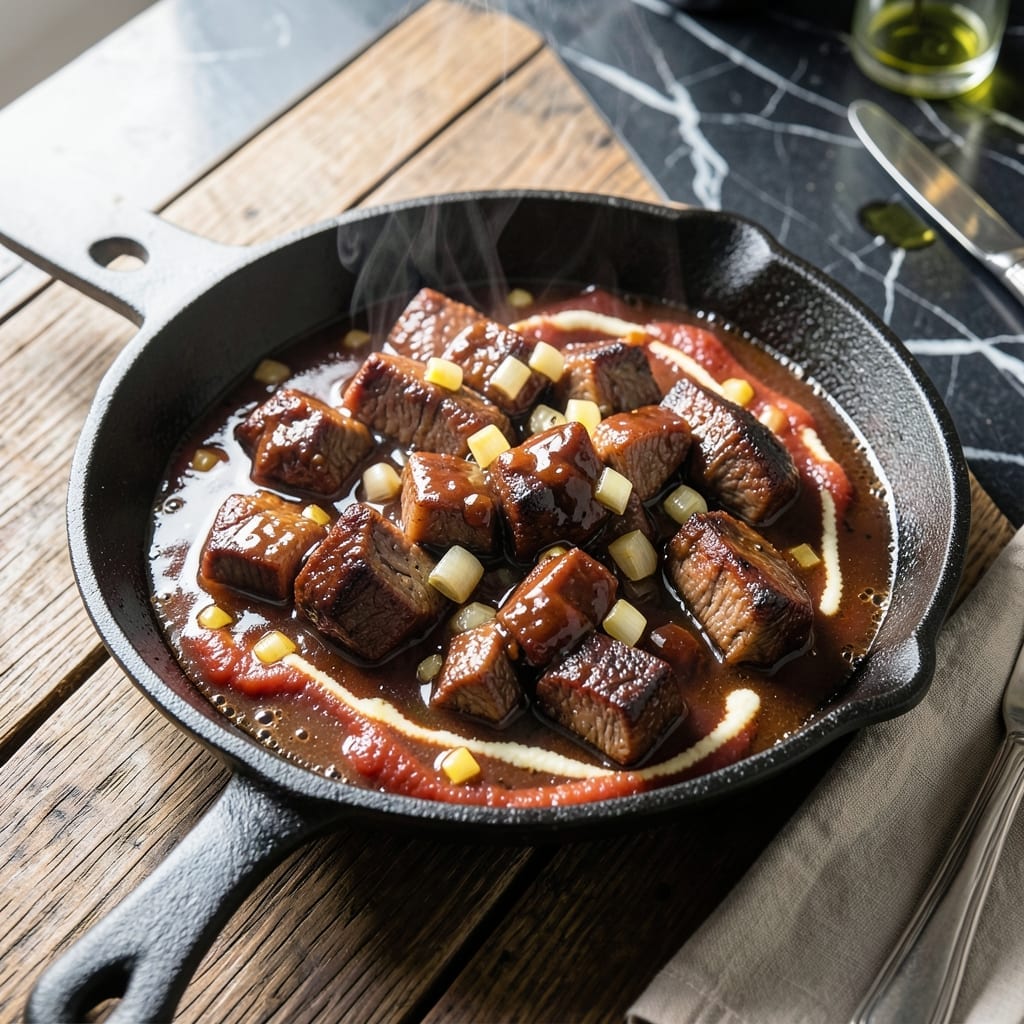
This sauce transforms simple corned beef into something extraordinary. A rich, velvety gravy that clings perfectly to every bite, it’s the secret to next-level Reuben sandwiches.
I’ve refined this recipe over years of deli work to balance savory depth with just enough tang. The key is reducing the liquid slowly to concentrate flavors without thinning the consistency.
The result is a smooth, full-bodied sauce that enhances without overpowering. It pairs as well with mashed potatoes as it does with rye bread.
Make a double batch—this keeps beautifully and freezes for up to 3 months. Here’s how to nail it every time.
Ingredients for Corned Beef Sauce
Ten ingredients deliver that deli-level richness and depth for your Reuben sandwiches.
| Ingredient | Amount | Notes |
|---|---|---|
| Corned Beef Brisket 🥩 | 1 lb | Cooked, shredded or chopped |
| Beef Broth 🥣 | 2 cups | Low-sodium preferred for control |
| Tomato Paste 🍅 | 2 tbsp | For depth and body |
| Worcestershire Sauce 💧 | 1 tbsp | Adds umami complexity |
| Dijon Mustard 🟡 | 1 tbsp | Sharp tang balances richness |
| Apple Cider Vinegar 🍏 | 1 tbsp | Brightens the sauce |
| Light Brown Sugar 🫙 | 1 tsp | Balances acidity with sweetness |
| Unsalted Butter 🧈 | 2 tbsp | For velvety finish |
| All-Purpose Flour 🌾 | 2 tbsp | Thickens to perfect consistency |
| Yellow Onion 🧅 | ½ whole | Finely diced for base flavor |
The beef broth is non-negotiable for depth—use low-sodium so you control the seasoning. Costco’s organic is my go-to for bulk without additives. Corned beef should be well-cooked and tender; leftover brisket works perfectly. Tomato paste from San Marzano cans has superior flavor, but any quality brand will do. The Worcestershire adds complexity, but check labels if avoiding anchovies.
No Dijon? Whole-grain mustard at one-third less quantity works, though the flavor profile shifts slightly. Apple cider vinegar can be swapped for white wine vinegar in a pinch. Brown sugar substitutes like maple syrup add a different sweetness—use half the amount and adjust to taste. For a gluten-free version, cornstarch replaces flour at a 1:1 ratio.
This sauce thickens as it cools, so thin with broth if needed. Stores in the fridge for 5 days or freezes for 3 months (portion first for easy use). Reheat gently to maintain that velvety texture.
Why You’ll Love This Recipe
- Dump and Simmer: I just toss everything in one pot—brisket, broth, and those bold flavors meld while I do something else.
- Umami Bomb: That combo of Worcestershire and Dijon gives it a deep, tangy richness that clings to the beef.
- Sandwich Savior: Honestly, this sauce turns leftover corned beef into the best Reubens or loaded fries in minutes.
- Stretches the Meal: I make a big batch and it transforms cheap brisket into multiple dinners—pasta, hash, or even a pie filling.
Step-by-Step Instructions for Corned Beef Sauce
Master this velvety gravy with precise technique for sandwiches that truly impress.
Step 1: Sauté the Aromatic Base
Finely dice the 0.5 whole Yellow Onion and cook it in a saucepan over medium heat with 2 tbsp Unsalted Butter until softened and translucent, about 5 minutes. This builds the flavor foundation for your sauce.
Stir frequently to prevent browning—you want gentle sweating, not caramelization. The onion should become pale golden and fragrant, signaling it’s ready for the next ingredients. This step ensures your sauce has depth without bitterness.
Step 2: Create the Roux for Thickening
Sprinkle the 2 tbsp All-Purpose Flour over the onions and stir constantly for 1-2 minutes to cook out the raw flour taste. The mixture should bubble gently and turn a light tan color.
This roux will thicken your sauce to the perfect consistency. Keep the heat at medium—too high and the flour will burn; too low and it won’t develop the necessary toasty notes. The butter-onion base should fully absorb the flour without clumping.
Step 3: Deglaze and Build Flavor
Gradually whisk in the 2 cups Beef Broth, ensuring no lumps remain. Add the 2 tbsp Tomato Paste, 1 tbsp Worcestershire Sauce, 1 tbsp Dijon Mustard, 1 tbsp Apple Cider Vinegar, and 1 tsp Light Brown Sugar.
Stir well to incorporate all ingredients. Bring the mixture to a gentle simmer, then reduce the heat to medium-low. You’ll notice the sauce begin to thicken as it cooks, coating the back of a spoon with a rich, glossy sheen.
Step 4: Incorporate the Corned Beef
Add the 1 lb Corned Beef Brisket, whether shredded or chopped, to the sauce. Stir to coat every piece evenly. The beef should be fully submerged in the sauce to absorb maximum flavor.
Simmer for 10-15 minutes, stirring occasionally, until the sauce has thickened to your desired consistency. The sauce should cling to the beef, creating a luxurious texture that enhances every bite. Taste and adjust seasoning if needed, though the ingredients should provide a balanced flavor profile.
Pro Tips For Making Corned Beef Sauce
- Simmer, Don’t Boil: Keep the sauce at a gentle simmer—if it boils, the Worcestershire and Dijon can separate and turn bitter. I learned this the hard way after ruining a batch with aggressive heat.
- Deglaze First: After browning the corned beef, pour in a splash of beef broth to scrape up those browned bits. Sounds weird, but it works: that’s where the deep flavor hides.
- Skip the Salt: Corned beef is already heavily cured, so go easy on extra salt or your sauce will taste like the ocean. I skip added salt entirely and adjust at the end if needed.
- Bloom the Paste: Cook the tomato paste in the pot for 1-2 minutes before adding liquids—it mellows the raw taste and gives the sauce a richer, more integrated flavor. My grandmother swore by this, and she was right.
Pro Cooking Tips for This Recipe
Perfect Roux Technique
Cook your 2 tbsp flour in butter for 1-2 minutes over medium heat until it turns a light tan color. This removes the raw flour taste and builds a nutty base. I use a wooden spoon for even mixing. 🌡️
Slow Flavor Development
Whisk in the 2 cups beef broth gradually to prevent lumps. The key is patience—let the sauce simmer for 10-15 minutes to let the tomatoes, mustard, and vinegar meld together. This slow reduction concentrates the flavors beautifully.
Beef Integration
Add the 1 lb corned beef only after the sauce has thickened slightly. This ensures the meat absorbs the rich flavors rather than diluting them. Stir frequently to coat every piece evenly.
Consistency Control
If the sauce thickens too much, thin it with a splash of broth. For a glossier finish, I whisk in an extra 1 tbsp butter at the end. The perfect consistency should coat the back of a spoon.
Seasoning Adjustment
Taste before serving—add a pinch of salt if needed, but remember the Worcestershire and Dijon already contribute saltiness. I often finish with a squeeze of fresh lemon for brightness. 💡
Temperature Maintenance
Keep the heat at medium-low once the sauce is simmering. Too high and it will scorch; too low and it won’t develop the deep, rich flavor that makes this sauce so special.
Nutrition Facts
Frequently Asked Questions
Can I use a different mustard?
Yes! Try whole-grain mustard at 2 tsp for a heartier texture. Avoid honey mustard—it’s too sweet for this savory sauce.
How do I fix a lumpy sauce?
Whisk vigorously to break up lumps, or strain through a fine-mesh sieve. For prevention, add flour slowly while stirring constantly over medium heat.
Can I make this ahead?
The sauce keeps in the fridge for 5 days or freezes for 3 months. Reheat gently, stirring often, and thin with broth if needed.
What if I don’t have beef broth?
Substitute with chicken broth plus 1 tsp soy sauce for depth. Vegetable broth works too, but add 1/2 tsp smoked paprika for richness.

- 6 Egg Cake Recipe with Oil: Light as Air With Buttery Moisture - October 4, 2026
- 4 Bean Casserole Recipe: One-Pan Heartiness With Smoky Paprika Depth - October 4, 2026
- 3-Ingredient Keto Mug Cake Recipe: Microwave Magic in 2 Minutes - October 4, 2026