
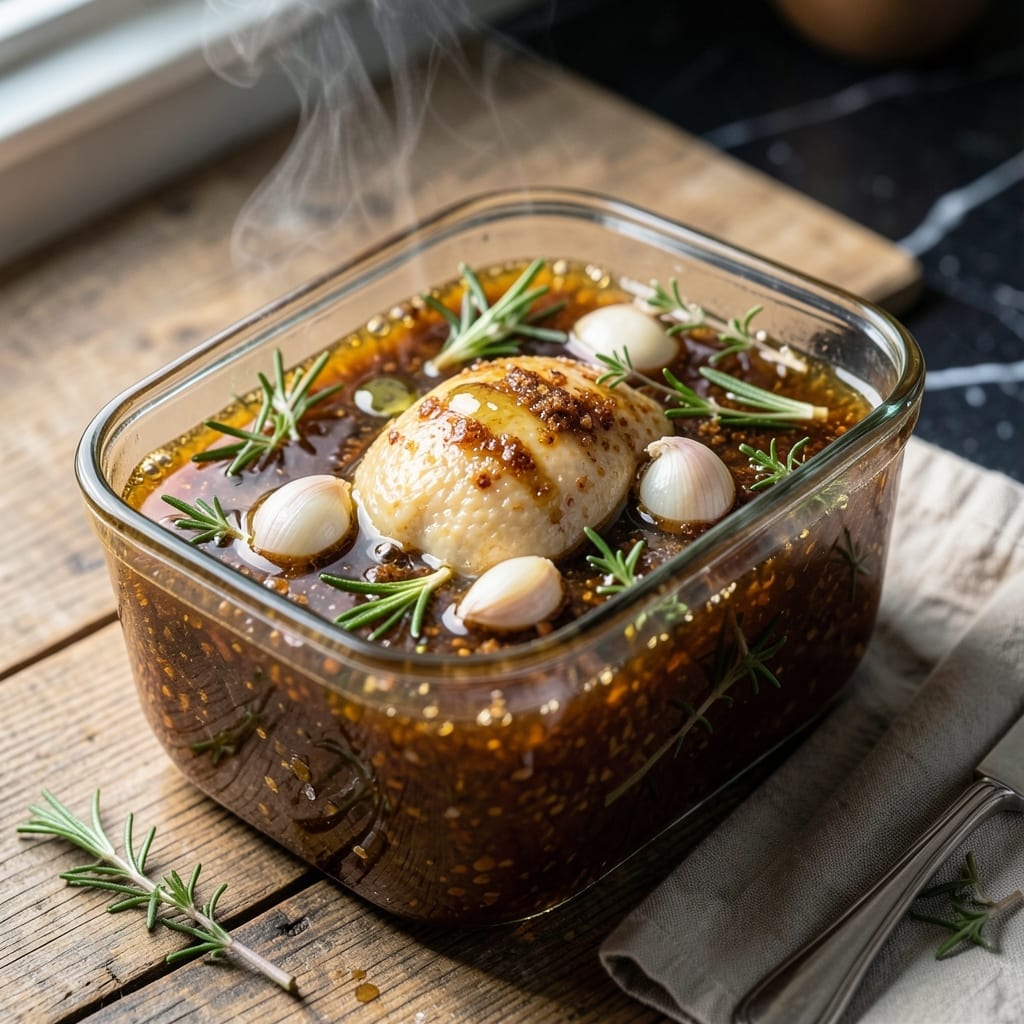
This brine transforms Cornish game hens from good to unforgettable. A simple yet precise blend of salt, sugar, and aromatics infuses every bite with juicy flavor, ensuring meat that stays tender throughout cooking.
Developed through years of testing, this method guarantees consistent results. The balanced ratio of salt to water creates the perfect environment for moisture retention, while sugar adds subtle sweetness that complements the bird’s natural richness.
Brining for 4-12 hours allows the flavors to penetrate deeply without overpowering the meat. The process is straightforward: combine the ingredients, submerge the hens, and let time work its magic.
What emerges is meat that’s consistently moist and flavorful, whether roasted, grilled, or smoked. This technique elevates your poultry to restaurant-quality with minimal effort.
Ingredients for Cornish Game Hen Brine
A precise blend of salt, sugar, and aromatics creates this transformative brine for poultry.
| Ingredient | Amount | Notes |
|---|---|---|
| Water 💧 | 4 cups | Cold, filtered preferred |
| Kosher Salt 🧂 | ½ cup | Diamond Crystal brand ideal |
| Brown Sugar 🍚 | ¼ cup | Light or dark variety |
| Garlic Cloves 🧄 | 6 cloves | Smashed, peeled |
| Fresh Rosemary Sprigs 🌿 | 3 pieces | Whole, bruised lightly |
| Fresh Thyme Sprigs 🍃 | 4 pieces | Whole, stems intact |
| Black Peppercorns 🌶️ | 1 tbsp | Whole, lightly crushed |
| Bay Leaves 🍃 | 2 pieces | Dried, whole |
| Lemon Slices 🍋 | 2 slices | Thin, unpeeled |
| Juniper Berries 🫒 | 1 tsp | Lightly crushed optional |
The salt is critical here—Diamond Crystal kosher salt dissolves cleanly and seasons evenly without bitterness. For the water, use cold filtered to ensure optimal flavor absorption. Whole Foods or Williams Sonoma carry high-quality kosher salt in bulk if you’re restocking. Fresh herbs make a noticeable difference; source organic rosemary and thyme from your local market when possible.
No fresh herbs? Dried at one-third the quantity works, though the flavor won’t be as vibrant. Brown sugar can be swapped for white, but the molasses notes in brown add depth. The juniper berries are optional but contribute a subtle piney complexity. If unavailable, an extra bay leaf or a pinch of allspice can bridge the gap.
This brine keeps for 1 week refrigerated in a sealed container, though it’s best used fresh. Discard after brining poultry—never reuse. The aromatics can be composted, and the saltwater disposed of safely down the sink.
Why You’ll Love This Recipe
- 5-Minute Prep: I just toss water, salt, sugar, garlic, and rosemary into a pot—no chopping, no fuss.
- Sweet-Savory Magic: The brown sugar and garlic create this deep, caramelized flavor that soaks right into the meat.
- Holiday or Tuesday: Honestly, I’ve used this brine for Sunday dinners and last-minute date nights alike.
- Leftovers Reinvented: Shred the brined hen the next day for sandwiches that taste way better than takeout.
Step-by-Step Instructions for Cornish Game Hen Brine
This method ensures maximum flavor penetration and guaranteed juiciness in every bite.
Step 1: Combine Water and Dissolve Solids
In a large stockpot or container, pour in the 4 cups Water. Add the 0.5 cup Kosher Salt and 0.25 cup Brown Sugar to the water. Stir vigorously with a wooden spoon until the salt and sugar are completely dissolved—this typically takes 2-3 minutes.
The water should become clear again once fully dissolved, with no visible granules at the bottom. This base solution creates the perfect osmotic environment for the brine to work its magic on the meat.
Step 2: Infuse with Aromatics and Spices
To the salt-sugar solution, add the 6 cloves Garlic Cloves, 3 pieces Fresh Rosemary Sprigs, 4 pieces Fresh Thyme Sprigs, 1 tbsp Black Peppercorns, 2 pieces Bay Leaves, 2 slices Lemon Slices, and 1 tsp Juniper Berries.
Lightly crush the juniper berries and peppercorns between your fingers before adding to release their essential oils. The garlic cloves should be smashed and peeled to allow their flavors to infuse more effectively. Stir the mixture gently to distribute the aromatics.
Step 3: Chill the Brine Thoroughly
Allow the brine to cool to room temperature, which usually takes 30-45 minutes. Then, transfer it to the refrigerator to chill completely for at least 1 hour before using. I prefer to prepare my brine the night before and let it chill overnight.
This chilling step is crucial—it prevents the brine from raising the temperature of the meat, which could lead to uneven cooking or food safety issues. The brine should be ice cold (below 40°F) before you add the Cornish game hens.
Step 4: Brine the Cornish Game Hens
Submerge the Cornish game hens completely in the chilled brine. If your container isn’t large enough for full submersion, you can brine the hens in batches or use a weighted plate to keep them under the liquid. Brine the hens for 12-24 hours in the refrigerator.
For even flavor distribution, gently rotate the hens in the brine halfway through the brining time. The meat should appear slightly plumped when ready, indicating the brine has penetrated effectively. This extended brining time ensures the flavors fully infuse the meat.
Pro Tips For Making Cornish Game Hen Brine
- Brine Overnight: I learned this the hard way—rushing the brine leaves the meat unevenly seasoned. Give it a full 12-24 hours in the fridge for the salt and sugar to work their way deep into the hen.
- Crush the Garlic: Sounds weird, but it works: Lightly smash the garlic cloves before adding them to the brine so their flavor infuses faster without overpowering the rosemary.
- Skip the Boil: After burning a batch of brine (yes, really), I now dissolve the salt and sugar in warm water first—no heat needed—then cool completely before adding the hens to avoid cooking the meat prematurely.
- Use a Zip-Top Bag: This isn’t the prettiest method, but it’s the most efficient: Seal the hens and brine in a large bag, squeeze out the air, and lay it flat in the fridge—saves space and guarantees even coverage.
Serving Suggestions for This cornish game hen brine
Plating Presentation
After brining and cooking, arrange each hen on a white platter with fresh rosemary sprigs and lemon wedges for a restaurant-worthy look. The golden-brown skin from the brine will contrast beautifully against the garnishes.
Sauce Pairings
Serve with a pan sauce made from the cooking juices, 2 tbsp butter, and ¼ cup white wine. Reduce for 3-4 minutes until slightly thickened. A simple honey-mustard glaze also complements the herbs in the brine. 💛
Side Dish Ideas
Pair with roasted root vegetables like carrots and parsnips, tossed in 1 tbsp olive oil and roasted at 400°F for 25 minutes. The sweetness mirrors the brown sugar in the brine.
Wine Recommendations
A crisp Sauvignon Blanc or a light Pinot Noir works wonderfully. The acidity in the white cuts through the richness, while the red’s earthiness pairs with the rosemary and thyme. 🍷
Garnish Tips
Sprinkle with flaky sea salt and fresh thyme leaves just before serving. For extra flair, add pomegranate seeds for a pop of color and tartness that balances the dish.
Serving Temperature
Let the hens rest for 10-15 minutes after cooking before carving. Serve warm, as the brined meat stays juicy even as it cools slightly.
Nutrition Facts
Frequently Asked Questions
How long should I brine the hens?
Brine for 12-24 hours in the refrigerator. This allows the flavors to fully penetrate while keeping the meat tender and juicy.
Can I reuse the brine?
No, never reuse brine after it’s been in contact with raw poultry. Discard it after use to prevent contamination.
What if I don’t have kosher salt?
Use 1/4 cup table salt instead of 1/2 cup kosher salt due to the finer grain. Adjust carefully to avoid oversalting.
Can I add other herbs?
Try adding sage or tarragon for extra depth. Keep the total herb quantity similar to maintain balance.

- 6 Egg Cake Recipe with Oil: Light as Air With Buttery Moisture - October 4, 2026
- 4 Bean Casserole Recipe: One-Pan Heartiness With Smoky Paprika Depth - October 4, 2026
- 3-Ingredient Keto Mug Cake Recipe: Microwave Magic in 2 Minutes - October 4, 2026