
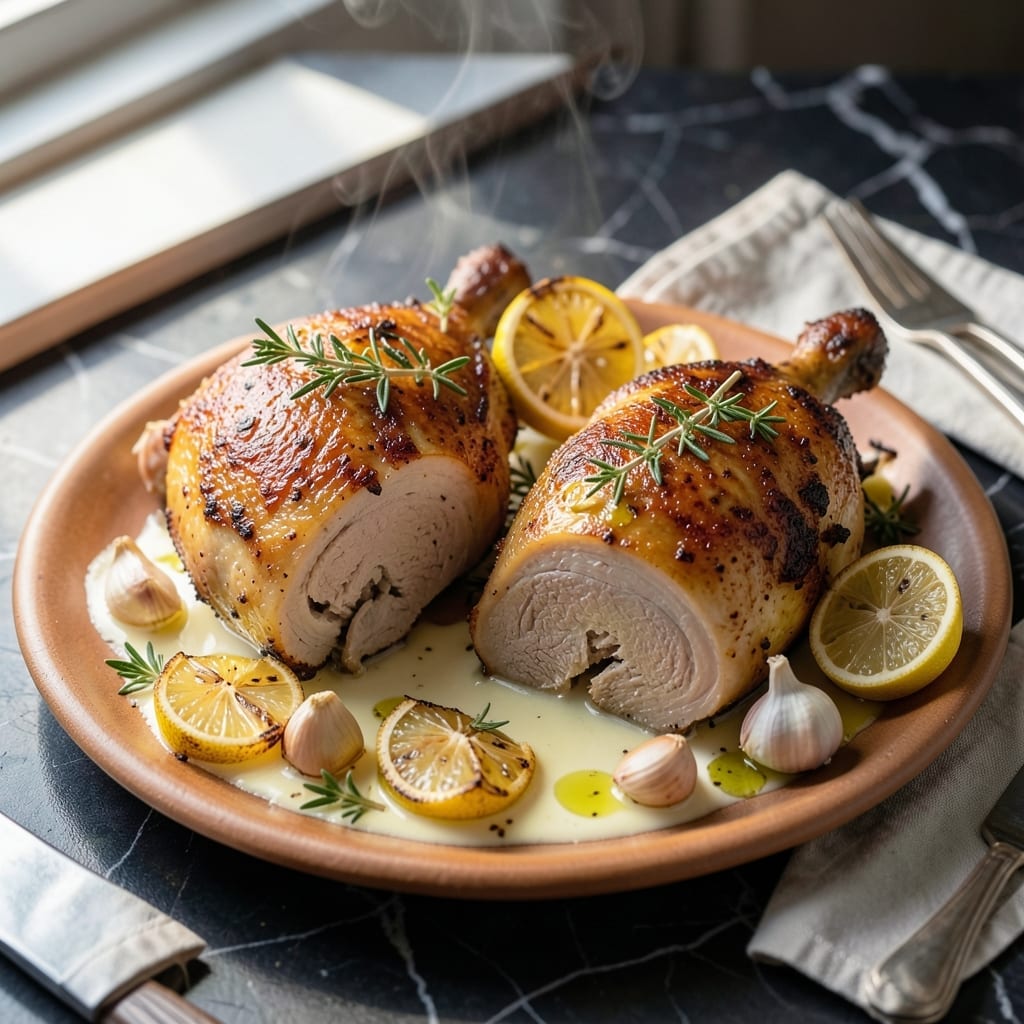
Achieving restaurant-quality Cornish hen at home is simpler than you think. This method focuses on classic roasting with a butter baste that locks in moisture.
The process involves a hot oven, 425°F, to ensure golden skin and juicy meat. Lemon and thyme infuse every bite with bright, aromatic flavors.
Each hen cooks in under an hour, making this perfect for a special dinner without all-day effort. The result is tender meat with crisp, golden-brown skin.
Serve with roasted vegetables or a simple salad for a complete, elegant meal. Here’s how to make it.
Ingredients for Cornish Hen Recipe Jamie Oliver
Classic ingredients for restaurant-quality roasted Cornish hens with vibrant lemon and thyme flavors.
| Ingredient | Amount | Notes |
|---|---|---|
| Cornish Hens 🍗 | 2 whole | Split lengthwise, patted dry |
| Unsalted Butter 🧈 | ½ cup | Melted for basting |
| Fresh Thyme Sprigs 🌿 | 8 pieces | Plus extra for garnish |
| Lemon 🍋 | 1 whole | Zested and juiced |
| Garlic Cloves 🧄 | 4 cloves | Smashed, peeled |
| Kosher Salt 🧂 | 1 ½ tsp | Divided for seasoning |
| Black Pepper 🌶️ | 1 tsp | Freshly ground preferred |
| Olive Oil 🫒 | 1 tbsp | For initial searing |
| Carrots 🥕 | 3 whole | Peeled, cut into chunks |
| Yellow Onion 🧅 | 1 whole | Quartered through root end |
| Fresh Rosemary Sprigs 🌿 | 2 pieces | Optional, for aroma |
| Chicken Stock 🥣 | ½ cup | Low-sodium preferred |
The hens are the star here. Whole Foods or specialty butchers often carry them fresh, but frozen works just as well—thaw overnight in the fridge. Look for hens about 1-1.25 lbs each for even cooking. The butter should be European-style (think Plugrá or Kerrygold) for richer flavor. Fresh thyme and rosemary make a difference, but dried can work in a pinch (use one-third the amount).
No fresh herbs? Dried thyme at one-third the quantity works fine. Lemon can be swapped for lime if that’s what you have. Short on butter? Olive oil with a splash of white wine creates a similar baste. For extra depth, add a few juniper berries or a bay leaf to the cavity. The garlic can be left whole if you prefer milder flavor.
Leftover hen keeps 3-4 days in the fridge, reheats beautifully in a 350°F oven for 15 minutes. Freeze cooked meat for up to 3 months—perfect for quick meals. Always let hens rest 10 minutes before carving for juiciest results.
Why You’ll Love This Recipe
- One Pan Wonder: I love that everything roasts together—hens, butter, thyme, lemon, and garlic—so I’m not stuck washing a sink full of dishes.
- That Butter Thyme Hit: The melted butter soaks into the meat with the thyme and garlic, giving every bite this rich, herby punch that’s just ridiculous.
- Fancy Without Fuss: It looks like a restaurant dish, but honestly, it’s just a matter of stuffing the cavity with lemon and herbs and letting the oven do the work.
- Leftovers? Yes Please: The meat stays juicy, so I shred it the next day for sandwiches or salads—my daughter picks out the thyme, but still asks for seconds.
Step-by-Step Instructions for Butter-Basted Cornish Hens With Lemon and Thyme
Here’s how to achieve perfectly roasted hens with crispy skin and juicy, flavorful meat.
Step 1: Prep and Season the Hens
Pat the 2 whole Cornish Hens completely dry with paper towels, inside and out. This crucial step ensures crispy skin. Split them lengthwise along the breastbone, then season both sides evenly with 1 tsp Kosher Salt and ½ tsp Black Pepper.
Rub the seasoning into the meat, including the cavity. The split hens cook more evenly than whole, and the dry surface allows the seasoning to adhere properly. Let them sit at room temperature for 30 minutes while you prepare the remaining ingredients.
Step 2: Prepare the Roasting Pan with Aromatics
Position a rack in the center of your oven and preheat to 425°F. In a large roasting pan, scatter the 3 whole Carrots (peeled and cut into chunks), 1 whole Yellow Onion (quartered through the root end), 4 cloves Garlic Cloves (smashed and peeled), and 2 pieces Fresh Rosemary Sprigs.
Drizzle the vegetables with the 1 tbsp Olive Oil and the remaining ½ tsp Kosher Salt. These will create a flavorful bed for the hens to roast on and prevent them from sticking to the pan. The vegetables will also absorb the drippings, making them delicious to serve alongside.
Step 3: Sear and Begin Roasting
Place the hens skin-side up on top of the vegetables in the roasting pan. Brush the 0.5 cup Unsalted Butter (melted) generously over the skin of the hens, ensuring each is well coated. This basting step helps achieve that golden-brown, crispy finish.
Roast the hens for 25 minutes. After this initial period, the skin should start to turn golden brown. This high-heat start renders the fat and begins the crisping process while locking in the juices.
Step 4: Baste and Finish Roasting
Remove the pan from the oven and carefully baste the hens with the pan juices. Add the 8 pieces Fresh Thyme Sprigs and the juice from the 1 whole Lemon to the pan, tucking some thyme under the hens. Return the pan to the oven and continue roasting for another 20-25 minutes, basting once more halfway through.
Pour the 0.5 cup Chicken Stock into the pan for the last 10 minutes of roasting. This adds moisture and creates a light pan sauce. The hens are done when the juices run clear and an instant-read thermometer inserted into the thickest part of the thigh reads 165°F.
Step 5: Rest and Serve
Transfer the hens to a cutting board, tent loosely with foil, and let them rest for 10 minutes. This allows the juices to redistribute, ensuring moist, tender meat. Skim any excess fat from the pan juices, then strain the vegetables and liquids into a saucepan if you’d like to make a simple pan sauce.
Carve the hens and arrange on a platter with the roasted vegetables. Garnish with extra fresh thyme sprigs and a sprinkle of lemon zest for a bright finish. Serve immediately while hot, with the pan juices spooned over the top.
Pro Tips For Making Cornish Hen Recipe Jamie Oliver
- Butter the Skin: Rub softened unsalted butter under and over the skin—this creates a golden crust and keeps the meat juicy, especially since Cornish hens dry out faster than chicken.
- Sear First, Roast Later: Start the hens in a screaming-hot pan for 2-3 minutes per side to lock in juices before transferring to the oven. I learned this the hard way—skipping the sear gives you pale, steamed-tasting skin.
- Zest the Lemon: Don’t just halve the lemon for the cavity—zest it first and mix with the thyme and garlic for the butter. The oils in the zest actually change the outcome, giving you brighter flavor in every bite.
- Rest Under Foil: Tent the hens with foil and let them rest 10 minutes after roasting. Sounds weird, but it works: the juices redistribute instead of pooling on your cutting board.
Wine and Beer Pairings for This Dish
White Wine Pairings
A crisp Chardonnay with bright acidity cuts through the richness of the butter-basted hens beautifully. I recommend a California Chardonnay like Kendall-Jackson Vintner’s Reserve—its citrus notes complement the lemon in the dish. The oak in the wine adds depth without overpowering the thyme. 🍷
Red Wine Options
For red wine lovers, a light-bodied Pinot Noir from Oregon or Burgundy works wonderfully. The 2019 Domaine Drouhin Oregon Pinot Noir has earthy notes that pair nicely with the roasted vegetables. Serve slightly chilled to enhance its fruit-forward profile.
Beer Pairings
A malty Amber Ale like New Belgium Fat Tire balances the savory flavors with its caramel notes. The moderate hop bitterness cleanses your palate between bites. For a lighter option, a Belgian Witbier with citrus undertones complements the lemon in the recipe. 🍺
Sparkling Choices
If you prefer bubbles, a dry Prosecco or Champagne offers refreshing contrast to the dish’s richness. The acidity and effervescence cut through the butter beautifully. I love La Marca Prosecco for its approachable price and consistent quality.
Non-Alcoholic Pairings
For alcohol-free options, a sparkling lemonade with fresh thyme infuses the same flavors as your meal. Or try a ginger beer like Fever-Tree—its spicy kick stands up to the savory hens. I often keep both on hand for guests who prefer non-alcoholic beverages.
Nutrition Facts
Frequently Asked Questions
What if I can’t find fresh thyme?
Dried thyme works in a pinch. Use 1/3 the amount since it’s more concentrated. Fresh rosemary or oregano also make good substitutes for similar aromatic depth.
Can I cook the hens whole instead of split?
Yes, but expect 10-15 extra minutes of cooking time. Whole hens may cook less evenly, so check the thickest part of the thigh with a thermometer for 165°F.
How do I prevent dry meat?
Don’t skip the 10-minute rest after roasting. Baste frequently and remove from oven immediately at 165°F to avoid overcooking.
Can I make this ahead for a dinner party?
Roast the hens earlier in the day, then reheat at 350°F for 15 minutes before serving. Cover with foil to retain moisture.

- 6 Egg Cake Recipe with Oil: Light as Air With Buttery Moisture - October 4, 2026
- 4 Bean Casserole Recipe: One-Pan Heartiness With Smoky Paprika Depth - October 4, 2026
- 3-Ingredient Keto Mug Cake Recipe: Microwave Magic in 2 Minutes - October 4, 2026