
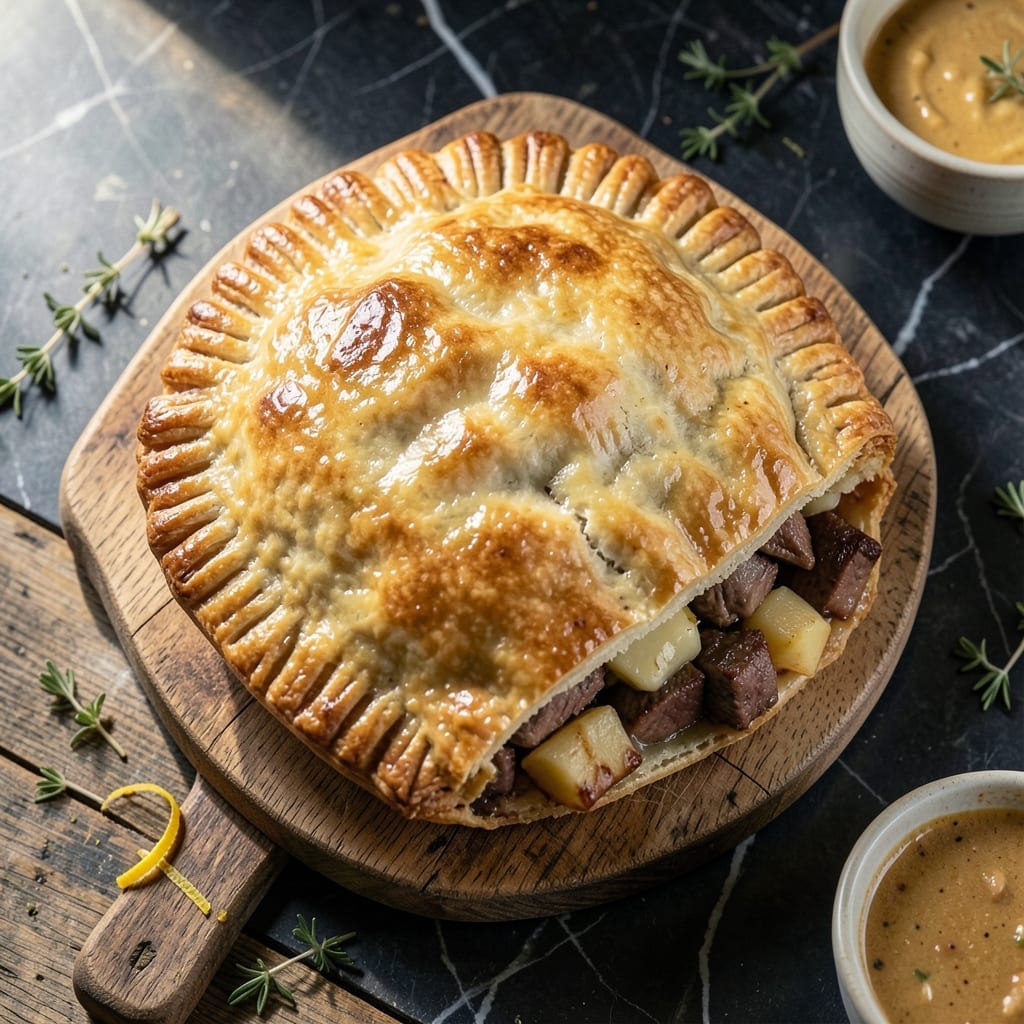
This traditional British hand pie delivers a taste of Cornwall with its hearty filling and flaky crust. I’ve refined the classic technique to ensure authentic results every time.
The secret lies in the pastry—cold butter and minimal handling create layers that shatter with each bite. The filling combines tender beef, potatoes, and swede with a savory gravy that soaks into every layer.
What emerges from the oven is a golden, traditional pasty with a sturdy yet delicate crust that encases a rich, flavorful filling. The crimped edge isn’t just decorative; it was originally designed to be held by miners’ dirty hands.
Perfect for a portable meal or a taste of British comfort food. Here’s how to make it.
Ingredients for Cornish Pasty Recipe Jamie Oliver
Traditional British comfort starts with these hearty, flaky ingredients for an authentic taste.
| Ingredient | Amount | Notes |
|---|---|---|
| All-Purpose Flour 🌾 | 3 cups | Plus extra for dusting |
| Unsalted Butter 🧈 | 1 cup | Cold, cubed for flaky layers |
| Ice Water 💧 | ½ cup | For pastry dough |
| Salt 🧂 | 1 tsp | Fine sea salt preferred |
| Beef Chuck 🥩 | 1 lb | Diced into small cubes |
| Russet Potatoes 🥔 | 2 whole | Peeled and diced |
| Swede 🥬 | 1 whole | Peeled and diced (rutabaga) |
| Yellow Onion 🧅 | 1 whole | Finely chopped |
| Beef Stock 🥘 | ½ cup | Low-sodium preferred |
| Worcestershire Sauce 🍶 | 1 tbsp | For umami depth |
| Black Pepper 🌶️ | 1 tsp | Freshly ground |
| Fresh Thyme 🌿 | 1 tbsp | Leaves stripped from stems |
| Large Egg 🥚 | 1 whole | For egg wash |
The pastry demands cold butter—Kerrygold or Plugrá if you want that authentic British flakiness. All-purpose flour is non-negotiable here; bread flour’s higher protein will toughen the crust. For the beef, chuck is ideal for its marbling and tenderness after slow cooking. Most supermarkets stock swede as rutabaga (same thing), so look for firm, unblemished roots with vibrant yellow-orange flesh.
No swede? Extra potato works in a pinch, though you’ll lose some sweetness. Vegetarian? Swap beef for mushrooms and lentils—just drain them well. Out of Worcestershire? Soy sauce plus a dash of balsamic mimics the tang. Fresh thyme is best, but dried at half the amount works. If your dough cracks while shaping, patch it with extra flour and water—don’t overwork it.
Assemble pasties and refrigerate for 30 minutes before baking to relax the gluten. Baked pasties keep for 3 days at room temperature or freeze for 3 months. Reheat in the oven to restore the crust’s flakiness. Always use ice water for the dough—warm water melts the butter prematurely.
Why You’ll Love This Recipe
- One Bowl Wonder: I love that I can mix the flour, butter, and ice water right in the same bowl—no fancy equipment, just my hands and a little elbow grease.
- Melt-in-Your-Mouth Crust: The all-butter pastry with that flaky, golden finish? Honestly, it’s the best part, and it pairs so well with the tender beef chuck inside.
- Picnic or Freezer: These pasties are just as good packed for a lunchbox as they are pulled from the freezer for a quick dinner.
- Budget Stretch: A little beef chuck goes a long way here, and the simple dough keeps costs low without sacrificing flavor.
Step-by-Step Instructions for Traditional Cornish Pasties
This method delivers authentic results with the signature flaky crust and hearty filling.
Step 1: Prepare the Pastry Dough
In a large bowl, combine the 3 cups All-Purpose Flour and 1 tsp Salt. Add the 1 cup Unsalted Butter (cold and cubed) and work it into the flour with your fingertips until the mixture resembles coarse breadcrumbs with some pea-sized butter pieces visible. This creates those flaky layers we’re after.
Gradually add the 0.5 cup Ice Water, mixing just until the dough comes together. Don’t overwork it—stop as soon as it forms a shaggy ball. Wrap in plastic and refrigerate for 30 minutes to relax the gluten and keep the butter cold.
Step 2: Make the Traditional Filling
In a bowl, combine the 1 lb Beef Chuck (diced into small cubes), 2 whole Russet Potatoes (peeled and diced), 1 whole Swede (peeled and diced), 1 whole Yellow Onion (finely chopped), 1 tbsp Fresh Thyme leaves, 1 tsp Black Pepper, 1 tbsp Worcestershire Sauce, and 0.5 cup Beef Stock. Mix well to ensure the flavors are evenly distributed.
The filling should be moist but not soupy. Let it sit for 10 minutes while you roll out the dough—this allows the potatoes to absorb some of the liquid, preventing a soggy pasty.
Step 3: Assemble the Pasties
On a lightly floured surface, roll out the chilled dough to ⅛-inch thickness. Using a bowl as a guide, cut out 8-inch circles. Place about ½ cup of the filling on one half of each circle, leaving a 1-inch border around the edge.
Brush the exposed dough edges with a little of the 1 whole Large Egg (beaten) to create a seal. Fold the dough over the filling to form a half-moon shape. Crimp the edges firmly with your fingers, working from one end to the other to trap the steam inside. This traditional crimp also makes them easier to hold.
Step 4: Bake to Golden Perfection
Preheat your oven to 375°F. Place the pasties on a parchment-lined baking sheet. Brush the tops with the remaining beaten large egg for a golden finish. Cut a small slit in the top of each to allow steam to escape.
Bake for 45-50 minutes until the crust is deep golden brown and the filling is bubbling. Rotate the tray halfway through for even browning. The pasties are done when the crust is crisp and the beef inside is tender.
Pro Tips For Making Cornish Pasty Recipe Jamie Oliver
- Chill the Butter: Cube your unsalted butter and pop it back in the fridge for 10 minutes before mixing with the flour—I learned this the hard way after my first few pasties turned out tough instead of flaky.
- Cut Small Beef Cubes: Dice the beef chuck into ½-inch pieces, no larger, or it won’t cook through by the time the pastry is golden. Sounds fiddly, but it works.
- Seal Tightly: Press the edges of your pasty with a fork or crimp firmly with your fingers—if the filling leaks, the pastry won’t hold its shape. My grandmother swore by this, and she was right.
- Use Ice-Cold Water: Keep your water literally ice-cold when mixing the dough, about ¼ cup at a time, to prevent the butter from melting. After burning three batches to crispy messes, I finally figured out this was the fix.
Regional Styles of This Recipe
Classic Cornish Style
The traditional version from Cornwall uses beef skirt instead of chuck, with rump steak being the most authentic cut. The vegetables are always diced to ½-inch cubes for even cooking. I love how the original recipe keeps it simple—just meat, potatoes, swede, and onion with minimal seasoning. 💛
Devon Variation
Just across the border in Devon, they add carrots to the filling mix, creating a slightly sweeter profile. The pastry remains the same, but the filling ratio shifts to 30% beef and 70% vegetables. This version became popular among farm workers who needed hearty, portable meals.
Modern Pub Style
Many British pubs now serve pasties with a cheddar cheese topping on the crust before baking. Some even add ale gravy to the filling for extra richness. I first tried this version at a London gastropub—it adds a lovely depth to the traditional flavors.
Vegetarian Pasty
In Cornwall’s mining towns, vegetarian pasties use mushrooms, lentils, and cheese instead of beef. The technique remains identical, but the filling gets a boost from soy sauce and nutritional yeast for umami. These became popular during Lent when meat was avoided.
Sweet Cornish Pasty
For dessert, traditional Cornish pasties sometimes feature apple and blackberry fillings. The same flaky pastry works beautifully with 1 tbsp cinnamon and 2 tbsp sugar mixed into the fruit. My grandmother used to make these for Sunday tea.
Nutrition Facts
Frequently Asked Questions
Can I use store-bought pastry instead?
Yes, but the flaky layers won’t be as pronounced. Use all-butter puff pastry for best results.
Why is the filling so simple?
Traditional Cornish pasties rely on quality ingredients. The beef, potatoes, and swede create a perfect balance without overpowering flavors.
How do I prevent a soggy bottom?
Bake on a preheated tray at 375°F and ensure slits are cut in the top. This allows steam to escape properly.
Can I make these ahead?
Assemble and refrigerate for up to 24 hours before baking. Freeze unbaked pasties for up to 3 months.

- 6 Egg Cake Recipe with Oil: Light as Air With Buttery Moisture - October 4, 2026
- 4 Bean Casserole Recipe: One-Pan Heartiness With Smoky Paprika Depth - October 4, 2026
- 3-Ingredient Keto Mug Cake Recipe: Microwave Magic in 2 Minutes - October 4, 2026