
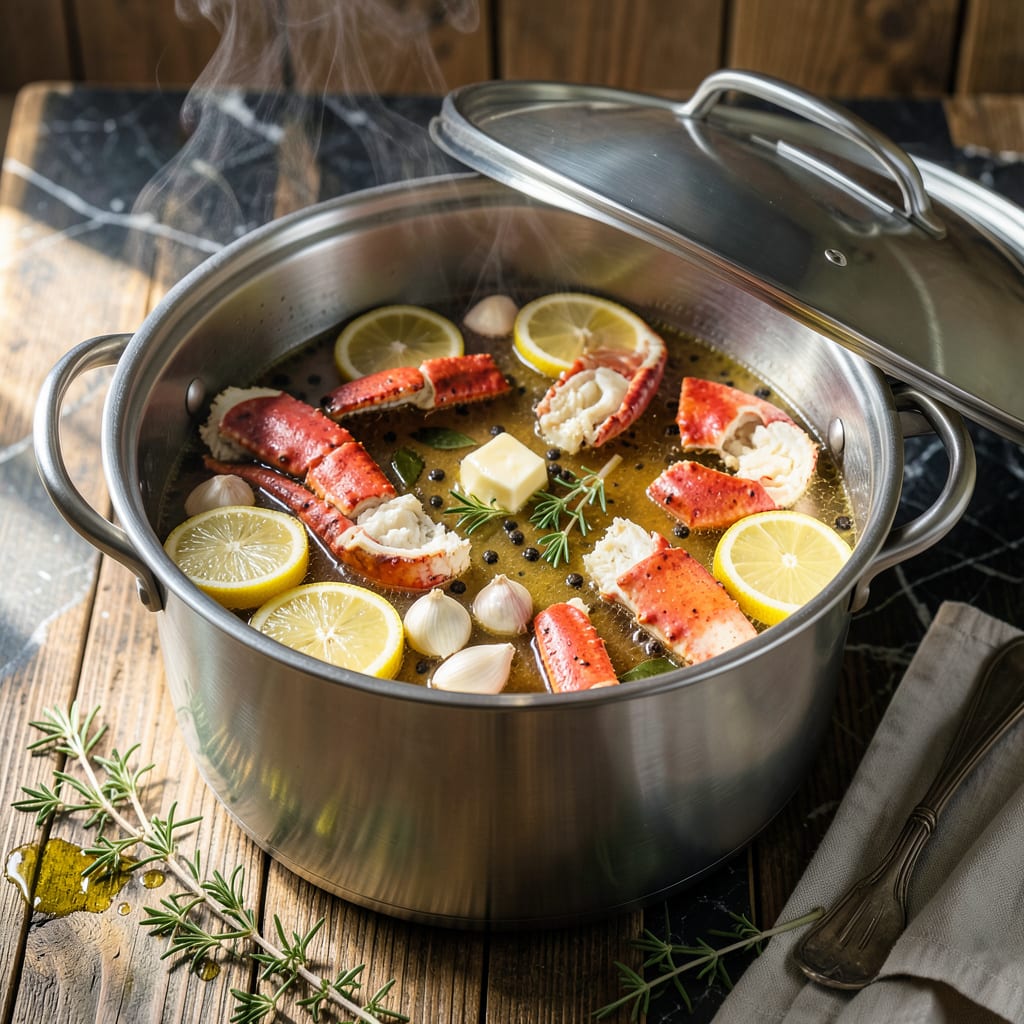
This one-pot method delivers butter-poached crab legs with minimal effort and maximum flavor.
Steaming in a rich butter broth preserves the natural sweetness while adding luxurious depth. The process takes 20 minutes and requires just a few simple ingredients for restaurant-quality results at home.
Ingredients for Crab Leg Steamer Pot
Luxurious seafood meets minimal effort with these fresh, flavorful components for perfect one-pot crab.
| Ingredient | Amount | Notes |
|---|---|---|
| Snow Crab Legs 🦀 | 2 lb | Thawed if frozen, clusters preferred |
| Unsalted Butter 🧈 | 1 cup | Cut into tablespoon-sized pieces |
| Sea Salt 🧂 | 2 tbsp | Kosher or flake variety preferred |
| Fresh Lemons 🍋 | 2 whole | Halved for juicing and garnish |
| Fresh Garlic Cloves 🧄 | 6 cloves | Smashed lightly, peeled |
| Fresh Thyme Sprigs 🌿 | 4 pieces | Whole sprigs for infusion |
| Bay Leaves 🍃 | 2 pieces | Dried, whole leaves |
| Black Peppercorns 🌶️ | 1 tbsp | Whole, lightly crushed |
| Water 💧 | 4 cups | For steaming base |
| Old Bay Seasoning 🌶️ | 1 tbsp | Classic seafood seasoning blend |
| Fresh Parsley 🌿 | ¼ cup | Chopped, for garnish |
The crab legs are the star, so wild-caught Alaskan snow crab clusters are ideal—look for them at Whole Foods or Costco (their frozen sections are reliable). The butter quality matters: European-style unsalted has higher fat content, which means richer poaching liquid. Fresh thyme and bay leaves should be vibrant green (dried works, but cut the amount in half for potency). Don’t skip the lemon—it brightens the butter broth beautifully.
No snow crab? King crab legs work too (adjust cooking time slightly). Out of fresh herbs? Dried thyme at half the quantity and a pinch of ground bay leaf substitute well. Old Bay can be swapped for Cajun seasoning if that’s what’s in your pantry. The garlic can be pre-minced in a pinch, but fresh cloves (smashed, not chopped) infuse the broth more effectively.
Leftovers keep 2-3 days in the fridge—reheat gently in the butter broth to avoid drying out. Freeze cooked crab in broth for up to 1 month. Always buy crab legs frozen unless you’re at a trusted seafood market (freshness is key).
Why You’ll Love This Recipe
- One Pot Wonder: I just dump the crab legs, garlic, and lemons in a pot with water, cover, and steam—no babysitting required.
- Buttery Garlic Heaven: The melted butter soaks into the crab with every bite, and the garlic cloves turn sweet and spreadable.
- Feeds a Crowd Fast: I’ve served this for dinner parties and weeknight family meals—it’s always a hit with zero stress.
- Leftovers? Please.: Honestly, the cold crab the next day with leftover garlic butter is almost better than fresh.
Step-by-Step Instructions for Crab Leg Steamer Pot
Master the technique for perfectly steamed snow crab legs with rich, aromatic butter infusion.
Step 1: Prepare the Steaming Liquid Base
In a large stockpot, combine the 4 cups water, 2 tbsp sea salt, 1 tbsp Old Bay seasoning, 1 tbsp black peppercorns, 2 pieces bay leaves, 4 pieces fresh thyme sprigs, and 6 cloves fresh garlic cloves. Bring to a rolling boil over high heat.
The salt and seasonings will infuse the water, ensuring every bite of crab carries bold, balanced flavor. You’ll see the peppercorns and bay leaves release their essence as the liquid heats, creating a fragrant base for the crab legs to absorb.
Step 2: Add Crab Legs and Steam
Once boiling, carefully add the 2 lb snow crab legs to the pot. If using clusters, arrange them so they’re mostly submerged but not overcrowded. Cover with a tight-fitting lid and reduce heat to maintain a steady simmer for 5-7 minutes.
Watch for the shells to turn a vibrant bright orange—this visual cue signals they’re nearly ready. The steam should be consistent but not aggressive, as too much heat can make the meat tough rather than tender.
Step 3: Infuse with Butter and Lemons
After 5 minutes, add the 1 cup unsalted butter (cut into pieces) and the 2 whole fresh lemons (halved) to the pot. The butter will melt into the steaming liquid, creating a rich, velvety broth that poaches the crab legs as they finish cooking.
Squeeze the lemon halves lightly into the pot to release some juice, then drop them in. The citrus brightens the butter and complements the seafood beautifully. Continue steaming for another 2-3 minutes until the crab is fully heated through.
Step 4: Finish and Serve
Remove the pot from heat. Using tongs, transfer the snow crab legs to a large serving platter. Spoon some of the butter-infused steaming liquid over the top to keep them moist and flavorful.
Garnish with the 0.25 cup fresh parsley (chopped) for a pop of color and freshness. Serve immediately with extra lemon halves and melted butter on the side for dipping. The crab should pull away from the shell easily, with a sweet, succulent texture and buttery aroma.
Pro Tips For Making Crab Leg Steamer Pot
- Boil First, Steam Second: I learned this the hard way—start the crab legs in boiling water for 2 minutes, then reduce to a rolling simmer. This guarantees they cook through without turning rubbery.
- Score the Shells: Use kitchen shears to snip a thin line down the length of each leg before steaming. The heat penetrates faster, and the flavor from the butter and garlic seeps right in.
- Skip Frozen Garlic: Fresh garlic cloves smashed with the flat of your knife release way more aroma into the steaming liquid. The pre-minced stuff just doesn’t cut it here.
- Melt Butter Separately: Sounds weird, but it works: melt your unsalted butter in a small pot on the side with a pinch of sea salt and lemon zest, then drizzle it over the crab after steaming. It stays rich and emulsified instead of separating in the steamer.
Troubleshooting This Recipe
Uneven Cooking
If some crab legs are done before others, it’s likely due to uneven pot heat. Use a large, heavy-bottomed stockpot and rotate the legs halfway through. I recommend a 12-quart pot for even heat distribution. 🔥
Water Boiling Over
Prevent this by using a pot that’s at least 2 inches taller than your crab legs. If it happens, reduce heat slightly and add ½ cup cold water to calm the boil. Never overfill the pot—leave room for steam.
Crab Meat Sticking
This usually means the crab wasn’t fully thawed before steaming. Always thaw frozen legs overnight in the fridge or under cold running water for 30 minutes. Once thawed, pat dry to avoid diluting the butter broth.
Butter Separating
If your butter breaks, the liquid was too hot. Remove from heat and whisk in 1 tsp cold water to re-emulsify. European-style butter with 82% fat (like Plugrá) is more stable for poaching.
Overcooked Crab
Crab legs cook fast—don’t exceed 10 minutes total. Test doneness by pulling a leg from the cluster; if it comes away easily, it’s done. Overcooking makes the meat rubbery and dry.
Weak Flavor
Boost the broth with an extra 1 tbsp Old Bay or a splash of white wine. Fresh herbs make a difference—swap dried for fresh if possible. The butter should be fragrant, not greasy. 💡
Nutrition Facts
Frequently Asked Questions
Can I use king crab instead of snow crab?
King crab legs work well but need slightly less time. Steam them for 4-6 minutes total since they’re thicker. The butter-poaching method enhances their sweet, rich flavor just as beautifully.
What’s the best pot size for this recipe?
A 12-quart stockpot is ideal for 2 lb of crab legs. It provides enough room for even steaming without overcrowding. A heavy-bottomed pot also helps maintain consistent heat.
How do I know when the crab is done?
The shells turn bright orange and the meat pulls away easily from the shell. For frozen legs, ensure they’re fully thawed first—this prevents uneven cooking. Never exceed 10 minutes total steaming time.
What if my butter separates in the pot?
Remove from heat immediately and whisk in 1 tsp cold water to re-emulsify. Using European-style butter with higher fat content (like Plugrá) helps prevent this issue.

- 6 Egg Cake Recipe with Oil: Light as Air With Buttery Moisture - October 4, 2026
- 4 Bean Casserole Recipe: One-Pan Heartiness With Smoky Paprika Depth - October 4, 2026
- 3-Ingredient Keto Mug Cake Recipe: Microwave Magic in 2 Minutes - October 4, 2026