
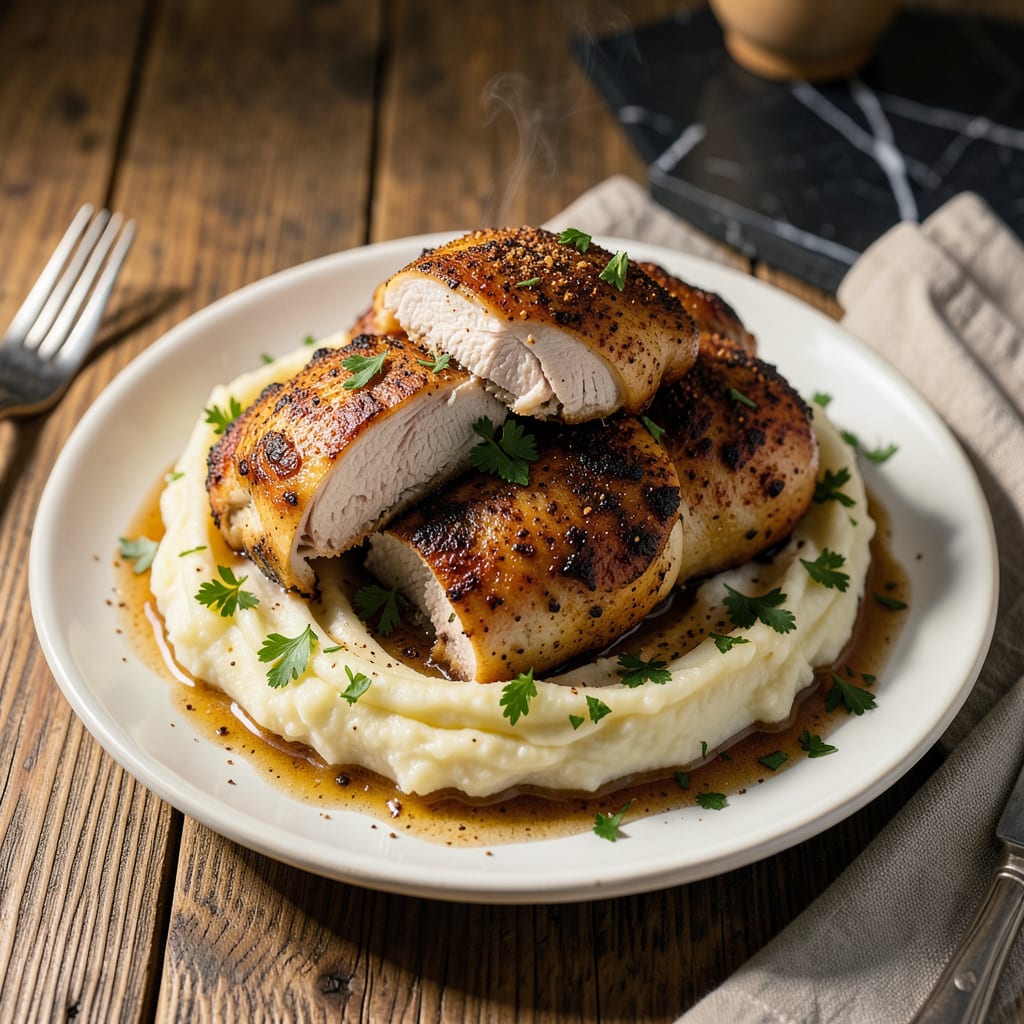
This smoky skillet chicken delivers the nostalgic flavors of Cracker Barrel’s campfire-style dish right to your home kitchen. The secret lies in achieving that signature wood-fired taste without a campfire—using simple pantry staples and a cast-iron skillet for perfect caramelization every time.
With just 30 minutes from start to finish, you’ll create tender, juicy chicken infused with smoky-sweet notes that pair beautifully with classic sides like buttery cornbread or creamy mashed potatoes. The technique mimics restaurant-quality results while keeping the process straightforward for weeknight cooking.
Ingredients for Cracker Barrel Campfire Chicken
Pantry staples and a quick grocery run—everything you need for that nostalgic campfire flavor at home.
| Ingredient | Amount | Notes |
|---|---|---|
| Boneless, Skinless Chicken Thighs 🍗 | 1 ½ lb | Trimmed of excess fat |
| Smoked Paprika 🌶️ | 1 ½ tbsp | For authentic campfire flavor |
| Light Brown Sugar 🍯 | 2 tbsp | Packed, for caramelization |
| Garlic Powder 🧄 | 1 tsp | Not garlic salt |
| Onion Powder 🧅 | 1 tsp | Fresh ground preferred |
| Kosher Salt 🧂 | 1 tsp | Diamond Crystal preferred |
| Ground Black Pepper 🌶️ | ½ tsp | Freshly ground for best flavor |
| Vegetable Oil 🫒 | 2 tbsp | High smoke point for searing |
| Unsalted Butter 🧈 | 2 tbsp | For finishing sauce |
| Apple Cider Vinegar 🍏 | 1 tbsp | Balances smoky sweetness |
| Worcestershire Sauce 💧 | 1 tbsp | Lea & Perrins recommended |
| Chicken Broth 🍲 | ½ cup | Low-sodium preferred |
| Fresh Parsley 🌿 | 2 tbsp | Chopped, for garnish |
[recipeingredientscaler]
The chicken thighs are non-negotiable here—boneless, skinless gives you that fall-apart tenderness without the fuss. Look for thighs with good marbling (the little white streaks) at Whole Foods or your regular supermarket. The smoked paprika is doing most of the heavy lifting for that campfire taste, so Penzeys or a well-stocked spice aisle is worth the trip. Don’t even think about substituting regular paprika—it won’t give you that smoky depth. The brown sugar should be light (not dark) for that perfect caramelized crust without bitterness.
Out of Worcestershire? Soy sauce with a pinch of sugar gets you 80% there. No apple cider vinegar? White wine vinegar at half the amount works in a pinch. The chicken broth can be bouillon dissolved in water if that’s what you’ve got (just watch the salt). Fresh parsley is ideal, but dried at one-third the amount won’t ruin anything. If you’re feeling fancy, a sprinkle of smoked salt at the end takes this over the top—Jacobsen or Maldon if you want to splurge.
This reheats surprisingly well—3-4 days in the fridge, though the texture is best fresh. Freeze cooked chicken (without sauce) for up to 3 months. The spice mix keeps in a cool, dark place for about 6 months if you make extra. Pro tip: double the dry rub portion and store it separately for next time. Just add a splash of broth when reheating to keep everything juicy.
Why You’ll Love This Recipe
- One-Pan Magic: I toss everything on a single sheet pan—chicken thighs, that smoky-sweet rub of brown sugar and paprika—and let the oven do the work. No marinating, no babysitting, just 25 minutes and one spatula to clean.
- That Caramelized Crust: Here’s what sold me—the way the brown sugar melts into the smoked paprika, creating this sticky, slightly crispy glaze on the thighs. It’s like campfire flavor without the actual fire (or the bugs).
- Weeknight Hero: Between us, this is my “forgot to plan dinner” backup. The thighs stay juicy even if they sit in the oven an extra 10 minutes, and the spices are all pantry staples. (Yes, even on a Tuesday night.)
- Stretches Further: One batch feeds my family of four with enough leftovers for next-day tacos or chopped over salad. Boneless thighs are cheaper than breasts but way more forgiving—and honestly, they taste better cold than most chicken does hot.
Step-by-Step Instructions for Cracker Barrel Campfire Chicken
Here’s how to nail that smoky-sweet skillet magic in your own kitchen—easy and foolproof.
Step 1: Season the Chicken with Smoky Sweetness
Pat the 1.5 lb boneless, skinless chicken thighs completely dry with paper towels. This step is crucial—any moisture will prevent the spices from adhering properly and interfere with browning. I like to trim any excess fat at this point for even cooking.
In a small bowl, combine the 1.5 tbsp smoked paprika, 2 tbsp light brown sugar, 1 tsp garlic powder, 1 tsp onion powder, 1 tsp kosher salt, and 0.5 tsp ground black pepper. The brown sugar should be packed firmly into your measuring spoon for accurate sweetness. Rub this mixture all over the chicken thighs, pressing gently so it sticks. Let them sit for 10 minutes while you prepare the skillet—this gives the spices time to penetrate the meat.
Step 2: Sear the Chicken to Lock in Flavor
Heat the 2 tbsp vegetable oil in a large cast-iron skillet over medium-high heat until it shimmers but doesn’t smoke. Add the chicken thighs in a single layer, being careful not to overcrowd the pan. You should hear a satisfying sizzle when they hit the oil—that’s how you know the pan is hot enough.
Cook the chicken undisturbed for 5-6 minutes per side until deeply browned. Don’t be tempted to move them around—you want that crust to form. The chicken is ready to flip when it releases easily from the pan. You’re looking for a rich, caramelized crust that combines the smoky paprika and brown sugar into something magical.
Step 3: Build the Campfire Sauce
Once the chicken is browned on both sides, reduce the heat to medium and add the 2 tbsp unsalted butter to the skillet. As it melts, add the 1 tbsp apple cider vinegar and 1 tbsp Worcestershire sauce. The vinegar will sizzle and steam—that’s it doing its job balancing the sweetness.
Pour in the 0.5 cup chicken broth, scraping up all those flavorful browned bits from the bottom of the pan with a wooden spoon. This is where the sauce really comes together. Let it simmer for 3-4 minutes until it reduces slightly and coats the back of a spoon. The sauce should be glossy and rich, with a perfect balance of smoky, sweet, and tangy flavors.
Step 4: Finish and Rest for Maximum Flavor
Return the chicken to the sauce if you removed it, or just let it continue cooking in the sauce for another 2-3 minutes until the internal temperature reaches 165°F. The thighs should be tender enough to cut with a fork but still hold their shape. Taste the sauce and adjust seasoning if needed—I sometimes add a pinch more salt if the flavors need brightening.
Transfer the chicken to a serving platter and spoon that beautiful sauce all over it. Let it rest for 5 minutes before serving—this allows the juices to redistribute so every bite is moist and flavorful. The sauce will thicken slightly as it cools, clinging perfectly to the chicken.
Step 5: Garnish and Serve While Hot
Sprinkle the 2 tbsp fresh parsley over the top just before serving. The bright green color contrasts beautifully with the deep brown sauce, and that fresh herbal note cuts through the richness. I like to serve this with mashed potatoes or crusty bread to soak up every last bit of that incredible sauce.
This dish is best enjoyed immediately while the sauce is still glossy and the chicken is at its most tender. The flavors will deepen if you let it sit, but the texture is perfect right out of the pan. Each bite should deliver that signature smoky-sweet campfire flavor with just enough tang to keep it interesting.
Troubleshooting Perfect Results
Sauce Too Thin
If your campfire sauce isn’t thickening properly, you likely need to reduce it longer. After adding the chicken broth, let it simmer uncovered for 5-7 minutes on medium heat until it coats the back of a spoon. A quick fix is mixing 1 tsp cornstarch with 1 tbsp cold water and stirring it in during the last minute of cooking. 💡
Chicken Sticks to Pan
When chicken sticks during searing, it’s usually because the pan wasn’t hot enough or the meat wasn’t dry. Make sure your cast-iron skillet is properly preheated for 3-4 minutes before adding oil. Pat the thighs completely dry with paper towels—any moisture creates steam that prevents browning. If it’s already stuck, let it cook undisturbed until it releases naturally.
Overly Sweet Flavor
If the dish tastes too sweet, the brown sugar likely overpowered the balance. Counteract it by adding 1-2 tsp apple cider vinegar or a squeeze of lemon juice at the end. You can also stir in ½ tsp smoked salt to enhance the savory notes. Next time, reduce the brown sugar to 1 tbsp if you prefer less sweetness.
Sauce Breaking or Separating
A broken sauce usually means the butter separated. To fix it, remove the pan from heat and whisk vigorously while slowly adding 1-2 tbsp hot water. This helps emulsify the fats back into the sauce. Prevent this by keeping the heat at medium (not high) when adding butter, and whisk constantly as it melts.
Chicken Too Dry
Dry chicken typically means it was overcooked. Use a meat thermometer to pull it at exactly 165°F—thighs cook quickly after searing. For next time, try brining the chicken in ¼ cup salt + 4 cups water for 30 minutes before cooking. This helps retain moisture even if it cooks slightly past ideal temperature.
Lacking Smoky Flavor
If the smoky taste is weak, your smoked paprika might be old or low-quality. I recommend Penzeys or La Chinata brands for maximum flavor. For an instant boost, stir in ½ tsp liquid smoke with the broth. Alternatively, add 1 tsp chipotle powder to the spice rub for deeper smokiness next time. 🔥
Nutrition Facts
Frequently Asked Questions
Can I use chicken breasts instead of thighs?
While you can substitute breasts, the texture will be different. Thighs stay juicier and handle the smoky-sweet glaze better. If using breasts, reduce cooking time to 4-5 minutes per side and brine them first to prevent dryness.
What’s the best way to reheat leftovers?
Gently warm in a skillet over medium-low heat with a splash of broth for 3-4 minutes. Microwaving works too—cover loosely and use 30-second intervals to avoid drying out. The sauce may thicken when cold, so thin with water if needed.
Can I make this ahead of time?
The spice rub can be mixed up to 1 week ahead and stored airtight. For best results, cook the chicken fresh, but you can prep the sauce separately and combine just before serving. The flavors actually deepen if left to sit for 1-2 hours before reheating.
What sides pair best with this dish?
Cracker Barrel-style buttermilk biscuits or creamy mashed potatoes soak up the sauce beautifully. For lighter options, try grilled corn or a tangy coleslaw to balance the smoky sweetness.

- 6 Egg Cake Recipe with Oil: Light as Air With Buttery Moisture - October 4, 2026
- 4 Bean Casserole Recipe: One-Pan Heartiness With Smoky Paprika Depth - October 4, 2026
- 3-Ingredient Keto Mug Cake Recipe: Microwave Magic in 2 Minutes - October 4, 2026