
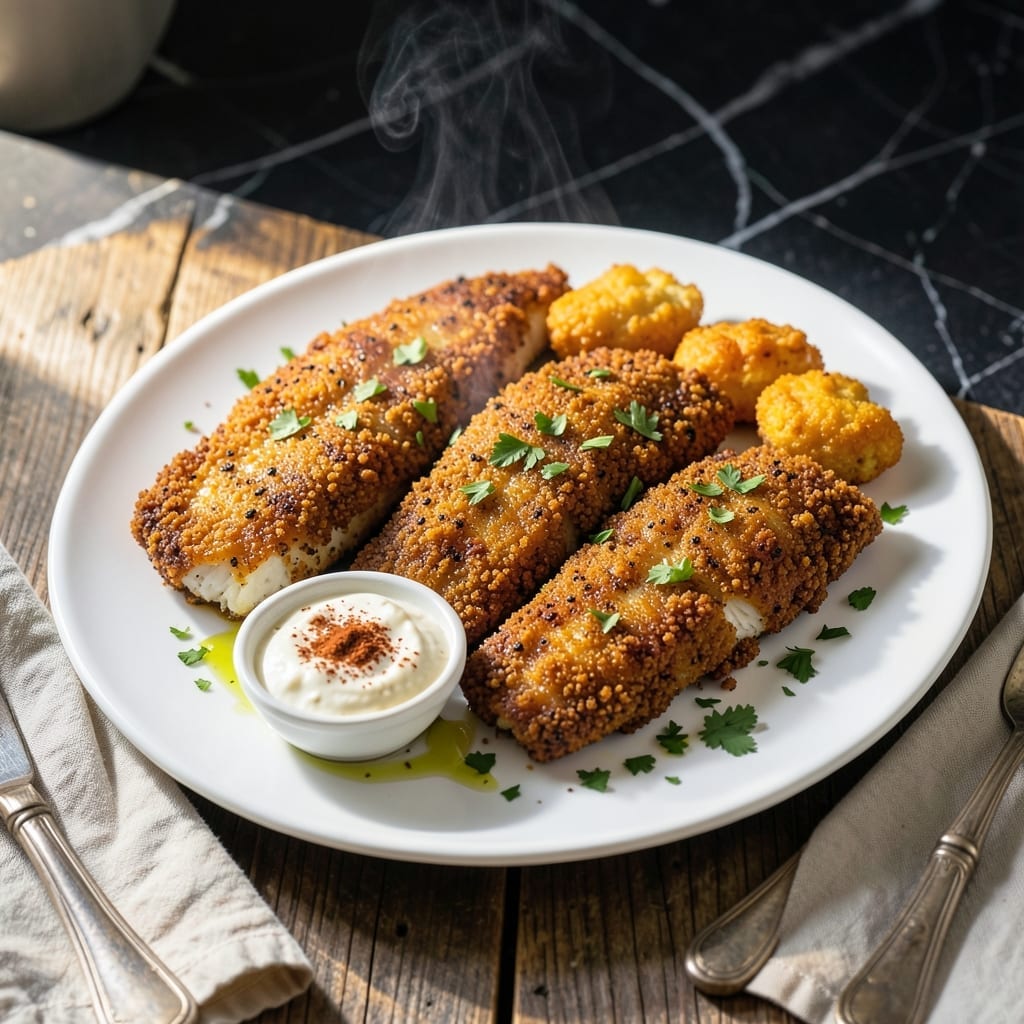
Southern catfish done right delivers a golden, crispy coating that gives way to tender, flaky fish inside. This classic preparation captures the essence of comfort food with a simple cornmeal crust that seals in moisture while achieving perfect crunch.
The secret lies in the double-dipping method: first in seasoned flour, then in buttermilk, and finally in the cornmeal mixture. This creates multiple layers that crisp beautifully when fried at the right temperature. Each bite offers that signature classic texture.
What emerges from the fryer is fish with a shatteringly crispy exterior and moist, delicate interior. The cornmeal coating adds a subtle sweetness that complements the mild catfish flavor. Serve with traditional sides to complete the experience.
Mastering this technique at home brings restaurant-quality results to your kitchen. The method is straightforward yet delivers consistent excellence every time.
Ingredients for Cracker Barrel Catfish
Golden, crispy catfish starts with fresh fillets and a well-seasoned cornmeal crust for that classic Southern taste.
| Ingredient | Amount | Notes |
|---|---|---|
| Catfish Fillets 🐟 | 1 ½ lb | Skinless, boneless, fresh or thawed |
| Yellow Cornmeal 🌽 | 2 cups | Fine or medium grind |
| All-Purpose Flour 🌾 | 1 cup | For initial dredging |
| Buttermilk 🥛 | 1 ½ cups | Full-fat for best adhesion |
| Large Eggs 🥚 | 2 whole | Beaten for binding |
| Salt 🧂 | 1 tbsp | Kosher or sea salt preferred |
| Black Pepper 🌶️ | 1 tbsp | Freshly ground for best flavor |
| Paprika 🌶️ | 1 tbsp | Sweet or smoked variety |
| Garlic Powder 🧄 | 1 tsp | For seasoning flour |
| Onion Powder 🧅 | 1 tsp | For seasoning flour |
| Cayenne Pepper 🔥 | ¼ tsp | Optional for heat |
| Vegetable Oil 🫒 | 4 cups | For frying, high smoke point |
| Lemon Wedges 🍋 | 4 slices | For serving |
For authentic flavor, fresh catfish fillets are essential—look for firm, translucent flesh without fishy odor. Stone-ground yellow cornmeal from a Southern mill like Martha White provides the right texture. Buttermilk should be full-fat for maximum adhesion to the coating. Most supermarkets carry these, but Publix or Winn-Dixie have the best selection in the South.
No buttermilk? Whole milk with 1 tbsp vinegar per cup works in a pinch. For gluten-free, swap all-purpose flour for cornstarch or rice flour. Hot sauce lovers can add 1 tsp cayenne to the cornmeal mix. The oil must have a high smoke point—peanut oil is traditional but vegetable or canola work. Avoid olive oil; it burns at frying temps.
Fry in batches to maintain oil temperature—overcrowding causes soggy coating. Drain on a rack (not paper towels) to keep it crispy. Best served immediately, but leftovers reheat in a 400°F oven for 10-12 minutes. Never microwave—it ruins the texture.
Why You’ll Love This Recipe
- One Bowl Wonder: I just dump the cornmeal, flour, and buttermilk in one bowl—no fancy prep, no extra dishes.
- Crispy Outside, Tender Inside: That cornmeal crust fries up golden while the catfish stays flaky and juicy.
- Feeds a Hungry Table: I’ve served this for Sunday supper and weeknight chaos—everyone cleans their plate.
- Budget Stretcher: Honestly, catfish fillets and pantry staples make this cheaper than takeout for my family of four.
Step-by-Step Instructions for Crispy Cornmeal-Coated Catfish
Master these techniques for restaurant-quality texture and flavor with every batch.
Step 1: Season and Prepare the Dredging Stations
In a shallow dish, whisk together the 1 cup all-purpose flour, 1 tbsp salt, 1 tbsp black pepper, 1 tbsp paprika, 1 tsp garlic powder, 1 tsp onion powder, and 0.25 tsp cayenne pepper until evenly combined. This seasoned flour creates the first layer of flavor and helps the coating adhere.
Place the 2 cups yellow cornmeal in a separate shallow dish. In a third bowl, whisk the 2 whole large eggs with the 1.5 cups buttermilk until fully incorporated. This three-step dredging process guarantees maximum crispiness and flavor in every bite.
Step 2: Coat the Catfish Thoroughly
Pat the 1.5 lb catfish fillets completely dry with paper towels—this is critical for the coating to stick properly. Season both sides lightly with a pinch of salt and pepper, though the dredging mixture will provide most of the seasoning.
Dredge each fillet in the seasoned flour, pressing gently to ensure full coverage. Shake off any excess, then dip into the buttermilk-egg mixture, allowing any excess to drip off. Finally, coat in the yellow cornmeal, pressing firmly so it adheres completely. Place on a wire rack set over a baking sheet for 10 minutes to let the coating set.
Step 3: Heat the Oil and Fry to Golden Perfection
In a large, heavy-bottomed skillet or Dutch oven, heat the 4 cups vegetable oil over medium-high heat to 350-365°F. Use a deep-fry thermometer for accuracy—oil that’s too cool will make the catfish greasy, while oil that’s too hot will burn the coating before the fish cooks through.
Working in batches to avoid crowding the pan, carefully lower the fillets into the hot oil. Fry for 4-5 minutes per side until the coating is deep golden brown and crispy. The catfish is done when it flakes easily with a fork and the internal temperature reaches 145°F.
Step 4: Drain and Serve Immediately
Transfer the fried catfish to a paper towel-lined plate to drain any excess oil. Avoid stacking the fillets, as this can trap steam and make the coating soggy. Let them rest for 2-3 minutes to allow the coating to set fully.
Serve hot with the 4 slices lemon wedges on the side for a bright, acidic contrast to the rich, crispy catfish. The ideal serving window is within 10 minutes of frying while the coating is at its peak crispiness. This timing ensures every bite delivers that signature crunch and tender interior.
Pro Tips For Making Cracker Barrel Catfish
- Heat the Oil First: Get your oil screaming hot—about 375°F—before adding the catfish. I learned this the hard way after pulling out soggy, greasy fillets that didn’t crisp up.
- Soak in Buttermilk: Let the catfish soak in buttermilk for at least 20 minutes—it tenderizes the meat and makes the cornmeal crust stick like it should.
- Drain Before Dredging: Shake off excess buttermilk before dredging in the cornmeal-flour mix, or you’ll end up with a gummy, uneven coating that doesn’t fry right.
- Double-Dip for Crunch: Sounds weird, but it works: dip the fillets in the cornmeal mix, back into the buttermilk, then back into the cornmeal for that extra-crispy Cracker Barrel texture.
Health Benefits of cracker barrel catfish
Lean Protein Source
Catfish is an excellent source of high-quality protein with about 18 grams per 3-ounce serving. This lean protein helps build and repair tissues while keeping you full longer. I find it’s a satisfying meal that doesn’t leave me weighed down. 💪
Heart-Healthy Fats
This fish provides omega-3 fatty acids, which support heart health and reduce inflammation. A 6-ounce portion delivers about 0.5 grams of these beneficial fats. The cornmeal coating adds minimal saturated fat compared to other fried foods.
Rich in Vitamins
Catfish is packed with vitamin B12, providing over 100% of your daily needs in a single serving. It also contains niacin and vitamin D, essential for energy metabolism and bone health. I notice I feel more energized after meals featuring this fish.
Mineral Powerhouse
You’ll get a healthy dose of selenium (about 25mcg per serving) from catfish, an antioxidant that supports thyroid function. It also provides phosphorus and potassium, important for bone health and muscle function.
Low Calorie Option
When prepared with a light cornmeal coating, each serving contains about 200 calories before frying. The protein content helps maintain muscle mass while keeping the calorie count reasonable. I appreciate that I can enjoy this crispy dish without guilt. ✨
Brain Booster
The omega-3s in catfish support cognitive function and may help improve memory. Regular consumption has been linked to reduced risk of cognitive decline. I always feel mentally sharper on days I include fish in my diet.
Nutrition Facts
Frequently Asked Questions
Can I use a different type of fish?
Yes! Firm white fish like tilapia or haddock work well. Adjust cooking time slightly as thinner fillets may finish faster.
What oil works best for frying?
Use oils with a high smoke point like peanut, canola, or vegetable. Avoid olive oil as it can burn at frying temps.
How do I keep the coating crispy?
Drain on a wire rack, not paper towels, to prevent steam buildup. Serve immediately for maximum crunch.
Can I bake instead of fry?
For a lighter version, bake at 400°F for 15-20 minutes. The texture won’t be as crispy but still delicious.

- 6 Egg Cake Recipe with Oil: Light as Air With Buttery Moisture - October 4, 2026
- 4 Bean Casserole Recipe: One-Pan Heartiness With Smoky Paprika Depth - October 4, 2026
- 3-Ingredient Keto Mug Cake Recipe: Microwave Magic in 2 Minutes - October 4, 2026