
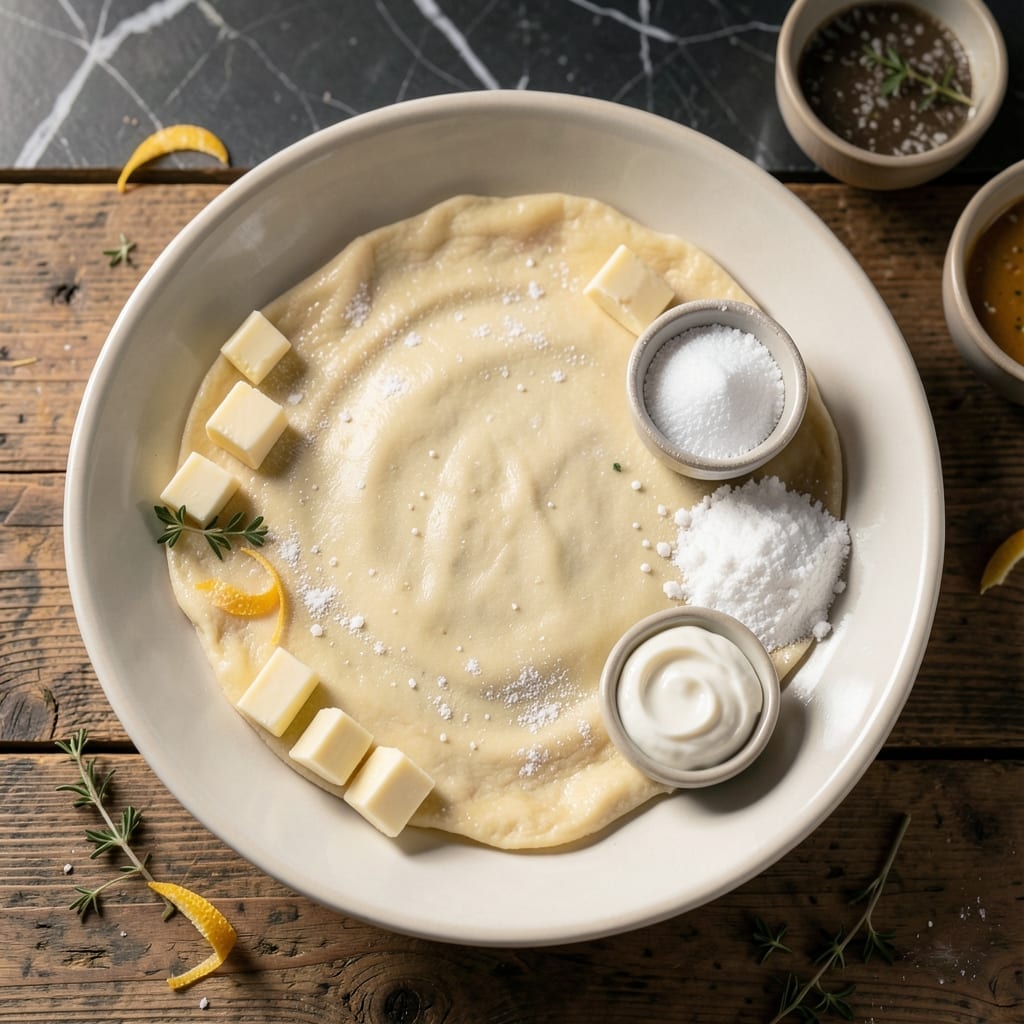
This recipe delivers flaky, golden layers with minimal effort, perfect for both sweet and savory creations. The secret lies in handling the dough gently to preserve its delicate structure.
Using just a few basic ingredients, this method creates a versatile base that bakes up light and buttery. The layers separate beautifully in the oven, giving that signature crescent roll texture every time.
Whether you’re making appetizers, desserts, or main dishes, this dough adapts effortlessly. It comes together quickly and bakes in under 20 minutes for reliable results.
You’ll appreciate how consistently this recipe performs, producing tender, layered pastry that impresses without complicated techniques.
Ingredients for Crescent Dough Sheet
Nine simple ingredients deliver buttery, flaky layers every time for this versatile dough.
| Ingredient | Amount | Notes |
|---|---|---|
| All-Purpose Flour 🌾 | 2 ½ cups | Plus extra for dusting surface |
| Unsalted Butter 🧈 | 1 cup | Cold, cut into small cubes |
| Sour Cream 🥛 | ¾ cup | Full-fat for best texture |
| Granulated Sugar 🍚 | 1 tbsp | Balances the richness |
| Salt 🧂 | 1 tsp | Fine sea salt preferred |
| Baking Powder 🧂 | 1 tsp | Ensures light layers |
| Ice Water 💧 | ¼ cup | Plus 1 tbsp as needed |
| Large Egg 🥚 | 1 whole | For richness and binding |
| Vanilla Extract 🌿 | 1 tsp | Pure extract recommended |
The butter must be cold—Land O’Lakes or Plugrá work well for their high fat content. Use full-fat sour cream from a trusted brand like Breakstone’s; low-fat versions add too much moisture. All-purpose flour from King Arthur or Gold Medal gives consistent results. Weigh your flour if possible—210g per cup for accuracy (the scoop-and-level method can pack it down).
No sour cream? Full-fat Greek yogurt at the same quantity works in a pinch. For a lighter texture, replace half the butter with cold vegetable shortening. The egg can be omitted for a vegan version, but add 1 tbsp extra sour cream to compensate for moisture. If you’re out of baking powder, 1/4 tsp baking soda plus 1/2 tsp cream of tartar makes a suitable substitute.
Dough can be wrapped tightly in plastic and refrigerated for up to 2 days, or frozen for 1 month. Thaw overnight in the fridge before using. For best flakiness, work quickly to keep the butter cold throughout the process (worth the extra minute).
Why You’ll Love This Recipe
- No-Fuss Dough: I mix the flour, butter, and sour cream in one bowl—no fancy steps, just my hands and 10 minutes.
- Rich and Tender: That sour cream makes it flaky yet soft, with a buttery taste that’s hard to resist.
- Endless Possibilities: I’ve used it for cinnamon rolls, cheese straws, even quick flatbreads—so versatile.
- Budget Stretch: Five pantry staples transform into multiple meals, and leftovers freeze beautifully.
Step-by-Step Instructions for Crescent Dough Sheets
Master these techniques to create light, flaky layers that rival any store-bought version.
Step 1: Combine Dry Ingredients for Structure
In a large mixing bowl, whisk together the 2.5 cups All-Purpose Flour, 1 tbsp Granulated Sugar, 1 tsp Salt, and 1 tsp Baking Powder until fully incorporated. This dry blend establishes the foundation for your dough’s texture and rise.
I use fine sea salt for even distribution throughout the dough. The baking powder ensures those signature airy layers, while the sugar balances the richness of the butter and sour cream. Make sure there are no lumps in your mixture before proceeding.
Step 2: Cut in Cold Butter for Flakiness
Add the 1 cup Unsalted Butter (cold, cut into small cubes) to the dry ingredients. Using a pastry cutter or your fingertips, work the butter into the flour mixture until it resembles coarse crumbs with pea-sized butter pieces visible. This creates the flaky layers that define crescent dough.
The key here is keeping the butter cold—it should remain in distinct pieces rather than melting into the flour. If the butter starts to soften, briefly chill the mixture in the refrigerator for 10 minutes before continuing. The visible butter flecks will create steam during baking, resulting in those beautiful, separated layers.
Step 3: Incorporate Wet Ingredients for Tenderness
In a separate bowl, whisk together the 0.75 cup Sour Cream, 1 whole Large Egg, and 1 tsp Vanilla Extract until smooth. Make a well in the center of your flour-butter mixture and pour in the wet ingredients.
Using a fork, gradually incorporate the dry ingredients into the wet, mixing just until the dough begins to come together. Then, add the 0.25 cup Ice Water 1 tbsp at a time as needed—the dough should be shaggy but hold together when pressed. The sour cream adds tenderness while the ice water keeps everything cold.
Step 4: Knead and Chill for Optimal Texture
Turn the dough out onto a lightly floured surface (use some of the extra all-purpose flour) and gently knead for 30-60 seconds just until smooth. Avoid overworking the dough, as this can develop gluten and make your crescent sheets tough rather than tender.
Shape the dough into a disk, wrap it tightly in plastic wrap, and refrigerate for at least 1 hour (or up to 24 hours). This chilling period allows the gluten to relax and the butter to firm up, making the dough easier to roll out and ensuring those perfect, flaky layers when baked.
Step 5: Roll and Shape for Baking
On a well-floured surface, roll the chilled dough into a 12×16-inch rectangle, about ¼-inch thick. If the dough resists rolling, let it rest at room temperature for 5-10 minutes to soften slightly. The goal is an even thickness for consistent baking.
For classic crescent shapes, cut the rectangle into 8 equal triangles. Starting from the wide end, roll each triangle up toward the point, creating the signature crescent shape. Place the shaped dough on a parchment-lined baking sheet, curve slightly if desired, and bake at 375°F for 12-15 minutes until golden brown.
Pro Tips For Making Crescent Dough Sheet
- Chill the Dough: After mixing, wrap it and refrigerate for at least 30 minutes—I learned this the hard way when my first batch spread like pancakes in the oven.
- Use Cold Butter: Cut the unsalted butter into small cubes and keep it ice-cold until mixing; this guarantees flaky layers instead of a dense, flat dough.
- Don’t Overwork It: Stop kneading as soon as the dough comes together, or you’ll end up with tough crescents that taste more like hockey pucks than pastries.
- Swap Sour Cream: Full-fat sour cream is non-negotiable here; the lower-fat versions add too much moisture and ruin the texture—yes, even if you’re trying to cut calories.
Regional Styles of These Flavors
Southern Style
Down South, we often add ½ tsp smoked paprika to the dry ingredients for a subtle, warm depth. The dough gets rolled slightly thicker—about ⅓-inch—and cut into squares for “butterfly rolls” that pull apart beautifully. I learned this from my grandmother, who always brushed them with melted butter before baking. 💛
Midwestern Classic
In the Midwest, crescent dough often includes 1 tbsp powdered sugar in the dry mix for a touch of sweetness. The triangles are rolled tighter and baked at 350°F for 15-18 minutes to achieve a softer, bread-like texture. Perfect for breakfast rolls served with honey butter.
Texas Twist
Everything’s bigger in Texas, including the flavor. Add 1 tsp chili powder and ½ tsp cumin to the dry ingredients for a savory kick. These are often shaped into larger, free-form rolls and baked until deep golden. I love serving these with chili or as a base for mini beef pies. 🔥
Pacific Northwest
This region favors a lighter touch with 1 tbsp honey replacing the granulated sugar. The dough is rolled thinner—about ⅛-inch—and often used for open-faced tarts filled with local berries. The flakiness pairs perfectly with the area’s fresh, fruity flavors.
New England Tradition
Here, crescent dough often gets a brush of maple syrup after baking for a distinct regional sweetness. The dough might include 1 tsp cinnamon in the dry mix. These are typically smaller, bite-sized rolls perfect for holiday brunches.
Nutrition Facts
Frequently Asked Questions
Can I use warm butter instead of cold?
No, cold butter is essential for flaky layers. Warm butter melts into the dough, preventing those perfect pockets of steam that create flakiness during baking.
Why do I need to chill the dough?
Chilling relaxes the gluten and firms the butter, making it easier to roll out. This 1-hour rest also prevents shrinking during baking and ensures even, defined layers.
Can I make the dough ahead of time?
Yes! Wrap the dough tightly and refrigerate for up to 2 days or freeze for 1 month. Thaw overnight in the fridge before using for best results.
What if my dough cracks when rolling?
Let it rest at room temperature for 5-10 minutes to soften. If it still resists, patch small cracks with your fingers—they’ll bake together seamlessly.

- 6 Egg Cake Recipe with Oil: Light as Air With Buttery Moisture - October 4, 2026
- 4 Bean Casserole Recipe: One-Pan Heartiness With Smoky Paprika Depth - October 4, 2026
- 3-Ingredient Keto Mug Cake Recipe: Microwave Magic in 2 Minutes - October 4, 2026