
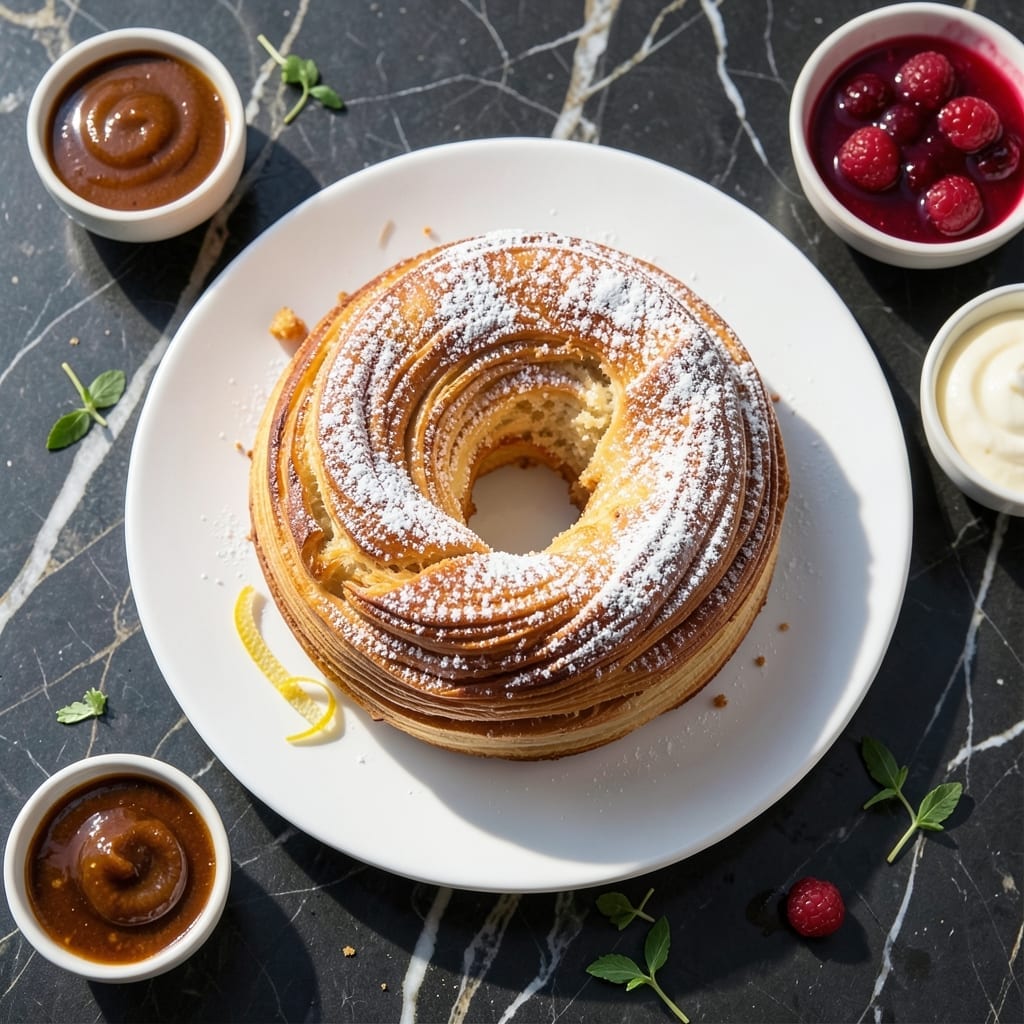
Creating bakery-style cronuts at home is a rewarding challenge that brings professional pastry techniques into your kitchen. This recipe recreates the flaky, layered texture that made Dominique Ansel’s original creation famous.
The process involves making a laminated dough similar to croissants, then shaping, frying, and glazing for that signature crispy-yet-tender result. Each step builds on the last to achieve those perfect golden layers.
What sets this apart is the careful balance of buttery dough and sweet glaze, delivering a pastry that’s both luxurious and satisfying. The layers should shatter slightly with each bite, just like the original.
Patience and precision are key—rushing any step can compromise the texture. But the effort is worth it for a taste of this iconic treat.
Ingredients for Cronut Recipe Dominique Ansel
Professional-grade ingredients create those iconic bakery-style layers at home with precision and flair.
| Ingredient | Amount | Notes |
|---|---|---|
| All-Purpose Flour 🌾 | 4 cups | Plus extra for dusting work surface |
| Granulated Sugar 🍚 | ¼ cup | Divided for dough and glaze |
| Kosher Salt 🧂 | 2 tsp | Diamond Crystal preferred for consistency |
| Unsalted Butter 🧈 | 1 ½ cups | European-style, 82% fat content ideal |
| Large Eggs 🥚 | 2 whole | Cold, for dough lamination |
| Whole Milk 🥛 | ¾ cup | Cold, for dough hydration |
| Active Dry Yeast 🍞 | 2 ¼ tsp | One packet, proofed in warm water |
| Vanilla Extract 🌿 | 2 tsp | Pure, not imitation for glaze |
| Confectioners Sugar 🍚 | 2 cups | Sifted for smooth glaze texture |
| Neutral Vegetable Oil 🫒 | 4 cups | For frying, peanuts or sunflower oil work well |
| Light Corn Syrup 🧴 | 2 tbsp | For glaze shine and flexibility |
| Cream Cheese 🧀 | 4 oz | Full-fat, softened for filling |
The butter is non-negotiable here. European-style with 82% fat content—like Plugrá or Kerrygold—delivers the flaky layers Dominique Ansel built his reputation on. King Arthur Flour for the all-purpose base ensures consistent results. Yeast freshness matters; check the expiration date and store it in the freezer if you won’t use it quickly.
No European butter? Use the highest-fat domestic butter you can find. Whole milk can be swapped for 2% in a pinch, but avoid skim. The confectioners sugar must be sifted—lumps ruin the glaze’s glassy finish. For the oil, peanut or sunflower has the high smoke point needed. Skip the vanilla imitation; pure extract makes a noticeable difference in the glaze.
Dough resting is critical—keep it refrigerated between folds. The butter must stay cold to create proper lamination. Store finished cronuts at room temperature for up to 2 days, but they’re best eaten fresh. Glaze can be made 1 day ahead and reheated gently to pour.
Why You’ll Love This Recipe
- One Bowl Wonder: I love that I can mix the dough with just flour, sugar, and eggs—no fancy equipment, just my hands and a bowl.
- Buttery Layers: The unsalted butter creates that flaky, melt-in-your-mouth texture Dominique Ansel is famous for.
- Crowd Pleaser: Honestly, these cronuts disappear at brunch, potlucks, even my kid’s birthday—everyone asks for the recipe.
- Budget Friendly: A batch costs pennies compared to bakery prices, and they taste just as indulgent.
Step-by-Step Instructions for Cronut
Master the laminated dough technique and frying process for bakery-quality results at home.
Step 1: Prepare and Proof the Dough
In a stand mixer fitted with the dough hook, combine the 4 cups All-Purpose Flour, 0.25 cup Granulated Sugar, and 2 tsp Kosher Salt. In a separate bowl, proof the 2.25 tsp Active Dry Yeast in warm water until foamy, then add it to the dry ingredients along with the 2 whole Large Eggs and 0.75 cup Whole Milk.
Mix on low speed until combined, then increase to medium and knead for 8-10 minutes until the dough is smooth and elastic. The dough should pull away from the sides of the bowl but remain slightly tacky. This develops the gluten structure essential for flaky layers.
Step 2: Laminate with Cold Butter
Roll the dough into a 12×16-inch rectangle on a lightly floured surface. Place the 1.5 cups Unsalted Butter (pounded into a flat sheet) over two-thirds of the dough, then fold the unbuttered third over the middle and the remaining third over that, like a letter.
Turn the dough 90 degrees and roll out again to 12×16 inches. Repeat the folding process. This creates the signature layers. Chill the dough for 30 minutes between each of the three total turns to prevent the butter from melting into the dough.
Step 3: Shape, Proof, and Fry
After the final turn, roll the dough to ¼-inch thickness and cut into 3-inch rings using a round cutter. Place the rings on a parchment-lined tray, cover, and proof at room temperature for 1-2 hours until puffed and doubled in size.
Heat the 4 cups Neutral Vegetable Oil in a deep pot to 350°F. Fry the doughnuts in batches for 2-3 minutes per side until golden brown and fully cooked through. Drain on a wire rack to maintain crispness.
Step 4: Fill and Glaze
Once cooled, use a piping bag to inject the 4 oz Cream Cheese (whipped until smooth) into the center of each cronut. For the glaze, whisk together the 2 cups Confectioners Sugar, 2 tsp Vanilla Extract, and 2 tbsp Light Corn Syrup with just enough water to reach a pourable consistency.
Dip the tops of the cronuts into the glaze, allowing excess to drip off. Let the glaze set for 10-15 minutes before serving. The ideal cronut has crisp layers, a creamy center, and a glossy, crackly glaze.
Pro Tips For Making Cronut Recipe Dominique Ansel
- Chill the Dough: After laminating, refrigerate the dough for at least 30 minutes between folds—this prevents the butter from melting into the flour, which I learned the hard way after my first batch turned into flat, greasy pancakes.
- Use Cold Butter: Keep your unsalted butter ice-cold when incorporating it into the dough; if it softens too soon, the layers won’t separate properly, and you’ll lose that signature flaky cronut texture.
- Roll Evenly: When rolling out the dough, aim for an even 1/4-inch thickness—any thinner and the cronuts will overcook, any thicker and they won’t puff up as they should.
- Fry at 350°F: Maintain a steady 350°F oil temperature while frying; too hot and the outside burns before the inside cooks, too cool and you’ll end up with soggy, oil-logged cronuts.
Perfect Pairings for This Recipe
Beverage Pairings
I love serving these with a chilled Vanilla Chai Latte—the warm spices complement the sweet glaze beautifully. For a boozy twist, try a Sparkling Moscato with its light effervescence and fruity notes cutting through the richness. 🍷
Coffee Classics
A bold Cold Brew Coffee from Stumptown or your local roaster balances the sweetness perfectly. The deep, chocolatey notes of a dark roast also work wonders, especially with a splash of cream.
Tea Options
An Earl Grey with its citrusy bergamot brightens each bite. For herbal lovers, Peppermint Tea provides a refreshing contrast that cleanses your palate between cronuts.
Breakfast Pairings
These pastries shine alongside a Fresh Berry Salad with mint and honey. The tartness of raspberries or blackberries cuts through the sweet glaze, creating a balanced brunch spread. 💫
Dessert Wine
A glass of Sauternes from Bordeaux elevates this to a gourmet experience. Its honeyed apricot flavors and acidity make it an ideal match for the buttery layers and cream cheese filling.
Nutrition Facts
Frequently Asked Questions
How many layers should the dough have?
Aim for 27 layers after three book folds (turns). This creates the signature flaky texture that separates a great cronut from a good one.
Why is my butter leaking during frying?
This happens if the dough wasn’t chilled enough between folds or the oil temperature was too low. Keep the dough at 40°F or below between turns and maintain 350°F oil.
Can I make these without a stand mixer?
Yes, but it requires strong arms! Knead by hand for 15-20 minutes to develop the gluten properly. The dough will be stickier, so use extra flour sparingly.
How do I know when the oil is ready?
Use a thermometer for precision—350°F is ideal. Without one, test with a small dough scrap: it should sizzle and rise immediately to the surface.

- 6 Egg Cake Recipe with Oil: Light as Air With Buttery Moisture - October 4, 2026
- 4 Bean Casserole Recipe: One-Pan Heartiness With Smoky Paprika Depth - October 4, 2026
- 3-Ingredient Keto Mug Cake Recipe: Microwave Magic in 2 Minutes - October 4, 2026