
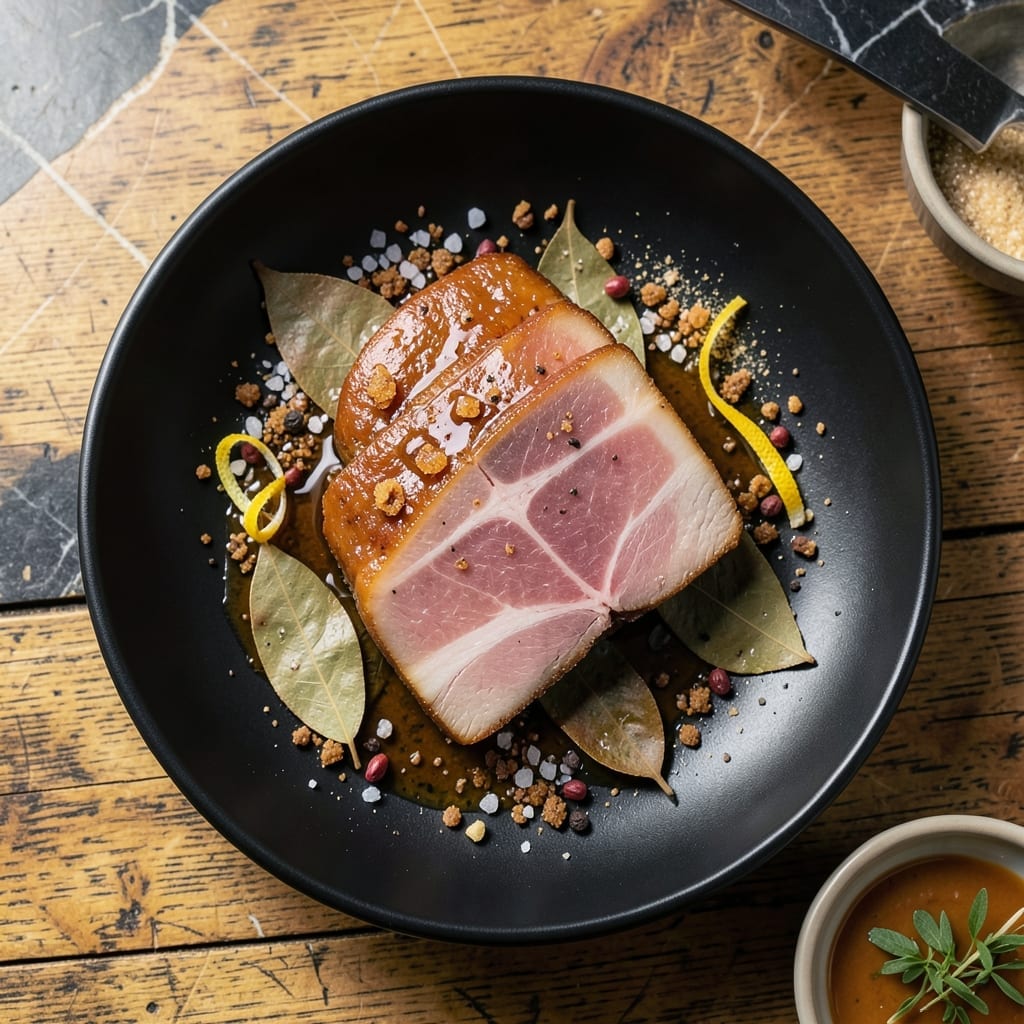
I’ve spent years perfecting this method for cured pork belly that delivers exactly what the title promises. The secret is patience—letting the cure work its magic before the final cook.
This isn’t your average bacon. We’re talking layers of fat that dissolve on your tongue, with edges so crispy they shatter. The curing process transforms the meat while keeping it tender.
I’ll walk you through every step, from the dry cure to the final roast. No fancy equipment needed—just time and attention to detail.
What you’ll end up with is worth every minute. That perfect balance of salty, fatty, and crisp is hard to beat.
Ingredients for Cured Pork Belly
Pantry staples plus a special cut of meat. Nothing exotic, just time-tested flavor builders.
| Ingredient | Amount | Notes |
|---|---|---|
| Pork Belly 🥓 | 2 lb | Skin-on, even thickness |
| Kosher Salt 🧂 | ½ cup | Diamond Crystal preferred |
| Brown Sugar 🍚 | ¼ cup | Light or dark works |
| Black Pepper 🌶️ | 1 tbsp | Freshly ground coarse |
| Garlic Powder 🧄 | 1 tbsp | Not garlic salt |
| Juniper Berries 🍇 | 1 tsp | Lightly crushed |
| Bay Leaves 🍃 | 2 whole | Dried, crumbled |
| Pink Curing Salt 🧂 | ¼ tsp | Prague Powder #1 essential |
| Maple Syrup 🍁 | 2 tbsp | For glazing finish |
| Apple Cider Vinegar 🍏 | 1 tbsp | Balances sweetness |
| Fresh Thyme 🌿 | 1 tbsp | Chopped leaves only |
| Fresh Rosemary 🌿 | 1 tbsp | Finely chopped stems removed |
The pork belly is non-negotiable here—skin-on for that shatter-crust, and even thickness (about 1.5 inches) so it cures uniformly. I get mine from Whole Foods or a local butcher who can cut it to spec. The curing salt isn’t optional; Prague Powder #1 keeps it safe while the regular salt does the flavor work. Don’t confuse it with table salt or you’ll end up with a sad, salty brick.
Out of brown sugar? White sugar plus a splash of molasses mimics the depth. No juniper berries? Skip them entirely—they’re subtle but not essential. Fresh herbs not in the cards? Dried at one-third the amount works, though the flavor won’t be as bright. The maple syrup in the glaze can be swapped for honey or agave, but maple’s earthiness really complements the pork.
The cured belly keeps 1 week in the fridge before cooking, or freezes for 3 months. Once cooked, it’s best eaten within 3 days—though good luck making it last that long. Store leftovers wrapped tight; the fat will firm up when cold but melts beautifully when reheated.
Why You’ll Love This Recipe
- Five-Minute Prep: I just rub the pork belly with salt, sugar, and spices—no fancy steps, no stress.
- Sweet and Savory: That brown sugar caramelizes while the garlic powder adds a deep, savory punch. Honestly, it’s the kind of flavor I crave all week.
- Breakfast to Dinner: I’ve served this cured pork belly with eggs at brunch and as a rich topping for ramen at dinner.
- Stretches the Budget: One slab of pork belly yields multiple meals, and the cure keeps it fresh for days. Between us, it’s my secret to fancy-tasting meals without the cost.
Step-by-Step Instructions for Cured Pork Belly
Here’s my tested method for achieving that ideal balance of crisp and tender every time.
Step 1: Apply the Dry Cure to the Pork Belly
In a bowl, combine the 0.5 cup kosher salt, 0.25 cup brown sugar, 1 tbsp black pepper, 1 tbsp garlic powder, 1 tsp juniper berries, 2 whole bay leaves, and 0.25 tsp pink curing salt. Mix well to distribute all the spices evenly—this ensures every bite is perfectly seasoned.
Pat the 2 lb pork belly dry with paper towels, then place it skin-side down on a wire rack set over a tray. Rub the cure mixture all over the meat, pressing it in firmly so it adheres completely. You should use all of the cure mixture—don’t skimp, as this is what transforms the flavor and texture.
Step 2: Cure the Pork Belly in the Refrigerator
Place the pork belly, still on the rack and tray, in the refrigerator uncovered. Let it cure for 5 to 7 days. This time allows the salt and spices to penetrate deeply, drawing out moisture and infusing the meat with flavor.
After the first 24 hours, you’ll notice liquid pooling in the tray—that’s the moisture being pulled out by the cure. I like to flip the pork belly over every 24 hours to ensure even curing on all sides. The meat should feel firm to the touch when fully cured.
Step 3: Rinse and Dry the Cured Pork Belly
Once the curing time is up, remove the pork belly from the refrigerator and rinse it under cold water to remove any excess cure. This step is important to prevent the final product from being overly salty.
Pat it completely dry with paper towels. I can’t stress this enough—moisture is the enemy of crispiness. Let the pork belly air-dry in the refrigerator uncovered for 12 to 24 hours to form a slightly tacky surface, which is called the “pellicle.” This helps the smoke adhere better if you plan to smoke it, or simply creates a better crust when roasted.
Step 4: Roast or Smoke to Perfection
Preheat your oven to 300°F if roasting. Place the pork belly on a wire rack set over a baking sheet. Roast for 2 to 2.5 hours until the internal temperature reaches 165°F and the fat is rendered beautifully.
For the last 15 minutes of cooking, brush the pork belly with a mixture of the 2 tbsp maple syrup and 1 tbsp apple cider vinegar. Then, increase the oven temperature to 425°F and cook for another 10 minutes to caramelize the glaze and crisp up the skin. Sprinkle with the 1 tbsp fresh thyme and 1 tbsp fresh rosemary before serving.
Pro Tips For Making Cured Pork Belly
- Score the Skin: Use a sharp knife to cut 1/4-inch crosses in the pork belly skin before curing—this helps the fat render out and the cure penetrate evenly.
- Weigh the Salt: Use 1 tablespoon of kosher salt per pound of pork belly; I learned this the hard way after over-salting my first two attempts.
- Rest Before Slicing: After curing, let the pork belly rest uncovered in the fridge for 12 hours to form a pellicle—this sticky layer grabs smoke or seasoning better.
- Skip the Shortcuts: Don’t rush the curing time; 5-7 days in the fridge is non-negotiable for proper flavor and texture development.
Make-Ahead Tips for This cured pork belly
Pre-Cure Prep
I always start this dish the week before serving. The dry cure needs 5-7 days in the fridge, so plan accordingly. You can mix the cure a day ahead—just store it in an airtight container to keep the spices fresh. 💡
Mid-Cure Storage
After applying the cure, place the pork belly on a wire rack over a tray. This setup lets air circulate while catching drips. Cover loosely with plastic wrap if your fridge gets cold spots below 35°F.
Post-Cure Drying
The 12-24 hour air-dry in the fridge is non-negotiable. I use a fan on low to speed this up. The pellicle forms best at 50% humidity—a small dehumidifier helps in damp climates.
Pre-Roast Freezing
You can freeze the cured (but uncooked) pork belly for up to 3 months. Wrap it tightly in plastic, then foil. Thaw overnight in the fridge before roasting—never at room temperature.
Post-Roast Holding
Once roasted, the belly holds beautifully at room temp for 2 hours. For longer waits, keep it warm in a 200°F oven. The glaze will stay sticky but re-crisp under the broiler for 2 minutes. 🔥
Leftovers
Store cooked pork belly in its juices in the fridge for 3-4 days. Reheat slices in a dry pan over medium heat for 2-3 minutes per side to restore crispness.
Nutrition Facts
Frequently Asked Questions
What’s the purpose of pink curing salt?
Pink curing salt prevents botulism and preserves color. It’s essential for safety—never substitute regular salt. Use exactly 0.25 tsp per 2 lb of pork belly.
Can I skip the air-drying step?
No, the 12-24 hour drying forms a pellicle that helps crisp the skin. Skipping it results in a softer texture. Use a fan to speed it up if needed.
How do I know when it’s fully cured?
The meat should feel firm throughout after 5-7 days. Check by pressing the center—it should spring back slightly. Liquid in the tray is normal.
Can I use a different sweetener?
Yes, swap maple syrup for honey or agave in the glaze. For the dry cure, white sugar plus molasses mimics brown sugar’s depth.

- 6 Egg Cake Recipe with Oil: Light as Air With Buttery Moisture - October 4, 2026
- 4 Bean Casserole Recipe: One-Pan Heartiness With Smoky Paprika Depth - October 4, 2026
- 3-Ingredient Keto Mug Cake Recipe: Microwave Magic in 2 Minutes - October 4, 2026