
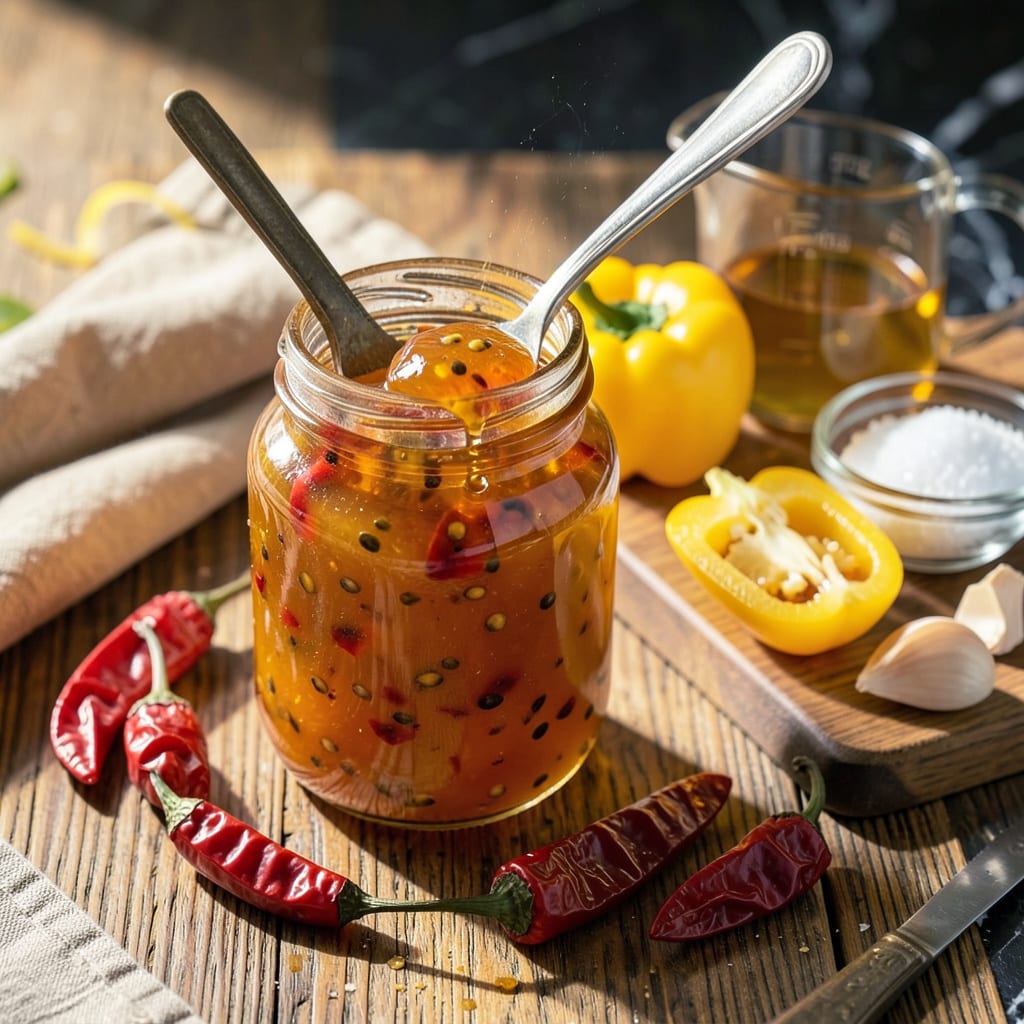
Datil pepper jelly offers the perfect balance of sweetness and heat, making it a standout addition to any pantry. This versatile condiment transforms simple cheese boards into gourmet experiences and adds depth to glazes for meats or roasted vegetables. The unique flavor profile comes from datil peppers—small but significantly hotter than jalapeños—blended with sugar and vinegar for a bright, complex finish.
The process is straightforward yet precise, ensuring a spreadable jelly with just the right consistency. Proper sterilization and canning extend shelf life to 12 months, so you can enjoy this sweet-spicy creation year-round. Whether paired with sharp cheddar, spread on crackers, or used as a glaze, this jelly delivers restaurant-quality flavor with minimal effort.
Ingredients for Datil Pepper Jelly
Eight simple ingredients transform into this sweet-spicy jelly that’ll elevate everything from crackers to glazes.
| Ingredient | Amount | Notes |
|---|---|---|
| Fresh Datil Peppers 🌶️ | ½ cup | Stems removed, finely chopped |
| Apple Cider Vinegar 🍏 | 1 cup | 5% acidity for proper gelling |
| Granulated Sugar 🍚 | 4 cups | Fine white sugar preferred |
| Liquid Pectin 🧪 | 6 oz | One standard package |
| Yellow Bell Pepper 🌶️ | ¼ cup | Seeds removed, finely minced |
| Garlic Cloves 🧄 | 2 cloves | Pressed or finely minced |
| Kosher Salt 🧂 | ½ tsp | Diamond Crystal preferred |
| Lemon Juice 🍋 | 1 tbsp | Freshly squeezed, bottled okay |
The datil peppers are everything here. St. Augustine, Florida is datil central—local markets there sell them fresh or pickled. If you’re ordering online, Florida Pepper Company ships nationwide. Look for firm, bright orange peppers (about 2-3 inches long). The yellow bell pepper adds body without extra heat—substitute red if you want deeper color (flavor stays similar).
No datils? Habaneros at half the amount get you close (but datils have a fruity sweetness habaneros lack). For vinegar, white vinegar works in a pinch, but cider vinegar’s mellow tang balances the sugar better. The pectin is non-negotiable—Ball or Sure-Jell liquid pectin are reliable brands. If you’re cutting the recipe, powdered pectin at 1:1 ratio works too (just mix it with sugar first).
Unopened jars keep in a cool, dark pantry for 12 months (thanks to that sterilization step). Once opened, refrigerate and use within 3 months. The jelly thickens as it cools—don’t panic if it’s runny hot from the pot. Pro tip: Label jars with the date (trust me, you’ll forget).
Why You’ll Love This Recipe
- No Fancy Equipment: Honestly, all you need is a pot, a spoon, and a jar—no canning experience required. The pectin does most of the work, so even if you’ve never made jelly before, this one’s hard to mess up.
- Sweet Heat Balance: That first taste hits you with bright, fruity sweetness from the sugar and bell pepper, then—bam—the datil’s slow-burning warmth lingers. It’s not overpowering, just that exactly right kick that makes you reach for another cracker.
- Gift-Worthy in Minutes: I’ve handed out jars of this at summer BBQs, holiday parties, and even as hostess gifts. Between us, it looks way more impressive than the 20 minutes of active prep it actually takes.
- Pantry Lifesaver: A single batch fills two standard jars, and they’ll keep for months. I’ll be real: I’ve stirred this into marinades, glazed chicken wings, and even swirled it into cream cheese for a last-minute appetizer. No waste, just options.
Step-by-Step Instructions for Datil Pepper Jelly
This process transforms simple ingredients into a vibrant jelly with perfect balance of sweetness and heat.
Step 1: Prepare the Pepper and Vegetable Base
Begin by carefully processing the 0.5 cup Fresh Datil Peppers—remove stems and finely chop them, keeping the seeds if you want maximum heat. I recommend wearing gloves for this step, as datil peppers can irritate skin. Add the chopped peppers to a food processor along with the 0.25 cup Yellow Bell Pepper (seeds removed, finely minced) and 2 cloves Garlic Cloves (pressed or finely minced).
Pulse until you achieve a fine, even texture—about 8-10 one-second pulses. You’re looking for a consistency similar to coarse sand, with no large chunks remaining. This uniform texture ensures even distribution of flavors throughout the jelly and prevents any unpleasant textural surprises in the final product.
Step 2: Create the Sugar-Vinegar Syrup
In a large, heavy-bottomed saucepan (at least 4-quart capacity to prevent boiling over), combine the 1 cup Apple Cider Vinegar and 4 cups Granulated Sugar. Stir over medium heat until the sugar completely dissolves—this typically takes 5-7 minutes. You’ll know it’s ready when the mixture becomes clear and you can’t feel any sugar granules when you rub a bit between your fingers.
Add the processed pepper mixture to the syrup along with the 0.5 tsp Kosher Salt and 1 tbsp Lemon Juice. Increase the heat to medium-high and bring the mixture to a full rolling boil that cannot be stirred down. This vigorous boil is crucial for proper pectin activation in the next step.
Step 3: Incorporate the Pectin for Perfect Gel
Once you’ve achieved a full rolling boil, immediately stir in the 6 oz Liquid Pectin. I recommend using a long-handled spoon and stirring constantly for 1 full minute to ensure complete incorporation. The mixture will foam up significantly—this is normal and indicates the pectin is working.
Continue boiling hard for exactly 1 additional minute, stirring constantly. You’ll notice the mixture thicken slightly and the bubbles become more viscous. This is your visual cue that the pectin has activated properly. Remove from heat promptly after this minute to prevent over-cooking, which can break down the pectin and prevent proper gelling.
Step 4: Process and Seal for Long-Term Storage
Ladle the hot jelly immediately into sterilized half-pint jars, leaving ¼-inch headspace at the top. Wipe the rims clean with a damp cloth to ensure a proper seal. The jelly should be thick enough to coat the back of a spoon but still pourable at this stage—it will continue to set as it cools.
Process the jars in a boiling water bath for 10 minutes (adjust for altitude if necessary). You’ll hear the satisfying “ping” of lids sealing as they cool—a sure sign of successful preservation. Let the jars cool undisturbed for 12 hours before checking seals and storing. The jelly will fully set during this cooling period, developing its characteristic glossy sheen and perfect consistency.
Common Mistakes When Making This Recipe
Underestimating Pepper Heat
Datil peppers pack serious heat—about 5-8 times hotter than jalapeños. I learned this the hard way when I doubled the peppers without adjusting seeds. Always wear gloves when handling, and consider removing seeds if you prefer milder heat. A good rule: start with ½ cup chopped datils and adjust next batch. 🌶️
Skipping Proper Pectin Activation
The jelly won’t set if you don’t achieve a full rolling boil before adding pectin. I’ve seen cooks rush this step, resulting in syrup instead of jelly. Boil the sugar-vinegar mixture hard for 1 full minute after adding pectin—no shortcuts. The foam you see is pectin working its magic.
Overfilling Jars
Leaving ¼-inch headspace isn’t optional—it’s critical for proper sealing. My first batch overflowed during processing because I filled jars to the rim. Use a canning funnel and measure carefully. The jelly expands slightly during processing, and that extra space prevents messy spills.
Neglecting Sterilization
Unsterilized jars can lead to mold growth, even with proper sealing. I boil my jars and lids for 10 minutes before filling. Don’t skip this step—it’s what gives your jelly that 12-month shelf life. A quick rinse isn’t enough to kill all bacteria.
Impatient Cooling
Moving jars before they’ve cooled 12 hours can break the seal. I once checked seals after just 2 hours and had to reprocess half my batch. Let them sit undisturbed on a towel-lined counter. The “ping” sound as lids seal is your reward for patience.
Using Wrong Vinegar
Apple cider vinegar’s 5% acidity is perfect for flavor and preservation. I tried white vinegar once, and the jelly tasted harsh. The cider vinegar’s mellow fruitiness balances the sugar and heat beautifully. Stick with the recipe’s vinegar choice for best results.
Nutrition Facts

- 6 Egg Cake Recipe with Oil: Light as Air With Buttery Moisture - October 4, 2026
- 4 Bean Casserole Recipe: One-Pan Heartiness With Smoky Paprika Depth - October 4, 2026
- 3-Ingredient Keto Mug Cake Recipe: Microwave Magic in 2 Minutes - October 4, 2026