
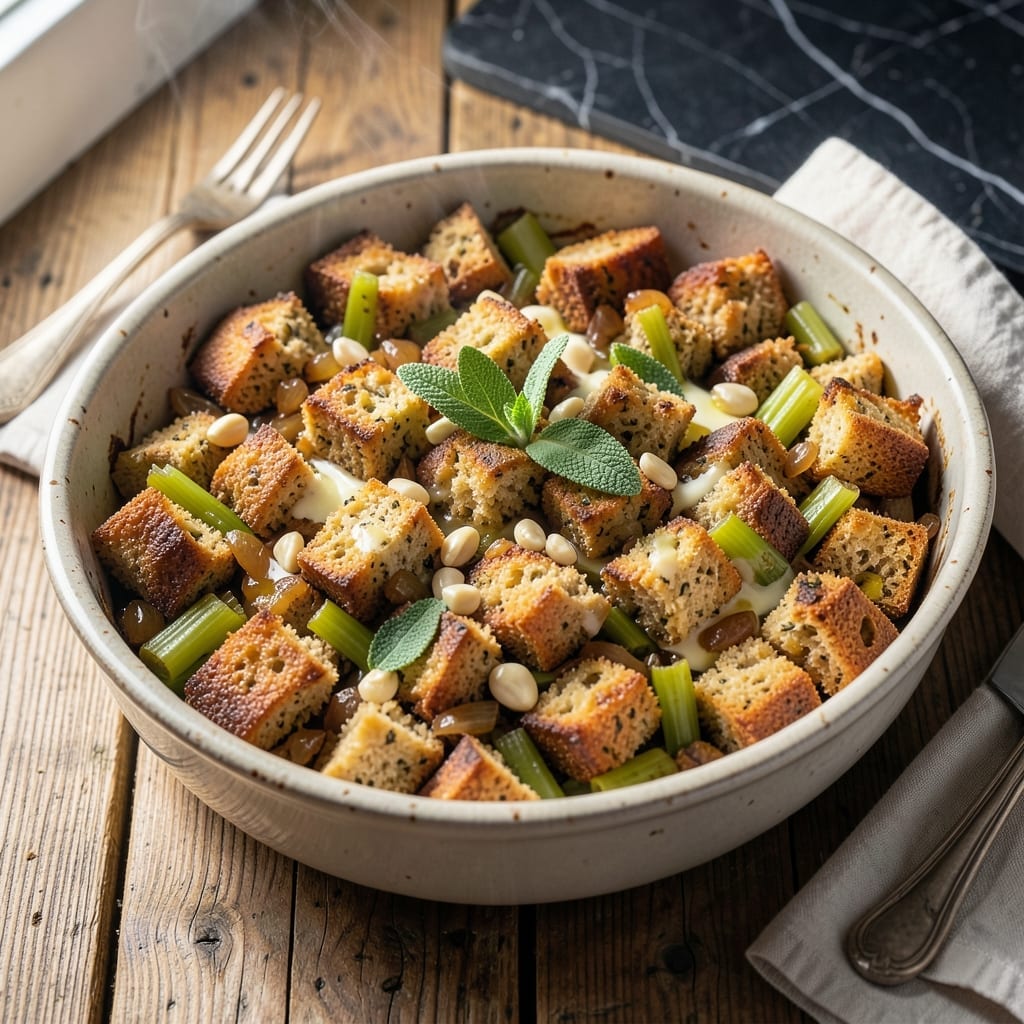
This stuffing recipe elevates the classic dish with a professional technique that ensures every bite is packed with flavor and perfect texture.
The liquid magic infusion transforms ordinary herb bread into something extraordinary, creating a moist yet structured stuffing that holds its own on any holiday table.
Dave Arnold’s method brings restaurant-quality results to your home kitchen, with precise steps that guarantee consistent success.
You’ll achieve a balance of crispy edges and tender interior that makes this the star of your meal.
Ingredients for Dave Arnold Stuffing Recipe Club
Restaurant-quality ingredients transform humble herb bread into an extraordinary holiday centerpiece with precise technique.
| Ingredient | Amount | Notes |
|---|---|---|
| Herb Bread Loaves 🍞 | 2 lb | Day-old, cubed into 1-inch pieces |
| Unsalted Butter 🧈 | 1 cup | Divided for cooking and infusion |
| Yellow Onions 🧅 | 3 whole | Medium, finely diced |
| Celery Stalks 🥬 | 6 whole | Finely diced, with leaves |
| Garlic Cloves 🧄 | 6 cloves | Minced for aromatic base |
| Fresh Sage Leaves 🌿 | ¼ cup | Chopped, stems discarded |
| Fresh Thyme Sprigs 🌿 | 2 tbsp | Leaves stripped, chopped |
| Fresh Rosemary 🌿 | 2 tbsp | Finely chopped, woody stems removed |
| Dried Cranberries 🫐 | 1 cup | Chopped if large |
| Pecans 🌰 | 1 cup | Toasted, roughly chopped |
| Chicken Stock 🥣 | 4 cups | Low-sodium preferred for control |
| Dry White Wine 🍷 | 1 cup | Sauvignon Blanc or Pinot Grigio |
| Kosher Salt 🧂 | 2 tsp | Diamond Crystal preferred |
| Freshly Ground Black Pepper 🌶️ | 1 tsp | Coarse grind for texture |
The bread is critical—day-old sourdough or artisanal herb loaves from a quality bakery absorb the liquid magic best. Avoid pre-cubed stuffing mixes; their texture breaks down. Whole Foods or a local bakery will have the right loaves. For herbs, fresh is non-negotiable—dried simply won’t deliver the vibrant, aromatic punch this method demands. Look for sage with deep green, velvety leaves (avoid any with black spots).
No white wine? Apple cider or additional chicken stock with a splash of lemon juice works in a pinch. Pecans can be swapped for walnuts or hazelnuts—toast them first to wake up their oils. For a vegetarian version, vegetable stock replaces chicken stock seamlessly. The cranberries add bright pops of color and tartness; dried cherries or apricots are excellent alternatives if that’s what’s in your pantry.
The stuffing can be prepped a day ahead—keep the bread cubes and liquid infusion separate until baking. Leftovers (if any) reheat beautifully in a 350°F oven for 15 minutes. Store in an airtight container for up to 4 days in the fridge, or freeze for 3 months (thaw overnight before reheating).
Why You’ll Love This Recipe
- Minimal Chopping: I just dice the onions, celery, and garlic—no fancy knife skills needed.
- Buttery Herb Heaven: The herb bread soaks up all that butter and garlic like a dream.
- Holiday or Tuesday: Honestly, I make this for Thanksgiving and random weeknights.
- Leftovers for Days: Between us, it tastes even better the next day fried in a pan.
Step-by-Step Instructions for Liquid Magic Infused Herb Bread
This method delivers maximum flavor infusion with perfect texture every time.
Step 1: Toast the Herb Bread
Preheat your oven to 350°F. Spread the 2 lb herb bread loaves cubes on two baking sheets in a single layer. Toast for 15-20 minutes, stirring halfway, until the cubes are golden brown and completely dry to the touch. This step is crucial for preventing soggy stuffing.
Watch carefully toward the end—over-toasting can make the bread too hard to absorb the liquid. The cubes should feel like stale bread, not rock-hard croutons. Transfer to a large bowl once done.
Step 2: Infuse the Aromatics
In a large skillet, melt ½ cup of the unsalted butter over medium heat. Add the 3 whole yellow onions and 6 whole celery stalks, cooking for 8-10 minutes until softened and translucent. The onions should look glassy, not browned.
Add the 6 cloves garlic cloves, 0.25 cup fresh sage leaves, 2 tbsp fresh thyme sprigs, and 2 tbsp fresh rosemary. Cook for 2-3 minutes until fragrant but not browned. This builds the aromatic foundation for your stuffing.
Step 3: Deglaze and Combine
Pour in the 1 cup dry white wine to deglaze the pan, scraping up any browned bits. Let it simmer for 3-4 minutes until the liquid reduces by half. This step concentrates the flavors and removes any raw alcohol taste.
Pour the aromatic mixture over the toasted bread in the bowl. Add the 1 cup dried cranberries, 1 cup pecans, 2 tsp kosher salt, and 1 tsp freshly ground black pepper. Toss gently to combine, ensuring the bread absorbs all the liquid and flavors.
Step 4: Add Liquid and Rest
In a separate saucepan, warm the 4 cups chicken stock with the remaining ½ cup unsalted butter until the butter melts. Pour this over the bread mixture, stirring gently. The liquid should be fully absorbed with no pooling at the bottom of the bowl.
Cover the bowl with a clean kitchen towel and let it rest for 15-20 minutes. This allows the bread to fully hydrate and the flavors to meld. The mixture should look moist but not soupy before baking.
Pro Tips For Making Dave Arnold Stuffing Recipe Club
- Dry the Bread: Cube and toast the herb bread loaves the day before—spread them on a tray in a 250°F oven for 30-40 minutes until completely dry. I learned this the hard way after my first stuffing turned mushy.
- Sweat the Veggies: Cook the onions and celery in unsalted butter over medium-low heat until soft but not browned, about 8-10 minutes. Rushing this step leaves them crunchy in the final dish.
- Skip the Wet Bread: Resist the urge to use fresh bread—it’ll turn your stuffing into a soggy mess. Even slightly stale herb loaves need that extra drying time to hold up.
- Brown the Butter: After sautéing the veggies, let the butter turn golden brown before adding garlic. Sounds weird, but it adds a nutty depth that plain butter just can’t.
Troubleshooting This Recipe
Soggy Stuffing Fix
If your stuffing turns out too wet, it likely didn’t toast long enough. Spread it on a baking sheet and return to a 375°F oven for 10-15 minutes to evaporate excess moisture. I’ve rescued many batches this way. 💡
Dry Bread Solution
When the bread cubes seem too dry after toasting, don’t panic. Simply reduce the resting time to 10 minutes before baking. The liquid magic infusion will still hydrate them perfectly during the bake.
Flavor Too Mild
If your stuffing lacks depth, boost it with 1 tbsp soy sauce or 1 tsp fish sauce in the liquid mixture. These umami bombs enhance the herbs and butter without overpowering the dish.
Uneven Browning
For a golden top, broil for 2-3 minutes at the end of baking. Watch closely to prevent burning. If the center isn’t cooking through, cover with foil and bake an additional 10 minutes at 350°F.
Herb Overpowering
If the sage or rosemary taste too strong, balance with 2 tbsp honey or 1 tbsp maple syrup mixed into the warm stock. The sweetness will mellow the herbs beautifully.
Crunchy Pecans
Toast the pecans separately for 5 minutes at 350°F before adding. This ensures even toasting and prevents any raw, bitter notes from ruining the texture. ✨
Nutrition Facts
Frequently Asked Questions
Can I use pre-cubed bread for this?
Avoid pre-cubed mixes as they often break down too much. Day-old artisanal herb loaves work best for texture and absorption.
What if I don’t have white wine?
Substitute with apple cider or extra chicken stock plus 1 tbsp lemon juice. The acidity mimics wine’s brightness.
How do I prevent soggy stuffing?
Toast bread cubes until golden brown and dry. Bake uncovered for 30-40 minutes at 375°F for crisp edges.
Can this be made vegetarian?
Yes! Replace chicken stock with vegetable stock. Keep all other ingredients the same for full flavor.

- 6 Egg Cake Recipe with Oil: Light as Air With Buttery Moisture - October 4, 2026
- 4 Bean Casserole Recipe: One-Pan Heartiness With Smoky Paprika Depth - October 4, 2026
- 3-Ingredient Keto Mug Cake Recipe: Microwave Magic in 2 Minutes - October 4, 2026